Tag: Saudi Arabia

  • France Prepares Saudi-Backed Deal for Japanese Dragon Ball Theme Park

    France Prepares Saudi-Backed Deal for Japanese Dragon Ball Theme Park

    French regional authorities are preparing to sign an agreement with Saudi investors to construct a massive amusement park based on Japan’s iconic Dragon Ball franchise.

    The project targets a development footprint comparable to Disneyland Paris, backed by capital from a Saudi investment company.

    Valerie Pecresse, head of the Ile-de-France regional government, confirmed that French officials spent 18 months structuring the proposal ahead of bilateral talks in Paris. Talks between French President Emmanuel Macron and Saudi Crown Prince Mohammed bin Salman at the Elysee Palace anchored the negotiations, with the entertainment park forming part of a broader package of commercial accords.

    Site selection northwest of Paris

    Plans for the venue point to Courdimanche, a municipality northwest of the French capital. While officials have not disclosed total capital expenditure, the scale required to match major European destination parks typically demands billions of euros in infrastructure, ride engineering, and hospitality real estate.

    Licensing Japanese intellectual property for overseas locations has accelerated across the entertainment industry. Bandai Namco and affiliated Japanese rights holders have increasingly monetised manga and anime catalogues through physical retail, location-based entertainment, and global tourist hubs.

    Sovereign capital and Japanese entertainment assets

    Gulf investment entities continue to funnel capital into global media and interactive entertainment properties, diversifying state portfolios away from hydrocarbons. Saudi Arabia previously announced its own dedicated Dragon Ball park at the Qiddiya development project outside Riyadh, illustrating a focused campaign to secure long-term rights around Japanese pop culture brands.

    European operators face shifting consumer demand as audiences seek immersive, single-franchise destinations over traditional mixed-attraction venues. Commercial agreements spanning the site purchase, planning permits, and formal construction timelines remain subject to final sign-off following the bilateral summit.
  • Etude House and Nature Republic debut in Saudi Arabia

    Etude House and Nature Republic debut in Saudi Arabia

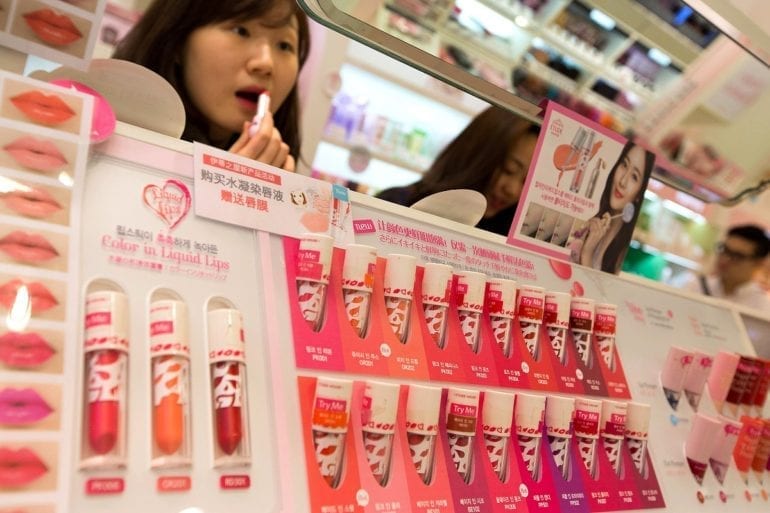
    Two Korean cosmetics brands Nature Republic and Etude House have opened their first outlets in Saudi Arabia.

    Nature Republic has signed an agreement with local retailer Fawaz Alhokair to open the first store in the capital city of Riyadh, the first of up to five outlets in the country. Saudi Arabia is the brand’s 19th market.

    Etude House has also made it to Riyadh with the first store at the Granada Center after a successful launch in UAE and Kuwait earlier this year.

    The Middle East’s cosmetics market is expected to reach US$36 billion by 2020 while Saudi Arabia’s cosmetics market has grown 15 per cent annually in recent years and is the largest beauty market in the region.

  • E-Mart to tap Saudi Arabia with beauty specialty store

    E-Mart to tap Saudi Arabia with beauty specialty store

    E-Mart Inc., South Korea’s largest discount chain operator, said Thursday its beauty brand will open a store in Saudi Arabia next year, as the retailer attempts to expand its presence in the overseas market.

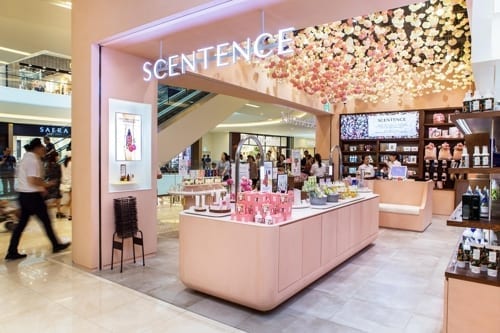
    The company said it signed an agreement with the Middle Eastern country’s major retail group Fawaz Alhokair to open its beauty store Scentence at a shopping mall operated by the Saudi firm.

    The store is likely to open in the Saudi capital city of Riyadh in March next year at the earliest, E-Mart said. It plans to open up to five more stores by 2018.

    The South Korean retailer has been pushing to tap deeper into foreign markets after withdrawing its business from China.

    This undated photo provided by E-Mart Inc., the operator of South Korea’s largest discount store chain, on Nov. 23, 2017, shows its beauty specialty store at a shopping mall in Goyang, northwest of Seoul. 


  • Bali to intensify tourism promotion in Saudi Arabia

    Bali to intensify tourism promotion in Saudi Arabia

    The Bali provincial administration will intensify tourism promotion in Saudi Arabia following a vacation of King Salman bin Abdulazis al-Saudi on the island.

    “Logically, when their King came here, his people would also like to visit. Moreover, the royal family seemed to very much enjoy their vacation in Bali,” Cokorda Bagus Pemayun, secretary of the Bali tourism office, said here, Sunday.

    The Kings visit was fresh air for Balis tourism because there had been a difficulty in attracting Middle Eastern tourists to Bali so far, he said.

    He believed the Kings visit has changed a perception of the Saudi people about Bali, and therefore it would be a golden opportunity for Bali to explore the Saudi market.

    The fact that the King and his family decided to extend their visit to Bali showed that King Salman al-Saud and his family felt happy with their vacation in Bali, he added.

    King Salman bin Abdulaziz al-Saud left Bali for Japan on Sunday at 11:15 a.m. local time after enjoying an eight-day holiday on the island.

    The Saudi King was holidaying in Bali from March 4 to 12, after paying a state visit to Jakarta on March 1-3, which is considered to be historical as a Saudi king had lasted visited Indonesia 47 years ago.

    The Bali tourism official has seen the Kings visit as a major tourism promotion for Bali.

    Middle Eastern tourists are in general high spender, with an average spending of US$ 1,800 per person per visit, compared to US$1,2000 per visit by other foreign tourists.

    The Arabs usually spend 10.08 days per visit, which is also much longer than other foreign tourists.

    “They usually come during Hajj pilgrimage season and summer,” he noted.

    Over the last five years, the number of Middle Eastern tourists visiting Bali, has increased by an average of 38.7 percent a year, he remarked.

  • Indonesia and Saudi Arabia set to double trade by 2020

    Indonesia and Saudi Arabia set to double trade by 2020

    Indonesia’s Trade Ministry received a business delegation from Saudi Arabia last week, as the two countries announced a plan to double their bilateral trade value by 2020, according to a report published by The Jakarta Post.

    The total trade between the two countries currently stands at a value of US$8.5 billion and is thought to leave plenty of room for expansion, according to the Indonesian Trade Ministry.

    “The figures are yet to reflect the potential of both countries,” said Arlinda Imbang Jaya, Trade Ministry Expert for Trade Services.

    Saudi Arabia is said to have expressed interest in cooperating with several Indonesian businesses in the fields of cosmetics, pharmaceutical products and medical equipment.

  • K-beauty spreads worldwide

    K-beauty spreads worldwide

    The ‘K-beauty’ market is expanding its sphere of influence beyond Asia, and reaching out to other global markets.

    According to Aju News, a Korean newspaper, Korean cosmetics brands are exploring new markets worldwide. As the global interest in K-pop and K-dramas is rising, women all over the world are now looking at K-cosmetics.

    Amore Pacific has been eyeing the international market since the 1990s. After establishing factories in France and China, the company continued to expand its influence worldwide, with products now being sold in the U.S., Malaysia, Indonesia, Vietnam, Canada, Thailand, the Philippines, Singapore, Myanmar, and Japan, generating global sales of 1.26 trillion won.

    Able C&C’s cosmetics brand Missha is following the lead, spreading K-beauty all over the world. Missha stores can now be found in Brazil, Germany, Mexico, Venezuela, Turkey and Spain. The Brazilian market in particular is expected to generate strong sales growth, as reports show that the local cosmetics market is the fourth largest in the world.

    LG Household & Health Care’s The Face Shop is focusing on the Middle Eastern market, opening 55 stores in five countries – Jordan, Saudi Arabia, UAE, Oman and Armenia.

    Cosmetics brands are using a number of different marketing strategies to aggressively target overseas markets.

    In areas where natural ingredients and safety are important, such as Europe and the US, businesses are attracting customers with their ‘natural’ brands. Some brands promote elements of Korean tradition to attract western consumers. Many are ‘blending in’ with the locals through collaboration with local businesses.

    To boost overseas expansion, the Korea Trade Promotion Corporation (Kotra) is taking steps to boost sales of Korean cosmetics through American and Chinese online shopping sites.

    Kotra will host a ‘K-beauty summit’ to help Korean cosmetics brands export their products. The agency’s ‘online export incubating program’ will be introduced, and is expected to help businesses sell their products through Amazon.

    Kotra is also seeking to secure new trading opportunities in China in collaboration with the online shopping site TaoBao, operated by Chinese eCommerce behemoth Alibaba. The two parties plan to host a K-beauty expo in China during the first half of the year.

    Innisfree store in Shanghi

    The cooperation with TaoBao is only the start, as Kotra is also planning to work with other online shopping portals such as JD.com.

    Officials at Kotra emphasise the importance of making inroads in the American and Chinese markets to prolong the popularity of the K-beauty trend. They expect to draw the attention of young consumers who are sensitive to fashion and style trends and familiar with online shopping.