
Tag: Sazaby

  • Canada Goose ramps up Japan expansion with Sazaby League

    Canada Goose ramps up Japan expansion with Sazaby League

    Canada Goose Holdings Inc. (“Canada Goose” or the “Company”) and longstanding partner Sazaby League Ltd. (“Sazaby League”) have entered into an agreement to create the joint venture Canada Goose Japan, with plans to accelerate DTC expansion, including stores.

    This agreement will replace an exclusive national distributor arrangement between Sazaby League and Canada Goose. Commencing in April, the existing distribution will be assumed by the joint venture, of which each partner will own 50 per cent. Current distribution includes a permanent Canada Goose retail store in Tokyo, a national e-Commerce site, as well as wholesale points of distribution across the country. The new operating model is expected to significantly increase revenue and gross profit per unit from the existing business. Canada Goose Japan is also expected to generate C$60m – C$65m in total revenue in fiscal 2023, which is roughly double the contribution from this market in fiscal 2022.

    “Japan is one of the world’s largest and most influential luxury markets and has long been an important consumer market for Canada Goose,” said Dani Reiss, President & CEO, Canada Goose. “This new agreement sets the stage for the acceleration of our growth in Japan, across both DTC and wholesale. We are excited to expand our existing operations with Sazaby League and know their successful history building strong consumer brands in the market will help drive us forward.”

    “We are proud to partner with Canada Goose and to be part of their continued growth in Japan,” said Yoji Hirai, CEO of Canada Goose Japan. “Canada Goose is a global performance luxury lifestyle brand, known for their unparallel product and industry-leading sustainability commitme
  • Gloss coming off Starbucks Asia growth

    Gloss coming off Starbucks Asia growth

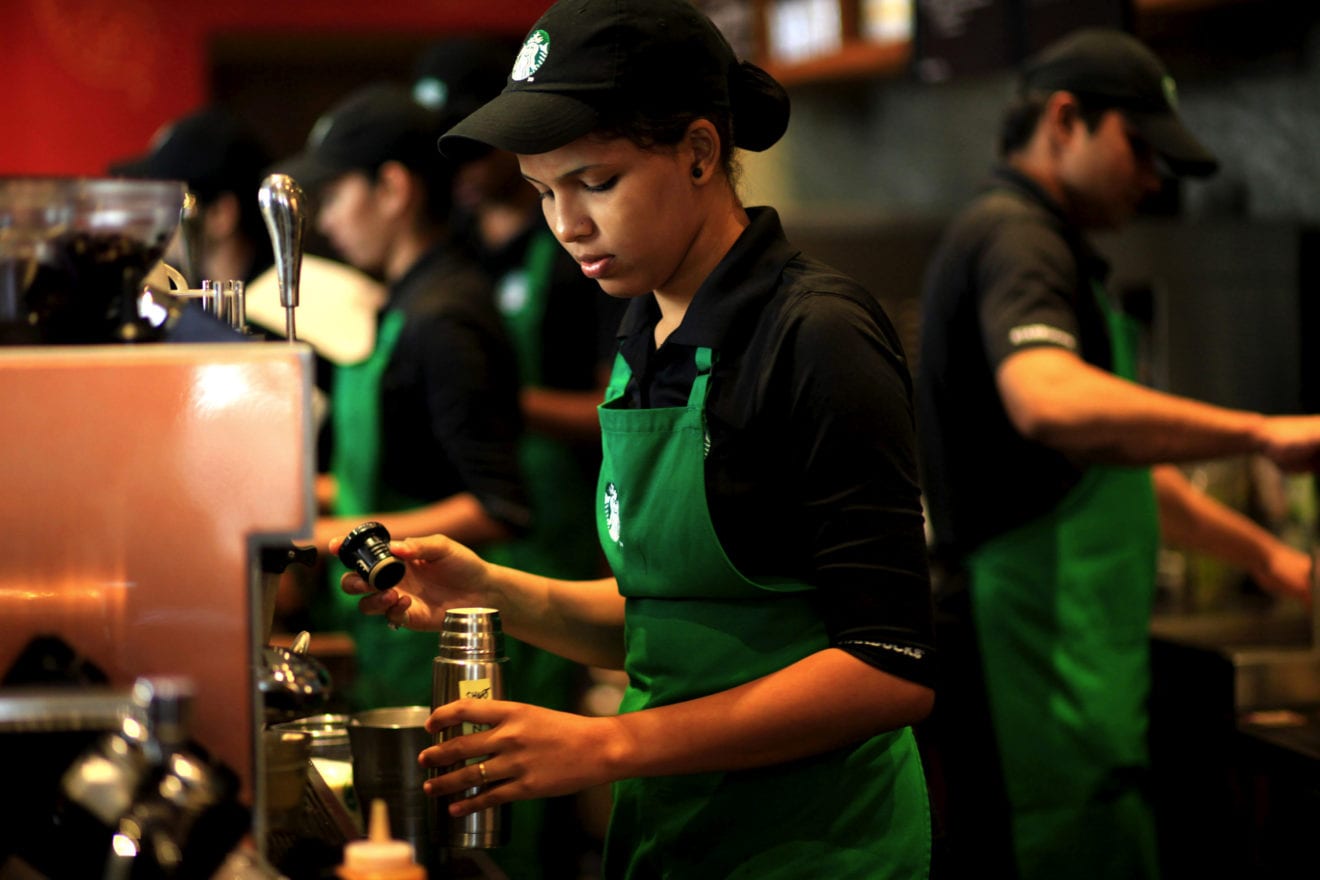
    Global coffee giant Starbucks has finished its financial year on a high, reporting a 17 per cent increase in annual revenue to a record US$19.2 billion.

    But is the Starbucks Asia Pacific business underperforming?

    Neil Saunders, CEO of Conlumino, believes so. He says the company’s last quarter figures were boosted by the acquisition of the balance of its Japan joint venture from partner Sazaby League. Globally it finished the quarter with 1666 more cafes than in the previous year, an impressive figure in itself.

    “For a company of Starbucks size and scale, such results are exceptional and a testament to the company’s innovative attitude, as well as the continued relevance of coffee across many geographies,” says Saunders.

    “While the overall numbers are strong, there is an interesting trend in the detail: namely that although Starbucks performed well across many geographies – including in the more mature core Americas territory – performance in Asia Pacific was surprisingly muted.”

    Saunders says while total revenue held up well, rising 110 over last year, this is mainly because of the Japanese acquisition.

    The opening of 767 new stores in Asia-Pacific (which is essentially Asia given Starbucks has only 25 cafes in Australia and 26 in New Zealand, both run by franchise partners) certainly helped.

    “However, on an underlying basis, same store sales only rose by six per cent – a slightly disappointing outcome, and one that is partly attributable to the general slowdown in China,” says Saunders.

    “If the emerging markets proved to be soft, the same cannot be said of the Americas where comparable sales rose by eight per cent. Here some of the menu changes, including the continued growth of the food offer, have helped to push up average ticket within existing stores. However, in our view the various digital initiatives Starbucks has been developing and pursuing have also paid dividends. Its popular digital app is already widely used for payment, and locks in loyalty both by saving customers time at the register and by making Starbucks a destination by virtue of the fact that the card is preloaded with cash. It is also notable that the average ticket from customers using the mobile app for payment tend to be higher. Naturally, some of this is because Starbucks enthusiasts and most loyal customers are more likely to have the app. However, we also believe that the rewards and advertising, which the app supports, help to stimulate add-on sales.”

    Saunders says Starbucks’ plan to drive evening sales through offering alcoholic beverages and an enhanced food menu in US and UK stores is also encouraging.

    “These improvements should be in a quarter of US stores by the end of 2019. In our view, they’re another example of why Starbucks outperforms: it evolves and innovates its in a way that’s relevant to customers.”

    Next year, Starbucks says it plans to open about 900 new stores in Asia-Pacific, two thirds of them licensed. And it says it expects it earnings in the region to be flat or even down.