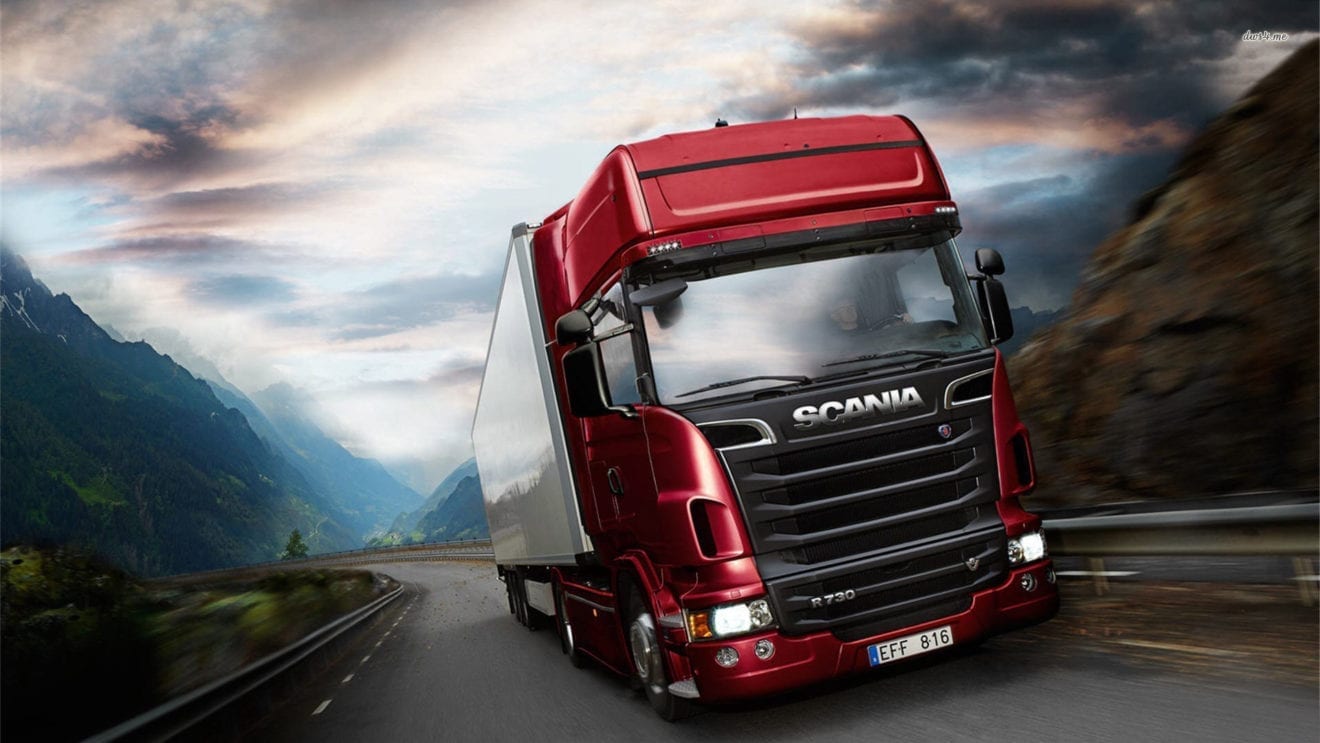
Tag: Scania

  • Imports of commercial vehicles fell last month in Korea

    Imports of commercial vehicles fell last month in Korea

    Sales of imported commercial vehicles plunged 38 percent last month from a year earlier amid slower economic growth, a local automobile association said Tuesday. The number of newly-registered imported commercial vehicles fell to 283 units in December from 390 a year ago, the Korea Automobile Importers and Distributors Association (KAIDA) said in a statement.

    “The construction industry faces a slowdown as the government pushes for regeneration projects in residential areas instead of building new apartments or homes. This is driving down demand for commercial vehicles,” a spokeswoman for Volvo Trucks Korea said.

    Imported commercial vehicles are widely viewed as being more upmarket than domestically produced rivals and offer more choices for users.

    For the whole of 2018, the number of imported commercial vehicles sold in Korea declined 1.6 percent to 4,394 units from 4,464 a year earlier, the statement said.

    Major imported commercial vehicle brands are MAN, Mercedes-Benz, Volvo Trucks, Scania and Iveco.

    There are three kinds of trucks. Two of them are regarded as commercial vehicles, but the third, referred to as a dump truck, is classified as construction equipment.

    KAIDA began to compile sales data for imported commercial vehicles in January 2017.
  • Scania says Korea keeps its trucks on top

    Scania says Korea keeps its trucks on top

    Sweden commercial vehicle manufacturer Scania said Korea will remain strategic to its Asian business, particularly due to the advanced technology and high environmental regulations imposed on cars.

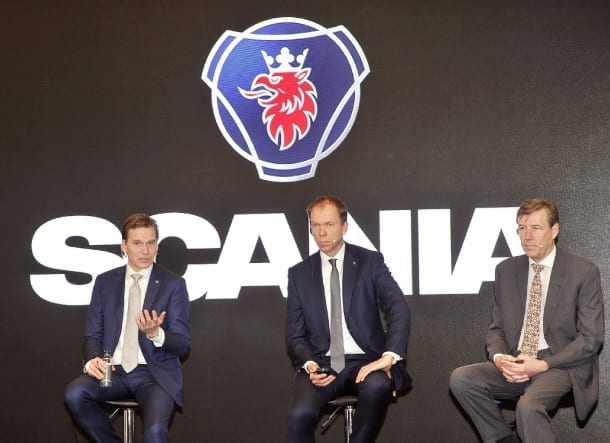
    “There’s a saying that if you can manage Korean standards, you can manage any country standards [in Asia],” said Kaj Farm, the managing director of Scania Korea at a press conference held Thursday in Gangnam, southern Seoul.

    Executive Vice Presidents Mathias Carlbaum, head of commercial operations, and Christian Levin, head of sales and marketing, joined the event to share the company’s future plans. This was the first time top-level executives from headquarters attended a local press event for Scania.

    The company says Korea is an effective gateway for launching new models before they are sent to other Asian countries, as environmental regulations and safety standards are much stricter. Another advantage is that Korea has an information technology infrastructure that allows the company to test high-tech “connectivity” features that help the company collect data on drivers and their trucks on the road.

    The company chose Korea as the first Asian market to sell its newest lineup, the All New Scania series, launched Feb. 10. The series was its biggest R&D project ever, taking 10 years and 2 billion euros to develop.

    In sales, Korea was Scania’s biggest market in Asia before last year, when China overtook it. In Korea, Scania has an 11.5 percent market share in heavy trucks, a jump from 6.6 percent in 2013. The Korean office’s aim is to keep up slow but steady growth by expanding market share 1 percent each year.

    Scania is pushing R&D to prepare for an era of sustainable transportation with increased energy efficiency, alternative fuels, electrification and so-called “smart transport.” It has already had some success in developing engines for alternative fuels.

    One interesting experiment Scania is conducting in Singapore for the “smart” sector is “platooning,” where four trucks, operating between several freight terminals, drive in a convoy and the only manned vehicle is the one at the very front. The others are connected via Wi-Fi and are led by the car in front.

    “Our target [for the Asian market] is a 70 percent increase [in the number of units sold] from 2016 to 2020,” said Carlbaum, Scania’s commercial operations head. “By then, one third of the total volume for the company will come from Asia. And, in the meanwhile, Korea will remain a core part of this growth strategy.”

  • Scania Strengthens Position in Indonesia

    Scania Strengthens Position in Indonesia

    Scania continues to reinforce its position in the Indonesian bus market. Transjakarta has now placed an order for 150 low-entry city buses in addition to the previously ordered 110 3-axle Scania buses that will be delivered later this year. The public transport operator in the Indonesian capital already has 108 articulated Euro 6 Scania gas buses in its network.

    The Transjakarta Bus Rapid Transport system is considered to be the world’s longest busway, serving more than 10 million passengers monthly. The forthcoming delivery of low-entry buses will replace the existing, highly polluting, old buses that operate outside the busway corridors. The new Scania buses, delivered by United Tractors and bodybuilt by Laksana, will feature wheelchair ramps.

    On announcing the order, Jakarta Governor Basuki “Ahok” Tjahaja Purnama particularly highlighted the greater accessibility and said, “this is the world-class bus we expect to have. Jakarta has never before had low-entry buses.”

    Scania, through its Indonesian partner United Tractors, has established the bus depot workshop facilities and parts supply systems in Jakarta needed to uphold an uptime of over 90 percent.

    United Tractors is the leading and the largest distributor of heavy equipment in Indonesia, providing products from world-renowned brands, including Scania. The partnership between United Tractors and Scania was established in 2004, initially focusing on heavy-duty trucks for the Indonesian mining industry.

    Scania is major supplier of buses for BRT systems throughout the world. “We are convinced that bus systems offer the quickest and most cost-effective solution for cities to increase urban mobility and alleviate traffic congestion,” says Karin Rådström, Head of Buses and Coaches. “The Jakarta BRT system serves as a model for many growing cities.”

    Scania is a part of Volkswagen Truck & Bus GmbH and one of the world’s leading manufacturers of trucks and buses for heavy transport applications. Scania is also leading provider of industrial and marine engines. Service-related products account for a growing proportion of the company’s operations, assuring Scania customers of cost-effective transport solutions and maximum uptime. Scania also offers financial services. Employing some 44,000 people, the company operates in about 100 countries. Research and development activities are concentrated in Sweden, while production takes place in Europe and South America, with facilities for global interchange of both components and complete vehicles. In 2015, net sales totalled SEK 95 billion and net income amounted to SEK 6.8 billion.