AI-supported comprehensive health screening is becoming increasingly accessible in Vietnam, granting both local and overseas Vietnamese the opportunity to access preventative diagnostic services. In the past, these services were usually sought after in countries like Japan, South Korea, and Thailand, where advanced screening programs were more readily available.
One factor driving the growing interest in preventative screening, according to healthcare providers, is early detection. Statistics from Nura, an AI-powered health screening center network, show that 73.5% of Vietnamese cancer patients do not survive their illness, compared to around 30% in Japan, where regular screenings are commonplace.
In Japan, the long-standing ningen-doku program screens approximately 80% of the population annually. In contrast, Vietnam’s screening rate is estimated to be around 3.5%.
AI-Assisted Screening
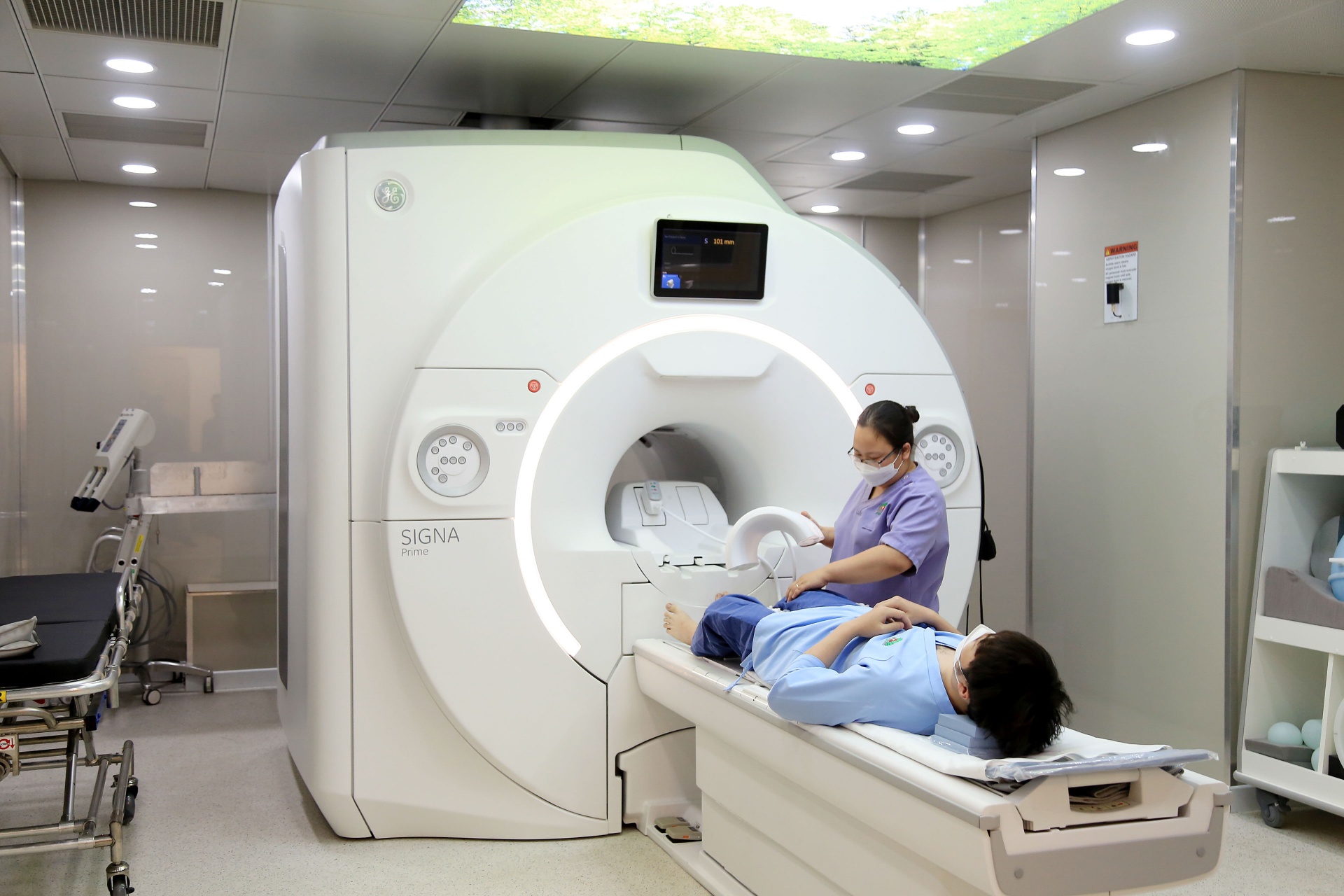
Since July 2024, Nura has been providing AI-assisted full-body screening services in Hanoi and Ho Chi Minh City. The company reports that over the past two years, they have conducted more than 33,000 screenings, identifying over 160 early-stage cancers in asymptomatic individuals.
Nura’s AI system is designed to aid doctors by supporting medical image analysis, not replace them. The platform, developed in conjunction with Fujifilm and partially trained on approximately 400 million medical images from Stanford Medicine, utilizes around 50 AI models to identify various types of abnormalities. Physicians review areas flagged by the AI before finalizing and sharing examination results with patients.
Supporting Clinical Decisions
According to Nura, AI-assisted imaging can assist doctors in evaluating complicated cases. In one instance, a 45-year-old man who was initially advised to undergo a lung biopsy after a suspected malignant lesion was detected at another medical facility. After an AI-assisted scan and specialist review, the abnormality was deemed consistent with benign inflammation. The patient was treated for pneumonia and recovered without needing a biopsy.
Nura’s services are not only convenient for local residents but also for overseas Vietnamese and expatriates living in Vietnam. The company’s AI-assisted screening services provide an alternative for those seeking preventative healthcare without having to travel outside of Vietnam.
One of the prominent concerns for people considering CT-based screening is radiation exposure. Nura states that its ultra-low-dose CT protocol, cleared by the U.S. Food and Drug Administration (FDA), is aimed at reducing radiation exposure while maintaining image quality through AI-supported image reconstruction.
Questions & Answers
What is the main purpose of Nura’s AI-assisted screening?
The main purpose of Nura’s AI-assisted screening is to facilitate early detection of diseases, such as cancer, by providing comprehensive health screenings.
How is Nura’s AI system used in clinical decision making?
Nura’s AI system aids in clinical decision making by supporting medical image analysis, flagging areas of concern for physicians to review and make an informed medical decision.
What measures has Nura taken to address concerns about radiation exposure during CT-based screening?
To alleviate concerns about radiation exposure during CT-based screenings, Nura has developed an ultra-low-dose CT protocol, designed to reduce radiation exposure while maintaining image quality. This system has received clearance from the U.S. Food and Drug Administration (FDA).