Tag: screens

  • Producers of flexible and punch-hole AMOLED displays Facing Roadblocks

    Producers of flexible and punch-hole AMOLED displays Facing Roadblocks

    Flat panel display producers in China are eager to start selling flexible AMOLED displays, and AMOLED displays with punch-holes. At this year’s China Information Technology Expo 2019 (CITE), which wrapped up earlier this month, companies like BOE Technology, Visionox, Tianma Microelectronics, Everdisplay Technology and China Star Optoelectronics Technology (CSOT) displayed their flexible screens for use in foldable phones. Also showing off its flexible AMOLED panels was Royole, which uses the screens for its own foldable FlexPai smartphone.

    All of these manufacturers are monitoring what is going on with Samsung and its Galaxy Fold device. Earlier today, the company delayed the U.S. launch of its foldable phone by at least one month due to issues with the interior display and the hinge. The Huawei Mate X outward folding device is expected to launch later this year. Other companies that could release a foldable phone in 2019 include Oppo, TCL, Motorola and Xiaomi.µ

    Meanwhile, companies turning out smartphone displays in China are now offering punch-hole panels with resolutions as high as 1080p (Full HD). The punch-hole is a small opening punched into a display allowing a front-facing selfie camera to be housed inside a phone’s screen. Some phones, like the Samsung Galaxy S10+, have two punch-holes in the screen for a dual selfie camera setup. The use of the punch-hole allows phone manufacturers to offer handsets with a high screen-to-body ratio and thin bezels without the use of a notch.

    CSOT is said to be shipping through hole and blind hole panels to Samsung. The latter has a punch-hole that goes completely through the display to the other side, while the latter has a hole that is drilled down to a certain depth. The company also showed off its self illuminating displays, while Tianma exhibited a back-lit smartphone panel. Both of these depend on mini-LEDs as a source of light. These are light emitting diodes that are smaller than 100 micrometers.
  • Apple has ordered 70 million OLED panels from rival Samsung for upcoming iPhone 8

    Apple has ordered 70 million OLED panels from rival Samsung for upcoming iPhone 8

    Shares of Samsung Electronics got a boost on Tuesday after the report that archrival Apple had ordered 70 million display panels that the South Korean giant specializes in for the upcoming iPhone. Samsung’s stock closed at 2.1 million Korean won, posting a rise of 1.54 percent.

    Citing a supply chain source, Nikkei reported that Apple has placed orders for bendable organic light-emitting diode panels for use in 70 million handsets for the year. OLED offers brighter displays and better power efficiency over liquid crystal displays currently in use.

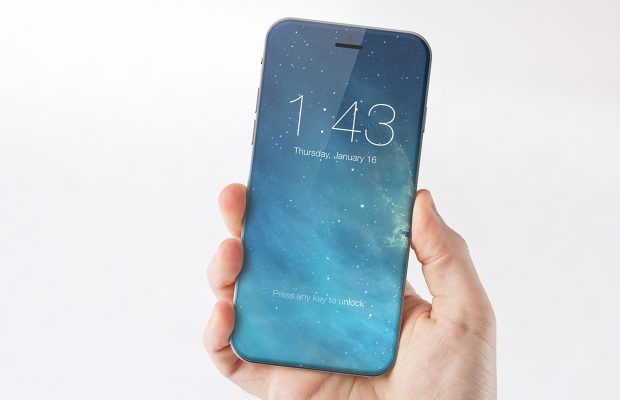
    Samsung’s OLED displays are used on its own flagship Galaxy devices, and the company is a market leader in the area. Apple is expected to launch three new iPhones later this year, with the anniversary edition iPhone 8 believed to have a slightly curved 5.2-inch OLED screen. This will be the most expensive model. The two other iPhones will have LCD displays. It would be the first time Apple has used OLED displays on its flagship device.

    Quoted IHS Markit analyst David Hsieh as saying that the order for 70 million units of OLED panels is in line with his expectations. He added that Samsung is expecting to produce as many as 95 million units for Apple in 2017, in case demand exceeds expectations. Hsieh also said Samsung is likely to be the sole supplier.

    “It is also possible that some of these 70 million handsets will not be shipped to customers this year and be carried over to next year depending on demand,” Hsieh told.

    The 70 million unit figure gives a sense of the kind of bullish demand Apple is expecting for the anniversary model, which some analysts are suggesting could cost $900 to $1,000.

    But some analysts have said it’s not likely Apple will sell all 70 million OLED iPhones this year looking at previous performance. In the fiscal first quarter, which ended Dec. 31, Apple sold 78.2 million iPhones — latest iPhone 7 and 7 Plus models and older versions.

    Neil Shah, research director of devices and ecosystems at Counterpoint Research, said he expects Apple to be able to sell around 70 million iPhones in total in the final quarter of this year when it releases the new device. But again, not all 70 million will be the OLED devices.

    “Seventy-million units of the OLED iPhone is too high for me at this point,” Shah told.

    The likelihood is Apple will sell some of the OLED phones next year, and at least have some ready in case it sees a pop in demand.

    Leaks and reports suggest that the iPhone 8 could be the most advanced yet with new features such as a front-facing camera with 3-D sensor. Analysts are expecting this to kick of a “supercycle” of iPhone sales.