Retail News CRM

Tag: seats

  • Bamboo Airways signs $2-bln deal with Safran, GE

    Bamboo Airways signs $2-bln deal with Safran, GE

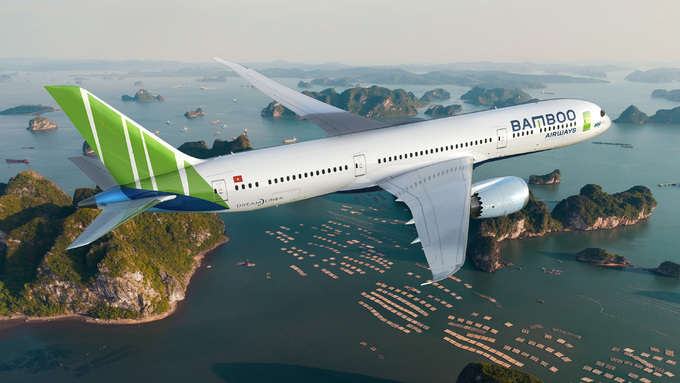
    Bamboo Airways has signed a EUR1.73-billion ($2 billion) deal with France’s Safran and the U.S.’s General Electric for aircraft engines and equipment.

    The Vietnamese carrier on Wednesday signed a memorandum of understanding with Safran and GE to purchase equipment for 50 narrow-bodied Airbus A321neos and 30 wide-bodied Boeing 787-9s.

    Safran makes high-class airplane seats and other cabin equipment.

    Bamboo Airways currently operates seven A320neos and 5 A321neos.

    “We are looking forward to developing a strong relationship with Bamboo and being part of its future growth,” Alexandre Ziegler, Safran’s senior executive vice president of international and public affairs, said in a statement.

    The deals were signed in the presence of Vietnamese Prime Minister Pham Minh Chinh and French Prime Minister Jean Castex during the former’s working visit to France from Nov. 3-5.

    Earlier low-cost Vietnamese carrier Vietjet also signed an agreement with Safran.

    The two parties had an existing $10-billion deal for engines and engine maintenance, and it has been expanded to cover more aircraft engine deals and a number of other aspects such as seats and interiors.

    Vietjet operates a fleet of 90 aircraft.

    Safran is a global technology company with interests also in the defense and space markets, 76,000 employees and annual sales of 16.5 billion euros ($19.15 billion).

  • Apple Developing A System For iPhone To Control ACs, Seats, Stereo In Cars

    Apple Developing A System For iPhone To Control ACs, Seats, Stereo In Cars

    Apple already has CarPlay which is highly successful as it allows users to beam the interface and features of their iPhone onto the infotainment system of their vehicles. It allows to get navigation, voice recognition via Siri and also taps into contacts and music streaming services. But Apple as per a Bloomberg report by Mark Gurman is working on a bolder system that will enable the iPhone to control core features of a car like the air conditioning, the seats, and even the stereo. The initiative internally is apparently called “IronHeart” and is in the early stages of development and will likely require the compliance of automakers.

    The automotive market is clearly a long-term goal for Apple as it also has its electric self-driving car project in the works called Project Titan. But that project is a long-term play and has had many issues, but in the meanwhile, Apple has made solid inroads with CarPlay. One of the latest automobile-focused features that Apple introduced in 2020 was CarKey which has even been emulated by Google.

    But IronHeart takes things to another level and it will provide inside and outside temperature and humidity readings. It will have information around temperature zones, fans, and defroster systems. There will be settings embedded for surround sound speakers, EQ settings which Apple doesn’t even provide for Apple Music, and fader and balancer settings; things that are standard in a car infotainment system that allows the user to sculpt the sound of the sound system in the car.

    Users will also be able to control the seats and armrests and it will also embed the car telematics data and will pull information from the speedometer, tachometer, and fuel instrument clusters – basically, Apple is trying to combine all the functions that are found in both the infotainment screen and the instrument cluster and make it accessible right from the iPhone. Apple is turning CarPlay into the interface for the car itself and potentially with access to such data, Apple could allow third parties to develop more apps over these core functions.

    Apple has faced resistance from major manufacturers like Tesla with the adoption of CarPlay. The updates that Apple is working on will reduce the reliance on the core car infotainment interface and most users will likely default to Apple’s interface. Apple could also use this information that will further help its efforts to make its own car which has been a tumultuous project since 2015.

  • Vardenchi To Open New Lifestyle Garage Store In Mumbai

    Vardenchi To Open New Lifestyle Garage Store In Mumbai

    Motorcycle design company, Vardenchi, is all set to open its first ‘Lifestyle Garage’ in Goregaon, Mumbai. The flagship space will offer a wide range of bespoke motorcycle upgrade solutions and crafted biker products. Biker Products will include a range of fashion motorcycle helmets, lifestyle riding gear, a collection of apparel like t shirts hoodies and shoes. Motorcycle Upgrade products will include accessories for Safety, Utility and Style such as lights, seats, guards, luggage and more.

    A lot of motorcycle parts and materials have inspired the design of the Lifestyle Garage. Akshai Varde, MD/Founder, Vardenchi said, “The Vardenchi Lifestyle Garage is a culmination of our long standing vision of offering ‘everything motorcycle.’ The market and the timing are very well positioned for a concept like this and we are extremely excited to kick off the first of an entire network of franchise stores”

  • New lighter AirAsia seats to help save the environment

    New lighter AirAsia seats to help save the environment

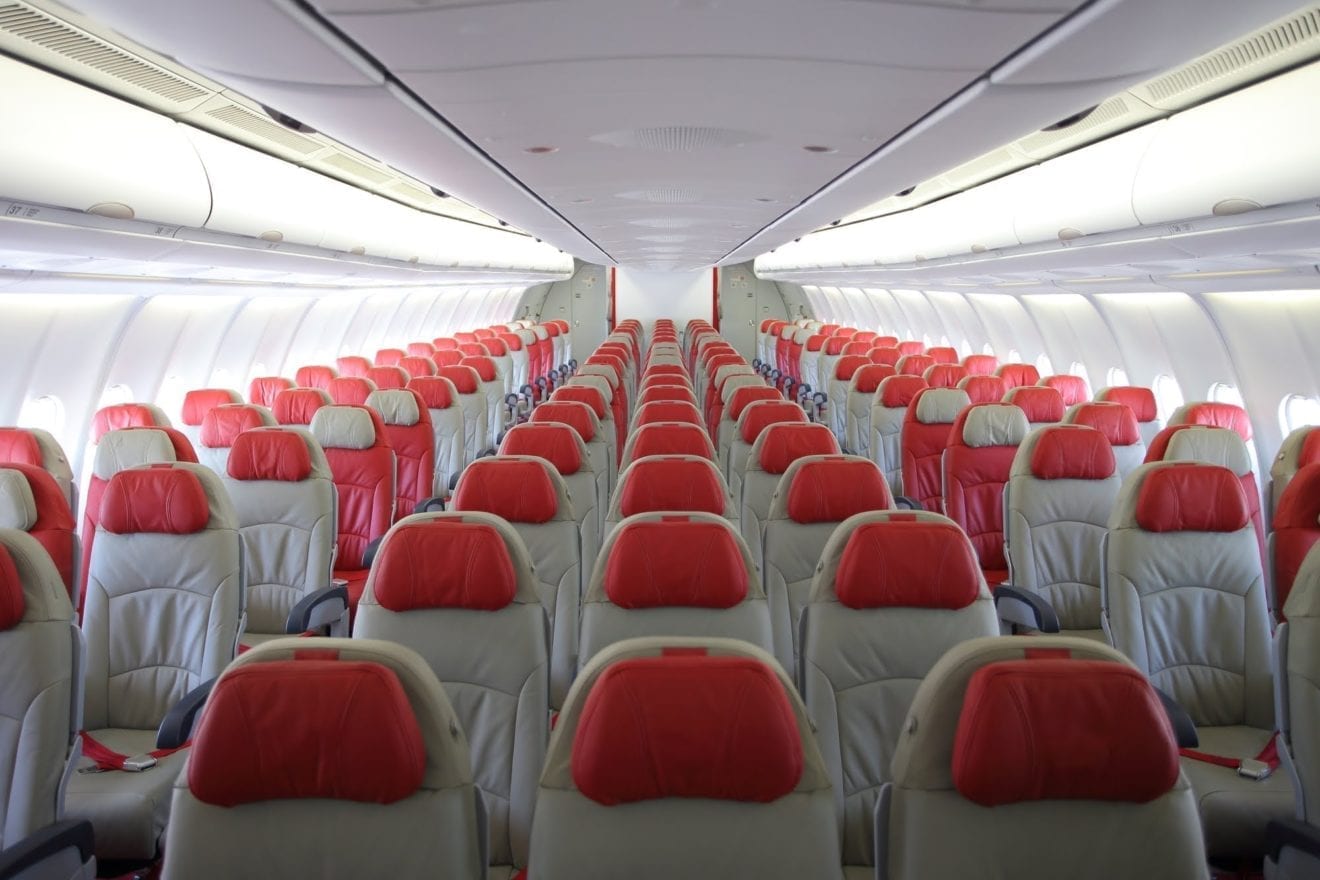
    Flying on AirAsia is getting greener with the introduction of its new Formula One-inspired seats. AirAsia is the first carrier to use the Mirus Hawk seats, which will be installed in existing Airbus A320 aircraft and incoming A320neo aircraft.

    The Economy Class seat is lighter and is expected to help AirAsia reduce fuel consumption by more than 70,000 litres and lower carbon dioxide emissions by 200 tonnes per aircraft per year.

    Environmental factors were taken into consideration for the design, according to AirAsia Group chief executive officer and AirAsia X co-group chief executive Tan Sri Tony Fernandes.

    “Not only is this premium seat more comfortable and boasts more legroom but it also weighs less, which is good for our guests, our bottom line and the environment as well,” he said.

    The new seat comes in the wake of Etihad Airways’ recent announcement of eliminating around 195,000 tonnes of carbon dioxide emissions last year, thanks to a wide range of fuel-saving initiatives across its network.

    Following a number of improvements aimed at enhancing operational efficiencies, Etihad Airways was able to reduce the amount of fuel consumed by its aircraft by over 62,000 tonnes of fuel.

    AirAsia’s new seat is made from carbon fibre, aluminium and genuine leather upholstery. It is ergonomically optimised for comfort, passenger living space and style.

    Along with the announcement of the new seat, Tony added that more innovations are on the way to cater to passengers. These include a personal electronic device holder and high power 2A USB port to charge devices.

    All Hawk seats are assembled in Norfolk, Britain and draw on Formula One engineering expertise.

  • AirAsia offers three million promo seats

    AirAsia offers three million promo seats

    AirAsia will be giving away up to three million promotional seats in its first major promotion of the year.

    The promotion is available on airasia.com from March 13 to 19 for travel period from Sept 1, 2017 to June 5, 2018.

    Fares will be as low as RM0 to destinations such as Ho Chi Minh City, Phnom Penh, Miri, Bangkok, Phuket, Jakarta and many more.

    Those travelling on AirAsia X will be able to enjoy its award-winning Premium Flatbed from Kuala Lumpur to Wuhan, Chongqing, Perth, Sydney and many more destinations from RM699.

    AirAsia BIG members will enjoy priority access to the promotion and can make bookings via airasia.com or mobile app or redeem flights via airasiabig.com and the newly released AirAsia BIG mobile app from March 12.

    Other partners will also be able to access the promotion 24 hours earlier.

    Other guests can book flights from March 13 to March 19 for travel between Sept 1 and June 5, 2018.

    “We like to start the year with a bang and what better way to make a spring splash than with free seats for our valued guests,” said AirAsia Group chief commercial officer Siegtraund Teh in a statement.

    “As always, AirAsia BIG members get perks and we’ll be allowing them to book flights 24 hours before we open the sale to the public,” she said.

    AirAsia is also trying to connect travellers to new and exciting destinations with recent launches to Luang Prabang, Laos; Bhubaneswar, India; and Honolulu, USA.

    For wanderlusts who wish to travel immediately, AirAsia has a special promotion for bookings during the same period for travel period from March 14 to Aug 31.

    AirAsia is Asia’s leading and largest low-cost carrier by passengers carried, with a network of more than 120 destinations to all Asean countries, other parts of Asia, Australia and New Zealand and the Middle East.

    AirAsia was named World’s Best Low-Cost Airline for the eighth year in a row and AirAsia X won the World’s Best Low-Cost Premium Cabin and Premium Seat for the fourth straight year at 2016 Skytrax World Airline Awards.

    AirAsia was also awarded World’s Leading Low-Cost Airline for the fourth consecutive year at the 2016 World Travel Awards, where it also beat a field of full-service carriers to become the first ever low-cost carrier to win World’s Leading Inflight Service.

  • 20% off all AirAsia seats across its entire network

    20% off all AirAsia seats across its entire network

    Low-cost airlines have a habit of tempting holidaymakers with sale after sale but lately it feels like Malaysia’s budget airline AirAsia has been dominating the deals department.

    Over Chinese New Year it dropped flights to China to $297. It then continued the discounts with last-minute commutes to select South East Asian destinations from $129.

    Just when we thought it couldn’t do any better the airline has now slashed 20% off all seats and all flights across its entire network.

    This includes low fare economy and premium flatbed fares on flights operated by both AirAsia and AirAsiaX.

    AirAsia flies from Sydney, Melbourne, Gold Coast, Darwin and Perth and has routes to popular destinations such as Tokyo, Shanghai, Bangkok, Ho Chi Minh City, Auckland, Penang, Phuket, Manila, Bali, Cebu, Singapore, Colombo, Chiang Mai and Male.

    While all these routes are included in this sale travel must must be taken between 7 February and 31 July 2017 and some peak periods are excluded.

    The largest date restrictions with this are on flights to and from Colombo, Mauritius and Wuhan. Broken down: flights to/from Colombo are available only from 7 February to 15 March 2017, flights to/from Mauritius are only available from 7 February to 25 March 2017 and flights to/from Wuhan are only available from Kuala Lumpur from 22 March to 31 July 2017.

    While it may be natural to nominate a return flight when searching for fares, AirAsia has a tendency to overcharge for return bookings. To avoid this and save even more, it might be worth purchasing two one-way flights.

    For example: flying Sydney to Kuala Lumpur on 24-26 February in this sale costs $568.50 return. Split into two single flights, you’ll pay $250 from Sydney to Kuala Lumpur and MYR837 (AUD$248) from Kuala Lumpur to Sydney. This gives you a total of $498. While that conversion doesn’t include fees your bank may charge for an international transaction, it’s still a hefty saving overall.

    AirAsia also charges a $10 processing fee per flight per person on credit and debit card purchases. You can avoid this by paying with PayPal.

    As a low-cost carrier, this price does not include extras such as checked baggage, on-board meals and in-flight entertainment. These can be purchased during the booking process for an additional fee.

    This 20% off all AirAsia flights sale ends 12 February 2017.

  • First ever sale kicks off on AirAsia India social channels

    First ever sale kicks off on AirAsia India social channels

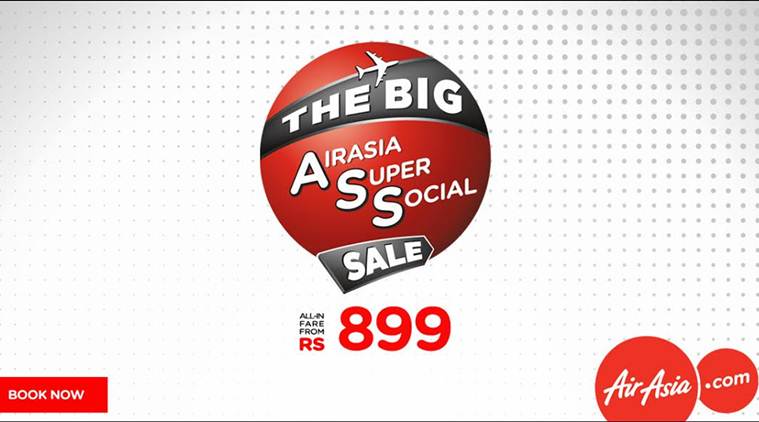
    Riding on the increasing digital penetration in the Country, AirAsia India is launching its first ever ‘Big ASS’ Sale on its social channels at 2130 hours on Thursday, 2 nd February 2017.

    Here’s the chance for travel enthusiasts to pick up their bags, without thinking twice and head out to their favourite destinations immediately! By immediately, we mean as early as NOW till 30 th April 2017.

    Unable to hold on to your excitement? Don’t lose time! between 3 rd & 5 th Feb 2017 and get going! What’s more thrilling than indulging yourself in an unexpected holiday? It is the amazing fares that come with it! Your Goa dreams are finally coming true – fly to Goa from Bengaluru or Hyderabad at INR 899 (All-inclusive).

    It’s the perfect time to plan those long weekends coming up in Feb, March and April! There’s so much for you to explore in India and beyond – Kuala Lumpur & Bangkok. AirAsia India currently flies to 11 destinations with its two hubs in Bengaluru & New Delhi covering Chandigarh, Jaipur, Guwahati, Imphal, Pune, Goa, Visakhapatnam, Kochi and Hyderabad. The airline will start flying to Srinagar & Bagdogra form 19 February 2017.

    Keep yourself updated with AirAsia’s latest promotions and activities via Twitter

    (twitter.com/AirAsiaIN) and (facebook.com/AirAsiaIndia).

  • Cebu Pacific planes use world’s lightest aircraft seat

    Cebu Pacific planes use world’s lightest aircraft seat

    Cebu Pacific, through its wholly owned subsidiary Cebgo, has chosen the world’s lightest aircraft seat, Expliseat, for its ATR 72-600 aircraft.

    The Titanium seat will be installed on all 16 aircraft, two of which are already being utilized by Cebu Pacific. The lighter seat is expected to help decrease fuel burn while allowing the carriage of more guests and cargo on board.

    Expliseat Titanium seat / CREDIT: Expliseat / Manila Bulletin

    Expliseat Titanium seat / CREDIT: Expliseat / Manila Bulletin

    “With Expliseat’s ultralight seats, Cebu Pacific is able to provide comfortable seating to its guests while allowing for a more fuel-efficient operation which will lead to more affordable fares.  With the airline’s low fare offer, we hope to further stimulate inter-island connectivity and contribute to the economies of the destinations we operate in,” said Alexander Lao, president and CEO of Cebgo.

    “Expliseat is proud to announce its collaboration with Cebu Pacific Air. This agreement confirms the unique balance between passenger comfort, high reliability and weight savings that can be offered by the Titanium Seat,” said Benjamin Saada, chief executive officer of Expliseat.

    The Titanium Seat is a technological breakthrough registered under 16 patents, made of ultralight materials such as titanium and carbon composite resources.

    CEB offers flights to 37 domestic and 29 international destinations, covering an extensive network that spans Asia, Australia, the Middle East, and USA.

  • Cebu Pacific opens 2 new Mindanao routes with seat sale

    Cebu Pacific opens 2 new Mindanao routes with seat sale

    Cebu Pacific, the country’s largest airline, said Monday it was launching two new routes from Cagayan de Oro City, as it expands in Mindanao.

    Cebu Pacific said it would fly four times weekly (Monday, Wednesday, Friday and Sunday) between Cagayan de Oro and Tagbilaran City from March 15, and thrice weekly (Tuesday, Thursday and Saturday) between Cagayan de Oro and Bacolod starting March 16.

    The airline said it was offering an introductory P799 all-in rate for travel from March 15 to May 31.

    New ATR 72-600 aircraft for the two routes, Cebu Pacific said.

  • Singapore Airlines rolling out more planes with premium economy cabins

    Singapore Airlines rolling out more planes with premium economy cabins

    Singapore Airlines (SIA) is banking on premium economy services to entice travelers to pay more for extra comfort.

    About four in 10 SIA planes now offer the service, slightly more than a year since it rolled out premium economy cabins, which offer perks such as more legroom and better food.

    And the carrier said it will continue to retrofit more aircraft with such cabins to meet travelers’ needs.

    Demand is especially strong on long-haul routes, said SIA spokesman Nicholas Ionides.

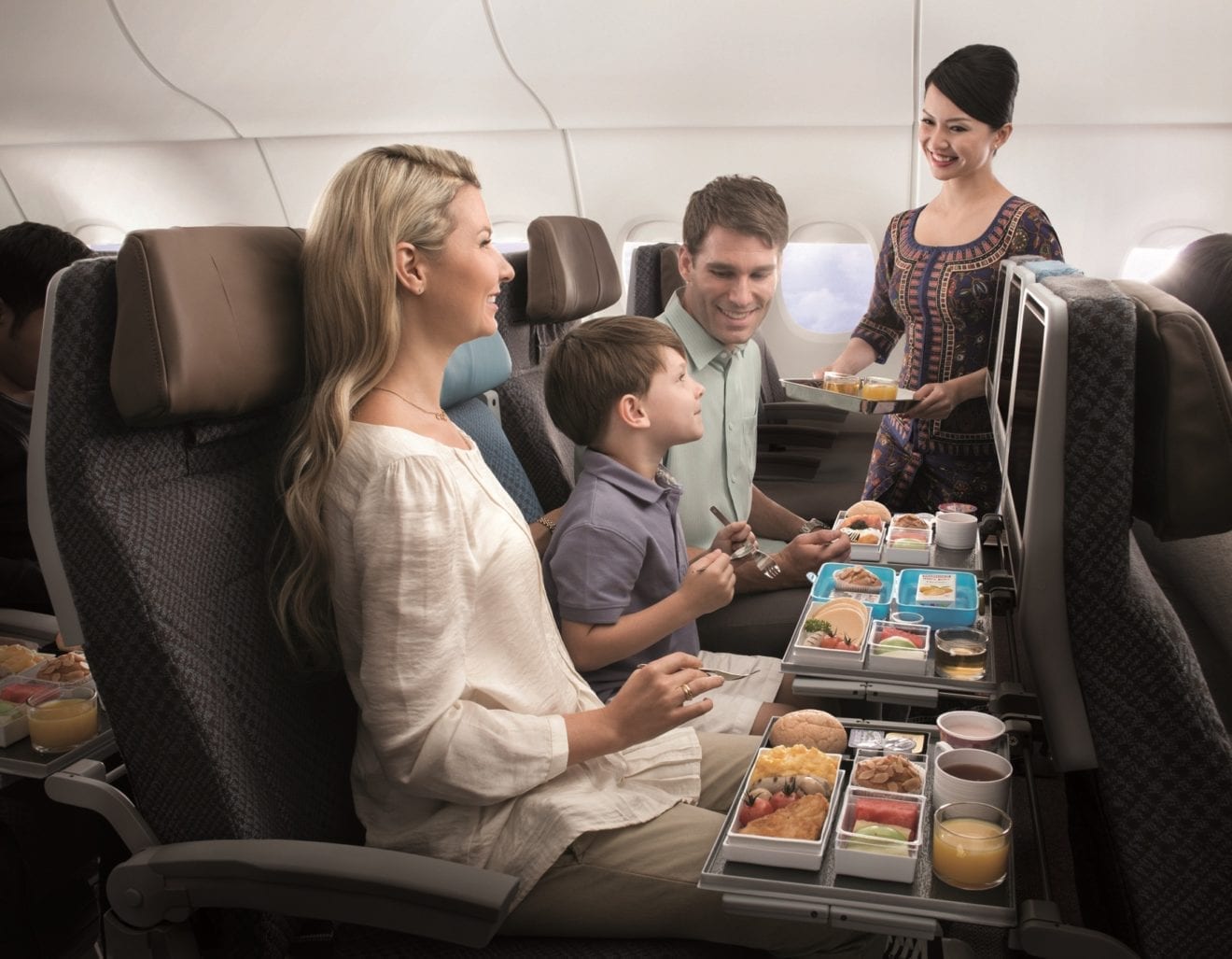
    The premium economy cabin includes features such as wider seats with greater recline and more legroom.

    First introduced more than two decades ago, such cabins are now found on more than 50 carriers worldwide, including American, European and Asian airlines.

    Apart from SIA, airlines that have rolled out such cabins in recent years include Hong Kong’s Cathay Pacific, which introduced them in 2012.

    Middle Eastern airlines, which have so far resisted the option, are now considering it as well.

    Premium economy services have caught on as they are popular with travelers who do not mind paying more for extra comfort, especially on long-haul flights.

    Cost-conscious businesses are also turning to them as an option for their executives on work trips, experts said.

    A premium economy ticket can cost up to 1 ½ times more than the economy fare, though this also varies depending on routes and time of travel.

    “The difference between the economy and premium economy fares for last-minute bookings can reduce significantly to just around 20 per cent to 30 per cent in some cases,” said Akshay Kapoor, director (Asia-Pacific) at CWT Solutions Group, which manages travel for corporate clients.

    While most airlines have taken a keen interest in the premium economy product, most tend to roll this out rather cautiously, he said.

    The number of premium economy seats is typically below 10 per cent of the total number of seats on the aircraft, said Kapoor.

    One concern that airlines have is that instead of economy travelers upgrading, business travelers could end up downgrading.

    Brendan Sobie, a Singapore-based analyst at the Centre for Aviation think-tank, said: “The idea is always to get economy class passengers to upgrade rather than to cannibalise business class.

    “However, there is always some cannibalisation – generally not a significant amount but there’s always the risk.”

    At Cathay Pacific and SIA, premium economy passengers are a mix of those who have downgraded from business and those who used to fly economy but are increasingly drawn to premium economy, especially on long-haul flights to North America and Europe, for example.

    However, given the uncertain global economic outlook, experts expect more business travelers to downgrade.

    Kapoor said: “With continued economic uncertainty expected over the next few quarters, we believe that organisations will increasingly be seeking avenues to drive savings in their travel spend without having to cut down on the amount they travel.

    “Taking premium economy over business class could save 60 to 70 per cent of the airfare and allow for more trips to a destination for the same dollar amount.”

    Rayman Som, 51, a human resource director who travels four to five times a year, has flown twice on SIA’s premium economy class on company expense.

    He said he took a short flight to Hong Kong the first time, so it did not make much difference. But he flew to Paris the second time and it proved a different experience.

    “The wider seat, more legroom and greater recline were much welcomed on the longer flight,” he said.

    He added: “Would I pay out of my own pocket for premium economy? For a short flight, no. For longer journeys, it makes sense if the price is right. I think 30 to 40 per cent more is reasonable.”

  • Mirus adds 1.5″ to AirAsia knee room, aims high with new options

    Mirus adds 1.5″ to AirAsia knee room, aims high with new options

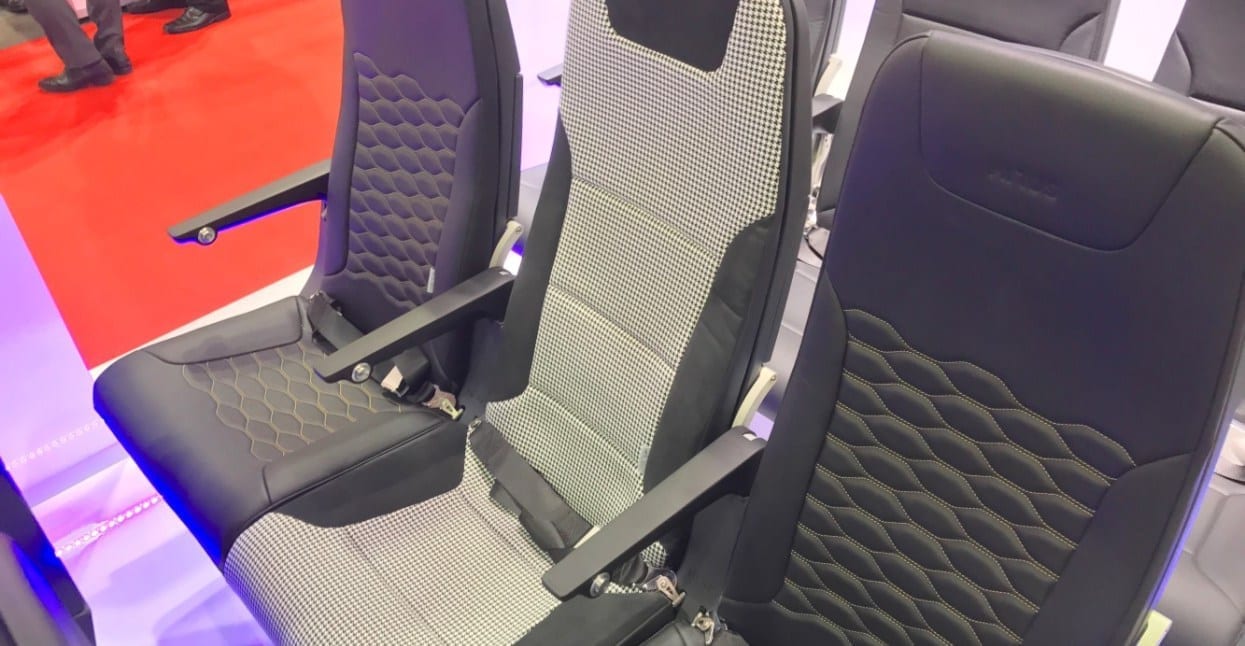
    AirAsia’s seatmaker Mirus made headlines even before the recent Aircraft Interiors Expo Asia started by announcing a partnership with digEcor and IFPL to add USB power to the armrest of its slimline seating. But Mirus isn’t just driving a step-change in the passenger experience for shorthaul LCCs. It’s also offering more fully featured seat options, one including a headrest inspired by a luxury car, which seems appropriate given the company’s automotive heritage. And, perhaps most crucially for the AirAsia passenger experience, it’s using smart design to carve out over an inch and a half of extra knee room — a full five percent extra on AirAsia’s tight seating.

    “This show, we’ve got some different variants of the seat,” Mirus CEO Phil Hall explained as he showed Runway Girl Network around the company’s AIX Asia stand. “We’ve got an entry-level seat, we’ve got a nominal AirAsia spec, and we did a heritage throwback line inspired by a 1970s Porsche. All these airlines have been around a long time, they’ve got a lot of heritage and they should be proud of it, and we’re trying to visualise some of that in the dress covers.”

    Most interesting, though, was the headrest, a snap-on, snap-off cushion. “That’s the S-Class inspired headrest. We’ll roll that out on AirAsia’s Hot Seats. Tony Fernandes said to me, ‘I really love the headrest on the S-Class Mercedes’,” Hall explained. “This is not production final, but I think we’re about 90% of the way there. There’s a small adjustment — you just un-velcro it and lift it up. It’s a similar type of feature to Emirates in their business class. We dressed it with Alcantara highlights just to mix up the textures a little bit, mix up the dress covers, and differentiate the brand. It’s a nice material, a tactile material, and it changes the appearance of the seat a little bit. This is more of a design and styling focus in terms of what we can do.”

    With a simple popper design for attachment, the headrest adjusts using velcro. Image: John Walton

    With a simple popper design for attachment, the headrest adjusts using velcro.

    “We’ve got production versions of the armrests here, and the aisle bumpers are our production spec,” Hall said. “We’ve changed the design language quite significantly, to a more dynamic looking seat. In Hamburg we didn’t have these available. What’s not on these seats is the production version of the backrests. We took a hit on the programme because we found quite a significant benefit to passenger space on the seatback, below the seatback area. Because we have a carbon-fibre frame, it allows us to mould the shape into whatever we want, because the carbon-fibre gives us the strength and the stiffness we need, and gives us the mobility. So we took a period of time to fully exploit that fact. We showed it to AirAsia, and they’re pitching at 28”, 29”, so it’s quite squeezy on there, and it was a genuine benefit to the passenger. That’s not on show here, but we’ll have that in Hamburg. It’s about an inch and a half. It was worth us taking the hit and offering a more competitive product.”

    “We’re looming up to certification and getting the seats in the air,” Hall added. “That’s our main target. All of our tooling has been commissioned, and the first production parts are now coming in. We built the certification seats from those parts. We’ve done all the precertification testing with non-production tool components, so we have a very good confidence level when we go into certification. The flam booth is there. The self-sufficiency aspect of the whole thing is coming together quite nicely. It’s all converging on a point.”

    “We did all the preliminary testing, pre-certification testing — 16G, 4G side, 9G static, 14G down — primarily to test the strength of the product but also to correlate all the virtual simulation that we do,” Hall said, noting that Mirus has succeeded with its head injury criterion (HIC) testing at pitches from 28” to 35”. “We’ve heavily invested in virtual prototyping and virtual product development, both software and process. We do another series of sub-assembly testing to validate those models as well.”

    It’s clear from the company’s level of hardware and testing investment that Mirus isn’t content simply to supply three hundred shipsets of A320 seats for AirAsia: the company wants to be much, much more than that. If Mirus was a seatmaker to watch six months ago when it burst onto the interiors scene, it’s doubly so now.