Tag: second hand

  • CarousellMobile Revolutionizes Preloved Phone Market – Introduces Singapore’s Largest Second-Hand Mobile Store

    CarousellMobile Revolutionizes Preloved Phone Market – Introduces Singapore’s Largest Second-Hand Mobile Store

    CarousellMobile, the mobile-centric division of Carousell, has announced the launch of its inaugural physical outlet at Chinatown Point. This move marks a new phase in the company’s growth, introducing a tangible retail presence to supplement its popular online platform.

    The Store Aims to Enhance the Shopping Experience

    The new physical location promises to offer an extensive range of pre-owned mobile devices, reportedly the most comprehensive selection available in a singular retail point within Singapore. This unique set-up will enable customers to personally inspect and try out devices prior to their purchase. This hands-on approach will provide potential buyers with the confidence that they are purchasing a product that meets their requirements and expectations.

    CarousellMobile’s customers will also have the option to peruse online listings for all available products or obtain a valuation quote for their existing devices before making an in-store visit.

    Extending the Life of Mobile Devices

    In addition to retail services, the store is committed to providing comprehensive services that prolong the lifespan of mobile devices. This includes providing certified pre-owned phones accompanied by warranties and flexible return policies, instant cash buybacks, trade-in options, and on-site repair services.

    Alvin Yap, the lead at CarousellMobile, shared his insights on the company’s latest venture. He emphasized the significance of physical interactions in building trust, especially when dealing with high-value items like phones and luxury bags. He added, “CarousellMobile is our solution to the anxiety that comes with purchasing pre-owned electronics.”

    Questions & Answers

    What does the new CarousellMobile store offer?

    The store offers a wide range of second-hand mobile devices, along with services such as instant cash buybacks, trade-ins, and on-site repair services. Customers can physically inspect and test products before purchasing.

    Where is CarousellMobile’s physical store located?

    CarousellMobile’s physical store is located at Chinatown Point.

    What does Alvin Yap, the lead at CarousellMobile, say about the new store?

    Alvin Yap emphasizes the importance of physical interactions in building trust when dealing with high-value items. He sees the new store as a solution to the anxiety often associated with buying used electronics.

  • Booming Secondhand Market In Asia Signals New Era For Sustainable Shopping

    Booming Secondhand Market In Asia Signals New Era For Sustainable Shopping

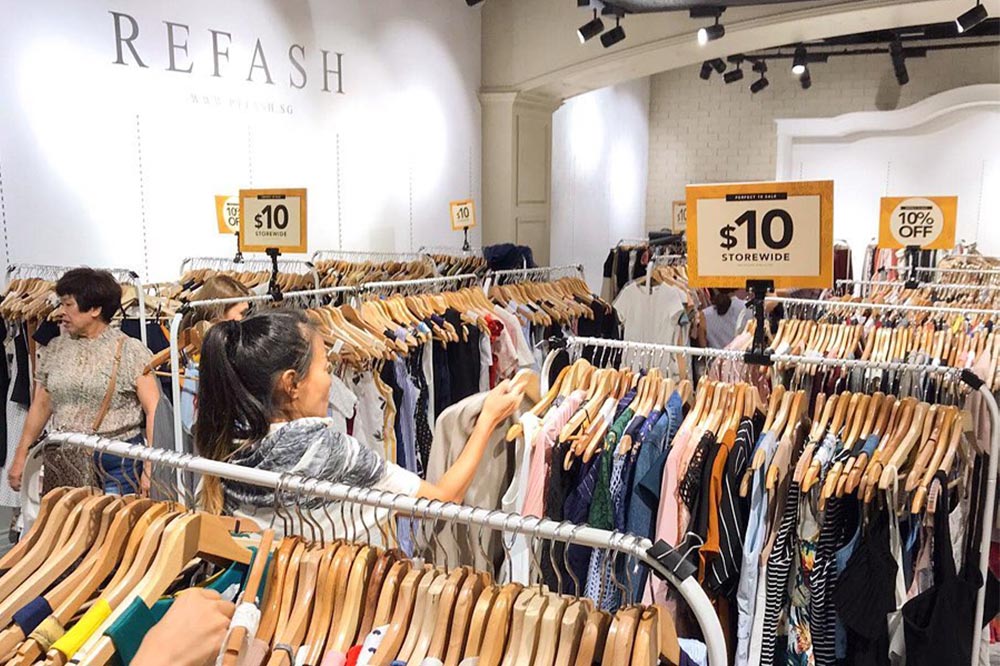
    The ongoing transformation in the retail landscape across Asia takes a tantalizing turn as reports emerge about the booming secondhand clothing market, particularly in countries like South Korea and Japan. This rise, spurred by a growing thrift culture and shifted consumer attitudes, signals a new era in sustainable shopping practices. Shoppers are no longer just looking for bargains; they are becoming increasingly mindful of their consumption habits and the environmental implications of their purchases.

    Secondhand Shopping Takes Center Stage

    The phenomenon of thrifting has captured the hearts of many, with platforms like Carousell, Depop, and Mercari leading the charge. In Japan, where the concept of ‘mottainai’—a term expressing a sense of regret regarding waste—resonates deeply, consumers are diving headfirst into used goods. South Korea is not far behind, with its vibrant “seconhand” market thriving amidst a cultural shift toward sustainable fashion.

    As discussions of environmental impacts become more prevalent, retailers and brands are aligning their values with those of eco-conscious consumers. Notably, this shift has turbocharged sales in thrift stores, which are witnessing a remarkable uptick in foot traffic and online engagement. It’s almost as if shopping for used clothes has become the new black.

    Corporate Moves to Support Sustainability

    Major brands are also recognizing this trend. For instance, companies like Uniqlo are launching recycling programs, encouraging customers to bring in old garments in exchange for store credits. These initiatives not only lower waste but also foster a sense of community as shoppers engage in a circular economy. With reports indicating a 40% increase in secondhand purchases from the previous year, it’s clear that both consumers and businesses are embracing this evolution.

    The Thrifting Experience: More Than Just a Trend

    The allure of secondhand shopping goes beyond mere savings; it’s about the thrill of discovery and the unique stories woven into each vintage piece. It’s not uncommon for shoppers to stumble upon rare finds—from classic designer pieces to quirky local designs—that offer a glimpse into the past and a sustainable future. In the words of one dedicated thrifter, “It feels like a treasure hunt, but with less stress and more style!”

    Challenges Ahead: Bridging Quality and Affordability

    Despite the growth, the secondhand sector faces challenges. Quality control and standardization remain critical as this market expands. Consumers demand not just affordability but reliability; they want to trust that what they’re purchasing meets certain standards. As platforms and retailers grapple with these expectations, innovation will be vital in smoothing the shopping experience while keeping sustainability at the forefront.

    The journey towards a greener retail landscape is undeniably on the upswing in Asia, with secondhand shopping leading the charge. As more consumers opt for sustainable choices, the retail industry is poised for an exciting transformation.

    Questions & Answers

    What factors are driving the growth of the secondhand market in Asia?
    A combination of rising awareness about sustainability, changing consumer behavior, and innovative online platforms has propelled the secondhand market forward, making it a popular choice among eco-conscious shoppers.

    How are major fashion brands responding to this trend?
    Brands like Uniqlo are implementing recycling programs to encourage customers to give back old clothing, thus aligning with the growing consumer demand for sustainable practices and contributing to a circular economy.

    What challenges does the secondhand market face as it continues to expand?
    Quality control and standardization are significant hurdles for the expanding secondhand market as consumers increasingly seek reliable products that provide value and assurance.

  • Ikea starts opening second-hand stores

    Ikea starts opening second-hand stores

    Ikea is to open its second second-hand furniture store in its home country, Sweden, expanding its commitment to the circular economy concept.

    The store, located in the ReTuna shopping mall in Eskilstuna, will stock used Ikea furniture bought back from customers, repaired and refurbished, giving old Ikea furniture a second life instead of ending up at recycling stations or in a landfill.

    The new outlet is scheduled to launch later this year, with the launch billed as part of Ikea’s strategy to become a fully circular business by 2030.

    “By testing new ideas, we take another step towards our goal of becoming completely circular and making it easier for more people to live a life within the planet’s boundaries,” the company said in a statement. “Our second-hand service is one of several examples of our sustainability work.”

    The second-hand concept was piloted in the UK last year together with a textile recycling scheme. In Sweden, the former is now available in all stores except one in Stockholm.

    Last year, the home furnishing giant launched a subscription program in some regions, allowing customers to rent home furniture.

  • Japanese making $62m with an instant-second hand website

    Japanese making $62m with an instant-second hand website

    What if you paid people instantly for their used goods over the internet, with no guarantee that they would hand them over?

    The 36 year-old e-commerce entrepreneur, Yusuke Mitsumoto, launched an app in June 2017 to test the idea. It worked better than he imagined; after 16 hours, he was stunned to discover he was on the hook for 3.6 billion yen (£23m) and shut the service down.

    A day later, truckloads of clothes and electronics gadgets started to arrive, with his startup’s employees forming a bucket line to move packages into his company’s tiny office in Tokyo.

    All told, less than 1 in 10 second-hand-goods sellers didn’t deliver as promised. That was good enough for Mitsumoto, who relaunched the service, called Cash, in August 2017 as a new way to gather inventory for an online flea market.

    Total daily purchases are capped at 10 million yen, and are limited to smartphones, luxury handbags, watches, clothing and other specific items from a list of several thousand. Customers take a photo and are given a non-negotiable offer. Prices are set automatically based on data gleaned from other second-hand marketplaces and Cash makes money by reselling the goods.

    “It was a social experiment,” said Mitsumoto, who started selling goods on the web in 1996. He later launched Stores.jp, Japan’s version of Shopify, which he sold and then bought back. “Of course, I believed that good people would outnumber the bad, but the question was by how much. That’s not something you can find out without trying.”

    Second-hand sales are a big business in Japan and a market worth 1.6 trillion yen, according to the Reuse Business Journal. Bookoff has hundreds of stores that buy and sell everything from used books to video games and electronics. Yahoo Japan operates the country’s biggest online auction site. Mercari became Japan’s first startup to be valued at more than $1bn with a smartphone app that made it easy for people to sell unwanted things to each other.

    What Mitsumoto discovered was a way to remove the last bit of friction for sellers to get rid of stuff, unlocking value wasting away in people’s closets. He tapped into a market of people who lacked either the time or the patience to take nice pictures, write product descriptions and haggle with buyers.

    He also knew that it was only a matter of time before bigger rivals followed with similar offerings. So when Mitsumoto got a Facebook message on 4 October 2017 at 1:58 am, “Hi! This is Kameyama~! Sell Cash to me~! No?” he saw a way to stay ahead of the competition.

    Keishi Kameyama is one of Japan’s richest people and the founder of DMM.com, a media and technology empire with $1.6bn in revenue. Kameyama started with pornography but has grown his company into a vast collection of enterprises that spans a currency trading platform, video games, an online English school and solar farms. Mitsumoto agreed to sell Cash to DMM for 7 billion yen and continue running the business.

    “For people doing internet businesses in Japan, DMM is a scary presence,” Mitsumoto said. “You never know when they may launch their own business and become a tough rival. I figured it’s best to at least meet.”

    Indeed, a week after the deal was announced, Mercari launched an identical offering.

    Kameyama said his team recognized the potential of the market uncovered by Mitsumoto, but admits that the eye-popping valuation for a company of six people that’s not even one year old was also partly an “acquihire” —an acquisition based on hiring.

    “Doing business on the internet is not all capital and equipment, you need a certain intuition, a design sense and ability to get a service going,” Kameyama, 56, said in an interview. “I can also appreciate a bold play. There aren’t that many audacious people in this world.”