Retail News CRM

Tag: Secoo

  • Secoo files for bankruptcy for the second time

    Secoo files for bankruptcy for the second time

    Secoo, once China’s top online luxury goods retailer, has filed a bankruptcy petition for the second time this year, showing how difficult it is for some companies to survive amid waning domestic consumption power in the country.

    Beijing Siku Shangmao Co, the corporate entity of the Nasdaq-listed company, filed a bankruptcy case with the First Intermediate People’s Court of Beijing Municipality, according to public records database Tianyancha on Wednesday.

    In January, after several domestic media outlets reported that Secoo had filed for bankruptcy in Beijing, the company retracted a petition to wind up, according to a notice on China’s bankruptcy disclosure platform.

    Founded in 2008 by Chinese entrepreneur Richard Li Rixue, the retailer quickly gained backing from private equity firms. It grew from a second-hand handbag shop into China’s largest luxury goods exchange for individuals, with a 2017 initial public offering on Nasdaq raising US$140 million.

    Its stock fell to US$0.27 in New York trading on Wednesday, compared to a high of US$14.6 four years ago. Since late last year, Secoo’s shares have been trading below US$1.

    On December 17, 2021, the firm received a delisting warning after its closing bid price for 30 consecutive business days fell below US$1 per share, Nasdaq’s minimum bid price requirement.

    Under an initial 180-day grace period, which ended on June 15, Nasdaq said the company would be officially delisted if its closing bid price was not above US$1 per share for at least 10 consecutive business days.

    On June 17, the company said Nasdaq had granted it a second 180-day grace period, until December 12, 2022, to comply with the minimum bid price requirement.

    Analysts attributed the company’s problems to several factors. While it caught the early wave of luxury e-commerce business in China, it also made several business decisions that deviated from its original mission.

    For example, it invested heavily in live streaming, with a 7,000-square-metre facility and dedicated team, and also vowed to disrupt the luxury resale sector with a blockchain-empowered authentication service.

    Adding to Secoo’s internal missteps, demand for luxury goods has softened, with China’s total national retail sales only rising 3.1 per cent year on year in June.

  • Secoo partners with Shangdong Ruyi

    Secoo partners with Shangdong Ruyi

    Asia’s largest online luxury platform Secoo has formed a strategic partnership with Chinese company Shangdong Ruyi for the sale and distribution of the latest  luxury clothing and accessories.

    The partnership between the Chinese firms will see both companies “leverage respective resources and expertise in branding, technology, network and channel management to jointly establish a global omnichannel fashion supply chain characterized by deep cooperation in brand operations, big data, smart manufacturing and smart retail,” said Beijing-based, Secoo, in a press release on July 16.

    Ruyi is no stranger to fashion and retail. The group currently supplies for a wide range of luxury brands globally, and in recent years, has acquired minority stakes and taken ownership of several international fashion and luxury brands. Most recently, Ruyi acquired Sandro, Maje and Claudie Pierlot, under France’s SMCP umbrella, which is listed on the Euronext Paris exchange.

    In addition to SCMP, Ruyi also owns British trench coat brand Aquascutum, and has a controlling stake in Hong Kong menswear group Trinity, which operates Cerruti 1881, Gieves & Hawkes and Kent Curwen.

    The new partnership correlates with Secoo’s goal to establish links with big name players in the luxury e-commerce sphere, according to Richard Li, rounder and CEO of Secoo, adding that his firm is a good match for Ruyi.

    “Our leading integrated luxury e-commerce platform is well-suited to drive growth through rapidly expanding brand collaborations and increasing product portfolios,” said Li, in a statement.

    The pair will cooperate on a variety of fashion and luxury retail innovations ranging from big data solutions to smart manufacturing to first-class shopping experiences for Secoo’s high-end customers.

    Ruyi hopes to tap this savvy customer base across Secoo’s integrated online and offline shopping platform. Currently, the firm operates Secoo.com, its mobile applications and offline experience centres, which attract approximately 20 million customers.

    “We believe this expansive integrated platform along with our valuable brand assets and supply chain network expertise will synergize and unlock unparalleled opportunities in the fashion market for both firms,” said Yafu Qiu, chairman of Ruyi Group.

    In the news follows recent tie-ups with brands in different areas, including Parkson Retail Group (cosmetic products), Capital Outlets Group (brands entry), Caissa Travel (customized travel service), Pernod Richard (alcohol products) and Edison Chen (limited products).

    This month, Secoo alos received a $175 million investment from L Catterton Asia and JD.com, aimed at “fastening brands relationship and enriching products categories,” said Secoo.

  • L Catterton Asia, JD.com Invest In Secoo

    L Catterton Asia, JD.com Invest In Secoo

    LVMH-linked L Catterton Asia and JD have jointly invested US$175 million into Asian luxury fashion platform Secoo, via convertible notes.

    L Catterton and JD together will have the right to appoint a director and an observer to Secoo’s board of directors. But in a broader tie-up, Secoo will have access to L Catterton’s network of luxury leaders and strengthen relationships with leading luxury brands in the L Catterton stable, including Pepe Jeans and eyewear brand Gentle Monster.

    “We are excited about this strategic partnership with L Catterton Asia and JD,” said Richard Li, Secoo’s chairman and CEO. “L Catterton is the leading consumer-focused investment firm in the world, and JD is China’s largest retailer and the leading e-commerce giant in China. By establishing relationships with leading partners in the consumer, luxury goods and e-commerce spaces, Secoo is poised to gain invaluable name recognition and further boost the company’s reputation in the international luxury consumer space.

    Through this partnership, Secoo will be able to leverage L Catterton and JD’s operational expertise and vast resources to expand and deepen our market presence not only in China, but across the globe.”

    Shengli Hu, president of JD fashion & lifestyle, said the partnership will help JD enhance its luxury capabilities and provide the best possible luxury shopping experience to consumers in China.

    “Chinese consumers are increasingly discerning about their luxury purchases, demanding more variety and choice than ever. As we look to continue to meet this demand, we see many potential areas for future collaboration with Secoo.”

    Secoo sells a wide collection of authentic, upscale products and lifestyle services on Secoo.com, mobile applications and offline experience centers, offering more than 300,000 SKUs, covering over 3000 global and domestic brands.

  • Secoo and Italia’s Richard Ginori tie up in partnership

    Secoo and Italia’s Richard Ginori tie up in partnership

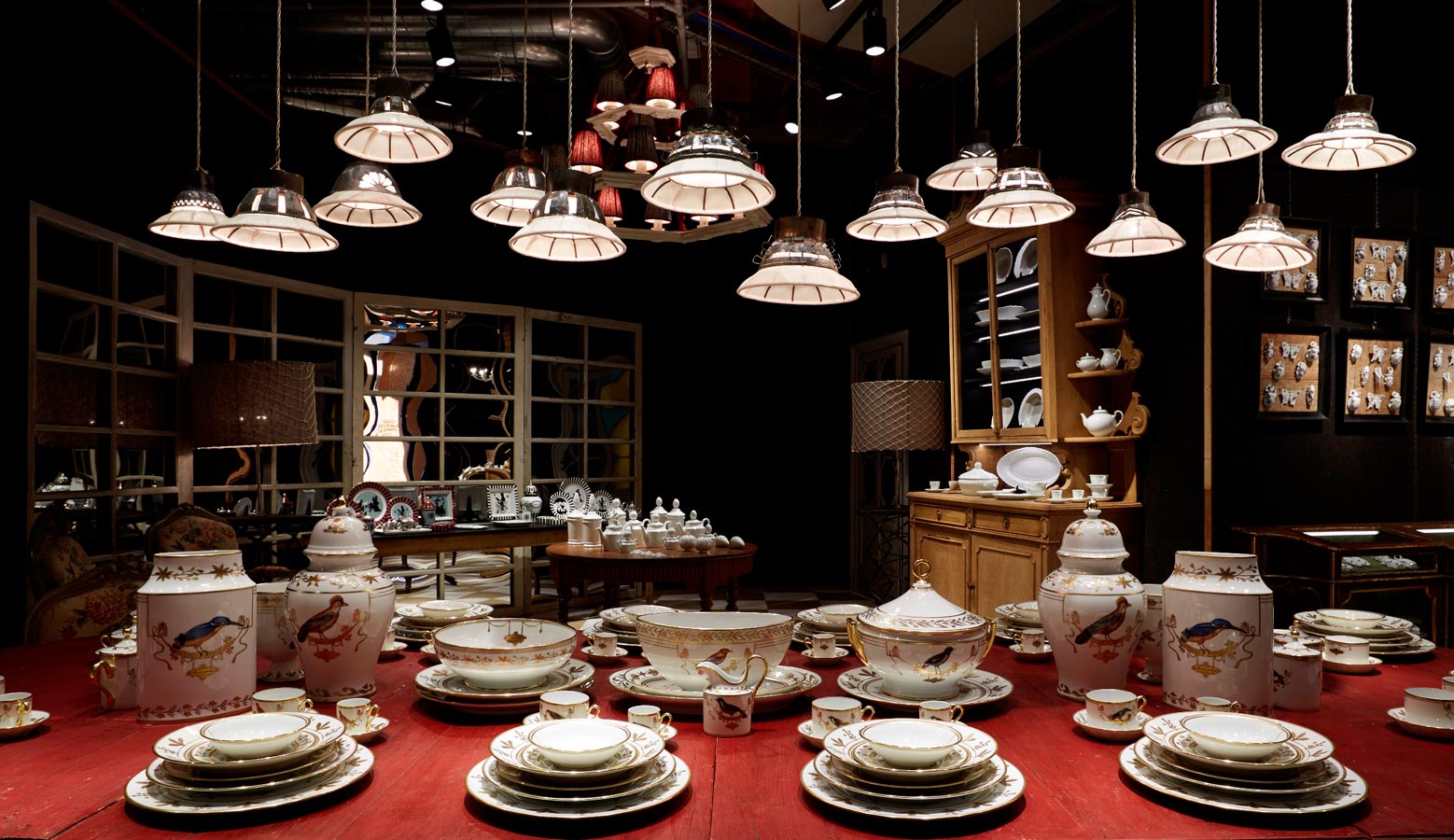
    Luxury retail platform Secoo has announced a partnership with Italian porcelain manufacturer Richard Ginori exclusively for the Chinese market.

    The heritage brand, founded almost 300 years ago, is one of the region’s most prestigious manufacturers of fine porcelain tableware and artistic porcelain.

    Li Rixue, Secoo’s founder and CEO, said: “The entry of Richard Ginori carried out our business strategy of further tapping into China’s robust luxury consumer market demand. With our consistent focus on both the diversity and quality of the products and services that we offer to our customers, we are confident that we are well positioned to capture emerging opportunities driven by the consumption upgrade in China and unlock values to our customers.”

    The move serves as part of Secoo’s strategy to become a leading premium lifestyle platform and luxury e-commerce site.

    Secoo customers can select from a wide range of porcelains offered online and collect the product from the brand’s offline experience centers in nine major Chinese cities.

  • E-commerce trend as highlight at Luxury China report

    E-commerce trend as highlight at Luxury China report

    Luxury brands have started embracing e-commerce in China, says the Luxury China report released by digital marketing company L2.

    It says 91 per cent of luxury brands in China had gone online by June last year, more than double the 43 per cent using e-commerce 12 months earlier.

    This comes as Chinese millennials and generation Z are set to become the dominant driver of luxury consumption over the next decade, according to the 2017 Chinese Luxury E-Commerce Whitebook report from high-end e-commerce platform Secoo and data company Tencent.

    The average age of the online shopper of luxury goods in China is now 25, 15 years younger than the average age of European luxury consumers, and 20 years younger than those in the US. These young consumers are stepping up their buying of minority brands – as opposed to high-profile labels – in a quest for more personalised and less mainstream experiences. For example, the streetwear trend has gradually become more mainstream, leading to more young people embracing such brands as Supreme and Vetements.

    “Consumers are no longer too loyal to one specific brand, but want luxury brands that speak for themselves,” says a Deloitte global luxury consumption survey about millennium consumers. “They are more willing to pay attention to trendy brands with stories.”

    Secoo has announced partnerships with niche brands including Corto Moltedo, Maison Kistune and Mr&Mrs Italy, which has been popularised by a South Korean TV series. Corto Moltedo is known for its entirely handmade bags.

    Corto Moltedo and Mr&Mrs Italy have signed exclusive co-operation agreements with Secoo, and all their collections are sold simultaneously across the world at the same prices.

  • Secoo signs exclusive European footwear deal

    Secoo signs exclusive European footwear deal

    Chinese lifestyle platform Secoo Holding has signed a deal to be the exclusive partner in China for the European Confederation of the Footwear Industry (CEC).

    With the agreement covering more than 100 European footwear brands, Secoo Group has secured the exclusive China rights to 87 per cent of the supply of European premium footwear.

    Representing the footwear industry in the European Union, CEC has a membership that includes companies in 18 EU countries as well as five countries in Central and Eastern Europe. They include leading brands from Italy, France, Sweden and the UK.

    CEC sees China as its next major opportunity. President Cleto Sagripanti says many European footwear brands lack access to rapidly growing markets such China.

    “Secoo already has wide access to China’s high-end customers and, at the same time, provides protection for our intellectual properties.”

    Secoo has 15.4 per cent of the Asian market, as well as a quarter of the high-end online market in China.

    With nine years in the business, the platform has 15 million registered users with the average purchase per customer exceeding RMB3500 (US$520), and 300,000 SKUs in stock.

  • Chinese luxury e-commerce firm Secoo debuts on Nasdaq

    Chinese luxury e-commerce firm Secoo debuts on Nasdaq

    Chinese luxury e-commerce company Secoo Holding Limited on Friday rang the Nasdaq Stock Market opening bell in celebration of its Initial Public Offerings (IPO).

    Secoo’s IPO of 8,500,000 American depositary shares (ADSs) priced at 13 U.S. dollars per ADS, within the pricing range of 11.5 dollars to 13.5 dollars given by the company, for a total offering size of approximately 110.5 million dollars, assuming the underwriters do not exercise their option to purchase additional ADSs. Each two ADSs represent one Class A ordinary share.

    The company has granted the underwriters an option, exercisable within 30 days from the date of the final prospectus, to purchase up to an aggregate of 1,275,000 additional ADSs to cover over-allotments.

    Shares of Secoo, trading under the ticker symbol of “SECO,” tumbled about 19 percent to 10.52 dollars per ADS around midday Friday.

    Secoo is Asia’s largest online integrated upscale products and services platform as measured by gross merchandise volume in 2016, according to the Frost & Sullivan report.

    The company’s net revenues increased to 198.6 million dollars for the six months ended June 30 from the same period a year ago, with a net profit of 7.7 million dollars. It had net losses of 32.9 million dollars and 6.6 million dollars in 2015 and 2016, respectively.

    “China’s consumption expenditure continues to grow rapidly, with luxury spending on the upswing, which will give us tremendous development opportunities,” Secoo Founder & CEO Richard Rixue Li told.

    By 2021, China will add 1.8 trillion dollars in new consumption, according to a report by The Boston Consulting Group and AliResearch, the research arm of Chinese e-commerce giant Alibaba.

    Meanwhile, online platforms are one of the fastest growing retail channels in China. The stocks of Alibaba and JD, China’s two largest e-commerce firms, have been trading around their record highs in recent days, despite the stagnant global consumer market.

    “By listing on the Nasdaq Stock Market, Secoo will have a better international stage, which will enable us to link global brands and the Chinese consumer market more closely,” Li said.