Tag: secure

  • Deutsche Bank Pioneers as First European Institution to Secure Renminbi Clearing License

    Deutsche Bank Pioneers as First European Institution to Secure Renminbi Clearing License

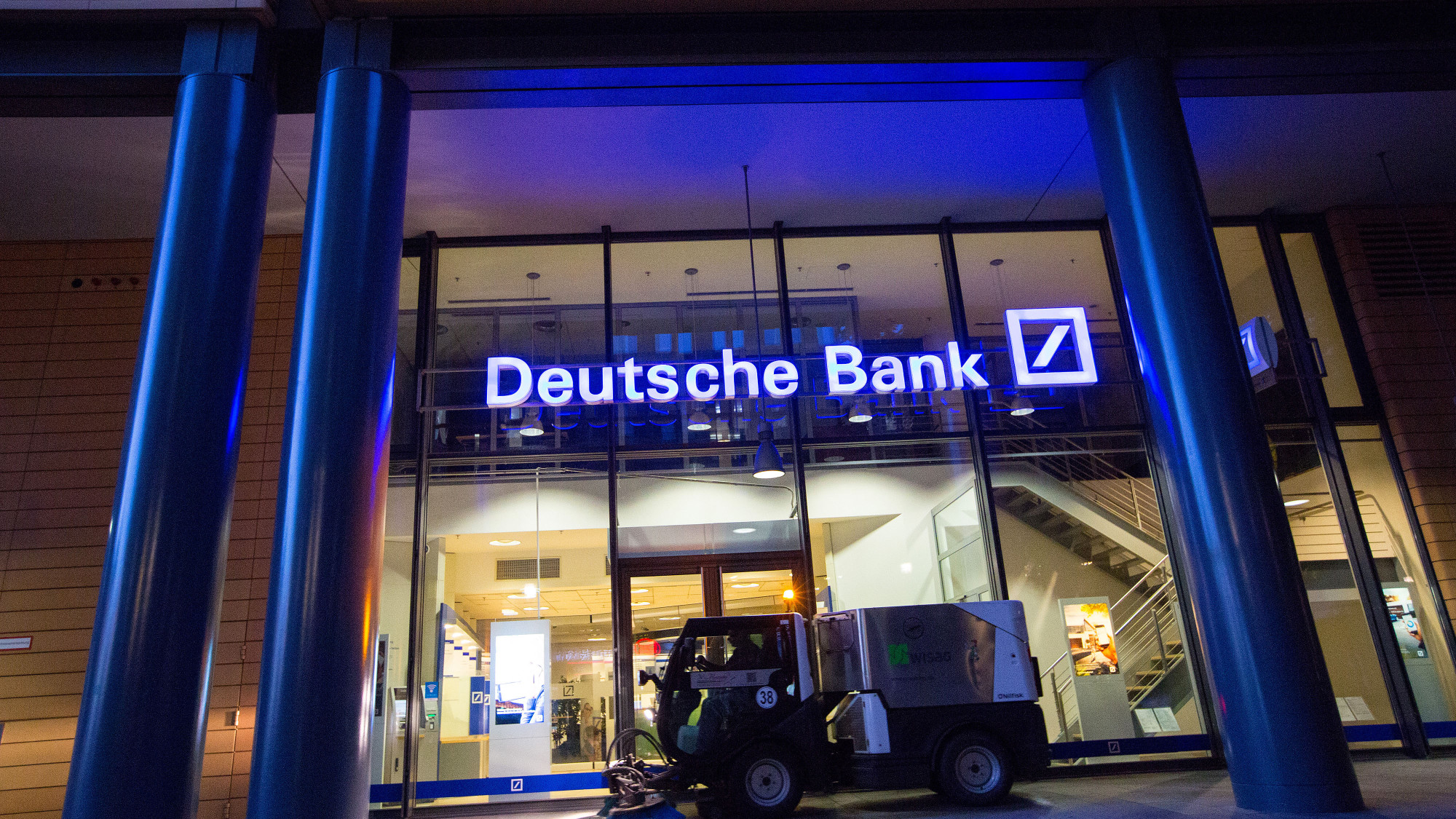
    The city of Frankfurt has just received a significant boost as a financial hub. Deutsche Bank, a prominent financial institution based in Frankfurt, has successfully become the first European bank appointed to serve as a renminbi clearing bank by the People’s Bank of China. This news was confirmed through an official statement on Monday.

    The provision of clearing services in Frankfurt will offer financial establishments and firms a direct, fast channel for processing, clearing, and settling cross-border transactions involving the renminbi. This move is anticipated to reinforce the financial ties between Europe and China.

    Deutsche Bank’s Role as a Clearing Bank

    Alexander von zur Mühlen, CEO for Asia Pacific, Europe, Middle East & Africa and Germany at Deutsche Bank, weighed in on the matter. He believes that their new role as a renminbi clearing partner in Europe deepens Deutsche Bank’s position as a globally recognized clearing bank. This commitment also reaffirms the bank’s long-standing dedication to the internationalization of the renminbi. Mühlen is optimistic that this development will bolster the financial connectivity between China and Europe. This will help Deutsche Bank to better serve its clients’ cross-border trade and investment activities.

    Even though renminbi clearing services were accessible in Europe prior to this, they were only offered through branches of Chinese banks.

    Renminbi Hub: A Shift from Competition to Normalcy

    Over a decade ago, the concept of establishing a renminbi hub in Europe was a contentious issue that incited competition among Europe’s financial centers. In Switzerland, the establishment of a renminbi hub emerged as a crucial prestige project for the nation’s banking industry.

    China Construction Bank (CCB) earned a banking license from the Swiss Financial Market Supervisory Authority in October 2015. When CCB’s Zurich branch launched in January 2016, it was attended by several notable representatives from the Swiss financial center and public authorities. Since then, CCB has been in charge of renminbi clearing in Switzerland.

    As of January 2021, CCB had processed transactions totalling nearly 600 billion francs. A total of 13 Swiss partner banks were reported to be participating in the hub. Currently, Zurich represents a key center within the offshore renminbi ecosystem.

    It remains unclear if a Swiss bank will pursue clearing status, however, UBS and Zürcher Kantonalbank could potentially be the only viable candidates.

    Questions & Answers

    What is the significance of Deutsche Bank’s new role as a renminbi clearing bank?
    This development strengthens Deutsche Bank’s position as a globally recognized clearing bank. It will enhance financial connectivity between China and Europe.

    What is the history of renminbi clearing in Europe?
    Renminbi clearing services were available in Europe previously, but only through branches of Chinese banks.

    What is the status of the renminbi hub in Switzerland?
    Currently, Zurich represents a key center within the offshore renminbi ecosystem, with China Construction Bank handling renminbi clearing in Switzerland since 2016.
  • Globe Joins Forces with e& to Boost International Voice Services, Ensuring Secure, High-Quality Traffic

    Globe Joins Forces with e& to Boost International Voice Services, Ensuring Secure, High-Quality Traffic

    Globe, a prominent name in the telecommunication industry, recently revealed a strategic collaboration with e& Carrier & Wholesale Services (C&WS), internationally recognized as the global technology group e&’s wholesale division. The primary objective of this partnership is to supervise Globe’s international voice traffic.

    Enhancing Global Voice Services

    Under the terms of this agreement, e& is set to be Globe’s preferred partner for international voice services, providing a safe, reliable, and superior entry point for voice traffic aimed at the Globe network. e&’s international voice network, routing expertise, and security capacities will couple with Globe’s extensive market influence to offer carrier partners a safe and efficient route to the Globe network.

    Nabil Baccouche, e&’s Group Chief Carrier & Wholesale Officer, stated that this collaboration will not only enhance service quality but also ensure traffic protection and support future growth. Real-time monitoring and AI-enabled fraud detection will bolster these services.

    On the other hand, Darius Delgado, Chief Commercial Officer of Globe, expressed that the partnership signifies a significant leap in solidifying Globe’s international voice business. By collaborating with a global technology leader like e&, Globe aims to improve service quality, bolster fraud protection, and offer more value to international carrier partners.

    Prioritizing Security and Efficiency

    The service will benefit from e&’s voice security features, which include a voice firewall, AI-driven fraud prevention, real-time traffic monitoring, advanced analytics, and SIM-box detection. These features will play a crucial role in ensuring revenue protection, maintaining traffic integrity, and minimizing fraud on international voice routes.

    Globe’s strong presence in the Philippine market paired with e&’s extensive global carrier network and wholesale expertise will offer international operators an efficient connection to the Globe network. Carrier partners are expected to benefit from intelligent routing, improved traffic visibility, and consistent service management through e&.

    Questions & Answers

    What does the strategic partnership between Globe and e& aim to achieve?
    The partnership aims to supervise Globe’s international voice traffic and improve service quality, bolster fraud protection, and offer more value to international carrier partners.

    What security features will the service leverage?
    The service will leverage e&’s voice security features, including a voice firewall, AI-driven fraud prevention, real-time traffic monitoring, advanced analytics, and SIM-box detection.

    What benefits will carrier partners potentially gain from this partnership?
    Carrier partners can expect benefits such as intelligent routing, improved traffic visibility, and consistent service management through e&.

  • Chinese Airlines Secure $17.8 Billion Airbus Deal to Boost Capacity and Modernize Fleets

    Chinese Airlines Secure $17.8 Billion Airbus Deal to Boost Capacity and Modernize Fleets

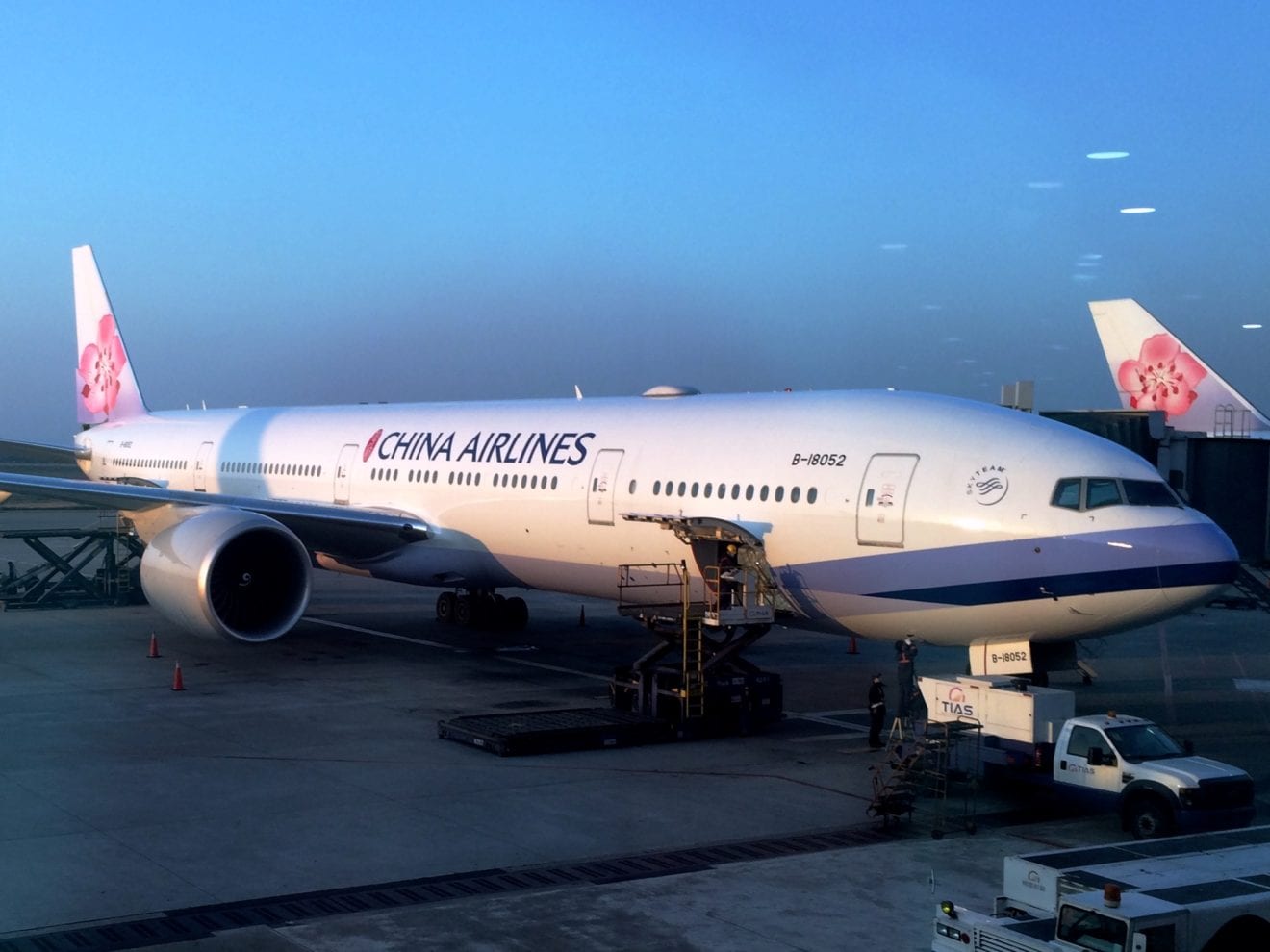
    Three major Chinese airline companies are set to acquire 95 aircraft from Airbus, in deals collectively valued at approximately $17.8 billion. This comes as part of a concerted effort by these airlines to expand their capacities and modernise their fleets with more fuel-efficient aircraft amidst the bourgeoning growth of China’s aviation market – the second-largest globally.

    Air China and its subsidiary Shenzhen Airlines have agreed to purchase 55 Airbus aircraft for a total value of $12.4 billion. Conversely, Hainan Airlines has independently agreed to buy 40 A320neo-family jets, with a list price of up to $5.4 billion.

    Air China will acquire 15 A350-900 wide-body jets, while Shenzhen Airlines will separately buy 40 narrow-body A320neo-family aircraft. The A350-900 jets, valued at roughly $6.09 billion, are set for delivery between 2030 and 2032. The 40 A320neo-family aircraft, worth approximately $6.35 billion, are slated for delivery between 2029 and 2032. Meanwhile, Hainan Airlines has scheduled the delivery of its 40 A320neo jets between 2028 to 2032.

    However, Air China has clarified that the actual transaction prices will be lower than the listed values, stating that Airbus has granted significant discounts in line with standard practice for large-scale aircraft orders.

    This surge of orders is indicative of the ongoing recovery and expansion of Chinese carriers post-pandemic, despite notable challenges. Recently, Air China reported a potential net loss of up to 2.6 billion yuan for the first half of this year, attributing the financial squeeze to rising fuel prices.

    Other Chinese carriers have also been investing in large orders with Airbus. Previous notable investments include those by China Eastern Airlines and China Southern Airlines, which have made substantial aircraft purchases in recent months.

    These new jets are predicted to increase the total capacity of the Air China group and Shenzhen Airlines by 7.1% and 4.3% respectively, based on their combined passenger and cargo capacity as of December 31, 2025. In addition, some of the new aircraft will replace older models set to be retired.

    Competition-wise, the A320neo family rivals the Boeing 737 MAX on medium-haul routes, while the A350-900 is favored for long-haul international services.

    According to the IATA World Air Transport Statistics, the U.S. remained the world’s largest aviation market last year with 890.1 million passengers, with China following closely at 776.1 million passengers.

    Questions & Answers

    What is the total value of the Airbus aircraft orders by the three Chinese airlines?
    The total list price of the 95 Airbus aircraft ordered by Air China, Shenzhen Airlines, and Hainan Airlines is approximately $17.8 billion.

    Which aircraft models are being purchased by the Chinese airlines from Airbus?
    The three airlines have agreed to purchase various models, with Air China acquiring 15 A350-900 wide-body jets and Shenzhen Airlines buying 40 narrow-body A320neo-family aircraft. Hainan Airlines will be purchasing 40 A320neo-family jets.

    How will these purchases affect the total capacity of the Air China group and Shenzhen Airlines?
    The acquisition of these new jets is expected to boost the total capacity of the Air China group by about 7.1% and Shenzhen Airlines by 4.3%, based on their combined passenger and cargo capacity as of December 31, 2025.

  • Singapore Boosts Gold Market Role: Invites Foreign Central Banks for Secure Gold Storage Services

    Singapore Boosts Gold Market Role: Invites Foreign Central Banks for Secure Gold Storage Services

    Beginning in October, Singapore will permit foreign central banks and sovereign entities to store their gold reserves within its borders. This move is aimed at reinforcing Singapore’s standing as a regional hub for gold trading and storage. The city-state’s commercial vaulting capacity currently surpasses 2,000 tonnes. This capacity is utilized by a diverse array of market participants including bullion banks, institutional investors, and high-net-worth individuals, as expressed by Deputy Prime Minister Gan Kim Yong on a recent Monday forum.

    Strengthening the Gold Market

    In addition to providing secure storage, Singapore will cater to foreign central banks and sovereign entities desiring to actively manage their gold holdings. The Monetary Authority of Singapore plans to offer gold accounts to a select group of bullion banks based in Singapore. This initiative will enhance their capability to deliver gold-related services and liquidity to these entities.

    Deputy Prime Minister Yong believes that this move will enhance Singapore’s reputation as a safe and reliable jurisdiction where reserve assets can be securely held and actively managed. The city-state will also be able to connect these assets to wider market liquidity during Asian trading hours, further reinforcing its regional dominance.

    Gold Market Innovations

    Several innovative measures have also been announced to strengthen Singapore’s role in the global gold market. One significant measure includes the establishment of an over-the-counter gold clearing system by the Singapore Exchange by the end of 2026. Interbank trading is anticipated to grow from 2027 onwards.

    This revolutionary system aims to enhance trade processing, boost transparency, and support more efficient clearing and settlement. According to Yong, this will instill greater confidence in market participants to transact in Singapore. The new system will accommodate both large bars and kilobars, enabling standardized settlement during Asian trading hours.

    Large bars refer to 400-troy-ounce gold bars or approximately 12.4 kilograms, which are standard for institutional trading and settlement in London. Kilobars, on the other hand, are 1-kilogram bars that are popular in Asian markets and are accepted for delivery in Comex gold futures contracts in the U.S.

    DBS, Deutsche Bank, ICBC Standard Bank, JPMorgan, OCBC, and UOB have been reported as the six banks that will join as clearing members and contribute to the development of Singapore’s gold market.

    Questions & Answers

    What will Singapore allow from October?
    Starting from October, Singapore will allow foreign central banks and sovereign entities to store their gold reserves in the country.

    What benefits will the proposed gold clearing system bring to Singapore’s gold market?
    The proposed over-the-counter gold clearing system will streamline trade processing, enhance transparency, and support more efficient clearing and settlement, thereby bolstering market participant confidence to transact in Singapore.

    Which banks will be joining as clearing members to develop Singapore’s gold market?
    DBS, Deutsche Bank, ICBC Standard Bank, JPMorgan, OCBC, and UOB are set to join as clearing members to help develop Singapore’s gold market.

  • Boyu Capital Poised to Secure $4 Billion Stake in Starbucks China, Boosting Brand’s Asian Market Footprint

    Boyu Capital Poised to Secure $4 Billion Stake in Starbucks China, Boosting Brand’s Asian Market Footprint

    Boyu Capital, a private equity firm from China, is leading the race to acquire a majority stake in Starbucks’ China operations, a deal that could potentially value the unit at over US$4 billion.

    Boyu Capital remains in the bid after the final contender, Carlyle Group, chose to withdraw. Key partners from both companies travelled to the U.S. to engage in final discussions with the Seattle-based coffee chain.

    Starbucks’ Stake in China

    After the sale is finalized, it’s expected that Starbucks will retain a substantial minority stake in its China operations. The company expressed that it has received strong interest from numerous high-quality partners, all of whom have faith in the long-term growth potential for Starbucks in China.

    The company is currently assessing bids from five contenders, though it declined to comment further. Starbucks China was valued at roughly $4 billion by the bidders who submitted binding offers, which is approximately ten times its core earnings.

    Starbucks’ Future Plans

    Starbucks CEO, Brian Niccol, previously indicated that the anticipated valuation of the China business would exceed $10 billion, factoring in the upfront investment from a potential partner, Starbucks’ retained stake in the China business, and future royalty payments.

    There is also the possibility of other parties, such as internet companies, joining the discussions as limited partners to assist in funding the deal.

    Competition and Sales

    Starbucks’ decision to divest in China comes amidst fierce competition from local coffee chains that have gained market share by offering less expensive products during an economic slowdown that has altered consumer behavior.

    In response to these challenges, Starbucks has implemented strategies such as lowering prices for selected non-coffee beverages in China and increasing the introduction of new, localized products.

    Sales in comparable stores in China increased by 2% in the quarter that ended on June 29, following a quarter with no growth. Starbucks’ earnings for the fourth quarter and the 2025 fiscal year will be reported on October 29.

    Questions & Answers

    Who is the frontrunner to buy a controlling stake in Starbucks’ China business?
    Boyu Capital, a private equity firm from China, is leading the race to acquire a controlling stake in Starbucks’ China operations.

    What is the potential value of Starbucks’ China unit?
    The deal to acquire the majority stake in Starbucks’ China operations could potentially value the unit at over US$4 billion.

    What strategies has Starbucks implemented in response to increasing competition in China?
    Starbucks has lowered prices for selected non-coffee beverages in China and increased the introduction of new, localized products to counter the competition.

  • Singtel Launches iSHIP to Provide Industry’s First All-in-One Maritime Service

    Singtel Launches iSHIP to Provide Industry’s First All-in-One Maritime Service

    Singtel has unveiled iSHIP, an all-in-one platform providing critical satellite-enabled connectivity and digital services for the maritime industry. iSHIP’s integrated services for crew and fleet management allows ship managers and owners greater flexibility and visibility of their resources and operations, enabling better well-being of the crew, vessel safety, and operational efficiency.

    Presently, nearly 90% of all goods from finished products to food, fuel, and more are shipped over the seas — with maritime trade volume set to triple by 2050. To keep ships running and global seaborne trade flowing during the pandemic, shipping companies had to rapidly digitalize critical operations such as navigation, power supply, engine control, and cargo management which were traditionally manual tasks while ensuring ship crews stay healthy and safe.

    “Our seas are a major mode of global trade and transport. But the pandemic has disrupted global supply chains and shipping operations, driving strained crews — who are more accustomed to traditional or manual processing methods — to navigate fragmented digital resources and applications. iSHIP was specifically designed to address these challenges and provide a versatile solution for shipping companies that are accelerating digital adoption and also have decarbonization and crew welfare high on their agenda. By making it easier for ship owners and operators to procure and steward digital services and resources, they can focus on keeping the world economy running, supporting billions of people who rely on our seas for food, energy and transport,” stated Ooi Seng Keat, vice president, carrier services, over-the-top & satellite, Group Enterprise, Singtel.

    Singtel is the only operator in Southeast Asia to attain the highest certification from the World Teleport Association (WTA) for providing customers with the highest quality of security, infrastructure, and operational standards for their communications needs. With the launch of iSHIP, Singtel continues leading the industry in providing connectivity support and more for the hundreds of customers and thousands of vessels sailing the seas at any given time.

    End-to-end connectivity for smart, secure and sustainable maritime operations

    Currently, ship owners and operators are required to liaise with multiple parties to procure connectivity and digital services or resources. With iSHIP, customers get all their possible maritime digital needs through one point of contact along with access to 24/7 support. Customers can select the combination of digital services they need with the assurance of Singtel’s end-to-end support, from initial provisioning and on boarding; scaling resources on an as-needed basis to resolving any technical; or service issues encountered.

    Via iSHIP, ship owners can tap on Singtel’s access to high-throughput satellites orbiting the earth to provision more bandwidth as and when required — anywhere in the world — to power fast and reliable connectivity.

    By the third quarter, iSHIP will include teleadvisory services to provide seafarers direct access to a trained medical professional, who can render assistance in situations beyond the skills of the medic onboard.

    By leveraging the latest in maritime Internet-of-Things (IoT) and data analytics, iSHIP enables ship owners and operators to improve operational efficiency and increase productivity while reducing costs, especially in fuel and operational maintenance. With data from sensors and other monitoring devices, ship owners and captains are empowered to optimize routes, workloads, and enhance quality control and quality assurance. IoT devices also help shipping companies meet the maritime industry’s ambitious goal — set in June last year — to cut carbon intensity of all ships by at least 40% by 2030.

    In addition, iSHIP provides advanced protection against malicious attempts along with education and assessment courses for ship crew to improve their cyber hygiene, thus alleviating potential human errors.

  • Blackberries May be Coming Back to Banking

    Blackberries May be Coming Back to Banking

    The banker’s best-loved gadget may be making a return from the dead – thanks in part to the pandemic sending millions of workers into work-from-home arrangements.

    Blackberry smartphones were phased out at banks years ago – Credit Suisse’s finance chief David Mathers was openly unhappy about his boss, Tidjane Thiam, taking his away in 2017. The brand has been left for dead several times after Blackberry left the phone business in 2016.

    Now, a Texan technology start-up plans to roll it out again, on an Android operating system with 5G connectivity, by next June, it said in a statement. The company, Onwardmobility, inked a pact with BlackBerry as well as a Foxconn subsidiary to offer the device in North America and Europe.

    The key draw of Blackberry – a physical keyboard – endeared it to bankers (as well as journalists) – so much so that it was colloquially known as a Crackberry. Blackberry, the company, licensed the brand out to TCL, but the Chinese provider abandoned it earlier this year.

    By that time, financial service firms had decommissioned the technology (after prying them from the reluctant hands of bankers like Mathers). First manufactured by Research in Motion (RIM), the Blackberry was gradually eclipsed by Apple’s iPhone, launched in 2007. Efforts to reinvent with Blackberry with features like a touchscreen, or without the physical keyboard, foundered.

    Blackberry gave up its own software in favor of Android, but ended up ditching phones altogether in favor of security software. The move relegated the Blackberry to zombie status, something Onwardmobility wants to change.

    Enterprise professionals are eager for secure 5G devices that enable productivity, without sacrificing the user experience, Onward CEO Peter Franklin said. The company hopes the increasing number of office staff working from home and cybersecurity needs will spur demand for the devices.

  • Galaxy S8 to use Gemalto Secure Element in some markets

    Galaxy S8 to use Gemalto Secure Element in some markets

    Samsung’s flagship Galaxy S8 smartphone will be equipped with Gemalto’s embedded Secure Element, a smart chip with a secure OS and applications, in selected markets.

    The smart chip can secure various application types including Samsung Pay (Samsung’s contactless payment solution), couponing, transport, access control, ticketing, corporate, cloud computing and e-government.

    This integration is expected to help Samsung deploy its services worldwide, due to Gemalto’s connections with multiple service providers via its Trusted Services Hub (TSH).

    The chip has already been integrated into other Samsung smartphones including the Galaxy A series globally and the Galaxy C series in China.

    “Gemalto is thrilled to be selected as one of Samsung’s providers for the new Galaxy S8 and other smartphones. We are delighted to provide them with an end-to-end solution, which proves that our strategy based on our state-of-the-art embedded secure elements is successful,” Gemalto SVP of Greater China and Korea for mobiles services and IoT and China country head Suzanne Tong-Li said.

    “[The element] supports a unique combination of features, and our TSH offering delivers a single entry point to link device manufacturers and service providers.”

  • V-Key Partners with Ant Financial To Secure Mobile Payments

    V-Key Partners with Ant Financial To Secure Mobile Payments

    V-Key, a global leader in digital security, and Ant Financial Services Group, the leading global tech company that provides online and mobile financial solutions, have entered into a collaboration. Under the partnership, V-Key will provide a virtual software solution called V-OS for Ant Financial to help secure transactions on AliExpress, one of Alibaba Group’s international retail ecommerce platforms. (Ant Financial is a related company of Alibaba Group). V-Key will also provide cryptographic services and trusted environments to help secure payments processed by Alipay on AliExpress, along with risk management for each transaction.

    V-OS, which is currently deployed by top banks, mobile payment providers, and governments globally, is the world’s first virtual secure element. With V-OS, card and cardholder data will be encrypted, providing for more secure user authentication. V-Key’s solutions allow businesses to roll out cloud-based payments, trusted digital identity and authentication necessary for mobile banking and other secured mobile applications. V-Key brings advanced user data protection to its partners, without the need to use any form of hardware secure elements, which can be less secure. Its mobile security solution works on both iOS and Android devices. 

    Speaking on the pressing need for V-Key’s fast-growth, as well as its mission to work with its partners to secure mobile transactions against fraudulent activities, Benjamin Mah, co-founder and Chief Executive Officer of V-Key said: “With the rapid uptake in mobile payments, e-commerce threats are becoming smarter, bigger, more sophisticated. They pose a threat not just to end-users, but also to the reputation of our partners. To stay ahead, V-Key has invested considerable time and effort to build the world’s leading virtual mobile cybersecurity suite of solutions. With our all-in-one virtual element V-OS, we look to future proof mobile wallets against advanced threats by protecting end-user information. In doing so, we look to create a safer transaction environment for our fast-growing number of partners.” 

    V-Key’s solutions are certified by leading industry bodies including FIPS 140-2 (USA) and Info-communications Media Development Authority of Singapore. It has been rigorously stress tested by the likes of global analysts, e-commerce players, government agencies and regulatory bodies globally, including Ant Financial, Core Security Technologies, UL Transaction Security, MWR InfoSecurity, Quarkslab, Upyun, Vantage Point Security, Resolvo Systems among others.

    Jason Lu, Vice President of Fraud Risk Management at Ant Financial, said,”As more users opt for mobile payments, account safety assumes utmost importance. V-Key’s unique technology helps us deploy our risk engine to enhance mobile security. The partnership is part of our commitment to secure our services. In the process, we are enabling more and more businesses and partners to expand their global market reach.”

    V-Key was founded in 2011, and has services in Singapore – where it is headquartered – as well as key markets across Asia-Pacific and the US. Through its partners, including Ant Financial as well as some of the leading banking and financial institutions and government agencies, it has already amassed over 30 million end-users.