Tag: sedan

  • New-Gen Volvo S60 Sedan To Be Unveiled This Month

    New-Gen Volvo S60 Sedan To Be Unveiled This Month

    The new-generation Volvo S60 sedan will be unveiled in India on November 27, 2020. Of course, given the current situation with the pandemic, the car will be revealed via a digital event, while the official launch will take place in the first quarter (Q1) of 2021. While the car was supposed to be launched this year itself, the COVID-19 and the resultant lockdown has forced the company to push the launch to next year. Last year, Volvo India had announced that it will be introducing 4 new electrified cars in the country in the next 3 years, so the S60 coming to India could be the plug-in hybrid version.

    Volvo Cars plans to slowly phase out conventional powertrains and focus only on electrified vehicles like PHEVs and fully electric vehicles (EVs). The company has already committed to a goal of featuring some form of electric propulsion in its models from 2019 onwards and now India too is part of this plan. Every new Volvo from 2019 onwards will be electrified.

    Volvo India had announced that it will be introducing 4 new electrified cars in the country, so the S60 could get a plugin hybrid version.

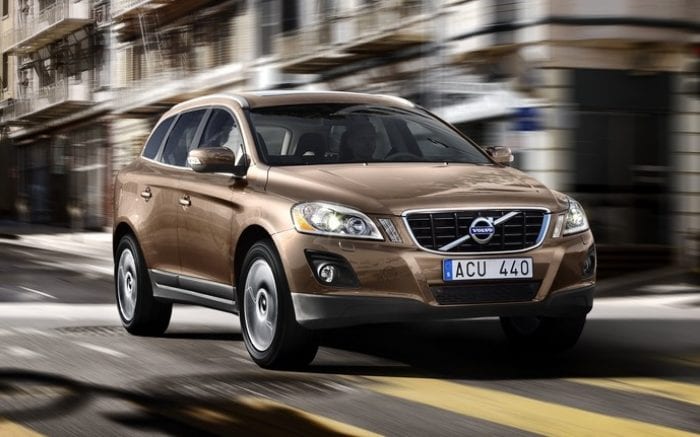
    The Volvo S60 coming to India has been in the global market for a couple of years now, and we have already driven the global-spec model. Overall, the car has become much sleeker now and flaunts some bold character lines that give it a sculpted look. Upfront the car comes with a wide grille with a chequered grille and the Volvo badge at the centre. It’s flanked by a set of sharper-looking headlights with the signature Thor Hammer LED daytime running lamps, and a sporty bumper. The car also comes with a set of 19-inch alloy wheels, along with a new rear design featuring S90 style C-shaped LED taillights, centrally positioned Volvo lettering, and the muscular rear bumper.

    The Volvo S60 is a petrol-only model and it comes with a 2.0-litre in-line 4-cylinder engine, mated to an 8-speed automatic transmission.

    The regular petrol model gets a 2.0-litre in-line 4-cylinder engine which is turbo-charged and pumps out 310 bhp and 400 Nm of peak torque, while mated to an 8-speed automatic. The plug-in hybrid version though gets the same 2.0-litre motor, but, with an electric motor at the rear. The combined power output is about 413 bhp and the total torque output stands at 670 Nm. In pure electric mode, the car can cover a range of up to 45 kilometres.
  • New Honda Accord For ASEAN Markets Revealed

    New Honda Accord For ASEAN Markets Revealed

    The tenth generation Honda Accord has been revealed for the ASEAN markets and the all-new sedan is more compact than its predecessor while offering more generous cabin space. Interestingly, the new generation ASEAN-spec Accord is similar to the North American version in design that has been on sale since 2017. The latter model has usually been bolder and sportier in terms of appearance, and it’s nice to see the ASEAN model borrowing those traits. This is also the version of the new Honda Accord that India will get, possibly by next year.

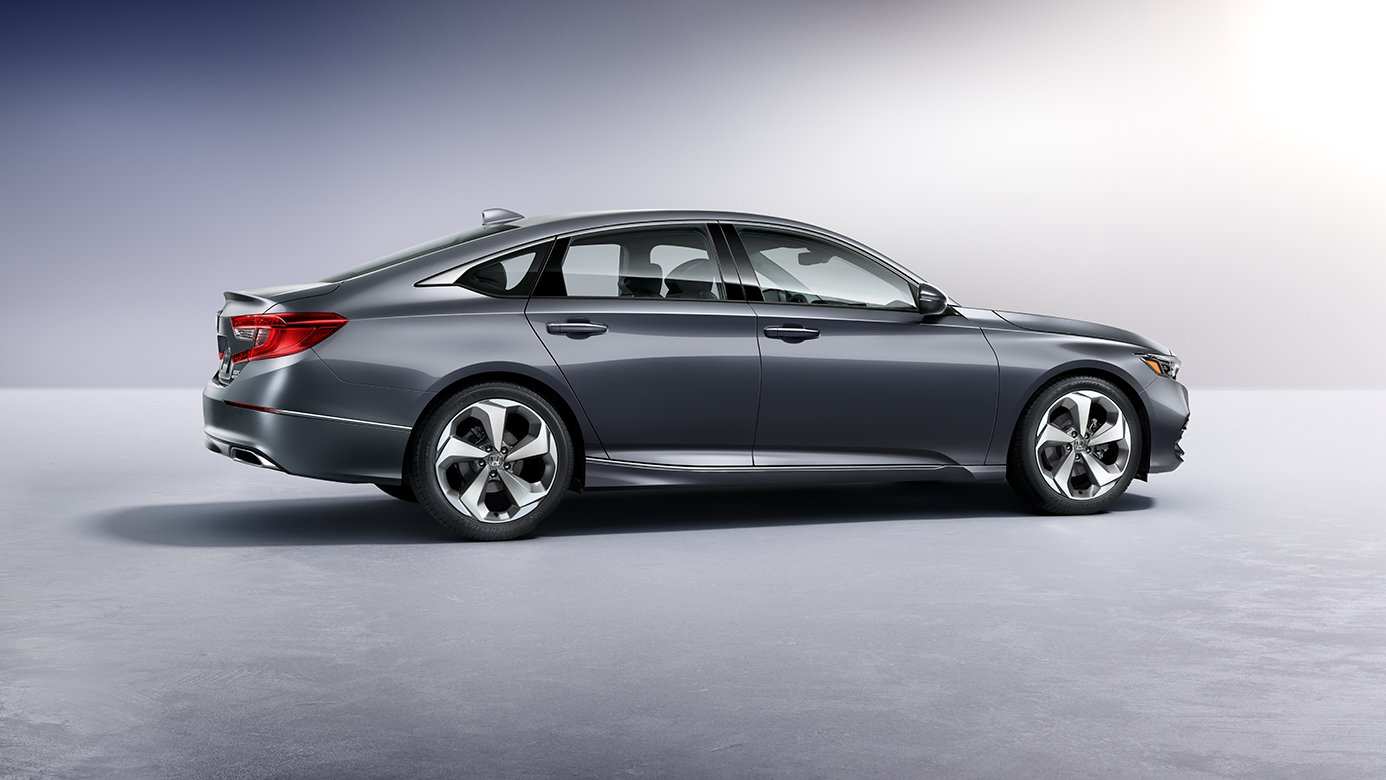
    With respect to dimensions, the 2019 Honda Accord is shorter in length, while the wheelbase has gone up over the ninth generation version. The new Accord is 13 mm shorter at 4920 mm, while the wheelbase stands at 2830 mm, up by 54 mm. The new version is also 10 mm wider than the previous gen Accord while the roofline has been lowered by 15 mm that lends a coupe-like appearance.

    The tenth generation Honda Accord gets an imposing design language with the thick chrome bar on the grille with the giant ‘H’ in the centre. The car gets full-LED headlamps with daytime running lights and the fog lamps too are LED equipped. The coupe roofline takes prominence at the sides with a chrome lining running through, and also gets the diamond cut alloy wheels. The rear sports the new C-shaped LED taillights that we first saw on the new generation Civic globally and the boot comes with an integrated spoiler for the sporty appearance.

    Inside, the ASEAN-spec 2019 Honda Accord gets a familiar treatment with the flat-bottom, multi-function steering wheel, floating infotainment system and a semi-digital instrument console. The seats are upholstered in leather and are finished in brown, creating a nice contrast over the black dashboard. The leather upholstery also extends to the door panels and centre console in the car. Like the current version, the new Accord is loaded on tech and comes with climate control, electric sunroof, heads-up display, front and rear parking sensors, 360-degree camera, cross traffic monitoring, wireless smartphone charging, Honda Smart Parking Assist System with auto parallel and perpendicular parking. The car also gets the Honda Sensing Suite that adds a bunch of safety aids to the sedan.

    The all-new Honda Accord will be offered with two engine options including the 1.5-litre turbocharged petrol engine that churns out 188 bhp and 243 Nm of the peak torque, while there is also the 2.0-litre four-cylinder petrol motor that is paired with electric motors on the hybrid version. The combined output on the new Accord Hybrid is rated at 213 bhp. It is the hybrid version that India is likely to get and will replace the current Accord Hybrid already on sale here.

  • 2020 Mercedes-AMG A35 Sedan Breaks Cover

    2020 Mercedes-AMG A35 Sedan Breaks Cover

    Mercedes-Benz dropped the curtains on the Mercedes-AMG A35 performance sedan ahead of its public debut at the Paris Motor Show in October this year. The sprightly luxury compact sedan gets the Affalterbach treatment sharing its underpinnings and powertrain with the A35 AMG hatchback, albeit now gets that small boot, making it slightly more practical. The good bit is that the A35 AMG sedan retains the performance of the hatchback churning out an identical 301 bhp from the same motor.

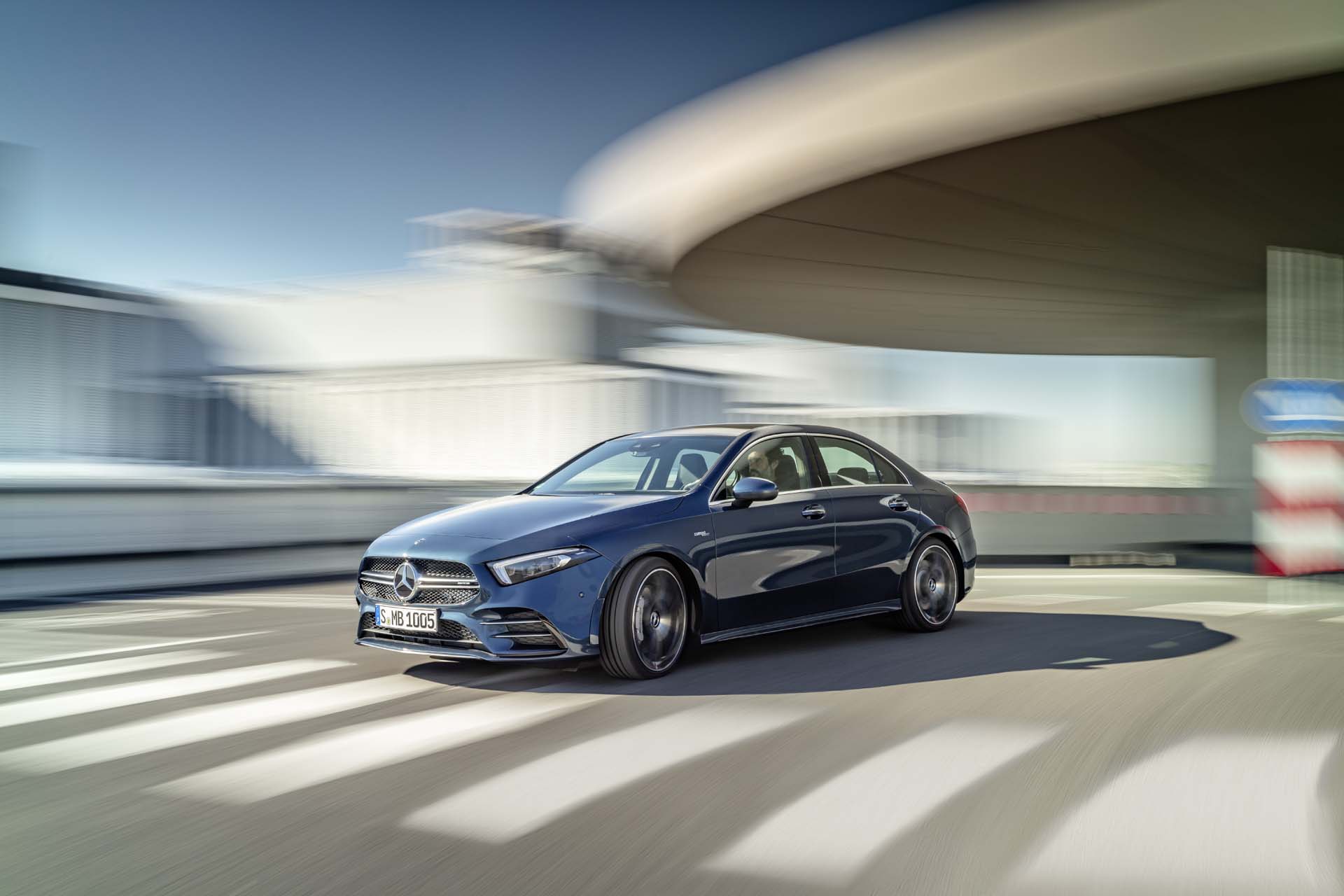
    Visually, the Mercedes-AMG A35 sedan looks similar to the hatch, complete with the bold grille with the massive logo up front, and the sweptback LED headlamps. The wheelbase too remains the same at 2727 mm, while the extended boot is met with a coupe-like roofline that adds to the striking appeal of the model. The rear sports twin exhaust and a lip spoiler integrated into the boot, while the wraparound LED taillights are distinctive and light up the boot’s appearance, quite literally.

    The cabin too is a direct lift from the A35 AMG hatchback. The sedan comes with the AMG flat-bottom, multi-function steering wheel and the extended digital cockpit with the split screen setup for the infotainment system that also uses the MBUX system. The A35 AMG comes with five driving modes, which changes the colour scheme inside the cabin according to the mode you select.

    With respect to performance, the Mercedes-AMG A35 uses 2.0-litre four-cylinder turbocharged engine that churns out 301 bhp on offer. The motor is paired with a 7-speed dual-clutch automatic transmission, while there are wheel-mounted paddle shifters for manual shifts. The A35 also comes with 4MATIC All-Wheel Drive system that sends power to the front wheels but can distribute power to the back as well for a 50:50 split. Furthermore, the A35 comes with individual braking for each wheel, while the suspension is adjustable and can be tuned for comfort on the streets or for attacking corners on a race track.  The performance sedan can do the 0-100 kmph sprint in 4.7 seconds, which is the same as the hatchback.

    The Mercedes-AMG A35 is slated to hit a number of markets by the end of this year including the US. However, it’s not clear if Mercedes-Benz will be bringing the performance sedan to India.

  • VinFast rolls out its first made-in-Vietnam car

    VinFast rolls out its first made-in-Vietnam car

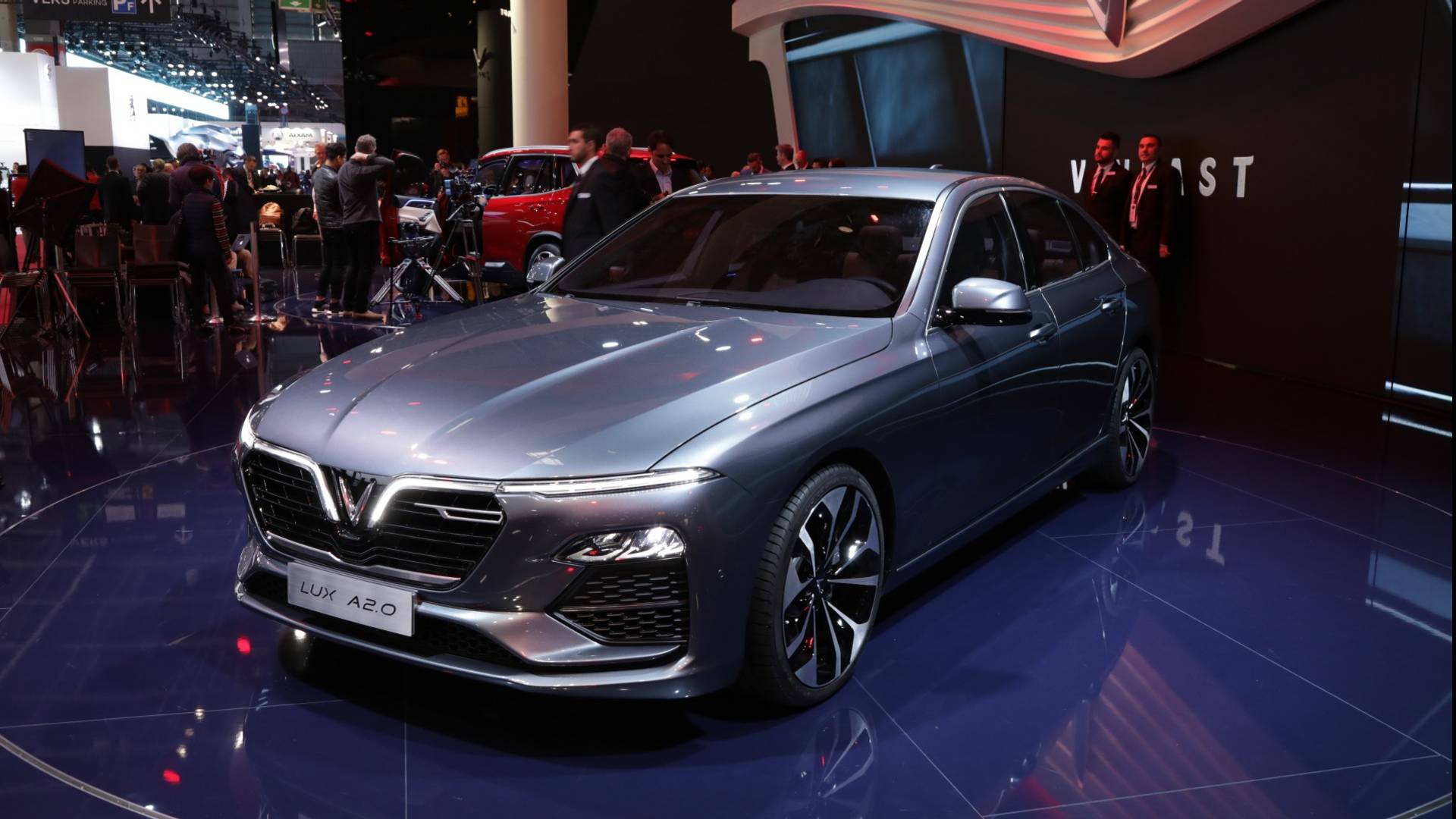
    Vietnam’s first full-fledged carmaker has started trial runs in its Hai Phong factory, preparing to deliver preordered vehicles later this year. The Lux SA 2.0 SUV, which has a 228 horsepower engine and an 8-gear automatic transmission, started its first run Wednesday at VinFast’s factory in the northern port city of Hai Phong.

    Commercial versions of both the SUV and a sedan will be delivered in the second and third quarter this year to customers who have pre-ordered.

    VinFast, a unit of Vietnam’s largest private conglomerate Vingroup, claims to be the first auto manufacturer in Vietnam with a closed, synchronous and complete cycle of production.

    The first cars will be tested in several countries including Australia, Austria and South Korea to make them European standards. They will also be tested in Vietnam for endurance in various climates and conditions.

    VinFast showed off prototypes of its first two car models at the Paris Motor Show in France last October, just a year after the company’s incorporation.

    A limited edition of its Lux SA 2.0, called the Lux V8 with a 455 horsepower V8 engine, is being displayed at the Geneva Motor Show 2019 this week.

  • VW new sedan model launched

    VW new sedan model launched

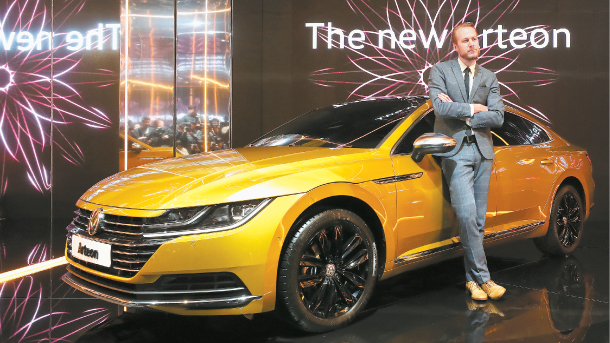
    Volkswagen launched its sleek new midsize Arteon sedan in Korea on Wednesday with high hopes that the car will overshadow consumers’ memories of the company’s emissions rigging scandal, which was first revealed three years ago. The sedan is the last of the five cars the German automaker promised to roll out in the local market in April, when it opened up a press event to show it was back in Korea after suspending sales in 2016.

    Stefan Krapp, the managing director of Volkswagen Korea, said he is “convinced the new Volkswagen Arteon will be another best seller in the Korean market, alongside the Tiguan, Tiguan Allspace and Passat,” during the launch event. He introduced the new sedan as its “new flagship model that opens a new chapter of Volkswagen’s design language.”

    The latest sedan is positioned at the top of the carmaker’s sedan line up, even above the Passat GT, according to Krapp.

    Under its sporty-looking exterior lies a spacious interior, thanks to the Arteon’s 28.40 centimeters (11.18 inches) wheelbase, which the carmaker says is the longest among its competition. The storage space can be as large as 1,557 liters (55 cubic feet) when the backseats are folded down.

    All Arteons come with a whole package of driving assistance programs, including adaptive cruise control and parking assist as basic features, in line with the digital trend sweeping the auto market. The cars come in two trims – Arteon Elegance Premium and Arteon Elegance Prestige. The most distinct feature of the Arteon is its quality assurance program.

    Krapp said the carmaker’s utmost priority is regaining consumer trust and reaffirmed the company will not compromise on quality.

    Volkswagen’s Triple Trust Program, exclusive to the Arteon, offers a bumper-to-bumper warranty for five years or 150,000 kilometers (93,205 miles), whichever comes earlier. The program also guarantees up to 1.5 million won ($1,347) in maintenance costs when metal plating or painting is necessary after an accident. For windshield glass, side mirrors and tires, which often need to be replaced, the company will guarantee up to 2 million won in repair cost.

    “This package is the best available in the market, I would say,” Krapp said. He added that in the import car market, where consumers usually sacrifice either style or value for money, the Arteon offers both.

    “This is how we will challenge our competitors,” he added.

    Though Volkswagen had no sales at all last year, it has gradually been coming back to life thanks to the popularity of the four models it launched earlier this year: the Passat GT, Tiguan, Tiguan Allspace and Passat TSI. The automaker’s market share in the local market is still in the single digits, low compared to good days when its shares were in the double digits, but it managed to reach 5.65 percent market share this year through October and sell a total of 12,294 cars.

    Whether the Arteon will help sales is another question, as it’s a pricey product. The more affordable Arteon Elegance Premium carries 52.2 million won price tag, while the Prestige model sells for 57.1 million won.

  • Hyundai’s Genesis G70 named Motor Trend’s Car of the Year

    Hyundai’s Genesis G70 named Motor Trend’s Car of the Year

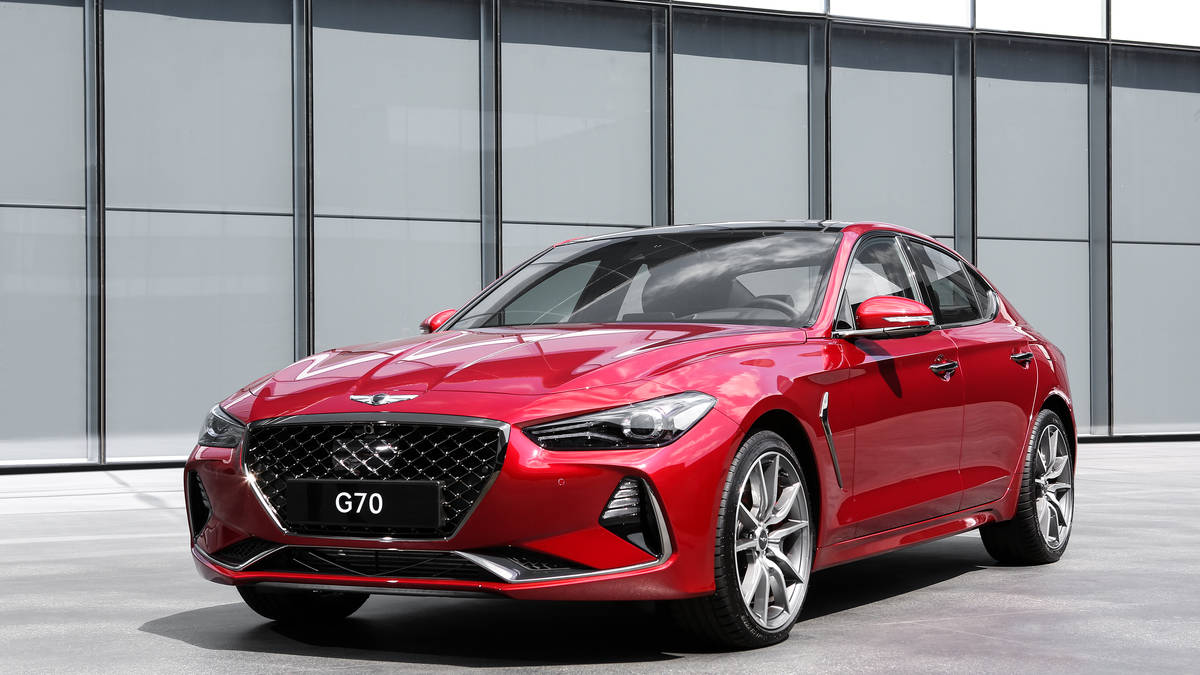
    Hyundai Motor’s luxury Genesis G70 sedan was selected as the Car of the Year by U.S. auto magazine Motor Trend, firmly establishing it as a legitimate alternative to BMW’s long-reigning 3 Series. The G70’s victory was proclaimed in Motor Trend’s January issue with the headline “A Star is Born.” The vehicle competed with 20 other models including the Audi A6, Mercedes-Benz CLS and Lexus ES.

    It is the first time a Korean car has won the award since the media outlet began the Car of the Year award in 1949. Last year, the winner was the Alfa Romeo Giulia, while in 2016, it was the Chevrolet Bolt EV.

    The magazine praised the rapid development that Hyundai Motor has achieved in its quality and brand awareness in such a short time, pointing out that the Korean brand first entered the U.S. market in 1985 selling a “Giugiaro-designed hatchback for the low, low price of $4,995.

    “Fast-forward to the present. How beyond belief is that the same cheap and cheerful automaker – Hyundai – not only has launched a luxury brand but has also built a better BMW 3 Series fighter right out the gate than the Japanese luxury brands have in numerous attempts?” the article read.

    The judging panel, made up of the magazine’s editors and engineering experts from top car brands, praised the sedan’s performance, particularly when equipped with a 3.3-liter engine. Its cousin, Kia Motors’ Stinger, which shares the same platform as the G70, missed the spot last year due to its lack of a sporty suspension.

    As an all-rounder, the Genesis G70 “pulls to infinity and beyond,” said Chris Theodore, a guest judge.

    Hyundai Motor expects its triumph to continue next year with the North American Car of the Year award, which will be announced at the North American International Auto Show in Detroit in January.

    “The Motor Trend’s Car of the Year award is expected to have positive effect in Genesis sales,” a Hyundai Motor spokesman said.

    The Genesis G70 was the first model to be released under Genesis after it was launched independently of the Hyundai brand. Other models – the G90 and G80 – were just partially revamped and renamed versions of existing models under Hyundai.

    The model ranked No. 1 in this year’s J.D. Power survey in quality, pushing aside long-running luxury brands like Porsche and BMW.

    The accolades didn’t translate to sales, however, as it continues to struggle in the U.S. market. The Genesis G70 sold 51 units in October in the United States.

  • Sales at Toyota’s Lexus brand slide in first-half as sedans suffer

    Sales at Toyota’s Lexus brand slide in first-half as sedans suffer

    Toyota Motor on Friday said its luxury Lexus brand suffered its first fall in half-year global sales in six years as demand for its sedans tumbled in the United States, its biggest market.

    Sedans, traditionally a mainstay for automakers including Toyota and Honda Motor, have fallen out of favor in their key U.S. market in past years, sending many carmakers scrambling to manufacture more larger vehicles including SUVs and trucks.

    Toyota said it sold 305,169 Lexus vehicles worldwide in the six months to June, down 4.4 percent from 319,275 vehicles a year earlier. Sales slumped 10 percent in the United States, which comprises nearly half of Lexus’s global sales, and 23 percent in Japan, while jumping 30 percent in China.

    “The U.S. passenger car market has been very challenging, and this has affected sales,” Toyota spokesman Maki Niimi said.

    He added that the automaker expects annual sales to slide about 4.0 percent this year to around 650,000 units, as the recently launched LC sports coupe model and a revamped version of its marquee LS sedan model later this year lift sales slightly in the coming months.

    While Lexus continues to enjoy solid U.S. sales of its NX SUV crossover model, analysts said that the brand overall had fallen behind rival luxury brands with newer sedan offerings including Daimler AG’s Mercedes, which recently launched its E-Class range, and BMW’s 5-series.

    “It’s a model cycle issue,” said Janet Lewis, head of Asia transportation research at Macquarie Securities. “You have two core competing products recently launched (by Mercedes and BMW), while the LS is pretty long in the tooth.”

    Lexus sold just 1,855 units of its LS 460 model in the United States in January-June, down 35.2 percent from a year earlier.

    Overall, Toyota, the world’s second-biggest automaker, expects to sell 10.25 million vehicles globally this year, down a touch from last year.

  • German carmaker BMW launches Indonesian-made sedans in luxury push

    German carmaker BMW launches Indonesian-made sedans in luxury push

    German automaker BMW on Wednesday launched its 7 series sedans in Indonesia that will be assembled in the country as it seeks to tap into the long-term demand for luxury vehicles in Southeast Asia’s biggest economy.

    Other luxury car companies such as Daimler AG’s Mercedes-Benz are also increasingly shifting part of their production to the country of 250 million people to reduce costs and distribute their vehicles more quickly to consumers.

    “We are very positive about the future of Indonesia and therefore we also see an increased potential in the luxury market,” Axel Pannes, managing director of BMW Group Asia, told Reuters on the sidelines of a media launch in Jakarta.

    The German company has invested more than 210 billion rupiah ($15.5 million) over the last five years to assemble a greater number of car models in Indonesia, the 7 series being the latest addition to its local line-up.

    The group sold a total of 3,638 vehicles in Indonesia last year, up 5.7 percent from a year earlier. BMW executives declined to give sales projections for this year or for 2017.

    Global carmakers would benefit from lower import tariffs for certain components if they were to set up local assembly plants, said Jongkie Sugiarto, co-chairman of the Association of Indonesia Automotive Industries.

    The move would also be positive for Indonesia as it brings investment into the country and generates employment, he added.

    The Indonesian government is offering incentives for foreign companies to build cars domestically, said I Gusti Putu Suryawirawan, director-general for metal, machines, transport equipments and electronics at the industry ministry.

    “The aim is for them to produce here and therefore involve local suppliers,” Suryawirawan said, adding that the automotive sector was a key sector for Indonesia’s economic growth.

    Gross domestic product is expected to grow 5 percent this year and up to 5.4 percent in 2017, according to the central bank’s latest estimate.

    The premium car market should be supported next year by the government’s economic stimulus and the roll-out of infrastructure projects, said Kariyanto Hardjosoemarto, a sales operation and product management executive at Mercedes-Benz in Indonesia.

    Indonesia’s tax amnesty scheme, launched in July, may also help to boost luxury car sales as those who were previously concerned by being chased by the tax office would now be less hesitant about making such purchases, Hardjosoemarto added.