Retail News CRM

Tag: Seibu

  • 7-Eleven parent sales surges: Report

    7-Eleven parent sales surges: Report

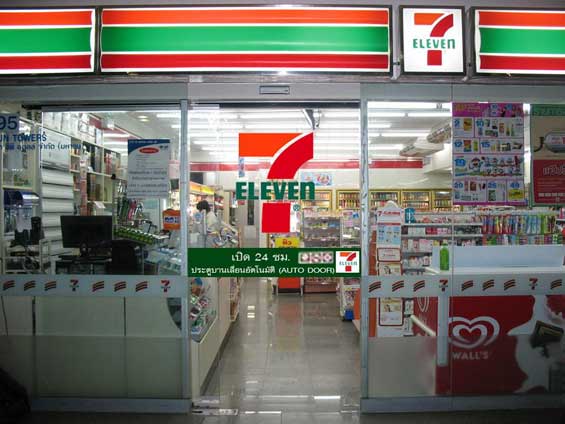
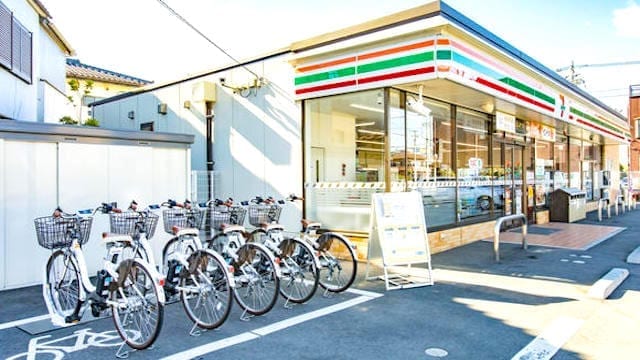
    Japanese retail giant Seven & I has reported a 15.8 per cent increase in net sales for the nine months to November. Profit rose by a less impressive 2.9 per cent. The 7-Eleven parent said its overseas convenience store business achieved an impressive 15.7 per cent increase in operating profit year on year.

    At home, its Ito-Yokado superstore managed to reduce its operating loss to ¥200 million (US$1.85 million), however its York-Benimaru supermarket division and Sogo & Seibu department stores both struggled, the latter losing ¥937 million ($8.6 million).

    Seven & I’s net sales totalled ¥4.11 trillion ($38 billion).

  • US investor buys into Mitra Adiperkasa

    US investor buys into Mitra Adiperkasa

    US private-equity company General Atlantic has made its first investment in Indonesia by buying into lifestyle retailer Mitra Adiperkasa (Map).

    It has subscribed for Rp1.08 trillion (US$80.5 million) in bonds issued by Map which are convertible into shares in its F&B subsidiary Map Boga Adiperkasa (MBA), which runs Cold Stone Creamery, Godiva, Krispy Kreme, Pizza Express and Starbucks in Indonesia. It has more than 300 stores across 24 cities, and has more than doubled its store count over the past five years.

    Map runs multi-channel retail concepts in Indonesia across a diversified portfolio of department stores, sportswear, specialty fashion, F&B, and lifestyle products. It has nearly 2000 retail stores.

    “We believe the rapid rise in Indonesia’s middle and young working classes, the increase in this population’s disposable income, and the continued rural-to-urban migration represents an opportunity for us to strengthen our international food brands and cement our leadership position in the F&B market,” says Map CEO V.P.

    Sharma. A portion of the investment money will be used to accelerate the F&B division’s network expansion.
    “Indonesia’s domestic consumption comprises more than half of gross domestic product, and consumption patterns are increasingly shifting toward modern and aspirational lifestyle brands,” says General Atlantic Southeast Asia head Wai hoong Fock. “These secular trends position MBA’s food & beverage portfolio well for further expansion.”

    Regional commitment

    The partnership, General Atlantic’s first investment in Indonesia, indicates its commitment to long-term market prospects in South-east Asia,” says Fock, who joined General Atlantic from CVC Capital Partners last year to lead its South-east Asia investing program. He is based in the firm’s Singapore office.
    General Atlantic has 18 investment professionals in Asia, based in offices in Beijing, Hong Kong, Mumbai and Singapore. The firm opened its Singapore office in 2011, investing three years later in Singapore-based online mobile entertainment/communication Garena platform. It has also supported the growth of retail and F&B companies including lifestyle brand Tory Burch, luxury fashion brand Zimmermann, restaurant group Barteca Holdings, urban juice-bar concept Joe & The Juice, community accommodation marketplace AirBNB and transportation network company Uber.

    Map has 1921 retail outlets in 68 cities throughout Indonesia. Its retail concepts include department stores (Debenhams, Galeries Lafayette, Seibu and Sogo), fashion and lifestyle (Crabtree & Evelyn, Kipling, Lacoste, Marks & Spencer, Massimo Dutti, Nautica, Sephora, Swarovski, Topman, Topshop and Zara), sports (Converse, Golf House, Oakley, Payless ShoeSource, Reebok, Rockport, Skechers, The Athlete’s Foot and The Sports Warehouse), F&B (Burger King, Cold Stone Creamery, Domino’s Pizza, Godiva, Krispy Kreme and Starbucks), kids (Kidz Station and Oshkosh B’Gosh) and bookstore Kinokuniya.

  • Maison Margiela Japan opens in Ikebukuro

    Maison Margiela Japan opens in Ikebukuro

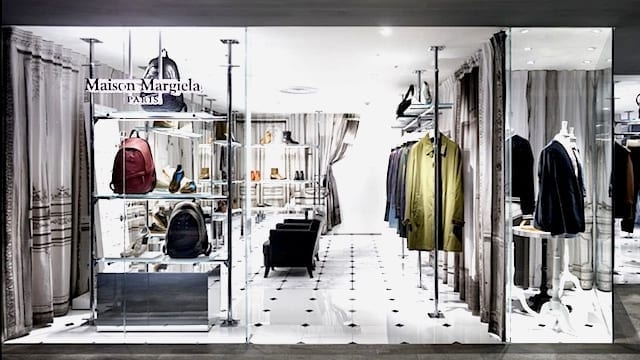
    Maison Margiela Japan has opened a new boutique in the Seibu Department Store in Ikebukuro, Tokyo.

    Customers of the fifth-floor store are greeted with marble flooring and walls adorned with lush cotton drapery.

    In between merchandise displays are silver chrome and clear glass furniture.

    Margiela says its latest Tokyo store combines “Ottoman architectural influences with modernist, industrial furnishing”.

    maison-tokyo

    The French luxury fashion house, headquartered in Paris, was founded in 1988 by Belgian designer Martin Margiela. It is known for its luxury Italian-made avant garde and deconstructed ready-to-wear and leather accessories.

    It has stores in 11 major cities of Japan, along with Hong Kong and Mainland China, South Korea, Thailand and Taiwan.

  • City’super was born in Hong Kong after Japanese department store Seibu exited the market

    City’super was born in Hong Kong after Japanese department store Seibu exited the market

    Many customers buy imported food and wine at Hong Kong’s City’super but few would know the group of founders were closely involved with a chain of Japanese department stores.

    In the 1980s high-end retail fashion and food markets were dominated by those Japanese operators. In 1990 Seibu department stores under a group management led by Masashi Ishikawa established its flagship store in the Admiralty district.

    city super

    Japan’s economic downturn during that decade, however, led Seibu to leave Hong Kong and its other overseas markets. Ishikawa, though, had fallen in love with Hong Kong and did not want to leave.

    He and other Japanese management, along with 14 local senior staff decided to create start-ups of their own in the city.

    They considered too many other stores were selling luxury-brand clothes and too few were selling good food and wine. So the City’super concept was born.

    But the 20-member founding group still needed a financial backer before their high-end mega stores could be launched.

    It did not take long to find a supporter.

    They convinced Masaaki Ogino, a Hong Kong-based Japanese businessman with textile manufacturer Fenix Group, about the future of their project. Ogino and his partners took just three days to back it.

    The rest is history.

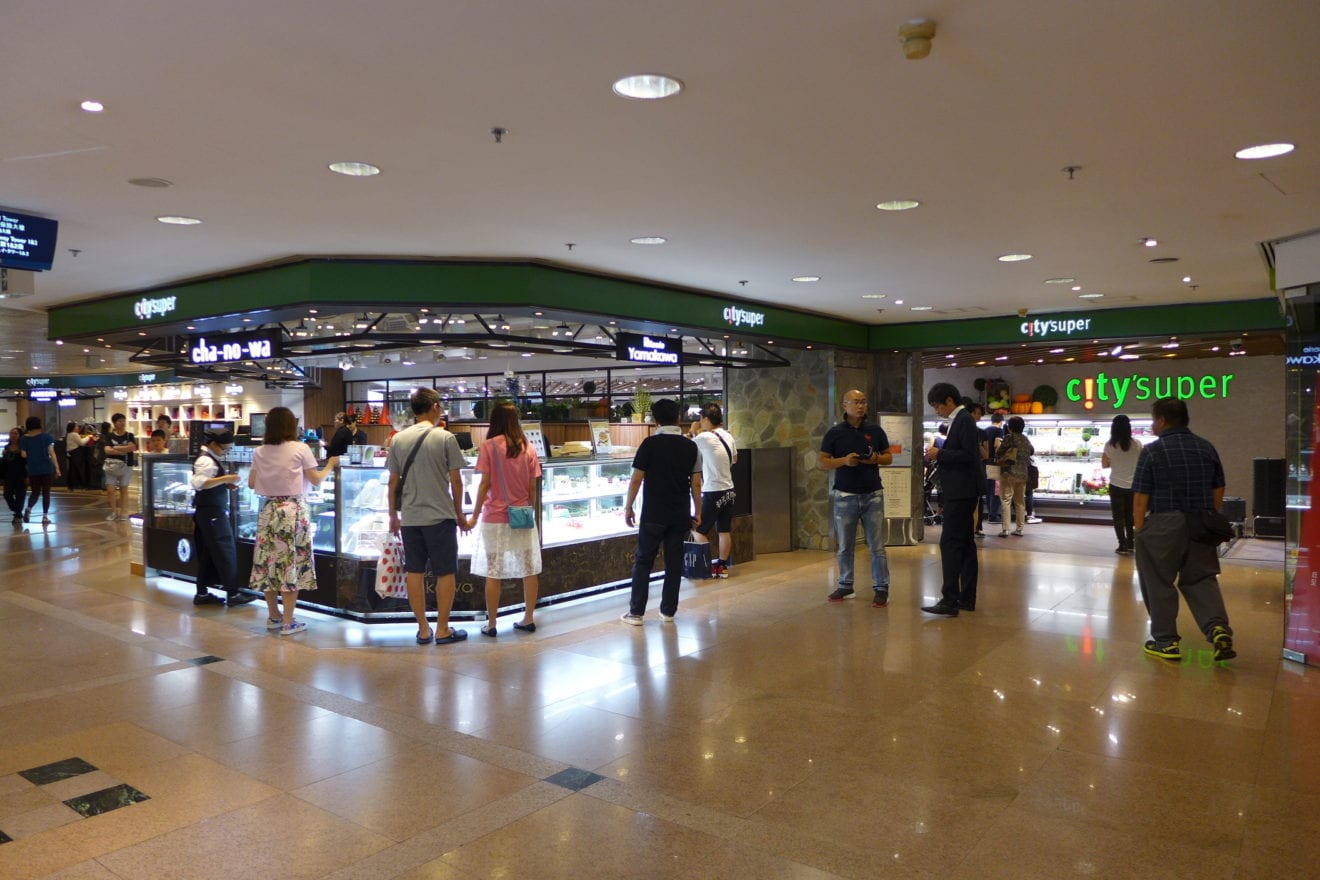
    Twenty years on and City’super has become a household name for lifestyle stores selling top-quality meats, fruits and vegetables along with wine, beverages and other lifestyle products. It has brought in new concepts to shopping; it was the first adopt a bank queueing system, in which all customers form a line to be served by the next available cashier, and allows them to pay faster.

    But such innovation and always trying something new may not always prove successful.

    In 1998 Hong Kong Telecom introduced interactive TV for shopping on demand and City’super joined the project as a service provider to sell its products on demand through TV. That proved to be too much ahead of its time because internet speeds were slower 20 years ago and the it was not popular. The company exited the venture some years later and suffered a significant loss.

    “The Lesson learned was that we might think twice jumping into new technology. But we don’t regret doing it. It was just a bit costly lesson,” City’super president Thomas Woo said.

    The company’s current hot product, Cha Cha soft cream, had a bumpy start.

    It formed a joint venture with Japanese partners to launch a traditional Japanese confectionery counter selling authentic Japanese sweets and ice-cream but it drew few customers. It lost money for a few years and the company once wanted to close it.

    But a staff member suggested it should be given a six-month period for a final chance. The team eventually developed the popular Japanese green tea soft cream and launched it as a brand — Cha Cha — which now always draws a long queue of customers.

    The company’s first batch of shops opened in Times Square in 1996. It now has four shops in Hong Kong, three in Shanghai and six in Taiwan.

    Besides City’super, it has Log-On brand which sell stationery, travel accessories and beauty products. There are now 12 such outlets in Hong Kong, three in Shanghai and six in Taiwan.

    It also operates the CookedDeli dining stores which offer international cuisine in Hong Kong and Shanghai.
  • Philippine brand Rusty Lopez heads to Indonesia

    Philippine brand Rusty Lopez heads to Indonesia

    Indonesia has welcomed Rusty Lopez into the market – and wants more Philippine fashion brands to follow.

    The shoe brand from Marikina City has opened its first overseas outlet in Jakarta’s Seibu Department Store in Grand Indonesia Mall.

    Other Philippine fashion brands that have established their names in Indonesia include Gingersnaps, Periwinkle, Penshoppe, and Karimadon.

    “The AEC [Association of Southeast Asian Nations Economic Community] is an exciting opportunity for Philippine companies to introduce established brands in Asean and beyond. We are optimistic that our local fashion brands can compete in the region because we are strong in design and we aim for the best quality,” said Philippine commercial representative to Indonesia Alma Argayoso.

    Rusty Lopez, known for high-quality footwear, took its classic and contemporary designs to the Indonesian market with a wide range of products from sandals to pumps.

    “We have carefully selected the best styles suited to the Indonesian market because we understand that fashionistas in Indonesia want more shoe styles that are fun, colorful, chic and fashionable,” said  PT Cruzzini Sejahtera president and director Sanny Cruz, who also serves as Rusty Lopez managing partner in Indonesia.

    Cruz said the company plans to open more stores this year.

    The Philippine Trade and Investment Center in Jakarta said it supports Philippine brands through trade shows and business development activities.

  • Seven & I store closures hit regions

    Seven & I store closures hit regions

    Losses have forced two Seven & I store closures in regional Japan, both outlets after 40 years of trading.

    Seven & I Holdings, which owns the Sogo and Seibu department store chains, is closing a Sogo store in Kashiwa, Chiba Prefecture, and a Seibu store in Asahikawa, Hokkaido. Both are scheduled to shut their doors on September 30, and the company has not revealed any plans for either site.

    Japan’s regional department stores have been hit hard by competition from major shopping developments and other factors. Also, they are not easily accessible for foreign tourists, so have not benefited from the tourism boom.

    “It has been difficult to attract customers and we cannot continue to run deficits,” says Seven & I Holdings president Noritoshi Murata.

    Sogo and Seibu are known for having a higher ratio of regional outlets than other major department store chains, says The Japan News. Since their sales peaked in the 1990s, both Sogo Kashiwa and Seibu Asahikawa have been on a downward trend.

    Many other regional department stores have already closed. The Kenmin Department Store in Kumamoto, in business for more than 40 years under different names, shuttered in February last year. The Imari Tamaya store in Imari, Saga Prefecture, closed in January, citing a shrinking population, poor sales and other factors.

    Run by Isetan Mitsukoshi Holdings, the Marui Imai department store in Hakodate, Hokkaido, has reported a 4.8 per cent drop in sales to ¥6.3 billion (US$55.46 million) for the nine months ending December compared to the same period the previous year. In contrast, the Mitsukoshi Ginza store in Tokyo logged ¥64.3 billion in sales during the same period, up 19.6 per cent from the previous year. The Ginza outlet has been helped by increased foreign tourism.

    Department stores in 10 major cities sold about ¥12.1 million per 100 sqm in January, compared to about ¥5.68 million in regional stores, according to the Japan Department Stores Association.

    “It will be difficult to close the gap,” says an association official.

    Meanwhile, Isetan Mitsukoshi Holdings plans to increase small and midsize stores nationwide from 102 to 180 by the end of the 2018 fiscal year.

    Takashimaya last year created in-store displays of cosmetics and other products available online instead of at the regional outlets themselves.

  • Seven & I to launch online store

    Seven & I to launch online store

    Japan’s Seven & I Holdings says it will open a giant online store in November, offering products sourced from across its retail store brands.

    By February 2019, Seven & I anticipates a range of 6 million SKUs will be available on the new store, including goods specifically created for the channel in partnership with name brands, including apparel chain Uniqlo.

    It targets ¥1 trillion in annual turnover, or US$8.3 billion when fully operational.

    Seven & I is the global parent of the 7-Eleven convenience store brand, owns the Ito-Yokado chain of hybrid supermarkets and general merchandise stores and the high end department stores Seibu and Sogo.

    The new online store ‘Omni7’ will open on November 11 with a stock of 1.8 million items.

    Shoppers will be able to request delivery to their home or two any Seven & I outlets for convenient collection – such as 7-Elevens.

    Returns will be permitted over the counter at any group store.