
Tag: sell-off

  • Yum Brands Eyeing Potential Pizza Hut Sell-Off Amid Underperformance

    Yum Brands Eyeing Potential Pizza Hut Sell-Off Amid Underperformance

    Yum Brands, the parent company of Pizza Hut, is currently exploring strategic alternatives for its pizza arm, which may include a potential sale. This move comes as Pizza Hut’s performance has been an underwhelming aspect of the business, failing to match the success of other sectors within the company.

    Strategic Review Initiated

    On Tuesday, Yum Brands disclosed that the company had commenced a formal evaluation of strategic alternatives for Pizza Hut. The purpose of this review is to unlock the brand’s full potential and optimise the value for the company’s stakeholders.

    In a statement, Christopher Turner, Yum Brands’ CEO, noted the Pizza Hut team has been diligently tackling business and category-specific challenges. However, the brand’s performance suggests that further action is required to unlock its full value. He further hinted that these goals might be more effectively achieved if Pizza Hut was not under the Yum Brands umbrella.

    A New Approach

    Turner stated that a new approach, which could potentially involve selling the business, may allow Pizza Hut to realise its full potential. However, he did not elaborate on what other approaches might be under consideration.

    Yum Brands has noted that no specific timeline has been set for the completion of this strategic review. Likewise, the company has not guaranteed that this process will result in a transaction.

    For guidance on this strategic review, Yum Brands has engaged the services of Goldman Sachs and Barclays as their financial advisors.

    Questions & Answers

    Why is Yum Brands considering selling Pizza Hut?
    The company is exploring different strategic options for Pizza Hut, including a potential sale, to maximise the brand’s potential and the value for the company’s shareholders.

    What is the timeline for this strategic review?
    Yum Brands has not set a specific deadline for the completion of the review.

    Has Yum Brands guaranteed that this review will result in a transaction?
    No, the company has stated that there is no assurance that the review process will lead to a transaction.
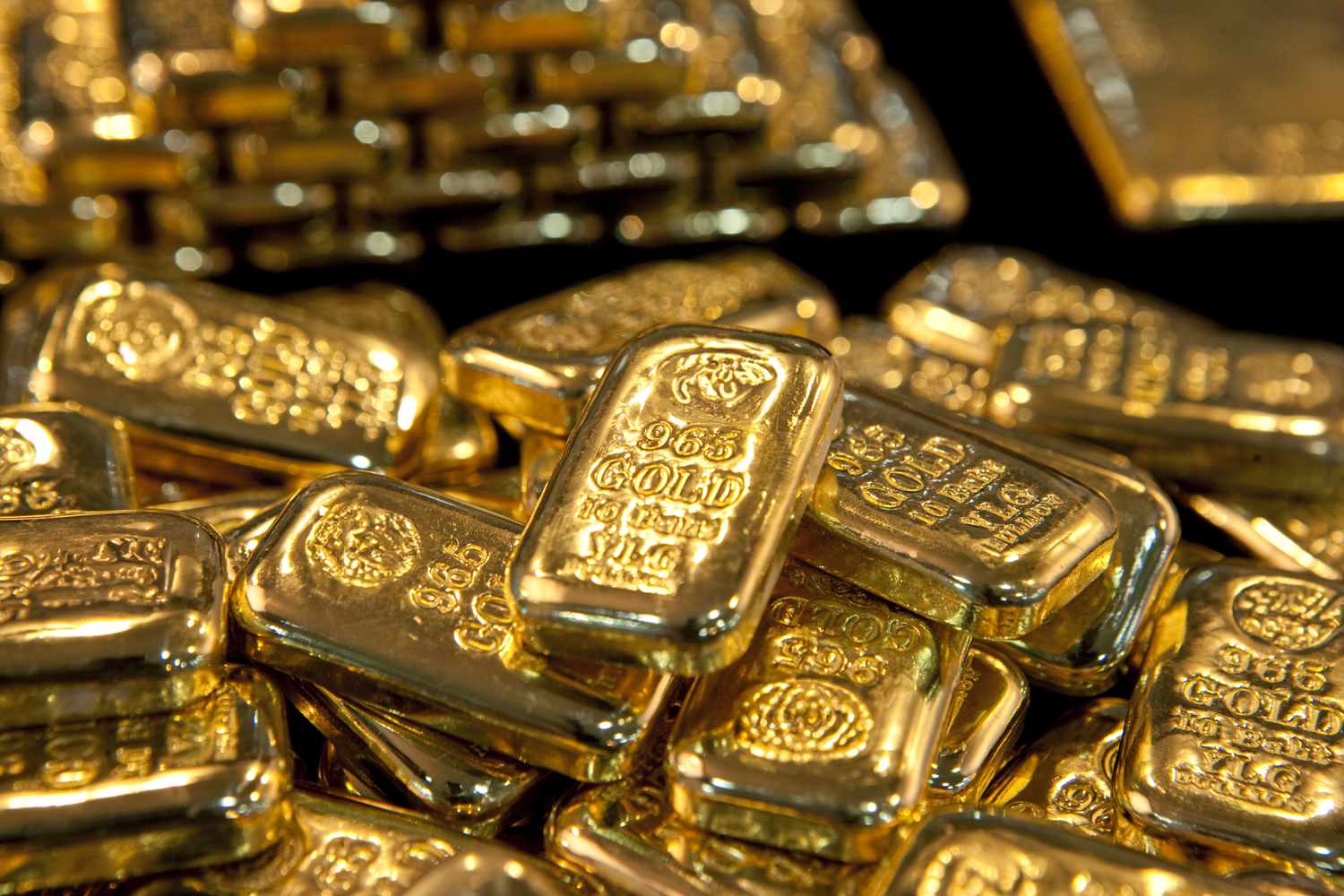

  • Philippines Contemplates Major Gold Sell-Off Amidst Skyrocketing Prices and ‘Excessive’ Reserves

    Philippines Contemplates Major Gold Sell-Off Amidst Skyrocketing Prices and ‘Excessive’ Reserves

    The central bank of the Philippines, Bangko Sentral ng Pilipinas (BSP), is currently considering whether to hold onto or sell a portion of its substantial gold reserves. This comes following comments from Benjamin Diokno, a member of the bank’s Monetary Board and former governor, who noted that gold prices are likely to decrease from their record heights.

    Decisions on Gold Reserves

    In a recent interview, Diokno raised the idea of the BSP selling some of its “excessive” gold reserves to turn a profit. He pointed out that gold comprises around 13% of the bank’s gross international reserves, a percentage that is significantly higher than other central banks in the region. The ideal range, according to Diokno, should fall between 8-12%.

    The total reserves of the BSP, amounting to nearly US$109 billion, include gold, foreign exchange, foreign-denominated securities, and other assets.

    Gold Prices and Past Decisions

    The Philippines amassed a significant amount of its gold reserves when prices were situated near $2,000 per ounce. Since this point, the value of gold has more than doubled, reaching a record peak of $4,381.21 on October 20. Following this peak, prices fell below $4,000 as investors capitalized on the easing of geopolitical tensions and chose to make a profit.

    Despite the current uncertainty surrounding the future of gold prices, Diokno posed the question, “Shouldn’t you sell already? What will happen if the price goes down?”

    Even with a recent dip, the value of gold has increased by 52% since the beginning of the year, partly due to substantial purchases made by central banks. Predictions for the future of gold prices vary, with some analysts expecting a further decline while others anticipate new record highs.

    Public Criticisms and Future Considerations

    In the past, the BSP faced backlash for selling a portion of its gold reserves in 2024 before prices experienced a substantial surge. However, Governor Eli Remolona Jr. defended this decision, arguing that the sale was spurred by sound portfolio management strategies, rather than an attempt to exploit market conditions.

    Remolona explained that the decision to sell the gold arose after its share in the reserves exceeded the ideal ratio. He maintained that the bank does not seek to predict gold prices, nor does it base its decisions on such predictions. The bank’s priority is to maintain a balanced portfolio.

    The BSP has previously noted that gold often acts as a hedge against price declines in other reserve assets. However, the bank also acknowledged that gold prices can be volatile, yield little interest, and incur storage costs.

    Questions & Answers

    Why is the Philippine central bank considering selling its gold reserves?
    The BSP is exploring this option due to suggestions that the bank’s gold holdings are “excessive.” As gold prices are currently at a record high, the bank could make a significant profit by selling a portion of its reserves.

    What percentage of the bank’s gross international reserves is made up of gold?
    Approximately 13% of the BSP’s gross international reserves is comprised of gold. According to former governor Benjamin Diokno, the ideal range should be between 8-12%.

    What factors influence the central bank’s decision to sell its gold reserves?
    Decisions to sell gold reserves are driven by portfolio management strategies rather than the anticipation of future market conditions. The bank aims to maintain a balanced and profitable portfolio.

  • Worst post-Lunar New Year sell-off in 22 years

    Worst post-Lunar New Year sell-off in 22 years

    The Hong Kong stock market saw the worst post-Lunar New Year session in 22 years on Thursday, a day after U.S. Federal Reserve chair Janet Yellen confirmed fears of a global slowdown in her testimony to Congress.

    Yellen raised the likelihood that U.S. interest rate hikes will be put on hold and possibly even cut over concerns about external risks to the U.S. economy and convulsions across stock markets worldwide.

    “Foreign economic developments, in particular, pose risks to U.S. economic growth,” said Yellen, referring to the debilitating effects of China’s economic slowdown, most remarkably, in dragging commodities prices down.

    On the back of those comments, the Hong Kong bourse reopened after a three-day break to a sharp sell-off, with the benchmark Hang Seng Index shedding 3.8% to close at its lowest level since June 2012 at 18,545.80. The Hang Seng China Enterprise Index of Hong Kong-listed mainland companies fell 4.9% to end at 7,657.92.

    The city’s blue chips fell almost across the board, with technology company Lenovo Group, which recently posted disappointing top-line growth, leading the decline with a 6.7% drop to 6.35 Hong Kong dollars.

    Financials and oil stocks bore the brunt of the selldown. China Life Insurance slumped 6.6% to HK$16.44. Other insurers such as Ping An Insurance Group and AIA Group lost 5.6% at HK$39.15 and 3.7% at HK$37.95, respectively.

    HSBC fell 5.44% to HK$49.50. Its Chinese counterparts Agricultural Bank of China, China Construction Bank, Bank of China, and Industrial and Commercial Bank of China all dropped about 4% over worries about a mounting credit crisis on the mainland.

    China’s largest oil refiner China Petroleum & Chemical (Sinopec) skidded 6.4% to HK$4.10, while other mainland energy giants, PetroChina, CNOOC and China Shenhua Energy slipped more than 5%.

    Of all the property stocks, China Vanke took the deepest plunge to close 8.92% lower at HK$1.58, while China Overseas Land & Investment was down 4.3% to HK$21.10.

    Consumer stocks such as Belle International, Hengan International and Tingyi Holding all lost around 6%. A fierce riot in Mongkok, one of the most popular shopping districts in Hong Kong, during the holidays has hurt sentiment toward the city’s already-battered retail sector.

    Mainland internet and telecom heavyweights such as Tencent Holdings and China Mobile were not able to escape the selling pressure, falling 5.4% to HK$136.10 and 3.1% to HK$82, respectively.

    Bad news from China also contributed to the sell-off. Before the holiday, the People’s Bank of China reported that the country’s foreign exchange reserve had fallen to $3.23 trillion in January, the lowest level since 2012, depleted by the central bank’s defense of both its currency and stock market.

    On Wednesday, Yellen’s comments were scrutinized for clues about future interest rate direction. She said that “monetary policy is not on a pre-set course,” suggesting that a rate cut could be considered if necessary. Overnight, the Dow Jones Industrial Average and the S&P 500 indexes ended slightly down, posting their fourth consecutive day of losses, while the Nasdaq ended three days of decline.

    Investors looking for safe havens in the risk-off environment pushed the spot gold price up to $1,207.6, the highest level since May 22.

    While mainland China and Taiwan markets remained shut for the Chinese New Year holiday until next week, most bourses across Asia faltered.

    South Korea, which also reopened after a long Lunar New Year break, saw its benchmark Kospi Index lose 2.9%. Singapore’s Straits Times Index and Thailand’s SET index dropped 1.7% and 1.84%, respectively. India’s Sensex Index closed 3.3% lower to its weakest level since May 2014.

    The Indonesian and Philippine markets were the only ones bucking the trend, rising 0.9% and 0.3%, respectively.