Tag: semarang

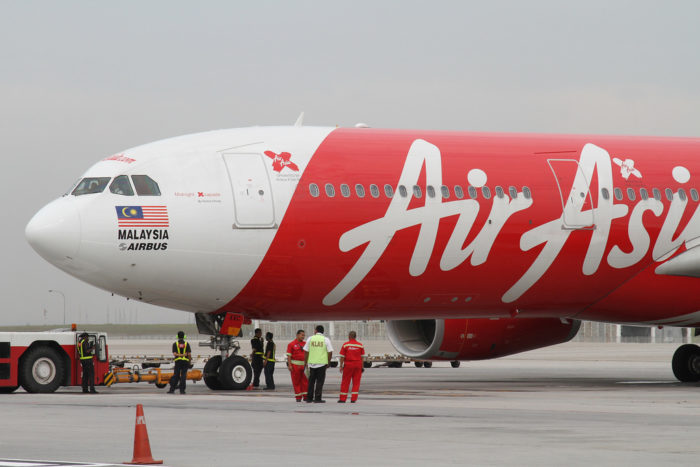
  • AirAsia keeps improving flight services

    AirAsia keeps improving flight services

    AirAsia won for the 11th time at the prestigious Skytrax World Airline Awards as the world’s best low-cost airline during the Paris Air Show in Le Bourget, Paris, France, in the middle of June 2019. But despite the awards, it has never let itself get complacent.

    The airline keeps its commitment to continue increasing and improving its flight services for domestic routes and foreign routes, by being continually committed to providing low cost but quality flight services on all of the routes it serves.

    In July 2019, the airline launched three new routes from Jakarta to Sorong in West Papua, Lombok in West Nusa Tenggara and Semarang in Central Java. The new routes will start operating on Sept. 1 and will be served by Airbus A320 aircraft with a capacity of 180 seats. In June, AirAsia launched five new domestic routes. The five round-trip domestic routes are Jakarta-Lombok (11 flights per week), Bali-Lombok (seven flights per week), Yogyakarta Kulonprogo-Lombok (three flights per week), Bali-Labuan Bajo (seven flights per week) and Surabaya-Kertajati (three flights per week). AirAsia will start operating its flight services on the five new domestic routes from Aug. 1 onwards.

    In an effort to attract more passengers to the new routes, AirAsia is offering special prices, namely for Jakarta–Lombok starting from Rp 635,000, Bali–Lombok from Rp 243,000, Surabaya–Kertajati from Rp 626,000. All the prices are one-way but include tax and free baggage up to 15 kg.

    The flight tickets, which are offered at a price of Rp 2.49 million for Jakarta-Sorong, Rp 590,000 for Jakarta-Lombok and Rp 341,000 for Jakarta-Semarang, can be ordered at airasia.com and through the AirAsia application. The prices are only for one-way but include passenger service charge and free baggage up to a maximum of 15 kg. The prices are only available on flights booked until July 28, for flights from Sept. 1 until Oct. 26.

    Sorong is the largest city in West Papua and stands as a gateway to Raja Ampat, one of the most exotic and beautiful tourist destinations in Indonesia.

    In Lombok, where AirAsia has recently opened its new hub, travelers can enjoy a number of enchanting destinations, such as Bukit Merese, the Gili Islands, Tanjung A’an, Pink Beach and Mandalika.

    In Semarang, which is also known as the little Netherlands, travelers can trace its history through the old buildings mostly from the Dutch colonial era, while hunting for local delicacies along the exotic journey.

    Besides the route expansion, last month AsiaAsia also offered five million cheap tickets through its Big Sale 2019 program for various domestic and international destinations. The promotional tickets include those on favorite routes, such as Jakarta-Singapore at a price of only Rp 150,000, Medan-Penang from Rp 230,000 and Surabaya-Bali from Rp 359,000.

    The airline has also introduced a new standard of flight comfort with its Airbus A330neo, which will certainly change the public perception of long-distance flights. It will offer the best value of ticket prices for 30 long-distance destinations in 10 major markets of AirAsia Group.

    “Besides developing international connectivity to support the visit of foreign tourists to Indonesia, this year, as we promised, we are focusing on expanding our domestic routes, especially those to eastern Indonesia.,” said AirAsia’s president director Dendy Kurniawan recently during the ceremony to launch the new routes.

    Currently, AirAsia Indonesia operates a total of 292 flights per week from Jakarta to various domestic and international destinations, such as Kuala Lumpur, Penang, Bangkok, Phuket, Surabaya, Yogyakarta and Bali.

    Overall, AirAsia serves more than 700 flights per week on 38 direct routes from 15 cities of Indonesia for domestic and international routes. It has a fleet of more than 200 airplanes of the type Airbus A320-200 and Airbus A330-300 in six countries, namely Indonesia, Malaysia, Thailand, Philippines, India and Japan, with more than 140 international destinations in Asia, Australia, the Middle East and the US.

    “We’ll continue to be committed to providing low cost but quality flight services in Indonesia. We realize it through the principle of efficiency, innovation and operation digitalization. It is not just a marketing gimmick. It is part of our vision and mission to realize ‘Now Everyone Can Fly,” Dendy Kurniawan concluded.

  • Angkasa Pura Retail opens units at Semarang terminal

    Angkasa Pura Retail opens units at Semarang terminal

    Angkasa Pura Retail has opened two shops at the new Semarang Ahmad Yani International Airport (SRG) in Central Java. The retail subsidiary of state-owned PT Angkasa Pura I has this month extended its retail footprint with two convenience shops spanning a total of 212sq m, one located landside in the public area and another airside post-security. A 135sq m airside gift shop is also set to open in due course.

    In addition, Angkasa Pura Retail will open a 105sq m gifting, souvenir and packaged food outlet at Lombok International Airport (LOP) in the coming months.

    Meanwhile, a 235sq m gift and souvenirs concept at Bali Ngurah Rai International Airport is also timed to open in August at the domestic departure area (gate six).

    ‘FLOATING TERMINAL’

    Last week, Indonesia’s President Joko Widodo inaugurated the ‘floating’ passenger terminal at Semarang, which replaces the previous 6,702sq m structure.

    Spanning 56,652sq m, the IDR 2.075tn ($149m) project has the capacity to handle 6.9m passengers annually, up from the previous 800,000 ceiling.

    According to a PWC Indonesia report earlier this year, Angkasa Pura I President Director Faik Fahmi was quoted as saying the ‘floating’ airport term relates to the fact the terminal is built on soft land, parts of which are submersed by water, using poles and pre-fabricated drainage.

    In a wide-ranging conversation during last month’s TFWA Asia Pacific Exhibition & Conference in Singapore, Angkasa Pura Retail revealed plans to re-map its existing 200sq m Surabaya Duty Free concession at Juanda International Airport, where it also operates a speciality beauty outlet at T2 (Baci) and other retail and F&B units.

    The re-mapping exercise is expected to take place towards the end of the year and is designed to open up space linked to the passenger gates.

    The firm’s merchandise presence at Surabaya includes wines & spirits, tobacco and fashion and accessories. The company is also taking a fresh look at its retail product mix in line with the the spatial re-configuration, with one focus being the development of Indonesian brand Bhumi Tea.

    For last two years, it has also boasted a presence in downtown Jakarta at the Kuningan City shopping mall, trading under the name ‘Ourflock’, but that has now come to an end.

    “The business was not doing very well and closed in August 2017,” confirmed Widya Wiedagdo, Marketing & Business Development Director, Angkasa Pura Retail.

    When asked if there are future plans to re-open in downtown Jakarta, he said: “Not yet, we must take many considerations as there is a lot of competition and the situation is not good for downtown, but the airport business is ok.”

    When asked for his plans this year, Wiedagdo says the objective is to open chocolate confectionery and fashion accessories stores in travel retail, in addition to dedicating more space towards liquor and spirits at Surabaya Airport.


  • International Fish Force Academy Officially Opens

    International Fish Force Academy Officially Opens

    The International Fish Force Academy of Indonesia (IFFAI) has officially opened today on Thursday, March 16, 2017. The inauguration was attended by Maritime Affairs and Fishery Minister Susi Pudjiastuti and National Police Chief Tito Karnavian. “This [academy] is aimed at how to handle criminal cases,” said Minister Susi on Thursday, March 16, 2017.

    The IFFAI academy is a joint effort by the Ministry of Maritime Affairs and Fishery together with Indonesian National Police (Polri) and the 115 Task Force.

    Susi explained that IFFAI is an international-standard school to study about fishery related criminal activities. Fishery crimes are complex and not only involve fish theft. “It also includes human trafficking, forced work, and endangered animal trade.”

    Minister Susi revealed that it would require great skills in handling and a good coordination between agencies to counteract the problem. “Now, information sharing is outstanding in developing an international fisheries fish force,” Susi said.

    According to the head of research and human resource agency at the Marine Affairs and Fishery Ministry, Zulficar Mochtar, there are currently 24 investigators and public prosecutors from the Ministry, Police, Navy, and Supreme Court that are enlisted at the academy.

    Zulficar said that following new criminal modus related to maritime affairs, he hopes that the academy can produce law enforcers that are able to understand and analyze this sort of criminal activities.

    The other purpose of this academy is to continue to build an effective understanding and collaboration between law enforcement agencies and to produce agents of change in the field. Participants will be trained at Jakarta Center for Law Enforcement Cooperation (JCLEC) in Semarang.

  • Alibaba eyes young, savvy Indonesia market

    Alibaba eyes young, savvy Indonesia market

    Chinese e-commerce giant Alibaba Group sees “huge potential” in the Indonesian market as the government, through a recent e-commerce road map, pushes efforts in developing the sector to make the country the biggest digital economy in Southeast Asia by 2020.

    Alibaba Group vice chairman Joseph Tsai said the diversified company — which has assets in e-commerce, technology, payment systems and logistics — saw “huge potential in Indonesia” for two reasons: The young population and a mobile phone savvy public.

    “We acquired (Southeast Asia e-commerce platform) Lazada so that we could be in Indonesia as well as five other Southeast Asian countries — Malaysia, the Philippines, Singapore, Thailand and Vietnam, with Indonesia obviously being the largest market,” Tsai told a press briefing on the sidelines of the 11.11 Global Shopping Festival on Nov. 11. The 11.11 Alibaba Group Global Shopping Festival, more commonly known as Singles’ Day, is the world’s largest shopping event.

    Alibaba Group acquired Lazada for US$1 billion earlier this year, its largest international investment ever. Lazada, which operates its own logistics and networks, is currently one of the fastest growing online shopping platforms in Indonesia.

    “We see that consumers in Indonesia are even younger than consumers in China. Indonesia is very much a “mobile first” e-commerce environment. People are enthusiastic about mobile phone use,” Tsai said.

    A survey of smartphone owners in Indonesia, who account for 43 percent of the population, showed that up to 57 percent of online shopping in the country is done on mobile phones, with average time spent on smartphones reaching more than two hours (136 minutes) per day, according to recent Google research.

    “They’re skipping computers and instead using mobile phones as their premier technology device. That growth is extremely fast, and we’re extremely excited about that,” Tsai said of the Indonesian market.

    Emerging Middle Class

    Indonesia’s e-commerce transactions are expected to reach US$24.6 billion this year, three times the US$8 billion recorded in 2013, thanks to emerging numbers of internet users and middle class Indonesians.

    The government even expects e-commerce transactions to reach US$130 billion in 2020 as it introduced the 14th economic stimulus package on an e-commerce roadmap covering support for funding, human resources training, logistics and telecommunication infrastructure, among other elements.

    In tapping into the growth potential in Indonesia, Alibaba Group aims to localize its operations to make them relevant in serving domestic consumption, which accounts for more than half of the country’s gross domestic product (GDP).

    “We want to be as local as possible to understand consumers locally through the Lazada platform,” Tsai said.

    In doing so, Alibaba Group may introduce the 11.11 Global Shopping Festival in local platforms to capture more transactions from Southeast Asia.

    “The service will also roll out to other markets, such as Southeast Asia, leveraging Alibaba Group’s investment in Southeast Asia e-commerce site Lazada, and markets that have a sizeable Chinese community,” the company’s press statement explained.