Tag: semiconductors

  • Taiwan Targets Silicon Photonics to Cut AI Chip Power Use by 50 Percent

    Taiwan Targets Silicon Photonics to Cut AI Chip Power Use by 50 Percent

    Taiwan is mobilising its chipmaking sector to commercialise silicon photonics and copackaged optics, with the Ministry of Economic Affairs backing efforts to overcome artificial intelligence computing bottlenecks.

    The island holds over 90 percent of global manufacturing capacity for chips at 7 nanometers or below, while more than 30 firms including Taiwan Semiconductor Manufacturing Co and MediaTek Inc formed an industry alliance in 2024.

    Silicon photonics replaces conventional copper wiring between chips with optical signals. Because optical transmission generates negligible heat, the technology cuts device power consumption by 30 to 50 percent, according to the Ministry of Economic Affairs. That saving eases cooling limits in high-density AI data centres. It also clears the 1.6-terabit-per-second bandwidth ceiling that hampers electronic links.

    Optics Replace Copper Interconnects

    Heavy capital is pouring across the hardware supply chain. Nvidia invested US$4 billion into silicon photonics development in March. The chipmaker needs architectures that sustain real-time AI workloads and high-definition streaming without overheating server racks.

    Taiwanese authorities have folded the technology into their New 10 Major AI Infrastructure Projects. Funding flows through the government’s A+ Enterprise Innovation research programme. The scheme subsidises domestic research teams and equipment developers building local manufacturing tooling.

    Alliance Mobilises Heavyweights

    Execution on the ground rests on the Silicon Photonics Industry Alliance, a consortium established in 2024 with industry group SEMI. The group brings together more than 30 technology suppliers. Members include Taiwan Semiconductor Manufacturing Co, ASE Technology Holding, MediaTek and Hon Hai Precision Industry.

    Asian hardware vendors and server assemblers face shifting procurement cycles. Traditional printed circuit board layouts will yield to integrated optical packaging. As a result, component suppliers must retool production lines for optical transceivers and precision glass substrates.

    Manufacturing risks centre on packaging yields and costs. Integrating laser sources and optical waveguides directly alongside silicon dies requires packaging tolerances tighter than standard wire bonding. These yield hurdles could delay volume delivery.

    Race for Next-Generation Packaging

    Foundry and packaging operators have spent years researching optics to counter the slowdown of traditional transistor scaling. Physical node shrinking now delivers diminishing returns. Advanced packaging formats like copackaged optics have become the primary path to computing efficiency.

    Prototype lines are now running across alliance members to finalise copackaged optics standards before volume production begins for 2026 data centre hardware cycles.

  • Xiaomi Launches 18 Fold Smartphone at 10,999 Yuan with Custom Silicon

    Xiaomi Launches 18 Fold Smartphone at 10,999 Yuan with Custom Silicon

    Xiaomi launched its flagship 18 Fold smartphone in Beijing on Monday, pricing the device from 10,999 yuan (US$1,639) to compete directly with high-end foldables from Huawei and Apple.

    The phone carries Xiaomi’s proprietary Xring O3 processor and LPDDR6 memory from ChangXin Memory Technologies, with sales opening on Thursday at 10am across mainland retail channels.

    Founder and chief executive Lei Jun detailed the hardware specifications at the Beijing presentation. The device includes a 7.58-inch inner display, a reinforced hinge mechanism, an aluminium chassis, and strengthened cover glass. The 24-billion-transistor Xring O3 artificial intelligence processor raises central processor performance by 60 per cent over the prior Xring O1 generation while cutting energy consumption on select workloads by 25 per cent. Lei said Xiaomi has earmarked 50 billion yuan specifically for custom chip development, part of a wider 200 billion yuan research and development budget planned over the next five years.

    Silicon Independence and Electric Vehicle Pricing

    Alongside the phone, Xiaomi rolled out its Pad 9 Pro Max tablet starting at 4,799 yuan, also powered by the Xring O3, and priced its extended-range Skynomad sport utility vehicles. The five-seat N70 Pro SUV starts at 209,900 yuan, while the seven-seat N90 Max begins at 269,900 yuan. Both undercut Tesla’s Model Y L, which retails from 339,000 yuan in China. The extended-range powertrain uses an auxiliary petrol engine to charge the battery pack, delivering a driving range exceeding 1,000 kilometres on a single cycle.

    For consumer tech retailers and premium device vendors across Asia, Xiaomi’s dual offensive in mobile silicon and electric mobility tightens pricing pressure across two categories simultaneously. By pairing domestic memory from CXMT with proprietary processors, the company shields its bill of materials against international component shortages that are squeezing entry-level hardware margins. The aggressive SUV pricing also demonstrates that Xiaomi is treating hardware margins as secondary to ecosystem lock-in, forcing traditional carmakers and handset specialists to defend their retail territory on compressed margins.

    Premium Tier Resists Smartphone Downturn

    The product blitz lands during an intense competitive window in China. Huawei unveiled its Mate XT 2 trifold handset on Monday starting at 19,999 yuan, using its Kirin 9050 Pro processor. Richard Yu Chengdong, chairman of Huawei’s Consumer Business Group, confirmed that Huawei has sold more than 1 million trifold devices worldwide. Meanwhile, Apple is scheduled to present its product line-up on Wednesday in California, where analysts anticipate the launch of a foldable model priced above US$2,000.

    This surge in premium launches contrasts sharply with the broader consumer hardware environment. Counterpoint expects global smartphone shipments to contract 12.4 per cent this year, hit by surging memory costs and lengthening replacement cycles among budget consumers. Premium foldables remain an exception. Counterpoint projects cumulative worldwide foldable shipments will cross 100 million units by year-end, with annual category shipments set to expand 37 per cent in 2027.

    Xiaomi built up to this release after spending 105.5 billion yuan on research and development over the past five years and first previewing the Skynomad vehicle architecture in late July. The group had previously rolled out the first-generation Xring O1 chip last year to test its custom silicon pipeline in select devices.

    Market attention now shifts to Thursday morning retail sell-through figures for the 18 Fold, followed by initial delivery volumes for the Skynomad SUV series ahead of fourth-quarter earnings.

  • Tencent-Backed Enflame Draws 4,073 Times Retail Demand in Shanghai IPO

    Tencent-Backed Enflame Draws 4,073 Times Retail Demand in Shanghai IPO

    Shanghai Enflame Technology drew 4,073 times retail subscription for its public offering on Shanghai’s STAR Market, raising 6.12 billion yuan ($860 million) to expand production of domestic artificial intelligence chips.

    Individual buyers lodged seven million orders totaling 5.98 trillion yuan, taking up the retail tranche of an issue priced at 142.18 yuan per share. The sale of 43 million shares represents 10 percent of the company’s enlarged equity base.

    Anchor Customer And Rising Shipments

    Founded in 2018, Enflame develops AI accelerator hardware designed for cloud infrastructure and large data centers. Tencent Holdings owns 20 percent of the business and generated 84 percent of Enflame’s total revenue in 2025, up from roughly 38 percent a year earlier.

    The company builds processor cards deployed in chatbots, recommendation systems and generative computing workloads. SWS Research estimates Nvidia commanded 55 percent of China’s AI accelerator market in 2025, while Enflame captured 1.7 percent of local shipments.

    The Final Dragon Reaches Public Capital

    Enflame is the last of China’s four emerging AI chip startups, known locally as the four little dragons, to complete a public listing. Peers Moore Threads, Biren Technology and MetaX Integrated Circuits reached the market earlier, with Moore Threads gaining 425 percent on its trading debut last December.

    While local computing platforms continue to substitute imported silicon, profitability remains unproven across the cohort. Enflame cut its net loss to 1.2 billion yuan in 2025 from 1.5 billion yuan in 2024. For the first half, the company projects a loss of 600 million yuan against anticipated revenue between 10.6 billion and 11.5 billion yuan.

  • Taiwan Pitches Global Chip Alliances as Market Heads for 1.5 Trillion Dollars

    Taiwan Pitches Global Chip Alliances as Market Heads for 1.5 Trillion Dollars

    Taiwan President William Lai told tech executives in Taipei that international chip partnerships will anchor an industry projected to exceed 1.5 trillion dollars this year.

    Foreign semiconductor leaders continue to pour capital into the island, led by Nvidia’s annual procurement and investment topping NT$3 trillion ($94.84 billion). Micron Technology has committed more than NT$1.4 trillion to local operations, while Advanced Micro Devices pushed its research spending in Taiwan past NT$300 billion.

    TSMC’s Overseas Buildout

    Taiwan Semiconductor Manufacturing Co is matching domestic research with heavy spending abroad to insulate buyers against supply shocks. The world’s largest contract chipmaker announced an additional $100 billion commitment to its Arizona facilities in July, while its plant in Kumamoto, Japan, continues on schedule.

    In Europe, TSMC expects its Dresden fabrication facility to begin commercial chip production before the end of next year. That site will supply automotive and industrial customers across the European Union.

    For consumer electronics makers and device brands across Asia, the dual strategy offers reassurance. Taiwan is retaining cutting-edge wafer fabrication and packaging on home soil while duplicating mature and specialized capacity in Western markets to guarantee steady silicon delivery during regional crises.

    State Support for Next-Gen Tech

    Taipei plans to back corporate spending by funding core infrastructure, including power generation, water supplies, land access, and computing capacity. State research backing will focus on silicon photonics, quantum computing, and artificial intelligence robotics.

    US Undersecretary of State for Economic Affairs Jacob Helberg told attendees via video link that concentration without resilience creates systemic vulnerabilities. He pointed to the Pax Silica framework, an alliance designed to secure technology supply lines among trusted trade partners.

    Discussions continue this week as the Semicon Taiwan trade exhibition runs through Friday at the Taipei Nangang Exhibition Center.

  • Google to Roll Out Two AI Chips a Year and Expand Taiwan Hub

    Google to Roll Out Two AI Chips a Year and Expand Taiwan Hub

    Google will accelerate its custom artificial intelligence chip rollout from a two-year cycle to two processors annually while expanding its Taiwan research footprint by 60 per cent.

    The revised schedule shifts the company away from its traditional multi-year hardware cadence as competition for proprietary cloud computing silicon intensifies across the tech sector.

    Faster Silicon Cadence

    Amin Vahdat, Google’s senior vice president and artificial intelligence infrastructure chief, announced the accelerated timeline during a keynote address at Semicon Taiwan in Taipei on Wednesday. The company plans to release two bespoke chips every year and expects to lift that frequency even further over time.

    Backing the faster production tempo requires more engineering capacity on the ground. Google is growing its dedicated research and development floor space across Taiwan by 60 per cent to house expanded design and testing teams.

    Regional Hardware Footprint

    Taiwan sits at the centre of global advanced semiconductor fabrication and packaging. By enlarging its local engineering hubs, Google tightens operational proximity to key foundry partners, contract assemblers and component supply chains that manufacture its custom processing units.

    For cloud platforms and enterprise services operating across Asia-Pacific, in-house silicon helps control operational power costs and workload efficiency in regional data centres. Competing tech operators across the region are running similar programs to secure custom processing capacity.

    The company will now focus on staffing the expanded Taiwan design facilities ahead of its next scheduled processor rollouts.

  • TSMC Agrees to Produce Three 3Nm Chips for Xiaomi

    TSMC Agrees to Produce Three 3Nm Chips for Xiaomi

    Taiwan Semiconductor Manufacturing agreed to produce three custom chips for Xiaomi, including a next-generation three-nanometre smartphone processor starting in 2026.

    The contract ties the $2.0 trillion Taiwanese foundry directly into the Chinese brand’s hardware expansion across flagship handsets, smart devices and automotive platforms. Xiaomi plans to deploy the primary 3nm design, designated the Xring O3, in its premium smartphones before rolling out two companion processors for consumer artificial intelligence devices and autonomous vehicle controls.

    Expanding beyond data centres

    Adding Xiaomi diversifies TSMC’s advanced-node order book at a time when top-tier 3nm wafer allocation has remained heavily concentrated among Western computing and mobile clients. Handset manufacturers in Asia have spent three years attempting to bring proprietary silicon in-house to reduce their dependence on merchant chipmakers. Xiaomi’s commitment to custom designs manufactured on TSMC’s cutting-edge lithography mirrors earlier silicon strategies from rival hardware makers, though extending those designs into vehicle autonomy widens the operational scope.

    For consumer tech brands in Asia, controlling chip architecture allows tighter software integration across connected ecosystems, from living-room appliances to electric sedans. The arrangement secures advanced fabrication capacity for Xiaomi while providing TSMC with volume demand outside its core server and cloud computing base.

    Wafer volume targets

    Initial commercial success hinges on the manufacturing yield and delivery pace of the Xring O3 line during 2026. Market performance will depend on the speed at which Xiaomi ramps retail shipments of its 3nm handsets and incorporates the subsequent automotive silicon into its production vehicles.

  • Canadian Chip Startups Team up with Taiwan Foundries on Advanced Packaging

    Canadian Chip Startups Team up with Taiwan Foundries on Advanced Packaging

    Canadian semiconductor developers showed design automation and packaging technologies in Taipei, seeking integration with Taiwan’s high-volume manufacturing lines ahead of SEMICON Taiwan.

    The Canada-Taiwan Semiconductor Co-Creation Forum 2026 brought together specialized tech firms offering solutions for bottlenecks in artificial intelligence hardware, hybrid bonding and analog circuit layout.

    Targeting packaging bottlenecks

    Rather than funding domestic wafer fabrication plants, Canadian firms are positioning themselves upstream in research, design tools and specialized metrology. AsterQuanta presented an AI-driven platform that applies reinforcement learning to automate analog circuit design, a discipline that still depends heavily on manual engineering adjustments.

    Digitho introduced programmable photomask software designed to adjust lithography patterns dynamically based on placement offsets of chiplets during heterogeneous integration. The system aims to increase interconnect density by adapting exposure patterns directly on the substrate.

    Metrology and vacuum subsystems

    In quality control, ICSPI presented micro-scale atomic force microscopy systems built onto one-square-millimetre chips. Operating multiple AFM probes in parallel allows high-throughput, nanoscale surface measurement required for hybrid bonding and advanced copper pad inspection.

    Meaglow exhibited hollow-cathode plasma source reactors engineered to reduce oxygen contamination in thin-film nitride layers. Toronto-founded AI processor developer Tenstorrent, which established an operating unit in Taiwan last year, also outlined its RISC-V and neural network processor roadmap.

    For Asian foundries and packaging houses facing skilled engineering shortages and tighter hybrid bonding tolerances, adopting specialised toolsets from overseas research hubs provides immediate productivity gains without rebuilding core manufacturing infrastructure.

    The participating suppliers now face qualification trials to demonstrate throughput and defect-reduction targets on standard 300mm wafer production lines across Taiwanese contract manufacturers.

  • Asia Air Cargo Rates Diverge as Transpacific Prices Surge 30 Percent

    Asia Air Cargo Rates Diverge as Transpacific Prices Surge 30 Percent

    Air cargo rates from China to the United States climbed 30 per cent year-on-year ahead of the peak shipping rush, driven by steady semiconductor and e-commerce shipments.

    By contrast, rates on the China-to-Europe corridor rose 12 per cent over the same period, slowed by the European Union ending its de minimis tax exemption on July 1.

    The price split reflects an uneven recovery across Asian export corridors. While air space out of Taiwan remains tight on artificial intelligence hardware, and outbound demand from South Korea, Malaysia and Singapore holds firm, outbound volumes from mainland China and Hong Kong have cooled. Pricing data from the TAC Index shows transpacific air freight maintaining a sharp premium, supported by technology shipments alongside higher jet fuel expenses caused by Persian Gulf shipping disruptions.

    Ground Bottlenecks and Route Shifts

    Airlines and forwarders face wide gaps in aircraft fill rates across the region. Dedicated freighter aircraft operate at roughly 65 per cent average load factors, compared with only 36 per cent for passenger aircraft belly hold space, according to IATA figures cited in the Journal of the Air Transport Research Society.

    Freight forwarder Dimerco Express Group noted that cross-border shippers altered transport modes to bypass tight air lanes, diverting freight between China, Vietnam and Thailand onto road networks and utilizing rail corridors into Europe. Early tariff front-loading by retail importers also pulled seasonal volumes forward into earlier quarters.

    Capacity limits on the ground often matter more than available aircraft. At regional transshipment hubs such as the Maldives’ Velana International Airport, which handled nearly 89,000 tonnes of cargo in 2025, warehouse throughput and labor deployment govern holiday processing speeds rather than runway slots.

    Shifting Asian Supply Chain Flows

    For consumer brands and electronics manufacturers across Asia, these fragmented lane dynamics mean freight procurement can no longer rely on broad regional averages. Shippers managing supply chains out of Taipei or Penang face sustained space premiums that do not match the softer spot rates available out of southern Chinese export hubs.

    Carriers are adjusting winter flight schedules to manage the uneven demand. Velana International Airport expects flight movements to rise 12 per cent during the 2026/27 winter schedule, supported by new scheduled freighter operations including Raya Airways’ weekly service from Penang.

  • Zhipu AI Launches GLM-5.3-Flash After Stealth Trial on 100,000 Domestic Chips

    Zhipu AI Launches GLM-5.3-Flash After Stealth Trial on 100,000 Domestic Chips

    Beijing-based Zhipu AI launched its open-weight model GLM-5.3-Flash on Wednesday after running the system across a cluster of 100,000 domestic Chinese chips. The release followed an unannounced trial on platforms including OpenRouter and OpenCode, where the system processed 62 trillion tokens under the test alias Ox Alpha before its formal unveiling.

    Shares tied to the startup rose following the disclosure. Zhipu confirmed that the entire test deployment operated on domestic silicon rather than foreign hardware imports.

    Traffic Across Developer Marketplaces

    The stealth evaluation generated heavy traffic across international developer hubs over the past week. Users tested the then-unidentified Ox Alpha across code generation and complex task routing, driving sustained compute volume across the 100,000-chip array before Zhipu claimed ownership of the checkpoint.

    Releasing the architecture as open weights allows enterprise clients and independent software developers to download, modify, and host the model on their own infrastructure. That deployment model lowers operating expenses for commercial software firms looking to integrate natural language tools without paying continuous per-token API charges to proprietary providers.

    Domestic Compute Strategy

    Building massive cluster capacity on domestic processors addresses direct supply constraints that Chinese technology groups face under ongoing hardware export restrictions. Large tech firms across the mainland have traditionally relied on foreign graphics processors to train top-tier foundation models, but local alternatives are now taking on larger workloads.

    The performance of the 100,000-unit setup provides an operating template for other Chinese software developers seeking to decouple their deployment pipelines from foreign accelerators. Market attention now turns to downstream enterprise adoption rates and independent performance benchmarks against competing commercial models over the current quarter.

  • Apex Logistics Faces US Probe over Alleged Nvidia Chip Transshipment to China

    Apex Logistics Faces US Probe over Alleged Nvidia Chip Transshipment to China

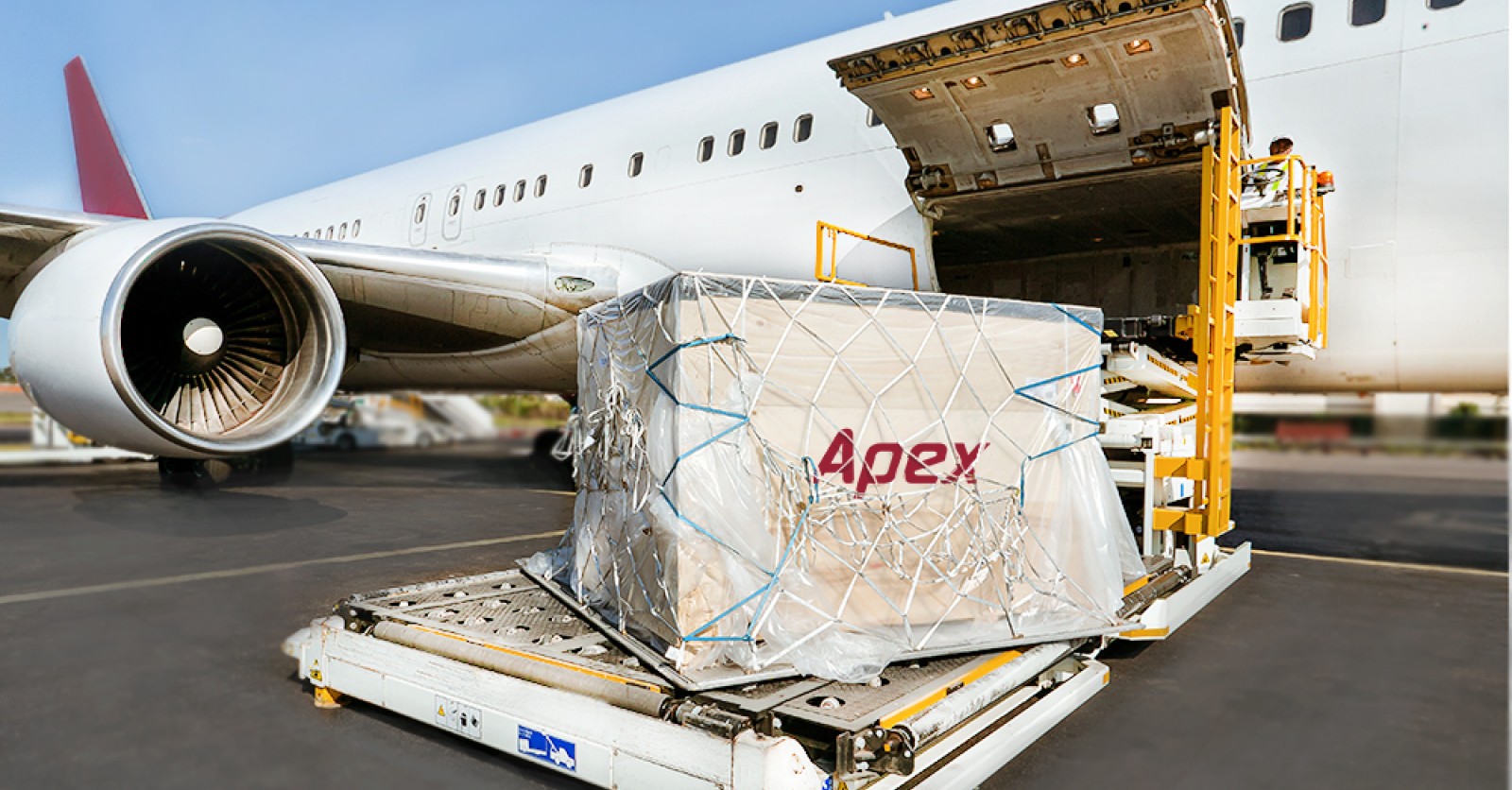
    US authorities are investigating Singapore-headquartered Apex Logistics over the suspected diversion of Nvidia-powered artificial intelligence servers to mainland China through Southeast Asian transshipment hubs. The inquiry focuses on cargo handled in 2024 and could mark the first US enforcement action against a commercial freight company for illicit semiconductor trade.

    Swiss logistics group Kuehne+Nagel, which bought a majority stake in Apex in May 2021 and acquired the remaining shares in October 2025, confirmed the subsidiary is assisting the investigation. Kuehne+Nagel stated it has not been contacted directly by US investigators, describing the probe as an isolated issue concerning specific past shipments.

    How the Taiwan to Hong Kong routing worked

    Investigators are examining a supply line that moved Nvidia-powered server hardware from Taiwan to the United States, dispatched it to a destination in Southeast Asia, and then forwarded it to Hong Kong. From Hong Kong, ground carriers transported the hardware across the border into mainland China. The US inquiry centers on the leg between American ports and Southeast Asian distribution points.

    Apex acknowledged US scrutiny regarding a limited batch of cargo moved during 2024 that reached prohibited destinations. The company stated it is cooperating with investigators and maintains compliance protocols across its network. Apex was founded in Shanghai in 2001 and registered its corporate entity in Singapore in February 2016.

    The servers under review were assembled by California-based Super Micro Computer. Super Micro maintains no direct contract with Apex, as the freight forwarder was hired directly by third-party buyers purchasing the hardware.

    Scrutiny on Southeast Asian hubs

    Washington has restricted direct sales of advanced AI processors to China since 2022, expanding those curbs to include custom chips such as the H20 over national security and military computing concerns. As export controls tightened, enforcement agencies increased audits on cross-border logistics firms that handle transshipment routes across Asia.

    Freight forwarders across Singapore and Malaysia face heightened compliance checks from Western trade officials seeking to close multi-leg shipping channels. Singapore Prime Minister Lawrence Wong stated on August 23 that the country will not permit illicit trade through its facilities, while noting ports cannot audit the full manufacturing chain of every container in transit. The US Commerce Department is reviewing freight documentation from the 2024 shipments to determine if formal export violation penalties apply.

  • Japan Warns Natural Disasters Threaten Automotive and Chip Supply Chains

    Japan Warns Natural Disasters Threaten Automotive and Chip Supply Chains

    Japan flagged supply chain risks from recent natural disasters on Thursday, even as the government maintained its assessment that the broader economy continues a moderate recovery.

    The Cabinet Office added the warning to its August report following a magnitude 7.1 earthquake in Kumamoto Prefecture on July 28 and torrential rain across Chiba Prefecture on Aug. 13. Kumamoto forms a major manufacturing hub for semiconductor and automotive components across East Asia. While plants have begun restarting production lines, disruptions to component flow still pose risks to industrial output.

    Supply Chain Knots and Farming Losses

    Kumamoto’s cluster of chip and automotive parts plants feeds assembly networks across Japan and regional export channels. Factory operators resumed output in stages throughout August, but the government warned that bottleneck risks persist. Heavy rain in Chiba damaged regional farming operations, threatening short-term supply for agriculture, forestry, and fisheries.

    Capital expenditure showed resilience despite the disruptions. Corporate investment picked up steadily across the technology sector, driven by data infrastructure spending and demand for artificial intelligence hardware.

    Spending Holds as Rental Housing Stabilises

    Private consumption showed movements of picking up, leaving the official assessment unchanged for the month. Retailers and consumer brands continue to benefit from stable domestic demand, though high material costs kept new builds for owner-occupied houses and condominiums subdued. Stronger demand for rental properties helped lift the overall housing assessment from sluggish to generally flat.

    Corporate earnings delivered solid numbers for the April to June quarter, prompting the Cabinet Office to upgrade its stance on business profits to improving. Wholesale inflation showed signs of cooling, with corporate goods price growth slowing as petroleum-related input costs eased.

    Manufacturers and retail networks now face the test of third-quarter earnings to show whether component delays in Kyushu and agricultural losses in Chiba hit operating margins.

  • Taiwan Indicts Eight over Smuggling 74 Nvidia AI Servers to China

    Taiwan Indicts Eight over Smuggling 74 Nvidia AI Servers to China

    Prosecutors in Taiwan indicted eight corporate managers on Monday over an illicit scheme that exported 74 advanced Nvidia artificial intelligence servers to Chinese buyers. The transactions generated more than $21.2 million in illegal proceeds through diverted shipments of Supermicro servers powered by Nvidia B300 graphics processing units.

    The Keelung District Prosecutors’ Office filed charges of breach of trust and forgery against distribution and sales managers from Taiwan units of Nvidia and Supermicro Computer Inc., as well as executives at distributor Albatron Technology and local server vendor Flying Tiger Technology. Strict manufacturer rules require buyers of advanced B300 hardware to hold whitelist approval, certify end users, and undergo on-site inspections for orders larger than eight units. Flying Tiger secured whitelist status through undisclosed methods in February 2025 before faking facility checks with data center operator Chief Telecom to clear an initial order of 130 servers.

    Routes through third markets

    When the original buyer failed to fund the purchase, conspirators rerouted the hardware across Asia to bypass export barriers. The group moved two servers from the first order and 50 servers from a second batch of 64 units directly to Chinese buyers through Indonesia. A third batch sent eight units through Japan and Hong Kong before Taiwanese customs halted the remaining 56 units on the island.

    Trading firm Long Wins and customs broker Chance See International handled logistics and false documentation to mask the destination of the cargo. In a related transaction, executives routed NT$39.16 million ($1.2 million) in Albatron assets through four bogus invoices issued by Quintai Electronics, triggering additional charges under Taiwan’s Securities and Exchange Act.

    Supply chain crackdowns in Asia

    The case shows how cross-border merchant networks continue to build transit routes through Southeast and East Asian hubs to feed mainland demand for restricted computing power. Washington has barred direct shipments of cutting-edge AI silicon to China since 2022, yet enterprise hardware continues to slip through regional third-party distributors that exploit weak verification loops between system builders and end facilities.

    Taiwan authorities are pursuing the fugitive head of Flying Tiger Technology, who collected the $21.2 million in export revenue, while the eight indicted managers await trial dates in Keelung.

  • Samsung and SK Hynix Slump Drags Seoul Benchmark Down 3.12 per Cent

    Samsung and SK Hynix Slump Drags Seoul Benchmark Down 3.12 per Cent

    South Korea’s benchmark KOSPI index dropped 3.12 per cent on Monday as sharp declines in Samsung Electronics and SK hynix dragged down Seoul equities. The semiconductor sell-off erased gains from the previous two sessions, leaving Samsung tumbling 8.70 per cent and SK hynix down 3.41 per cent by the close.

    The benchmark index settled at 6,696.96 points, down 215.99 points from Friday after opening 0.46 per cent lower. Foreign institutional funds drove the retreat, offloading a net 3.69 trillion won ($2.67 billion) in shares, while domestic institutions sold 1.29 trillion won. Local retail buyers absorbed 3.32 trillion won of the selling pressure.

    Divergent Shareholder Return Strategies

    Investor disappointment centered on the stark contrast between the capital return programs announced by the two semiconductor giants. SK hynix revealed a plan last Wednesday to repurchase and cancel 40 trillion won of its own stock, alongside a pledge to return at least 50 per cent of its free cash flow over the next three years. The chipmaker immediately started buying roughly 650,000 shares a day, accounting for up to 15 per cent of its daily trading volume.

    Samsung took a different approach, winning board approval on Friday for a capital allocation package worth between 90 trillion and 110 trillion won this year. That total includes about 30 trillion won in cash payouts and regular third-quarter dividends. Traders reacted negatively to the lack of immediate share cancellations, dumping the stock after management deferred specific allocation mechanics.

    Retail Buyers Cushion Foreign Outflows

    Across regional tech capital, institutional funds increasingly reward immediate share retirements over cash dividends because equity cancellations permanently reduce share count. Samsung’s reliance on cash payouts left investors exposed to timing uncertainty while SK hynix locked in direct daily buying demand.

    Capital that fled Samsung found a temporary home in smaller technology names. The secondary Kosdaq index gained 1.42 per cent to close at 813.33 points as money rotated into secondary battery suppliers and electronic materials manufacturers. In foreign exchange trading, the Korean won ended onshore trade at 1,382.4 per US dollar, strengthening by 4.1 won.

    Samsung’s board of directors is scheduled to meet in late October to determine the final dividend allocation and exact cash distribution timetable for the remaining portion of its 110 trillion won plan.

  • Chinese AI and Chip Makers Hand Millions in Stock to Lock Down Staff

    Chinese AI and Chip Makers Hand Millions in Stock to Lock Down Staff

    Chinese artificial intelligence and semiconductor firms are granting stock awards worth millions of dollars to staff across entire workforces to halt talent poaching.

    Chip designer Cambricon Technologies unlocked nearly 600,000 shares for 124 core staff, delivering an average payout of 5.57 million yuan (US$828,000) per employee. The Shanghai-listed company also launched a 5 million share scheme covering 944 workers through 2028, representing 85.3 per cent of its total payroll.

    Hardware Giants Expand Workforce Coverage

    Zhongji InnoLight, which makes optical transceivers for AI data centres, allocated 2.48 million shares across 99 key personnel in its latest vesting cycle. Based on April market pricing, that distribution yielded an average of more than 26 million yuan per recipient.

    Equipment manufacturer Advanced Micro-Fabrication Equipment China widened access further. Its March restricted share programme enrolled more than 97 per cent of its workforce. GPU maker Moore Threads followed in April by assigning 1,080 employees, roughly 85 per cent of its headcount, into its equity pool. At memory producer ChangXin Memory Technologies, founder Zhu Yiming pledged 768 million shares, half his partnership stake, to fund a decade-long employee pool while excluding himself from payouts.

    Zero Targets and Pre-IPO Payouts

    AI model developers are structuring payouts with fewer performance hurdles. Hong Kong-listed MiniMax issued 1.16 million zero-cost shares in June to core personnel, tying vesting schedules solely to tenure rather than operational benchmarks. Rival developer Zhipu AI allocated a 9.8 per cent post-listing stake across 426 staff through an internal platform, yielding an average holding value exceeding HK$100 million per person.

    Big Tech platforms are stepping up their own programmes to match startup offers. Tencent Holdings granted more than 38.6 million shares under its employee scheme, representing 0.42 per cent of its issued equity, as Alibaba Group Holding, Baidu, Meituan and Xiaomi rework compensation packages.

    The scale of these handouts reflects how quickly technical headcount costs have risen across mainland China. Where earlier stock plans favoured senior directors, current programmes distribute equity down to floor engineers to insulate operations from overseas recruitment drives and venture-backed rivals.

    Market watchers are now monitoring upcoming interim financial filings to track the share dilution costs from these multi-year vesting programmes.

  • Chinese EV Makers Face Rising Component Costs as AI Drains Supply

    Chinese EV Makers Face Rising Component Costs as AI Drains Supply

    Chinese smart electric vehicle manufacturers are battling component deficits of up to 30 per cent, driving steep price surges across circuit boards and basic electronic parts.

    Prices for printed circuit boards and multilayer ceramic capacitors have more than tripled over the past twelve months as global semiconductor makers reallocate production capacity to artificial intelligence data centres.

    Surging Hardware Prices

    Printed circuit boards now cost roughly 330 yuan ($49) per sheet, up threefold in a year according to data from the India Printed Circuit Association. Multilayer ceramic capacitors, essential for regulating electrical currents across vehicle power systems, jumped from 10 yuan per 1,000 units to 40 yuan in early 2026.

    Memory chips needed for autonomous driving features are delivering the heaviest financial blow. Nio chief executive William Li reported that rising raw material expenses, led by memory chips, added 20,000 yuan to the build cost of every single vehicle.

    Carmakers cost pressure mainly comes from memory chips. But a lack of PCBs and MLCCs disrupts production and prevents assemblies from running smoothly.

    Supply Chain Squeeze

    Component makers in manufacturing hubs like Zhejiang province are giving order priority to AI data centre operators over automotive assemblers because computing chips yield higher margins. Carmakers must now pay hefty premiums to keep assembly lines running.

    Geely Auto, China’s second-largest automaker, confirmed that while small passive components represent a modest fraction of total expenditure, physical shortages threaten assembly continuity. The bottleneck across global component production lines will take at least twelve months to resolve.

    The margin squeeze arrives just as Chinese carmakers rely on software and autonomous driving capabilities to win buyers in an increasingly crowded domestic auto market. Nio and Geely are renegotiating vendor contracts to lock in deliveries for the second half of 2026.