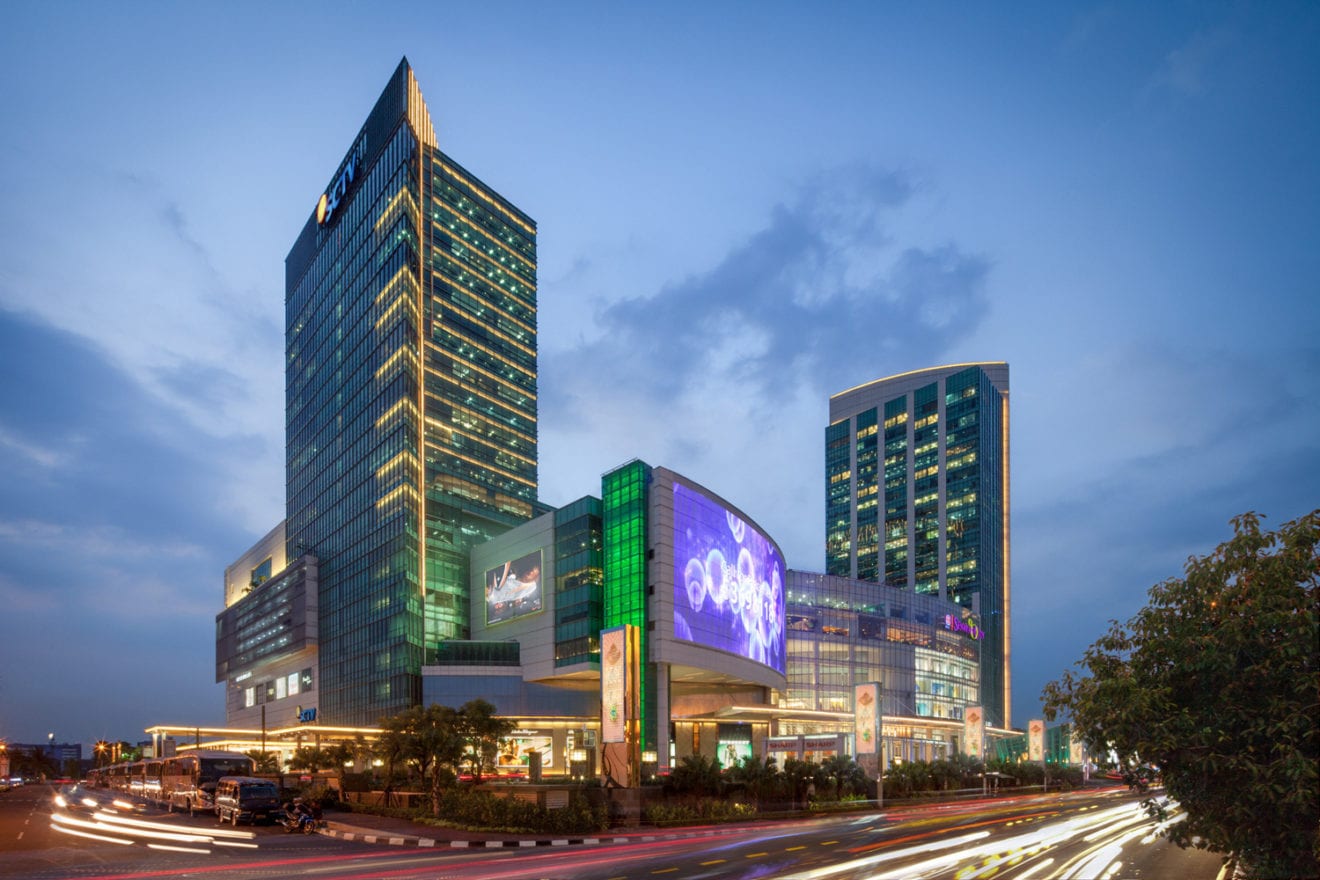
Jakarta may have hundreds of shopping malls, but the city has a long way to go to compete with global shopping destinations like Singapore or Hong Kong, as its malls lack interconnection.
Property consultant firm Savills Indonesia head researcher Anton Sitorus said recently that malls and shopping centers lacked interconnection as they had been developed in scattered locations all over
the city, explaining that such conditions were unfavorable for the retail sector.
Anton said the city had a number of traditional shopping districts like Tanah Abang in Central Jakarta and Mangga Dua in West Jakarta, Anton agreed.
“However, modern retailers are scattered in many places. Even if some malls are next to each other, the developers have not considered connecting them,” he said.
Anton said inter-connectivity was one of the main factors required to create an iconic shopping district and boost the market, citing the 1.9 kilometer Orchard Road shopping belt in Singapore as a prime example of a successful interconnected shopping district.
“15.1 million foreigners visited Singapore in 2014, 41 percent of them visited Orchard Road,” he said.
He emphasized that other well known shopping belts in the world such as the Avenue des Champs-Élysées in Paris and Fifth Avenue in New York also boast interconnection between shopping centers.
Anton said a consortium of developers in Jakarta had attempted to create a similar concept on Jl. Satrio in South Jakarta. “However, because of the economic crisis in 1998, the plan was canceled,” he said, adding that since then developers had only built free-standing malls. “The initial Jl. Satrio concept had sidewalks along which shoppers could easily walk between various shopping malls,” he said.
Most shopping malls in Jakarta do not provide pedestrian facilities as the management prioritize cars. Even when the distance between malls is less than 500 meters, there is no walkway connection.
The Jakarta administration is currently mulling over plans to widen the sidewalk on Jl. MH Thamrin, Central Jakarta, but the road is mostly occupied by office buildings, not shopping malls.
Anton said that if the city hoped to develop its retail sectors, it would be necessary to have shopping belts. “It is a good strategy. Retail will be the first sector to revive after the economic slowdown,” he said, adding that the sector also showed good resistance during times of crisis.
Anton said resilience was the result of various factors, including purchasing power in society, government domestic business incentives, the significant wealth of individuals as well as growing middle class.
“Although the economy is slowing, Jakartans keep shopping. Malls are packed during weekends and when there are bazaars or fairs scheduled,” he said.
Currently, there are almost 200 malls located throughout the capital. Shopping tax return company Global Blue revealed in January that Indonesians have been listed among the top four global shoppers, behind Chinese, Middle Eastern and Russians consumers.
The top five destination countries for shopping were listed as the UK, France, Italy, Japan and Singapore.
Rosaline Stella Lie, Savills retail senior director, said Indonesian consumers had high purchasing power but emphasized that the price of luxury goods in Indonesia were not competitive.
“Therefore, the rich love shopping abroad,” she said.
Rosaline said although the luxury tax was slashed for branded items, the price had remained high due to other costs like import duty.
Rosaline said the price should be competitive so high-end brands would be eager to open outlets in Jakarta. “More shopping districts will be developed but most of them will be in Greater Jakarta due to the city administration moratorium [2012],” she said.
She added that shopping districts should be located downtown, near the central business district, as the area offered easy access.