Tag: Seoul Fashion Week

  • South Korea Fashion Market Targets $25.15 Billion by 2029 as Domestic Labels Scale

    South Korea Fashion Market Targets $25.15 Billion by 2029 as Domestic Labels Scale

    South Korea’s fashion market is projected to reach US$25.15 billion by 2029, driven by an expanding roster of independent designer labels scaling across wholesale and retail channels.

    The figure reflects more than two decades of steady commercial development since Seoul Fashion Week debuted in 2000.

    Exporting Seoul’s Contemporary Aesthetic

    Seoul-based labels are capturing market share by combining technical fabrics with clean, structured tailoring. Amomento, founded in 2016 by designer Lee Mee-Kung, operates standalone stores in Seoul and sources textiles from South Korea and Japan. Open YY, launched by sisters Jiyoung and Boyoung Kim after rebranding from TheOpen Product, has secured global stockists through international luxury e-commerce platforms.

    Footwear and accessories have carved out dedicated niches. Heejin Kang established handbag label Osoi to target contemporary shoppers across Seoul. In jewellery, Numbering produces sterling silver and 14k gold-plated pieces. Eyewear specialist Gentle Monster built international presence through art-installation concept stores and high-profile product collaborations with Maison Margiela and Blackpink’s Jennie.

    Global Trajectories and Wholesale Reach

    Several Korean designers have anchored operations directly in major European fashion capitals. Rok Hwang, an alumnus of Celine, Louis Vuitton, and Chloe, established his label Rokh in Paris after training in London. Hyein Seo launched her utilitarian label in 2014 following graduation from the Antwerp Royal Academy of Fine Arts, staging runway presentations in London and New York.

    Veteran designers maintain long-running commercial runs at home. Former K-pop artist Seung Gun Park founded Pushbutton in 2003, making it one of Seoul’s most established independent brands. Other labels, including Lee Myoung Shin’s Low Classic, Hyunwoo Kim and Myungjun Shin’s Kijun, and outerwear specialist Dunst, continue to build volume through department store channels and multi-brand boutiques.

    For department stores and specialty stockists across Asia-Pacific, Korean contemporary labels offer mid-tier luxury price points with high cultural resonance among younger consumers. This commercial momentum increasingly challenges established Japanese and Chinese designers for shelf space across regional retail hubs.

    Buyers now track the upcoming seasonal order books, where South Korean labels must prove they can convert international runway visibility into steady wholesale reorders.
  • Culture complexes blooms in Asia

    Culture complexes blooms in Asia

    In recent years, the term “culture complex” has often been seen on social media. Postings showing people spending time at these spaces are shared often, attached with hashtags that read “culture life,” “leisure time” and “relaxation.” Culture complexes have risen as popular city destinations for young Seoulites. Buildings housing exhibition halls, cafes, restaurants and design shops bill themselves as culture complexes.

    According to last year’s “Where to Live,” a book by Yoo Hyun-joon, an architect and professor, the younger generation has been exhibiting their identities on social media by sharing the kind of clothes that they wear and the kind of food that they eat. Now, it is about the space — the kind of spaces where you spend your time.

    To satisfy such desires, culture complexes compete to house the trendiest tenants. What also matters is how well such culture complexes go with the neighborhoods they inhabit.

    The Wooran Foundation building in Seongsu-dong, eastern Seoul, is a case in point. The neighborhood is often referred to as the Brooklyn of Seoul, as young artists and hipsters have flocked to the old abandoned factories in the area.

    The new 12-story building stands out in the generally low-rise neighborhood. But the architectural design shares the Brooklyn mood with layers of gray concrete and an industrial mood.

    Cafe Dorrell, a Jeju Island import, on the first floor is one of the trendiest coffee franchises of 2018. The interior is decorated with skateboards, matching the young and hip atmosphere of the area.

    The culture complex has five halls for exhibitions and performances, ready to host all genres of artistic activities.

    Founded in 2014, the Wooran Foundation, is a cultural foundation that aims to create sustainable arts and culture ecosystem. President Chey Ki-Won is the younger sister of SK Group Chairman Chey Tae-Won.

    Some culture complexes serve as showrooms for companies. For example, Simmons Terrace showcases Simmons mattresses while the Monami Concept Store displays the brand’s stationery products.

    Flask Namsan in central Seoul is operated by Market m, a lifestyle design select shop. Located near Myeongdong, the first floor space features design products from interior decorations to furniture. Upstairs, visitors can relax with a cup of Moonshine Coffee from Australia.

    The cafe lounge on the third floor is a culture space for lectures, seminars and mentoring sessions. The yet-to-open upper part of the building, from the fourth to sixth floor rooftop, will house more showrooms and restaurants.

    “In Korea, we usually meet people at cafes and restaurants. While meeting friends, we can visit these shops and share our lifestyles. I get to know more about what others like and what I like, too,” Kim Ji-hye, an office worker her mid-20s in Seoul, said.

    “On the other hand, I sometimes wonder why these places call themselves culture complexes, when they are just spaces for businesses,” Kim said. “I feel like they should have something more than just sales.”

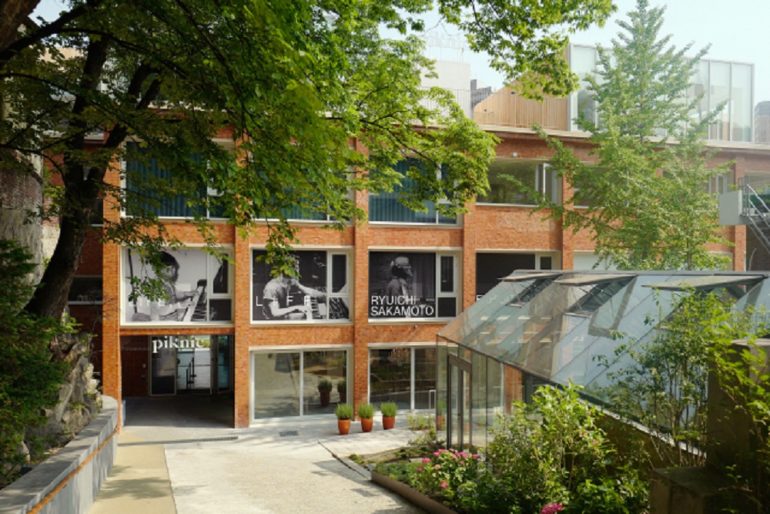
    Originally a pharmaceutical company building from the 1970s, Piknic, a culture complex in Hoehyeon-dong, central Seoul, houses Kafe Piknic, a cafe by day and tapas bar by night. Michelin-starred french restaurant Zero Complex is on the third floor.
    However, what has made Piknic a popularly recognized name is the exhibition space. Designer brand SJYP held a runway show here during the last Seoul Fashion Week. The space also hosted “Ryuichi Sakamoto: Life Life,” a media art exhibition of the life of the Japanese composer and musician.

    The culture space is currently holding “Jasper Morrison: Thingness,” an exhibition of work by the famed British industrial designer. After enjoying the exhibition, visitors can dine at the Kafe Piknic, sitting on a chair designed by Morrison.