Revamping Leasing: Porsche Shifts Focus to Internal Management
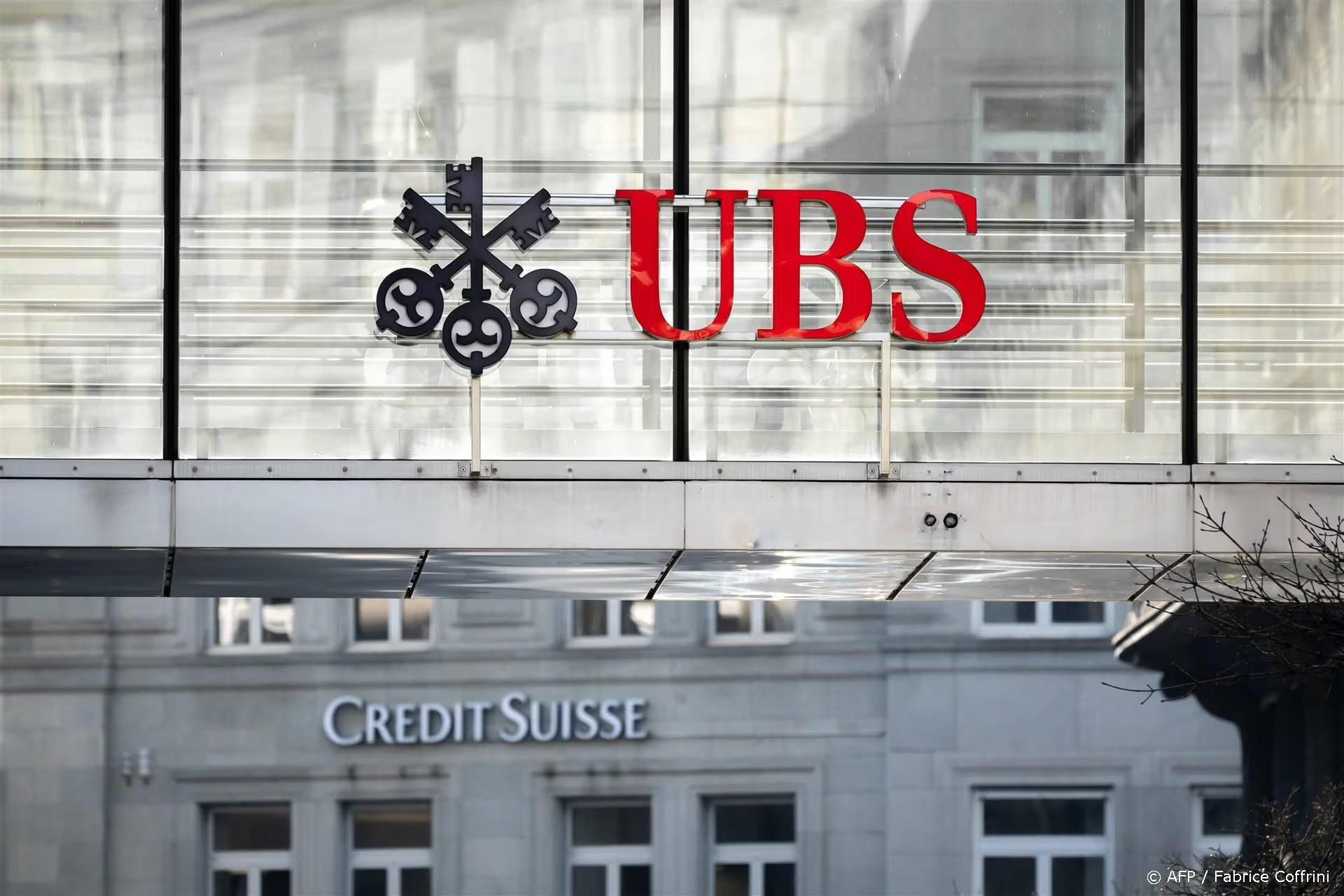
Porsche Switzerland is making a significant pivot in its leasing strategy. In a recent announcement, the iconic sports car manufacturer revealed that it will no longer rely on Bank-now—a subsidiary integrated into UBS following its acquisition of Credit Suisse—for its leasing operations. Instead, Porsche Financial Services Schweiz (PFSCH) will take the reins and manage leasing directly, aided by the operational support of Amag Leasing as an outsourcing partner.
The End of an Era: Goodbye to Bank-now for Leasing
For over a decade, Bank-now has held the reins of Porsche’s leasing activities in Switzerland. The specialist in consumer credit and leasing joined UBS after the historic takeover of Credit Suisse, marking a notable partnership since 2008. This recent restructuring reflects a strategic decision by Porsche to bring leasing operations in-house, allowing the company to have more control over key aspects of the value chain. The goal is to enhance flexibility in addressing customer demands and the needs of its dealers amid a rapidly changing automotive landscape.
Embracing the Future with New Offerings
The shift allows Porsche to respond more dynamically to evolving market trends driven by the rise of electric vehicles and the increasing importance of digital solutions. “With this strategic realignment, we are strengthening our resilience in an increasingly demanding market environment,” stated Dino Minutolo, Managing Director of PFSCH, underscoring the proactive approach to meet the challenges ahead. Expect a fresh array of tailored financing models to hit the market soon—imagine financing your dream Porsche with a swipe on an app!
Gaining Independence: A New Chapter
This newfound autonomy paves the way for Porsche to engage in independent product design while ensuring a closer relationship with its dealers. To facilitate the transition, Porsche will count on Amag Leasing’s expertise for back-office functions and contract processing, allowing them to focus on strategic development and customer service enhancement.
Bank-now Faces New Challenges
As Porsche moves forward with PFSCH, Bank-now experiences a notable loss of a high-profile client. The bank chose not to comment on how this change might impact its financial metrics. “Beyond our annual report, Bank-now does not provide information on current business developments,” a representative shared, suggesting that all is not lost as the bank continues working with various strategic partners in vehicle financing.
The Bigger Picture: Bank-now’s Stability
While Porsche has opted for a new direction, Bank-now reassured stakeholders regarding its collaborative ties with brand-independent garages and extensive dealer networks. The volume of Porsche’s previous leasing business remains a well-guarded secret, as both parties are tight-lipped about the specifics of their financial dealings.
On a more positive note for UBS Switzerland, Porsche Financial Services’ credit card business, which underwent restructuring last year, still maintains ties with the bank. So, while one door closes, another remains open.
Financial Health: Bank-now’s Robust Position
Looking ahead, Bank-now displayed commendable health in its financial reports for the 2024 fiscal year, boasting total assets exceeding CHF 5 billion, equity of CHF 416.3 million, and an operating profit of CHF 39.5 million. With a CHF 73 million dividend distribution to UBS Switzerland, the bank appears to be on steady ground, even as it navigates this noteworthy client transition.
Questions & Answers
What prompted Porsche to transition its leasing operations away from Bank-now?
Porsche decided to take control of its leasing operations to enhance flexibility and better respond to changing customer needs and market dynamics, particularly in the wake of electric mobility and digitalization.
How does this restructuring affect Bank-now?
Losing Porsche as a client represents a significant shift for Bank-now. However, the bank continues to collaborate with various strategic partners in vehicle financing, aiming to offset this loss.
What financial condition is Bank-now currently in?
Bank-now has reported strong financial health, with more than CHF 5 billion in total assets and a dividend distribution of CHF 73 million to UBS Switzerland, demonstrating its resilience despite recent changes.