Retail News CRM

Tag: seven eleven

  • Seven & I Holdings CEO Charts Future Of Retail: Digital Innovation, Sustainability, And Customer Engagement

    Seven & I Holdings CEO Charts Future Of Retail: Digital Innovation, Sustainability, And Customer Engagement

    As major players in the retail industry continue to evolve, insights from leaders such as the CEO of Seven & I Holdings, Ryuichi Isaka, reveal key strategies to thrive in a competitive landscape. At a recent stakeholder meeting, Isaka shared his blueprint for enhancing the company’s performance through innovation and collaboration, aiming to boost revenues across its diverse business segments, which include convenience stores, supermarkets, and department stores.

    Embracing Digital Transformation

    Isaka emphasized the significance of integrating digital technology into everyday operations. This is not just about having a snazzy app; it’s about fundamentally transforming the retail experience. For instance, by leveraging data analytics and AI, Seven & I is aiming to personalize the shopping experience while optimizing supply chain efficiency. Isaka noted that “a customer’s shopping journey needs to be as engaging as their favorite Netflix series,” underscoring the critical role of seamless digital engagement in today’s retail landscape.

    Corporate Culture and Sustainability

    At the heart of Seven & I’s strategy is a commitment to fostering a corporate culture that values sustainability and inclusivity. Isaka pointed out that sustainable practices not only resonate with consumers but also drive operational efficiencies. In a playful nod to consumer preferences, he remarked, “Who knew that a paper straw could lead to a plastic-free ocean and boost our brand image simultaneously?” This lighthearted comment underscored the growing importance of social responsibility in appealing to the modern consumer.

    Focus on Customer Engagement

    Another pivotal aspect of Isaka’s strategy is deepening customer engagement. He highlighted plans to expand loyalty programs that reward shopping behaviors while simultaneously creating a sense of community among shoppers. By offering exclusive deals and personalized shopping experiences, Seven & I aims to foster greater customer loyalty, recognizing that today’s consumer craves connection, not just transactions.

    Looking Ahead

    As Seven & I Holdings sets its sights on the future, its strategies reflect a keen understanding of evolving consumer behaviors and market dynamics in Asia. Isaka’s approach—to blend digital innovation with sustainability and customer engagement—holds promise not only for the company but also for the broader retail landscape. In a world where shopping can often feel impersonal, Isaka’s vision may just provide the spark needed to ignite a new era in retail.

    Questions & Answers

    What key strategy did Ryuichi Isaka highlight for Seven & I Holdings?
    Isaka emphasized the importance of integrating digital technology to enhance the shopping experience and optimize supply chain efficiencies.

    How does Seven & I Holdings plan to engage customers more effectively?
    The company aims to deepen customer engagement through expanded loyalty programs that foster a sense of community and reward shopping behaviors.

    What role does sustainability play in Seven & I’s corporate strategy?
    Sustainability is central to Isaka’s vision, with practices that resonate with consumers while enhancing operational efficiencies, showcasing the dual benefits of responsible retailing.
  • Japan’s Seven & i review to continue under investor pressure

    Japan’s Seven & i review to continue under investor pressure

    Seven & i’s independent directors said on Thursday the Japanese retail giant’s board would continue to review strategic alternatives as it faces pressure for broader reforms from some shareholders, including activist ValueAct Capital.

    ValueAct, which owns a 4.4 percent stake in Seven & i and has been pushing for change since 2020, calls for a spin-off of its 7-Eleven convenience store chain and seeks to replace four of the 14 board members at an upcoming annual meeting.

    A source has said Seven & i president Ryuichi Isaka is one of the board members ValueAct wants to replace.

    “The board is currently discussing the shareholder proposals and new board composition, and we plan to announce our decisions in mid-April,” Isaka told reporters and analysts on Thursday.

    Last month, Seven & i announced the results of a strategic review and said it would close an additional 14 Ito-Yokado supermarket stores in Japan and fully exit its apparel business. Some investors, though, said the review did not go far enough.

    The company said on Thursday it would reshuffle its financial services.

    Seven & i said in a separate statement that its operating profit rose 30.7 percent to a record 506.5 billion yen ($3.85 billion) in the financial year to end February. For the financial year that began on March 1, it forecasted a 1.3 percent profit increase.

  • Capi expands sparkling water range with 7-Eleven exclusive

    Capi expands sparkling water range with 7-Eleven exclusive

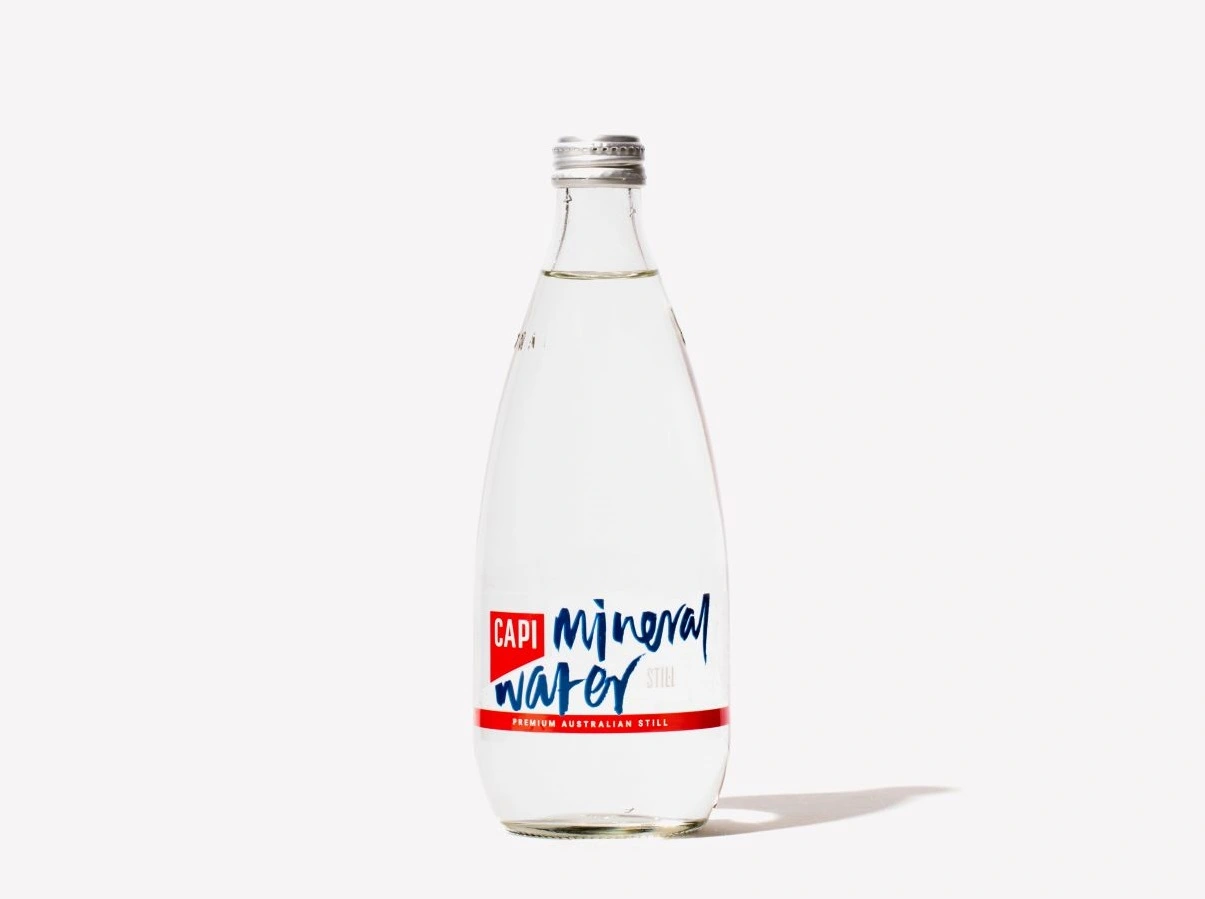
    Australian-owned premium water and mixer brand CAPI is rolling out through 7-Eleven stores nationwide with its 500ml still and sparkling waters.

    To support the launch, CAPI has partnered with media agency Hatched and designer Thomas Williams to create an outdoor and digital advertising campaign that champions its Australian roots.

    The campaign brings CAPI’s heritage to the fore of being wholly Australian owned and locally produced.

    CAPI CEO Emma Evans says the brand is excited to be launching through 7-Eleven as it will enable them to bring their locally produced premium water brand to more Australians.

    “We are beyond thrilled about our roll out with 7-Eleven Australia and grateful for the 7-Eleven team’s support with CAPI.

    “With increased visibility of the brand in fridges across Australia we are excited about increasing awareness of supporting local beverage brands and driving further innovation.”

  • First 7-11 in Hunan sets massive record

    First 7-11 in Hunan sets massive record

    The first 7-Eleven in Hunan has broken the global opening-day sales record for the convenience-store brand, reporting US$70,310 of turnover.

    According to the Federation of Industry and Commerce of Hunan, the first 7-Eleven store attracted more than 5000 customers on its opening day. The most popular products sold were more than 5000 Japanese wooden sticks, 3000 sushi balls, 1500 desserts and 600 loaves of bread.

    “The introduction of Japanese brands will help upgrade the industry and the overall operation level of convenience stores in Changsha,” said Hu Zijing, president of Friendship&Apollo – owner of the 7-Eleven Hunan franchise.

    Friendship&Apollo acquired the 7-Eleven’s Hunan franchise rights last October. However, due to the Covid-19 pandemic, the opening was twice postponed.

  • Thailand’s CP wins 7-Eleven rights to operate in Cambodia

    Thailand’s CP wins 7-Eleven rights to operate in Cambodia

    Thailand’s CP Group will launch 7 Eleven Cambodia next year after winning the franchise rights for the country.

    CP Group, which operates 7-Eleven in Thailand, will run the business via its local subsidiary. The first outlet is expected to open in Phnom Penh.

    According to reporting in Nikkei, CP will be responsible for all business strategy and distribution activities of 7-Eleven Cambodia, and will bear the right to use the brand logo and signage.

    The operation will also include grocery sales along with some banking and delivery services.

    With 12,000 outlets, Thailand is the second-largest market for 7-Eleven after Japan.

    Founded in 1927 in Dallas, Texas, 7-Eleven is now owned by Japanese retail group Seven & I Holdings.

  • Anti-plastic campaigns pay off for Starbucks and 7-Eleven

    Anti-plastic campaigns pay off for Starbucks and 7-Eleven

    Starbucks Korea and 7-Eleven Thailand have announced positive results for their respective anti-plastic campaigns.

    A report revealed that the local Starbucks subsidiary has seen consumption of single-use straws cut by half in the months since introducing strawless lids on drinks without whipped cream or that do not need stirring.

    The initiative, introduced last November, has resulted in the monthly average of 15 million straws used across its coffee chain stores drop to 7.5 million per month. The company now only provides straws to customers who request them.

    Aiming to further reduce straw usage by up to 70 per cent, Starbucks Korea is planning an online event to offer rewards to customers who upload pictures of drinks taken without using straws. It has also introduced paper straws for usage in some beverages.

    7-Eleven saves 169 million bags

    Meanwhile, in Thailand, more than 169 million plastic bags have remained unused over the past two months at 7-Eleven stores, according to a report, the result of a management initiative to phase out their use. The move, which has been supported by local celebrities, encourages shoppers to refuse plastic bags or bring reusable bags to the store.

    The reductions are reported to have saved the chain more than 33 million baht, which operator CP All Public Company will donate to a local hospital.

    All about perception?

    Despite these reports, there have been growing concerns among critics in the media regarding the perceived environmental benefits of similar plastics initiatives worldwide.

    The sippy cup lid adopted in Korea is identical to the design used in North American stores, which was shown in a Reason magazine report last year to use more plastic than the previous lid design and straw put together.

    Plastic shopping bag initiatives similar to the one adopted by 7-Eleven have provoked skepticism among observers who point out that of all single-use plastic packaging used throughout supermarkets and convenience stores, the shopping bag is the only item that tends to be reused in the home.