Tag: Seven & I Holdings

  • 7-Eleven boosts parents profit growth

    7-Eleven boosts parents profit growth

    Overseas growth in the 7-Eleven convenience store business drove a modest increase in profit for Japanese retail group Seven & I Holdings in the first quarter.

    While the challenges of a shrinking population, falling household spending and corresponding lacklustre economy in its home market subdued local performance, offshore growth continues to underpin the company’s results.

    Operating profit of 86.4 billion yen (US$781.2 million) was 2.7 per cent higher year-on-year in the three months to May.

    While 7-Eleven Japan is the nation’s largest convenience store chain, with more than 20,000 stores, the c-store sector is struggling to make headway amid growing competition from drugstores, and Seven & I Holdings’ Ito-Yokado supermarket chain, and its department stores are essentially standing still.

    That makes overseas growth critical for Seven & I Holdings. While 7-Eleven Japan operating profit fell 6.9 per cent to 55.4 billion yen, overseas 7-Eleven profits surged 33 per cent. In Thailand, the chain has about 11,000 stores operated by local partner CP All. It has another 9500 stores in the US and more still under franchise agreements in markets including Malaysia, Australia and, more recently, Vietnam.

  • Thailand retail growth predicted at 6%

    Thailand retail growth predicted at 6%

    Thailand’s retail market is expected to grow at a compound annual growth rate (CAGR) of more than 6 per cent from now until 2020.

    This was revealed in the latest market study by global technology research and advisory company Technavio.

    Its research report, Thailand Retail Market 2016-2020, offers an analysis of the market in terms of revenue and emerging trends, as well as forecasts for six major product segments – grocery, apparel and footwear, beauty and personal care, personal accessories, home and garden, and consumer electronics.

    Grocery

    Valued at US$103 billion last year, the grocery market in Thailand is forecast to reach $145 billion by 2020, growing at a CAGR of 6.92 per cent. The segment is largely driven by the modern retail sector, while increasing urbanisation and changing consumer lifestyles are playing a significant role in the market’s development.

    Supermarkets and convenience stores have shown the fastest year-on-year growth rates with 9.5 and 10.5 per cent respectively last year.

    “Even though hypermarkets offer attractive prices, consumers are increasingly preferring supermarkets for the convenience factor and the availability of a wide product range,” says Technavio lead retail goods expert Poonam Saini. “Unlike supermarkets, which are in urban zones, hypermarkets are generally in bordering areas, catering almost exclusively to nearby consumers.”

    Apparel and footwear

    The second-largest market segment last year, apparel and footwear is expected to reach $9.19 billion by 2020, growing at a CAGR of more than 3 per cent.

    Several foreign companies are competing with local companies in the segment, says the report. International brands have fair penetration rates, offering stylish designs and a wide product range through modern retail stores. Local brands have also been successful with their long-established presence along with customer loyalty and trust.

    “The popularity of the online channel is growing, and players are actively using social media sites such as Facebook and Instagram for promotional campaigns and marketing activities,” says Poonam.

    “Websites such as Zalora.com are becoming popular for apparel and footwear products, as these sites offer promotions and discounts.”

    Beauty and personal care

    One of the fastest-growing segments, beauty and personal care (BPC) is having more than 3 per cent CAGR and is expected to reach $5.53 billion by 2020. A continuous exposure to western beauty and grooming trends has helped maintain the growth of the market over the past few years.

    International BPC companies have a nearly 50 per cent share of the market, with comprehensive product portfolios and innovative products. Thai retailers are expanding and attracting new consumers, says the report, citing cosmetics brand Sephora, which opened two new stores in 2014 after entering the market late the previous year.

    Top vendors

    Technavio’s research analysts name five top vendors for Thailand in the report.

    Topping the list are supermarket Big C and retail conglomerate Central Group. Then follow CP All, which has a chain of 7-Eleven stores, and homewares stores Global House and Home.

    Other prominent vendors in the market are Adidas, Aeon, Isetan Mitsukoshi Holdings, Lazada, Nike, Sephora, Seven & I Holdings, Tesco, The Mall Group and WearYouWant.

    Technavio develops more than 2000 reports every year, covering more than 500 technologies across 80 countries. It has about 300 analysts globally.
  • Lawson Japan eyes US for expansion

    Lawson Japan eyes US for expansion

    Convenience store owner Lawson Japan is seeking to buy chains in the US with the aim of boosting its number of overseas outlets by about a quarter within a year.

    “In the US, where the market is mature, mergers and acquisitions are a simple and straightforward way for us to expand, which would also allow us to buy time to boost the number of shops,” says Sadanobu Takemasu, who became Lawson president and COO this week.

    He says the group will also focus on expanding in Southeast Asia.

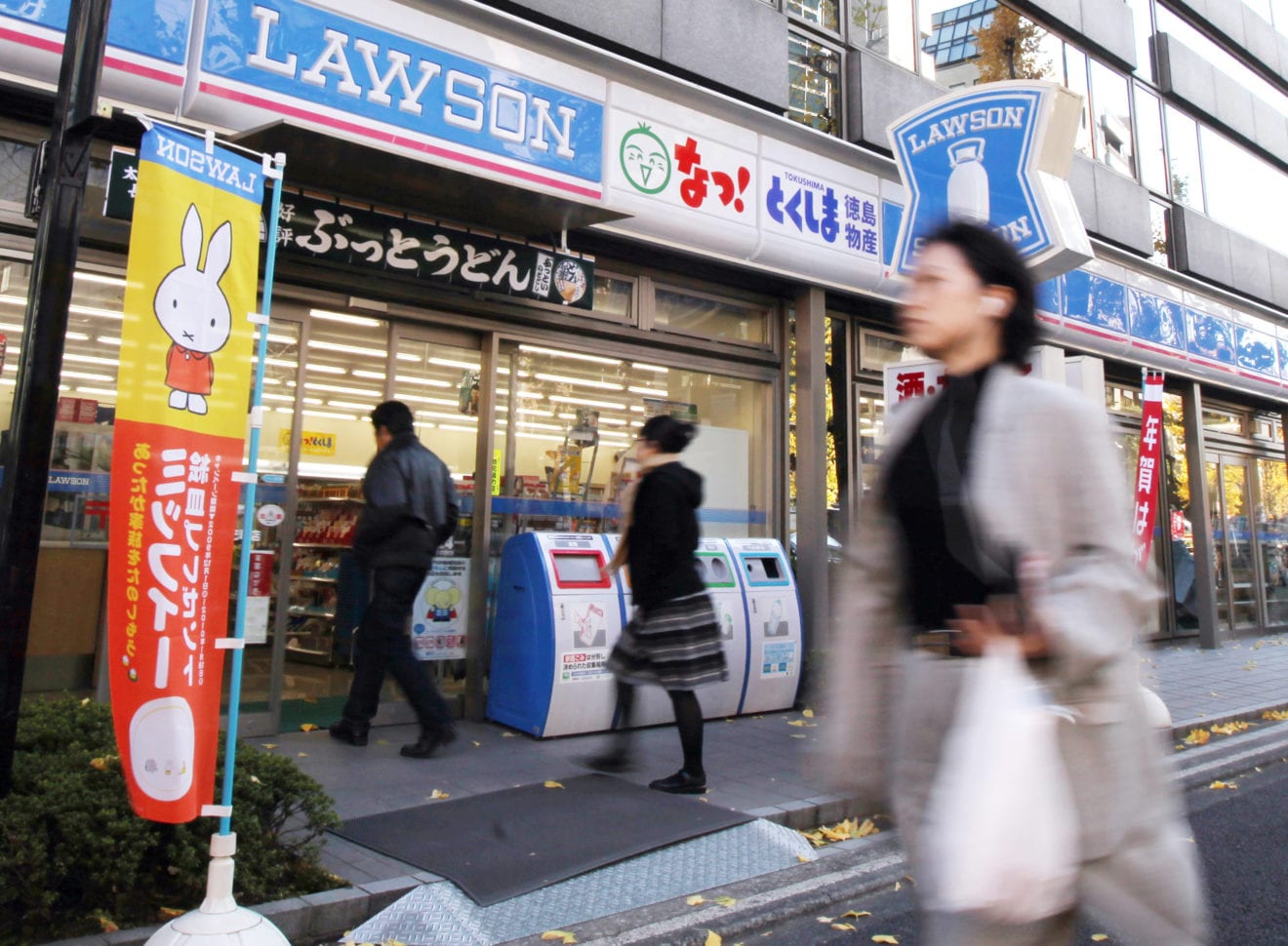
    Lawson has about 12,500 stores in Japan and 793 outside the country, and is targeting a 26 per cent increase to 1000 overseas outlets by February.

    Lawson joins other chains such as Seven & I Holdings’ 7-Eleven and FamilyMart in seeking overseas expansion while competing to displace conventional grocery shops and restaurants domestically amid Japan’s economic malaise and falling population.

    Lawson has a 5.3 per cent market share of Japan’s grocery retail sales, second only to 7-Eleven’s 12.2 per cent share, according to data from Euromonitor International. The situation is the same in the fast-food market, with 7-Eleven holding a  33.8 per cent share followed by Lawson with 12.4 per cent.

    Prime Minister Shinzo Abe says he is postponing an increase in sales tax until October 2019 as the government seeks to avoid depressing private consumption.

    But Takemasu says any changes in sales tax timing would have had only a temporary impact on Lawson’s business.

    “In Japan, I want to focus resources on the existing businesses to strengthen them, so I’m not considering adding new businesses through mergers and acquisitions for now.”

    Trading conglomerate Mitsubishi Corporation, where Takemasu was an aide to the president before joining Lawson, is Lawson’s top shareholder with a 33 per cent stake.

    Lawson bought the Seijo Ishii supermarket group in 2014, and the United Cinema chain the same year.

    While Lawson has outlets in China, Indonesia and the Philippines, Seven & I has about 40,000 shops outside Japan while FamilyMart has about 6000.

  • Seven & I store closures hit regions

    Seven & I store closures hit regions

    Losses have forced two Seven & I store closures in regional Japan, both outlets after 40 years of trading.

    Seven & I Holdings, which owns the Sogo and Seibu department store chains, is closing a Sogo store in Kashiwa, Chiba Prefecture, and a Seibu store in Asahikawa, Hokkaido. Both are scheduled to shut their doors on September 30, and the company has not revealed any plans for either site.

    Japan’s regional department stores have been hit hard by competition from major shopping developments and other factors. Also, they are not easily accessible for foreign tourists, so have not benefited from the tourism boom.

    “It has been difficult to attract customers and we cannot continue to run deficits,” says Seven & I Holdings president Noritoshi Murata.

    Sogo and Seibu are known for having a higher ratio of regional outlets than other major department store chains, says The Japan News. Since their sales peaked in the 1990s, both Sogo Kashiwa and Seibu Asahikawa have been on a downward trend.

    Many other regional department stores have already closed. The Kenmin Department Store in Kumamoto, in business for more than 40 years under different names, shuttered in February last year. The Imari Tamaya store in Imari, Saga Prefecture, closed in January, citing a shrinking population, poor sales and other factors.

    Run by Isetan Mitsukoshi Holdings, the Marui Imai department store in Hakodate, Hokkaido, has reported a 4.8 per cent drop in sales to ¥6.3 billion (US$55.46 million) for the nine months ending December compared to the same period the previous year. In contrast, the Mitsukoshi Ginza store in Tokyo logged ¥64.3 billion in sales during the same period, up 19.6 per cent from the previous year. The Ginza outlet has been helped by increased foreign tourism.

    Department stores in 10 major cities sold about ¥12.1 million per 100 sqm in January, compared to about ¥5.68 million in regional stores, according to the Japan Department Stores Association.

    “It will be difficult to close the gap,” says an association official.

    Meanwhile, Isetan Mitsukoshi Holdings plans to increase small and midsize stores nationwide from 102 to 180 by the end of the 2018 fiscal year.

    Takashimaya last year created in-store displays of cosmetics and other products available online instead of at the regional outlets themselves.

  • Finance plan for Indonesia 7-Eleven

    Finance plan for Indonesia 7-Eleven

    Modern Internasional, the master franchisee for Indonesia 7-Eleven, has partnered with Credit Saison of Japan to create a fund to help finance new franchisees.

    The two companies have created a joint venture called PT Saison Modern Finance (SMF) in Indonesia. MI will take a 30 per cent stake in the business, which will have a paid-up share capital of Rp100 billion.

    The JV will support the expansion of Indonesia 7-Eleven franchise business. In the initial phase of the business, it will provide finance leases at an attractive cost for equipment installed at 7-Eleven stores, particularly for the new sub-franchisees to be secured in the future.

    “MI believes that this will reduce cost of capital for a new store opening and hence enhance the attraction of its 7-Eleven sub-franchising model. The JV also aims to develop payment products such as pre-paid cards for the customers of 7-Eleven by leveraging on CS’ strength as the third largest credit card issuer in Japan,” the companies said in a statement.

    The JV is committed to provide attractive IDR denominated leasing terms.

    “MI expects the JV will contribute positively to the development of the 7-Eleven sub-franchising business as well as improvement in 7-Eleven’s customer relationship management through its prepaid card and loyalty programs.”

    In Japan, CS has a joint venture with 7-Eleven global brand parent Seven & I Holdings for the issuance of Saison Card. The finance company also operates overseas offices in China, Vietnam and Singapore, and is seeking to further expand its business in the rapidly-growing Asian market.

  • Ito-Yokado to close 40 stores

    Ito-Yokado to close 40 stores

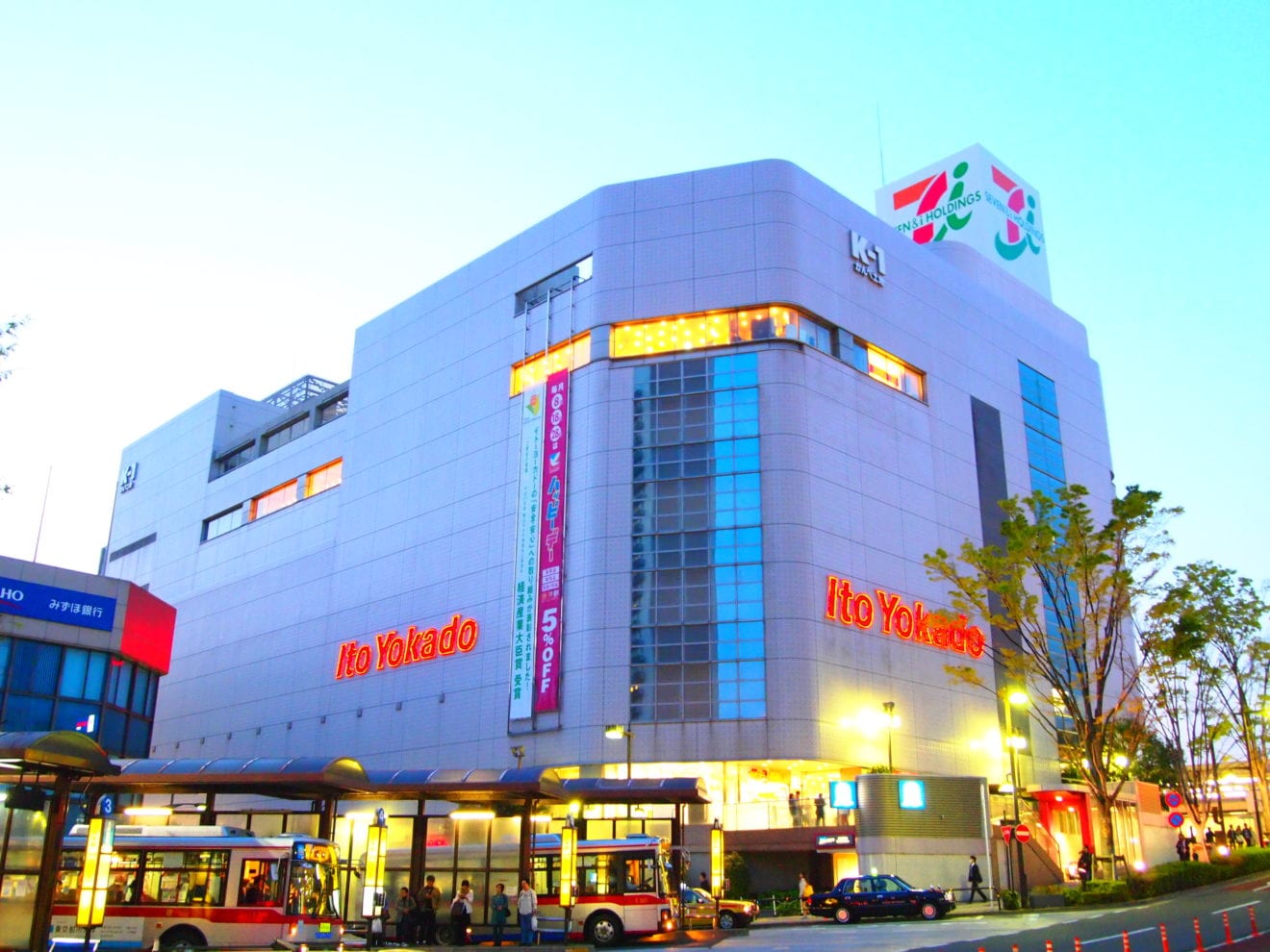
    Japanese retail giant Seven & I plans to close 40 of its Ito-Yokado branded supermarkets and general merchandise stores by 2020.

    Japan’s Nikkei reports that Seven & I, which is the parent of the 7-Eleven retail brand, expects the closures will boost profits. Forty stores represents about 20 per cent of its Ito-Yokado chain, which is struggling with lacklustre sales, especially of its apparel lines.

    “Seven & I will target money-losing and old locations outside major metropolitan areas for closings. More resources will be poured into Tokyo-area stores instead,” the Nikkei reported.

    The company’s financial year ends in February and by then, the first of the stores to be closed will be identified, with 10 more each year after that.


    While Seven & I posted a record profit in the six months to August, its Ito-Yokado arm actually lost money.

    The company says it will continue to open new stores as opportunities arise, but most likely only about one each year.

    The Nikkei reported that the company may also close some poor-performing Sogo and Seibu department stores, but there were no details of that plan.