Tag: share

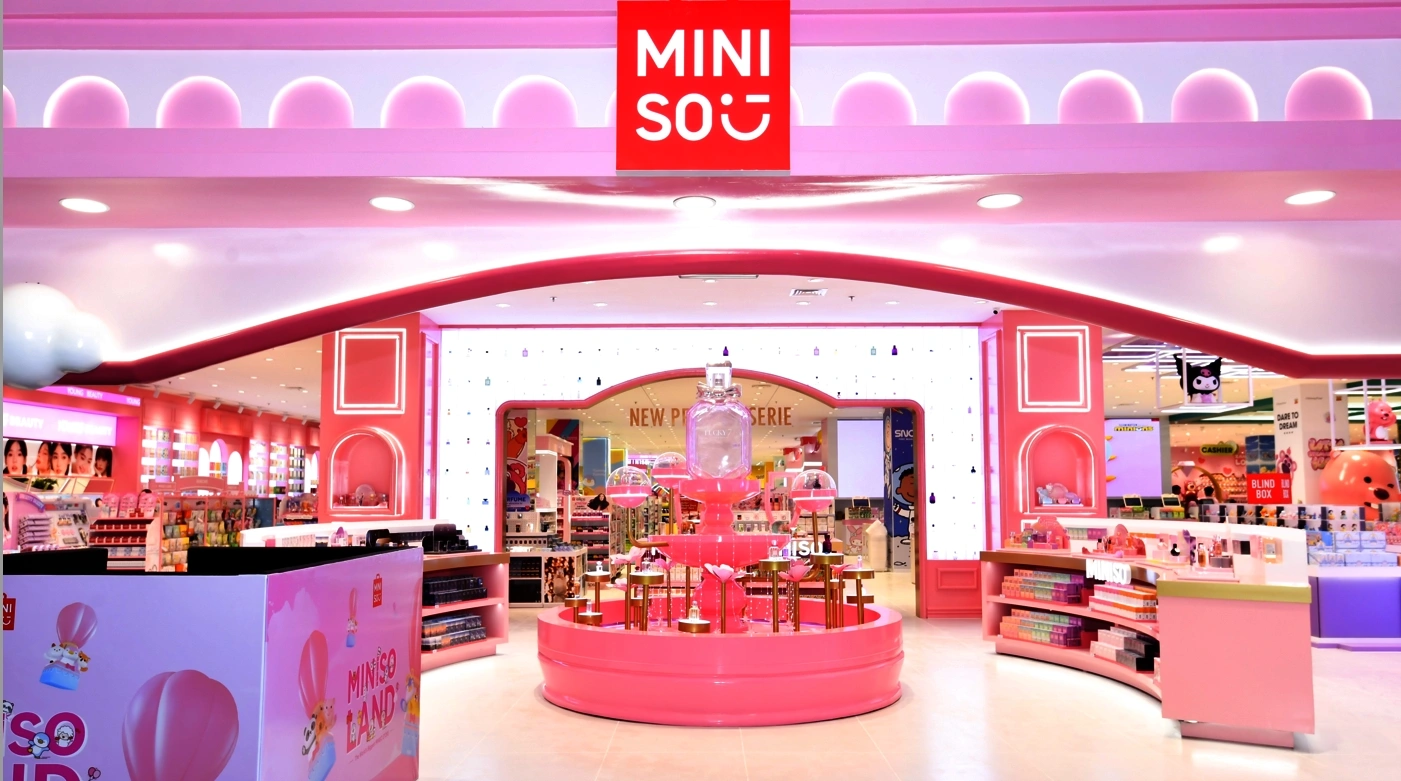
  • Miniso Initiates $255M Share Buyback Plan Aiming for Steady Returns Amid Rapid Growth: Founders Stake Boost Imminent

    Miniso Initiates $255M Share Buyback Plan Aiming for Steady Returns Amid Rapid Growth: Founders Stake Boost Imminent

    Retail giant Miniso has unveiled a HK$2 billion (approximately US$255 million) share buyback initiative. This strategic move comes several months after Guofu Ye, Miniso’s founder, chairman and CEO, vowed to augment his personal stake in the company. The 12-month scheme, which became effective as of June 30, allows the company to buy up to HK$2 billion worth of its standard shares and American depositary shares (ADSs).

    Funding and Confidence in Growth

    The funding for this repurchase program will come from the company’s surplus cash reserves. The company’s board believes this decision mirrors their confidence in Miniso’s long-term growth. They also believe that the current share price does not adequately represent the company’s true worth.

    This new buyback scheme follows a previous one in which approximately HK$1.37 billion worth of shares and ADSs were reacquired by the company. The main objective of this most recent initiative is to balance the group’s quick expansion with consistent and reliable returns for shareholders.

    CEO’s Confidence in Continued Growth

    This new repurchase program closely follows Ye’s April pledge to increase his shareholding by purchasing at least HK$50 million worth of Miniso shares over a one-year period using his personal finances. At that point, Ye had ownership of approximately 63.7% of the company’s shares. He stated that his planned purchase was an indication of his faith in the ongoing growth of the retailer.

    Questions & Answers

    What is the main goal of Miniso’s new share repurchase program?
    The program aims to balance the company’s rapid growth with stable, predictable returns for its shareholders.

    How is Miniso funding its share buyback program?
    The funds for the repurchase program will come from the company’s surplus cash on its balance sheet.

    What led to the launch of this new share repurchase program?
    This decision followed a pledge made in April by Miniso’s CEO, Guofu Ye, to increase his personal shareholding in the company. This new initiative reflects the company’s confidence in its long-term growth and its belief that the current share price does not fully represent its intrinsic value.

  • Alibaba Challenges Meituan In Local-lifestyle Domain With Amap’s Ai-powered ‘street Stars’ Feature

    Alibaba Challenges Meituan In Local-lifestyle Domain With Amap’s Ai-powered ‘street Stars’ Feature

    Alibaba’s navigational application, Amap, is diversifying its functionality beyond its primary aim of providing directional services. It is venturing into the local-lifestyle domain, a territory traditionally occupied by competitor Meituan. This move is marked by the introduction of its own classification system for restaurants, hotels, and tourist attractions.

    Competing for Market Share in “Instant Retail”

    Alibaba and Meituan are well-established tech enterprises in China. Currently, they are deeply engaged in an intense rivalry for dominance in the “instant retail” sector. This field is characterized by immediate delivery services and has seen a rapid influx of consumers due to the provision of extensive discounts and coupons.

    The competitive landscape of this sector has led to increased attention from regulatory bodies, who are concerned about a potential harmful price spiral. In the Chinese context, sluggish property rates and unstable employment conditions have contributed to a consistent dip in consumer confidence. This has pressured corporations to adopt aggressive pricing strategies and provide subsidies to stimulate consumer spending.

    “Street Stars”: Amap’s New Feature

    Amap announced a new feature named “Street Stars” on Wednesday. This feature, powered by advanced artificial intelligence algorithms, aims to rank destinations for its 170 million daily active users. To promote this new feature, Amap is offering subsidies amounting to 1 billion yuan (approximately US$140.43 million). These subsidies are intended to provide users with coupons for ride-hailing or in-store services. The initial launch phase is expected to encompass 300 cities, and will include around 1.6 million local business listings.

    In China, consumers have historically depended on applications such as Meituan’s Dazhong Dianping for restaurant suggestions, reservations, and other services. Meituan recently announced that it would distribute 25 million consumption coupons as part of an overhaul of Dianping’s takeaway service from highly-rated restaurants.

    During a recent after-earnings discussion with analysts, Alibaba Group CEO Eddie Wu highlighted Amap’s AI-driven transformation. He emphasized the strategic importance of the app’s new direction, positioning it as a “new gateway for future lifestyle services”. This is part of Alibaba’s broader plan to design what it refers to as a “comprehensive consumption platform”.

    Regulatory Challenges

    However, concerns exist regarding the potential interference of Chinese regulators in these plans. E-commerce and food delivery giants in China have already been summoned by authorities for several meetings. The ongoing price war, which contradicts the government’s official stance against cutthroat competition, is a particularly contentious issue.

    Questions & Answers

    What is Alibaba’s Amap diversifying into?
    Amap is venturing into the local-lifestyle domain, traditionally occupied by its competitor Meituan. It plans to introduce its own classification system for restaurants, hotels, and tourist attractions.

    What is “Street Stars”?
    “Street Stars” is a new feature of Amap powered by advanced artificial intelligence algorithms. It aims to rank destinations for its 170 million daily active users.

    What are regulators’ concerns about the “instant retail” sector?
    Regulators are concerned about a potentially harmful price spiral in the sector. This is driven by aggressive pricing strategies and subsidies offered by companies to stimulate consumer spending, especially in the context of sluggish property rates and unstable employment conditions in China.

  • Share issuance value surges as businesses expand

    Share issuance value surges as businesses expand

    The share issuance value of listed companies as of mid-April this year was more than 1.6 times that of 2020 as businesses seek to expand operations.

    As of April 13, 54 listed companies have announced plans to issue more shares this year to raise nearly VND44.7 trillion ($1.94 billion), according to financial data provider FiinGroup.

    In the first quarter, 43 companies raised nearly VND19.8 trillion, accounting for nearly 70 percent of the total amount raised last year.

    With Vietnam being able to contain its Covid-19 outbreaks relatively efficiently, businesses are seeking to recover and expand production. Therefore, there is high demand for raising capital, a FiinGroup report says.

    The biggest issues this year are set to be that of national flag carrier Vietnam Airlines and agriculture giant HAGL Agrico, together accounting for one-third of the projected total.

    Vietnam Airlines is set to raise VND8 trillion through share issuance this year, seeking to reduce its debt-over-equity ratio from 6.2 to 5.2.

    HAGL Agrico is set to raise VND 7.4 trillion.

    Several brokerages are also planning to issue more shares amid rising demand for margin debt as new investors pour cash into the stock market.

    VNDirect plans to raise VND2.2 trillion, while Ho Chi Minh City Securities wants to raise VND2.1 trillion.

  • Tesla Shares Set To Start 2021 At Record High

    Tesla Shares Set To Start 2021 At Record High

    Tesla Inc shares were set to open at a record high on Monday after the electric-car maker reported better-than-expected vehicle deliveries in 2020, extending a meteoric rally that has seen the stock surge more than 700%.

    It delivered 499,550 vehicles last year, above Wall Street estimates of 481,261 vehicles, according to Refinitiv data, but 450 units short of Chief Executive Officer Elon Musk’s target.

    “We are raising our forecasts to reflect higher 4Q deliveries and reports of strong demand for the Model Y in China, which is also suggestive of higher future deliveries,” J.P. Morgan analysts said in a client note.

    Tesla has reported profit in five straight quarters, defying last year’s auto industry trends of slumping sales, quarterly losses and global supply chain disruptions.

    Shares of the company, which joined the benchmark S&P 500 index in December, were up 3% in premarket trading.

  • Alibaba Cloud Ranked First in Asia Pacific by Gartner

    Alibaba Cloud Ranked First in Asia Pacific by Gartner

    Alibaba Cloud, the cloud computing and data intelligence arm of Alibaba Group, has been named first in Asia Pacific(*) market share for IaaS (Infrastructure as a Service) and IUS (Infrastructure Utility Services) in two consecutive years as per Gartner’s latest report revealed earlier this month named Market Share: IT Services, 2018. It has also retained its top three global provider position in the same space.

    According to this Market Share conducted by global analyst firm Gartner, Alibaba Cloud led the Asia Pacific market for IaaS and IUS with 19.6% market share (+4.7% market share gain from 2017). The technology innovator is followed by 11.0% and 8.0% market shares of the second (AWS) and third player (Microsoft) respectively in Asia Pacific in 2018.

    Alibaba Cloud boasts a strong network in Asia Pacific, with 15 availability zones in the region outside mainland China, covering Hong Kong, Singapore, Australia, Malaysia, Indonesia, India and Japan markets. It is the only global cloud provider that has set up local data centers in Indonesia and Malaysia, offering a wide range of cloud and data analytics products.

    “It is very encouraging that our continued dedication to enabling cloud development across industries in both Asia Pacific and globally(**) has been recognized by world’s leading research and advisory company. As the only global cloud provider originated from Asia, we will continue to champion millions of businesses through our world-class infrastructure, advanced analytics tools and thriving ecosystem.” said Lancelot Guo, Vice President of Alibaba Group and Head of Strategy and Marketing at Alibaba Cloud.

  • Microsoft app works in reverse sending content links to your Phone

    Microsoft app works in reverse sending content links to your Phone

    Instead of having to email content from your Android phone to your Windows PC, Microsoft’s Your Phone app automatically shares photos, texts and other content from your handset to that box on your desk. And according to MS Poweruser, you can send content links the other way from your PC to your phone. Doing this requires the use of the native share button on Microsoft Edge and Firefox.
    You will receive a notification when the link hits your phone. Tap it, and the content will open in the Microsoft Edge browser for Android. To arrange this, you need to install Microsoft’s Your Phone Companion app on your Android handset and the Microsoft Edge browser app. You then need to install the Your Phone app on your Windows 10 PC. Sign in using a Microsoft account, agree to some permission requests, and you have helped your PC and Android phone become friends.
    Suppose you were on your PC, watching one of our reviews on YouTube, and wanted to send a link to your phone so you can quickly find it later when you’re out. While the video is up on the PC, click on the three dot overflow menu on the right side of the address box. From there, tap on share and then Your Phone. You will receive the aforementioned notification on your phone. Tap on it, and the content will open in the Edge app on the handset.
    This setup will also allow you to send web pages from your desktop to your phone, along with some other content that you are viewing on the desktop Edge browser. And don’t forget that the original idea of the Your Phone hook up is to send texts and photos from your phone to your Windows 10 PC.
  • Vietnamese car maker plans private share issue

    Vietnamese car maker plans private share issue

    Truong Hai Auto Corporation (THACO) is planning to issue more than 30.3 million shares to a strategic shareholder. The company is currently collecting shareholders’ opinions on a draft resolution to authorize a private placement worth an estimated total of VND3.89 trillion ($167.19 million) to Jardine Cycle & Carriage, a Singaporean diversified conglomerate that specializes in investment in car manufacturing.

    The share issue aims to raise additional capital to finance THACO’s investment and business plans this year, the company said in a circular issued to shareholders last week.

    The 30.3 million shares proposed in this placement make up 1.82 percent of THACO’s current chartered capital, and will raise the Singaporean shareholder’s stake in the car manufacturer to 26.57 percent.

    The share ownership of remaining shareholders will remain unchanged. Currently, 6.8 percent of THACO is owned by billionaire Tran Ba Duong, founder and chairman of the company, and another 60.6 percent by Tran Oanh JSC, a holding company owned by Duong and his family.

    The shares are expected to be issued soon after the State Securities Commission has confirmed the receipt of all documentation regarding the private placement.

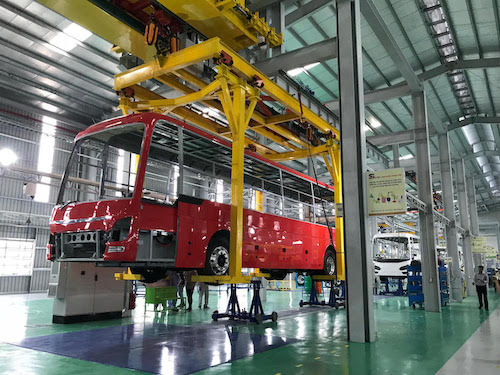
    Dong Nai-based THACO was established as an auto and commercial vehicle maker in 1997. It has a plant in central province of Quang Nam and 89 showrooms and 53 dealerships.

    It makes trucks and buses and assembles cars for brands like Kia (South Korea), Mazda (Japan), and Peugeot (France).

    Jardine Cycle & Carriage Ltd, which is part of the Jardine Group of companies, has a diverse business portfolio. They have long term shareholdings in major manufacturers such as Jakarta based Astra International, as well as other interests in the refrigeration, cement and milk business.

    In Singapore, Jardine C&C is best known as the retailer of Mercedes Benz, Mitsubishi, Kia, Citroen, DS, and Maxus motor vehicles. The company has a current market capitalisation of S$14.55 billion (US$10.71 billion).

  • Time for China’s smartphone brands to bloom

    Time for China’s smartphone brands to bloom

    Like many urban Chinese consumers, Shenzhen civil servant Gao Jian has had a long-held belief that the quality of domestic smartphone brands paled in comparison with foreign brands, especially Apple. But in December, Gao joined the growing number of mainland consumers who have made the switch from Apple’s iPhone to a premium Android smartphone from a major Chinese brand. He bought a Mate 20 Pro, the flagship model from the country’s largest smartphone supplier Huawei Technologies.

    “Its design and cameras are better than what I expected,” Gao said. “Also, iPhones have become increasingly unaffordable.”

    His experience reflects the broader success of the Chinese mobile phone industry in smashing people’s perception that domestic suppliers are only good for inexpensive, low-quality products.

    That stereotype has beset many Chinese brands in the home appliances, consumer electronics, personal computer, car and mobile phone markets, where products from more established brands in the US, Japan or Europe were preferred by mainland consumers for many years.

    But brands like Haier Group Corp, Lenovo Group and, more recently, Huawei, have expanded their operations, increased research and development, and made advanced products to change that impression around the world.

    China is now home to some of the most successful smartphone brands, which rival the likes of Samsung Electronics, Apple and LG Electronics.

    Shenzhen-based Huawei, the top global supplier of telecommunications network equipment, was ranked the world’s second biggest smartphone vendor – behind Samsung and ahead of Apple – for the second consecutive quarter in the three months ended September 30, according to research firm IDC. Xiaomi Corp and Oppo took the No 4 and 5 spots in the same quarter.

    The emergence of Chinese smartphone brands on the global stage has mirrored the rising competitiveness of the country’s telecoms network equipment suppliers, which have won market share with value-for-money offerings as well as on heavy investments in research and development.

    The gains have also sparked increasing pushback by the US, which is persuading its allies to boycott Chinese telecoms gear suppliers such as Huawei on grounds of national security.

    With the world’s biggest internet population and smartphone market, China had as many as 300 domestic mobile phone companies about three years ago. Cutthroat competition reduced that number to about 200 last year, as Chinese consumers bought fewer smartphones and the economy grew at a slower pace.

  • Axiata slides 5% in early morning trade on tax bill

    Axiata slides 5% in early morning trade on tax bill

    Axiata Group Bhd saw some selling pressure in early morning trade on news that it had been hit with a capital gains tax bill of RM2.16bil by the Nepalese Supreme Court. The stock lost as much as 20 sen or 5.1% in early morning trading on Friday to a low of RM3.70. At 9.30am, the counter was down 14 sen or 3.59% to RM3.76 a share on the back of 1.57 million shares traded.

    Analysts said the news report by the Himalayan Times yesterday came as a negative surprise, which may impact the group’s FY19E earnings forecasts.

    Kenanga research made no changes to its FY18-19E earnings forecast pending its upcoming 4Q18 results but lowered its target price to RM4.50 from RM4.60 previously.

    “All in, we are keeping our Outperform call for now in view of its relatively decent valuation (Forward EV/EBITDA of 7.2x vs. peers of 12-13x) coupled with a stronger Celcom and earnings recovery at XL.

    “Bargain-hunting opportunity could potentially arise on any share price weakness due to the recent hiccup. We advocate investors to start accumulating the share at c.RM3.70 level,” it said.

    PublicInvest research said its core earnings forecasts remain unchanged but headline profit could see a sharp decline if Axiata paid the capital gains tax in FY19F.

    “Although our core earnings forecasts and Neutral call remain unchanged, we believe share price would react negatively to this news due to uncertainties and the potential downside to headline profit,” it said.

    It maintained its target price at RM3.85.

    In its response to news reports, Axiata said in a statement that it is yet to receive the judgment and order of the Supreme Court and is yet to receive any details of the order.

    “Ncell, Reynolds, and Axiata UK were given the full clearance by the Large Tax Payers Office of Nepal [LTPO] of its obligations to withhold any CGT payment on behalf of the Seller in relation to the Transaction via the letter from LTPO dated 4 June 2017, following the full and final payment made by Ncell, albeit under protest on the basis that CGT is not applicable on offshore transactions and even if applicable, any shortfall on payment is the responsibility of the Seller,” it said.

    The group said it would provide further updates upon receiving the order of the Supreme Court.


  • E-commerce share to rise to 12pc from 2pc in 10 years: Walmart India CEO

    E-commerce share to rise to 12pc from 2pc in 10 years: Walmart India CEO

    Share of e-commerce is set to rise, despite the growth in brick and mortar or physical retail from 2 percent to 12 percent over the next 10 years, aided by pick up in Omnichannel format, said Krish Iyer, President & CEO, Walmart India and Chairman of India Food Forum, at India Food Forum 2019 on Tuesday. Gap between physical and digital needs to be bridged as the consumer is going digital in terms of experience as also his touchpoints, he said delivering the inaugural address at the two-day India Food Forum 2019.

    Sharing his insight at Walmart, Iyer said that by enriching customer experience, the consumer started buying Rs 180 over Omnichannel instead of buying Rs 100 from the store itself and later the ratio in the store was Rs 70 while digital was Rs 110. Calling for technology adoption as key to retail growth, Iyer enumerated four key challenges led by food security, safety & nutrition, food wastage and sustainability.

    “Feeding a rising world population of 10 billion from 7 billion amid rising death of infant children due to malnutrition, changing climatic conditions are key challenges. In India, phenomenal efforts are made on the regulatory front for safety and nutrition that will follow with awareness, compliance and enforcement of law. Significant investment amounting to Rs 92,000 crore in food processing in catchment areas is needed to overcome the wastage of 30 percent of all food and 40 percent of fruits and vegetables,” he said.

    Earlier, speaking at the forum, Ajay Macaden, Executive Director, Nielsen said, “Consumers have evolved now for omni-channel even for specific categories like milk and bakery. Increased internet and smartphone penetration has led to multiple shopping channels and change in consumer behaviour.”

    In markets around the world categories such as travel, entertainment (books, music, events) and durable goods (fashion, IT/mobile, electronics) are the front runners for consumers to enter the online retail sphere. Consumers are, however, also looking for e-commerce options for an increasing range of categories, as their more immediate needs for convenience and ease expands, Macaden said.

    Consumers in APAC (Asia Pacific) have even evolved to fresh grocery and packaged goods with China, India, Japan and Korea leading the market. In fact, packaged grocery food and fresh groceries are showing the highest percentage growth of all categories in 2018 in this region, he said.

    Other key speakers at the forum included Damodar Mall, CEO, Reliance Retail (Supermarketwala), Sadashiv Nayak, CEO Food business, Future Group, Mohit Kampani, CEO, Aditya Birla Retail, C. Gopalkrishnan, Founder, N. Supermarkets, Ramesh Menon, Former CEO, Hypercity, Mohit Anand, MD, Kellogg, India and South to name a few.

  • Asia stocks quiet, dollar firm after upbeat US job data

    Asia stocks quiet, dollar firm after upbeat US job data

    Asia stocks hovered near four-month highs on Monday after a mixed performance on Wall Street at the close of last week, while the dollar firmed against the yen following strong US job and manufacturing data. MSCI’s broadest index of Asia-Pacific shares outside Japan was almost flat. It had scaled a four-month peak on Friday along with a surge in its global peers.

    Trade was subdued with many of the region’s markets closed for the Lunar New Year. China’s financial markets are closed all week, while those in South Korea are shut until Thursday.

    Hong Kong’s Hang Seng, which is trading for only half a day, edged up 0.2%.

    Japan’s Nikkei added 0.5%.

    On Wall Street on Friday optimism from a surge in January US job growth was offset by a weaker-than-expected outlook from Amazon.com Inc that battered retail stocks. The Dow nudged up 0.26% while the Nasdaq shed 0.25%.

    “Key points for the markets this week will be how the remaining US corporate earnings releases turn out, and whether they are in line with recent upbeat data,” said Junichi Ishikawa, senior FX strategist at IG Securities in Tokyo.

    “While corporate earnings and fundamentals remain key, political developments, notably the US-China trade situation, remain potential risk factors,” he said.

    A US Labor Department report on Friday showed nonfarm payrolls jumped by a stronger-than-forecast 304,000 jobs last month, the largest gain since February 2018.

    That report, along with better-than-expected ISM manufacturing activity numbers for January, pointed to underlying strength in the world’s biggest economy.

    “After last week’s risk appetite revival, the data pulse and the tone of Fed speakers will be important. For the Goldilocks market to continue, we need to find a delicate balance between improving data and still-neutral central banks,” strategists at ANZ wrote.

    Global equity markets performed strongly last week after the Federal Reserve pledged to be patient with further interest rate hikes, signalling a potential end to its tightening cycle.

    Friday’s robust economic data triggered a sharp rebound in US Treasury yields, in turn lifting the dollar.

    On Monday, the US currency was a shade higher at 109.555 yen after advancing 0.6% on Friday.

    The euro was little changed at $1.1456 after getting pulled back from a high of $1.1488 on Friday.

    The Australian dollar was mostly steady at $0.7244 after slipping 0.4% the previous session.

    The benchmark 10-year U.S. Treasury yield was at 2.686% after climbing nearly 6 basis points on Friday to pull away from a four-week low of 2.619% earlier last week.

    West Texas Intermediate (WTI) US crude oil futures extended Friday’s rally and were last up 0.3% at $55.42 per barrel.

    On Friday, WTI futures had rallied 2.7% on the upbeat US job report, signs that Washington’s sanctions on Venezuelan exports have helped tighten supply and data showing US drillers cut the number of oil rigs.

  • Confidence Returns to Indonesia’s Financial Markets

    Confidence Returns to Indonesia’s Financial Markets

    After a steep correction last year and pressure on the rupiah, Indonesia expects stability to return to its financial markets this year as foreign capital starts flowing back into the domestic market. The first bond offerings of the year last week were more than three times oversubscribed, with interest mainly coming from foreign investors, who also bought more local stocks than what they sold over the past two weeks, reversing a net selling trend that persisted throughout last year, according to Indonesia Stock Exchange (IDX) data.

    For Bank Indonesia Governor Perry Warjiyo, the return of foreign capital inflows came as no surprise. The central bank has been aggressive in raising its benchmark interest rate – the seven-day reverse repo rate – which was increased by 175 basis points to 6 percent over the past nine months in response to tightening by the United States Federal Reserve.

    As it now seems more likely that the US central bank may raise the federal funds rate only twice this year instead of three times, Indonesia’s financial markets have become more attractive to foreign investors as a destination to park their funds.

    “The US dollar is not king anymore this year,” Perry said during a meeting with editors of the country’s largest media groups on Monday.

    Pressure on the rupiah has also eased. The currency currently trades at 14,031 to the greenback, having appreciated 8 percent from its weakest level of 15,253 four months ago, Bank Indonesia data showed.

    Bank Indonesia took measures in concert with the central banks of Malaysia and Thailand on Jan. 2 to reduce dependency on the dollar in bilateral trade. The arrangement will involve Indonesian trade with the two countries, which amounts to about $33 billion per year, being settled in the countries’ respective currencies, instead of the US dollar.

    Indonesia’s current-account deficit, the main culprit for the weakness in its currency, is expected to narrow to 2.5 percent of gross domestic product this year, compared with 3 percent last year.

    American multinational investment bank Morgan Stanley said lower oil prices should help Indonesia lower its current-account deficit.

    “With Brent down 36 percent from its September highs, we should see some relief on the trade balance, which has been weighing on the current account and, in turn, [become] a drag on confidence in equities and performance,” analysts Sean Gardiner and Aarti Shah wrote in a recent note to clients.

    They said oil prices, with the combined effects of the election stimulus, recovering loan growth, dovish monetary policy and rising company earnings have cemented Morgan Stanley’s bullish views on Indonesian stocks.

    The New York-based bank’s top picks include conglomerate Astra International, state-owned gas utility company Perusahaan Gas Negara, state-owned telecommunications company Telkom Indonesia, and lenders Bank Central Asia and Bank Mandiri.

    Bank Indonesia is confident that the country’s economy may grow by between 5.0 percent and 5.4 percent this year, compared with an estimated 5.2 percent last year. Household consumption is also expected to expand by between 5.1 percent and 5.5 percent and investment by between 6.5 percent and 6.9 percent, the central bank governor said.

    Perry said bank loans will maintain their expansive pace of 12 percent this year, in line with an increase of between 8 percent and 10 percent in third-party funds.

    However, one source of concern this year is lower commodity prices, which will affect Indonesia’s export earnings. Perry said the country should therefore increase its exports of manufactured goods, seek new markets for its products and encourage tourism.

    He said Bank Indonesia is comfortable with its current policy and that it can afford to maintain its benchmark rate until March.

    “We are optimistic that 2019 will be better than 2018,” Perry said.

  • Temasek plans to sell AS Watson stake

    Temasek plans to sell AS Watson stake

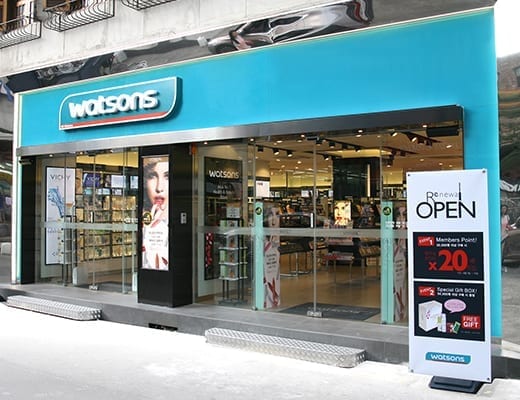
    Singapore’s Temasek Holdings is reportedly looking to quit its stake in Hong Kong-headquartered beauty products retailer AS Watson. Temasek spent US$5.6 billion to acquire a 25 per cent share of AS Watson in 2014 from Hong Kong’s CK Hutchison, which retains the majority stake. According to report, Temasek made the investment expecting the business to be listed within three years. But softening investor sentiment towards retail sector listings has weakened since that plan was first envisaged. Investors are spooked by the demise of a slew of brick-and-mortar-focused brands across developed markets.

    AS Watson has some 14,500 stores in 24 markets around the world, and has market leadership in 15 of those. That could make the business an attractive target for private equity funds, despite the company appearing to be focused more on opening new stores than migrating online, where consumers are buying more beauty and healthcare products.

    Bloomberg says in an analysis published online, that a private equity business would be among the more likely buyers for the Temasek stake, given the amount of industry money that’s sitting idle.

    “That said, any acquirer will still be in a minority position, even if the entire 25 per cent is sold. Along with the business’s poor growth prospects, the absence of control is likely to be reflected in the valuation. This is one retail sale that will need a discount to be attractive.”

  • The Coca-Cola Company completes acquisition of Costa

    The Coca-Cola Company completes acquisition of Costa

    The Coca-Cola Company has announced that it has completed the acquisition of Costa Limited from Whitbread PLC. The US$ 4.9 billion transaction follows approval from regulatory authorities in the European Union and China. The acquisition was first announced on August 31, 2018. Costa, which has operations in more than 30 countries, gives Coca-Cola a significant footprint in the global coffee business. Worldwide, the coffee segment is growing 6 percent annually. Costa has a scalable platform across multiple formats and channels, from the existing Costa Express vending system to opportunities to introduce ready-to-drink products.

    “We see great opportunities for value creation through the combination of Costa’s capabilities and Coca-Cola’s marketing expertise and global reach,” said James Quincey, CEO of The Coca-Cola Company. “Our vision is to use the strong Costa platform to expand our portfolio in the growing coffee category.”

    “We wish our friends and colleagues at Costa all the very best for their future success,” said Alison Brittain, Whitbread Chief Executive. “Whitbread acquired Costa 23 years ago, when it had only 39 shops. Costa has grown to become a leading, international coffee brand, and Coca-Cola is the right partner to take Costa to the next stage of expansion.”

  • Singapore company seeks to increase stake in Vietnam’s largest dairy firm

    Singapore company seeks to increase stake in Vietnam’s largest dairy firm

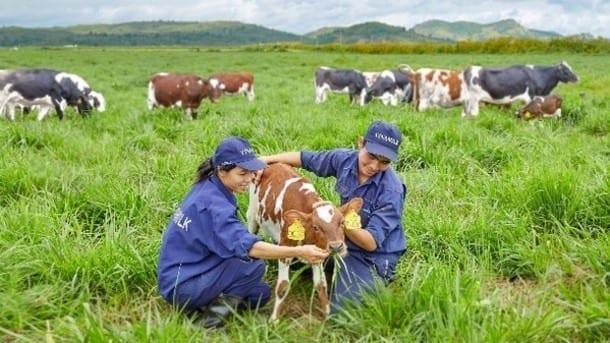
    A Singaporean shareholder in Vinamilk is seeking to increase its stake in Vietnam’s largest dairy firm. Jardine Cycle & Carriage Ltd has registered to buy 17.41 million shares between January 9 and February 7 through its wholly-owned local subsidiary, Platinum Victory, which will enable it to increase its ownership in Vinamilk from over 10 percent to 11.62 percent.

    At a proposed price of VND125,000 ($5.38) per share, the transaction will be worth VND2.17 trillion ($94.42 million).

    Last year Jardine, Vinamilk’s third largest shareholder, had registered on six different occasions to buy 14-17 million shares to increase its stake to above 11 percent, but was unsuccessful due to unfavorable market conditions.

    It first bought a 3.3 percent stake in Vinamilk in November 2017. Within a month it raised its ownership to over 10 percent.

    In April last year a representative of Jardine’s parent company, Jardine Matheson, became a Vinamilk board member.

    Hong Kong-based Jardine Matheson is one of Asia’s biggest conglomerates with interests in luxury hotels, motor vehicles, property, food retail, transport financial services, and agribusiness and revenues of almost $16 billion in 2017.

    F&N Dairy Investments, a subsidiary of Singapore-based Fraser & Neave Ltd, which is backed by Thai tycoon Charoen Sirivadhanabhakdi, owns a 17.31 percent stake in Vinamilk.

    Vietnam’s dairy industry reported revenues of more than VND100 trillion ($4.4 billion) in 2017, with Vinamilk commanding more than a 50 percent market share.

    According to a report by the EU-Vietnam Business Network, the market is expected to double in size by 2020 as the country’s population, personal incomes and dairy consumption increase.