Uber’s founders first tested their app among San Franciscans, a pair of Harvard Business School classmates from Malaysia seized upon a similar idea: They wanted to build Uber, but for Asia.
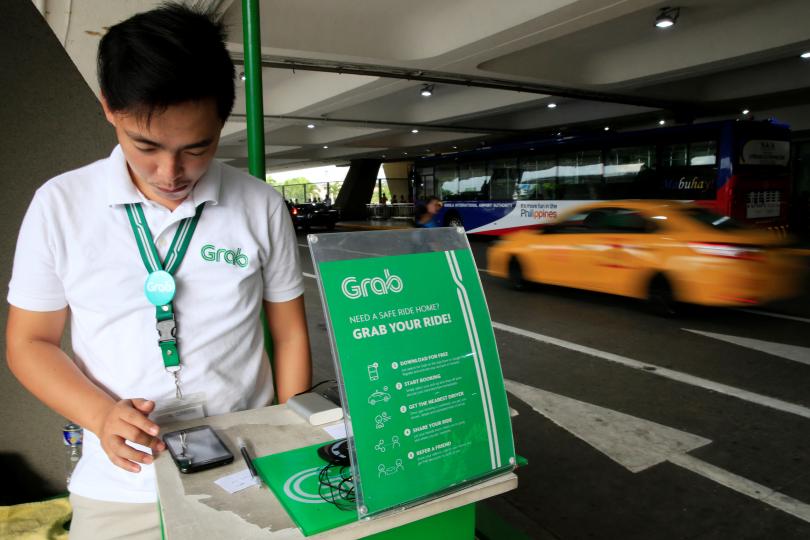
In 2012, they launched a ride-sharing service with 40 drivers in Kuala Lumpur. Eventually, they settled on the name Grab.
Six years later, Grab dominates the ridesharing market in South East Asia, boasting 2.3 million drivers in 168 cities across eight countries.
In 2017, the company raised $2.5 billion from investors, including Softbank, the Chinese ridesharing company Didi Chuxing, and Hyundai.
This recent round of funding valued it at $6 billion, making it the most valuable tech startup in South East Asia. Despite Uber’s aggressive investment in the region, it has struggled to beat Grab. That is in part because of Grab’s cultural advantage.
While Uber has spent close to a decade figuring out what Western users want out of a ride-service, the company has struggled to adapt its findings to parts of the developing world. By contrast, Grab has solved a puzzle facing companies in places that are just coming online: How to make e-pay work in nations that lack financial infrastructure.
For co-founder Anthony Tan, the transactions Grab facilitates represent the future of his company. We are sitting in the booth of a hotel restaurant in Davos, Switzerland.
Tan, 35, who is the son of one of Malaysia’s largest automobile distributors, wears a cross and a ring on a chain around his neck. He pauses over his noodle dish as he describes the company’s bustling Singapore headquarters, where he and co-founder Hooi Ling Tan (no relation) have recruited an army of young coders that include alumni of Facebook, Amazon and Google.
They will need that army. In South East Asia, the ride sharing wars have escalated into an arms race for money and talent. Since Uber launched in the region in 2013, the company has sunk millions of dollars into recruiting riders and drivers.
Meanwhile, local competitor Go-Jek enjoys a strong market lead in Indonesia, where it is based, and recently raised $1.2 billion in a funding round that included Google as well as Chinese companies Tencent and JD.com and the Singaporean sovereign wealth fund Temasek.
Dominating ride-share in Southeast Asia comes with significant economic opportunity. According to a December report co-authored by Google, spending on ride-hailing apps in the region has more than doubled over the past two years to $5 billion, and is expected to reach $20 billion by 2025.
So far, local companies seem to be winning. Despite its huge investments, Uber continues to lose money as it strives to match the discounts and promotions competitors are offering riders and drivers in the region.
Speaking at the New York Times Dealbook Conference in New York last fall, new CEO Dara Khosrowshahi addressed the company’s business in Southeast Asia, saying the market was over-capitalized. “We’re going in, and we’re leaning forward,” he said. “But I‘m not optimistic that market is going to be profitable any time soon.”
Citing a source close to Grab, Reuters reported in November 2017 that Uber may look to partner with Grab, as Khosrowshahi moves to cut costs in advance of a possible 2019 initial public offering.
There is precedent for this. In 2016, as Uber bled money in China, the company sold its China business to Didi Chuxing in exchange for a 20 percent stake in the merged operation.
Now that Uber has completed its Softbank deal, the two companies share a significant investor, which could pave the way for a similar future partnership. Both Uber and Grab declined requests for comment on the speculation.