Retail News CRM

Tag: sharp

  • WK Kellogg reports sharp drop in Q2 earnings amid Ferrero takeover

    WK Kellogg reports sharp drop in Q2 earnings amid Ferrero takeover

    The major breakfast cereal and snack producer, WK Kellogg, has revealed a significant drop in its net income for the second quarter as it readies itself for an upcoming acquisition by Ferrero Group.

    Drop in Earnings

    The company’s net income for the quarter was a mere $8 million, a significant decrease from the $37 million earned in the same period last year. This represents a year-over-year decrease of 78.4%.

    The company’s net sales for the second quarter also dipped by 8.8%, coming in at $613 million. This slump reflects the weakening consumer demand across all of WK Kellogg’s markets.

    Pending Acquisition by Ferrero Group

    WK Kellogg had previously announced a definitive agreement to be purchased by Italy-based Ferrero Group in an all-cash deal worth $3.1 billion. The deal is anticipated to close in the latter half of the present year, provided it receives the required approval from regulators and shareholders.

    Gary Pilnick, chairman and CEO of WK Kellogg, stated, “Despite the challenging operating environment, we experienced in the second quarter, we are making tangible progress against our long-term strategic priorities, including our supply chain modernization initiative.” He continued, “Our team remains committed to executing our plans for the remainder of the year and preparing for the future as we look forward to merging with Ferrero and commencing this exciting new chapter for WK.”

    The acquisition is viewed as a crucial move to expedite WK Kellogg’s transformation under Ferrero’s stewardship, capitalizing on complementary product portfolios and global outreach.

    Questions & Answers

    Why did WK Kellogg’s net income decrease in this quarter?
    The decline in net income is attributed to weaker consumer demand across all of WK Kellogg’s markets.

    What is the value of Ferrero Group’s acquisition deal with WK Kellogg?
    Ferrero Group has agreed to acquire WK Kellogg in an all-cash deal worth $3.1 billion.

    What does WK Kellogg anticipate from the prospective merger with Ferrero Group?
    The merger with Ferrero Group is expected to fast-track WK Kellogg’s transformation, leveraging the combined strength of their product portfolios and global reach.

  • Sharp to launch new solar power plant in central Vietnam

    Sharp to launch new solar power plant in central Vietnam

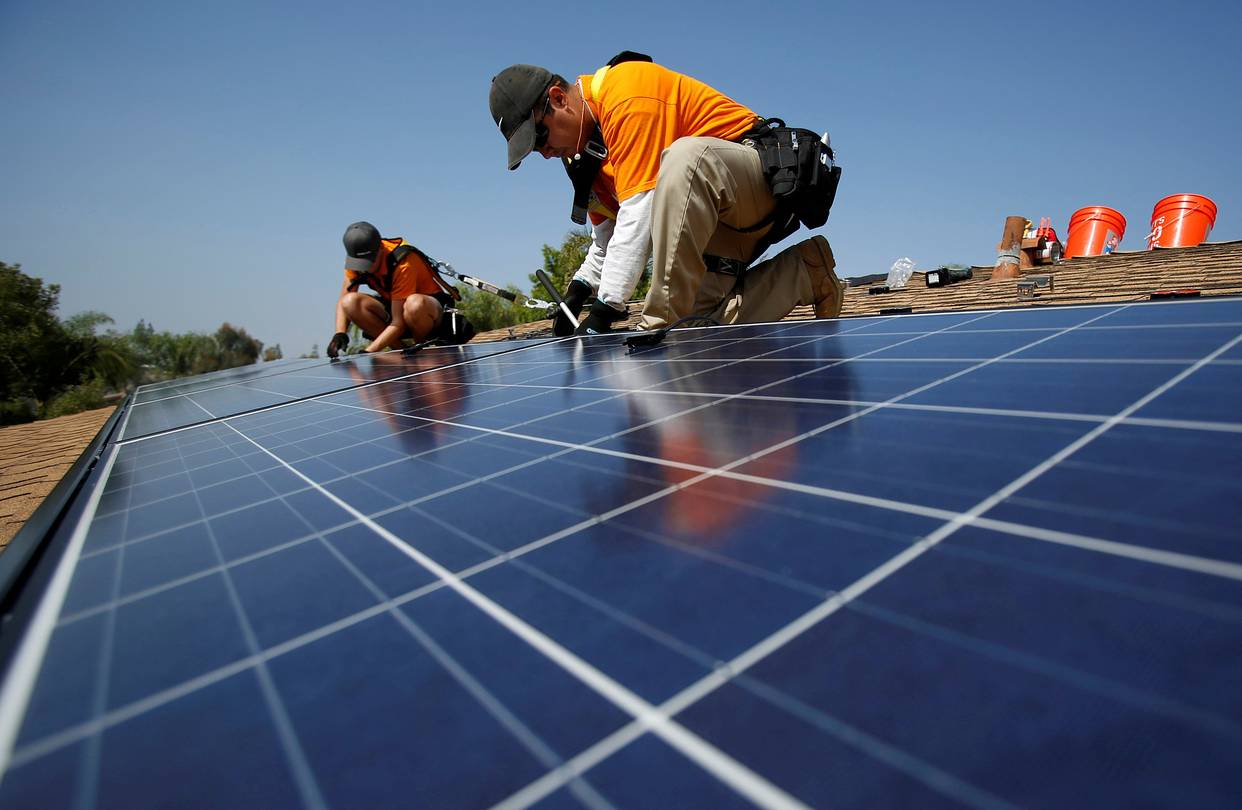
    Japanese electronics giant Sharp Corporation will begin operating a 45 MW solar power plant in the central province of Ninh Thuan in July. The plant is a joint venture between Sharp Energy Solutions Corp., a subsidiary of Sharp Corporation, Vietnam’s T&T Group JSC, and its affiliate Ninh Thuan Energy Industry JSC.

    The new solar plant is expected to generate 76,373 MWh of electricity per year, enough to meet the average annual demand of 40,500 Vietnamese households. It can offset the equivalent of 25,458 tons of carbon dioxide (CO2) emissions a year, Sharp said in a recent statement.

    Japanese news agency Kyodo News quoted a spokesman of the giant as saying that Sharp has been pushing its solar power business in Asia, having built plants in Thailand, Indonesia, and Mongolia, on the back of expected growth in consumption of electricity.

    Solar power currently accounts for 0.01 percent of Vietnam’s total power output, but the government plans to increase the ratio to 3.3 percent by 2030 and 20 percent by 2050.

    Vietnam currently relies largely on hydropower and thermal power for its electricity needs, but its hydropower potential is almost fully exploited and oil and gas reserves are running low.

    Under its energy development plan, Vietnam aims to have renewables, mainly solar and wind, account for 10.7 percent of total energy production by 2030.

  • Sharp considers suing Vietnam’s Asanzo

    Sharp considers suing Vietnam’s Asanzo

    Sharp Electronics Vietnam is considering suing Asanzo for allegedly counterfeiting evidence to prove it owns technology that actually belongs to the Japanese brand.

    The subsidiary of electronics giant Sharp said this in a statement Thursday after Asanzo said earlier this week that it has a business partnership with a company called Sharp-Roxy Hong Kong, a business alliance between Sharp and Roxy Electronic Company Ltd.

    However, Sharp Vietnam says the Sharp-Roxy Hong Kong business alliance was terminated on October 31, 2016, therefore it would be impossible for Sharp-Roxy Hong Kong to issue a partnership document to Asanzo on September 12, 2019.

    “It is obvious that the document introduced by Asanzo in their press conference on Tuesday is counterfeit,” Sharp Vietnam’s statement said.

    This action seriously damages the Sharp brand, and it is currently exploring the possibility of legal action against Asanzo, it added.

    An Asanzo release has responded that it was “surprised” by Sharp’s statement.

    Asanzo chairman Pham Van Tam told VnExpress that the document in question was sent to Asanzo by a Chinese partner who is a tier one supplier to Sharp-Roxy Hong Kong.

    “We are working with the Chinese partner and Sharp Electronics Vietnam on this matter and will inform the press later,” Tam said.

    Asanzo, a Ho Chi Minh City-based home appliances maker that dominates the rural market, is being investigated for importing components from China and replacing “made in China” stickers with Vietnamese ones.

    The investigation, which has been going on for three months, came after local newspaper Tuoi Tre reported in June that the company did not manufacture any of the components for its products and imported everything from China.

    Asanzo has countered that it imports about 70 percent of components from China and makes other parts, like TV plastic cases and remote controls, in Vietnam.

    Asanzo, founded in 2013, has the fourth largest market share in Vietnam’s TV market. It has also expanded into the refrigeration, consumer electronics, home appliances, and smartphone segments.

    In just three years, it accounted for 70 percent of the TV market in rural areas and 16 percent nationwide.

  • Sharp has patented a sleek foldable phone

    Sharp has patented a sleek foldable phone

    Sharp is not a smartphone brand that makes the news frequently. Its phones are mostly sold in Japan with some models making an appearance in Europe as well but in fairly small numbers. This is probably no one is expecting them to have a go at the latest trend in mobile tech: foldable smartphones. By now, you’re probably familiar with the Galaxy Fold and the Huawei Mate X, the two phones of that new class that you’re most likely to see in the real world (if you’re lucky). We’ve also seen hints that Motorola and Google are working on their own interpretations as well.

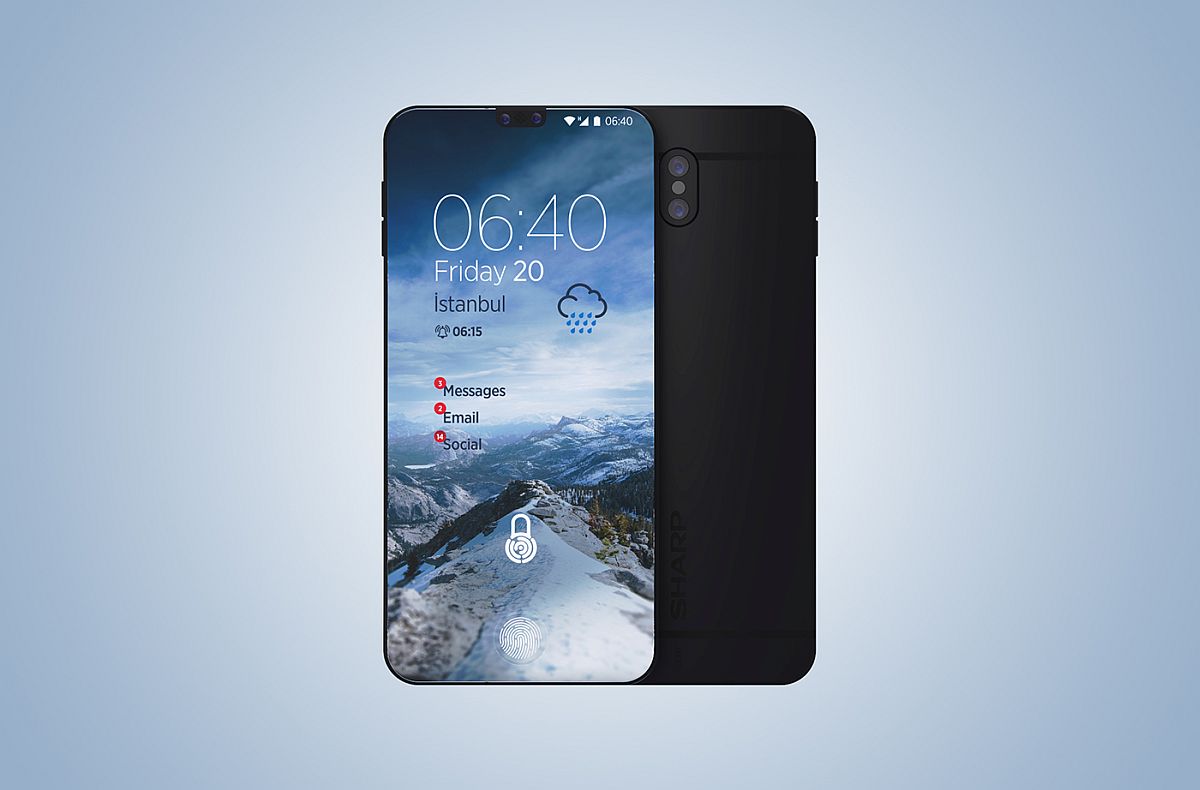
    Coming from patents yet again is information about Sharp’s intentions for a foldable phone. Picked up by LetsGoDigital and visualized in renders are drawings from an application to WIPO (World Intellectual Property Office) that was submitted by the Japanese tech giantThe design proposed by Sharp has some familiar elements with a twist. The fold of the display is horizontal, similar to that of the rumored Motorola phone, which means the screen size will be similar to current flagship phones, but the device will be more compact when folded. That approach has its advantages, but it seems that users have now accepted the form factor of current phones and prefer to get a larger display if their device is to be foldable.

    There are two things that grab our attention when looking at these renders. First, there seems to be no gap when the device is folded, which is something current foldable displays can’t accomplish. Of course, devices in renders are often quite different from real products, so it’s too early to judge. Sharp is one of the major display manufacturers, however, and it’s possible that the company is working on its own tech to achieve those results.

    The other curious thing is that the device has two hinges about half an inch apart, which allows the lower panel to either completely cover the top one or to leave about an inch of the display clear for notifications and other system indicators. While that might be handy in some situations, the added hinge is also another weak point for this device.

    There also appears to be no selfie camera in the drawings Sharp submitted, but this is likely just another omission until the design reaches a stage closer to realization.

    Currently, there are no hints from Sharp when or if we should expect a device like the one pictured above, but we certainly hope that more companies will join the foldable phone stage with their own ideas.
  • Sharp innovation gap seen between advanced, emerging Asia

    Sharp innovation gap seen between advanced, emerging Asia

    Pay-TV providers in advanced economies in Asia are focused on improving existing product suites, while investment in emerging economies is being used to create new solutions to boost subscriber growth, according to NAGRA and MTM.

    Across advanced economies in the region, 97% of pay-TV providers offer IP connected set-top boxes, compared to only 42% in emerging markets.

    The latest paper from the Pay-TV Innovation Forum research program shows that there are also noticeable differences in operator provisioning of other features. 4K availability within the region varies, with 50% of providers in advanced economies offering this service, versus only 6% in emerging ones.

    There is also significant variation in the availability of TV Everywhere services, with 53% of emerging providers offering it compared with 80% in the advanced economies.

    These differences underscore that providers are focusing on varying and diverse innovation initiatives over the next five years which will be directly linked to their economic circumstances.

    In emerging markets, service providers are expected to concentrate their efforts on delivering core valued-added propositions, including HD video and a transition to hybrid STBs.

    Operators in advanced markets that already offer these services are expected to focus on developing seamless video experiences across devices, based on IP, cloud and data technologies to make content discovery as easy as possible.

  • Meet RoBoHon : Sharp new smartphone robot

    Meet RoBoHon : Sharp new smartphone robot

    A walking smartphone robot has been launched in Japan by Sharp.

    Called RoBoHon, it has an Android smartphone for a body with tiny legs and arms.

    Ronohon Japan

    Sharp is producing 5000 RoboHon units a month, each selling for about US$1850, plus monthly charges.

    Sharp says the robotic phone was developed in collaboration with Robo Garage Co CEO Tomotaka Takahashi, who is also project associate professor at the University of Tokyo’s Research Center for Advanced Science and Technology.

    Ronohon Japan 3

    Sharp says users will be able to download apps to give RoBoHon more features. The company has even launched a RoBoHon Cafe where people can try out the robot as well as order robot-inspired dishes and beverages.

    Robohon cafe

    Standing 19.5cm high, the robot can walk, dance and answer calls. It weighs 390g. and can recognise people by their face and remember their names.

    RoboHon can hold small objects with its hands, and can also be used as a projector and broadcast video.

  • Sharp launches Aquos Crystal 4G smartphone in Indonesia

    Sharp launches Aquos Crystal 4G smartphone in Indonesia

    Japanese electronics company Sharp has launched its first Aquos wireless phone, the Sharp Aquos Crystal, in Indonesia, The Jakarta Post reports. The Aquos Crystal will be on sale in Indonesia for IDR 3.99 million (approximately USD 302.9). Sharp targets sales of over 100,000 Aquos Crystal units during the first six months of this year.

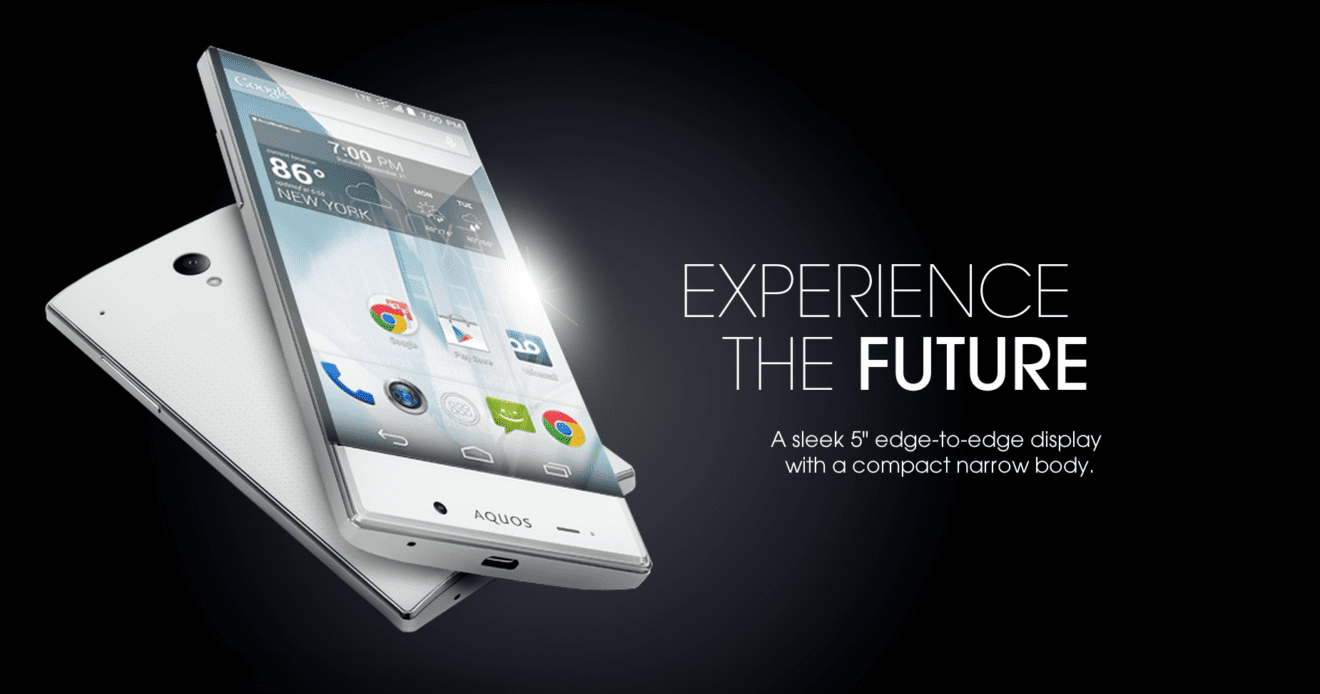
    The 4G-ready smartphone runs on Android 4.4 KitKat and features a 5-inch edge-to-edge HD screen, Clari-Fi technology for enhanced digital sound quality, an 8-megapixel rear-facing camera, a 1.2-megapixel front-facing camera, HD voice, an embedded 2,040mAh battery, a 1.2GHz quad-core processor, and 1.5GB RAM and 8GB ROM.

    Indonesia accounts for 40 percent of Sharp’s total sales in India, Southeast Asia, Oceania and the Middle East, said Sharp Electronics Indonesia president director Fumihiro Irie. “Our target is to obtain sales from the middle to high-end market, which accounts for only 30 percent of the country’s smartphone market. We won’t enter into low-end products that account for 70 percent of the market,” Irie said.

    According to Sharp Electronics Indonesia’s national sales manager for smartphone, David Leonard, the manufacturer already has 20,000 ready-stocks available across distribution channels owned by its distributor partner Surya Citra Multimedia. “We’re also partnering with online store blibli.com to sell the product. We remain open to similar partnerships with other online stores or marketplaces,” he said.

  • Sharp to cut 6,000 jobs, spend over USD1.7b to restructure

    Sharp to cut 6,000 jobs, spend over USD1.7b to restructure

    Japan’s loss-making electronics firm Sharp plans to cut around 6,000 jobs, over 10 percent of its workforce, in a global restructuring that will cost over 200 billion yen ($1.7 billion), a person familiar with the plan said on Thursday.

    The job cuts will include around 3,000 in Japan through early retirement and 3,000 overseas, according to the person, who was briefed on the matter but asked not to be named. The company had around 50,000 employees at the end of 2014.

    The display maker expects to post its third annual net loss in four years after weak sales of smartphone screens in China, aggravated by an unexpected comeback by rival Japan Display, derailed its recovery efforts. Last month it forecast a net loss of around 30 billion yen for the fiscal year ending in March, compared with the 30 billion net profit it previously estimated.

    Sharp Chief Executive Kozo Takahashi has been in negotiations with the firm’s main lenders, Mizuho Financial Group, Mizuho Bank and Bank of Tokyo-Mitsubishi UFJ, part of Mitsubishi UFJ Financial Group, for the company’s second major bailout since 2012, people familiar with the matter have said.

    The firm’s banks agreed in September 2012 to provide Sharp with loans and credit lines worth 360 billion yen, or $3 billion at today’s exchange rates, in exchange for promises to return to profit by this year. So far, it has exited the European TV market and closed solar-panel businesses in Europe and the United States.

    One person familiar with the matter previously said Sharp has also asked Japan Industrial Solutions, a corporate turnaround fund, to invest up to $250 million in capital.

    The Nikkei reported earlier on Thursday that Sharp could also shed its North American television business and lower the pay scale for workers in Japan. The Yomiuri newspaper reported Sharp was considering closing its TV factory in Mexico and cutting the size of its North American sales division.

    The company, which is expected to include the restructuring plan in a medium-term business strategy due to be announced in May, said it was considering various options to restructure its business but no decisions had been made.