Tag: shell

  • Shell Sells 200 Indonesian Fuel Stations to SEFAS Group

    Shell Sells 200 Indonesian Fuel Stations to SEFAS Group

    Shell has completed the sale of its retail fuel business in Indonesia to local partner SEFAS Group, transferring a network of roughly 200 service stations across the country.

    More than 160 of those forecourts are company-owned sites, and all of them will continue trading under the Shell name through a long-term trademark licensing agreement.

    Announced on Friday, October 30, 2026, the transfer hands over operations to SEFAS while preserving Shell-branded fuel products for Indonesian motorists without disruption.

    Transfer to PT Isla Energy Indonesia

    The transaction shifts Shell’s downstream forecourt assets, supply chain infrastructure, and fuel distribution operations into PT Isla Energy Indonesia, which SEFAS now owns entirely. The deal also hands SEFAS full control of a fuel terminal in Gresik, East Java. Neither company disclosed the financial terms.

    Forecourts will keep selling Shell-formulated fuels without interruption, leaving customer loyalty schemes, payment systems, and forecourt retail partnerships intact at store level. Operating fuel retail through local licensees allows foreign energy majors to cut direct capital expenditure while taking high-margin brand royalties from high-volume emerging markets.

    Forecourt Retail Shift in Southeast Asia

    Fuel retailing across Southeast Asia has shifted away from direct ownership by international majors toward local distribution specialists who operate roadside convenience stores, quick-service dining, and vehicle maintenance franchises more aggressively. Running company-owned networks in Indonesia requires heavy working capital to manage import supply chains and land leases.

    For Indonesian forecourt operators and convenience store concessionaires, the ownership change puts site development decisions in the hands of a local distributor with immediate domestic supply ties. SEFAS absorbs the operational risk of managing site inventories and wholesale fuel margin volatility, while Shell collects licensing revenue without carrying forecourt real estate on its balance sheet.

    Lubricants and Manufacturing Kept In-House

    Shell kept its Indonesian lubricants and industrial manufacturing divisions entirely separate from the retail sale. The energy group continues to operate its lubricant oil blending plant in Marunda, Bekasi, which produces up to 300 million litres annually.

    That manufacturing footprint expanded in September 2026 when Shell started commercial operations at a grease plant with an annual capacity of 12,000 metric tons. SEFAS agreed in August 2026 to buy the retail fuel business before working through Indonesian regulatory clearances and closing procedures.

    Forecourt operators will watch how quickly SEFAS expands the network beyond Java and whether it updates PT Isla Energy Indonesia’s convenience retail partnerships across the remaining dealer-owned sites.
  • Shell Sued for $108 Million in Brazil over Deadly Floods

    Shell Sued for $108 Million in Brazil over Deadly Floods

    British energy giant Shell is facing legal action in Brazil and the United Kingdom seeking compensation for devastating extreme weather disasters.

    On Friday, Brazilian federal prosecutors and the non-governmental organization Instituto Preservar jointly filed a lawsuit against Shell’s subsidiary demanding $108 million over catastrophic 2024 floods.

    Attribution Science Drives $108 Million Claim

    The disaster in southern Brazil killed nearly 200 people, displaced half a million, and caused widespread destruction, marking the first time attribution science has been used in the country against a major carbon producer.

    Plaintiffs based their legal claim on research published in a Nature group journal, which calculated that climate change increased the intensity of the 2024 rainfall by 12 percent. Drawing on data from think tank Carbon Majors attributing 2.02 percent of historic global emissions to Shell, the lawsuit demands the company pay for two percent of that 12 percent intensification.

    Philippine Typhoon Survivors File in London

    The Brazilian case follows a 2025 lawsuit brought in London by roughly 100 survivors of Typhoon Rai, known locally in the Philippines as Odette. The December 2021 storm killed more than 400 people across several Philippine islands and wiped out entire coastal communities.

    Lawyers at Hausfeld filed the London action against Shell on behalf of the Philippine survivors, arguing that historic emissions and alleged misinformation on climate risks constitute actionable negligence under Philippine law. The legal team cited historical evidence indicating Shell understood fossil fuel impacts as early as the 1960s, alongside an internal 1986 company report detailing greenhouse gas risks.

    Corporate Exposure Shifts Across Asia

    Legal liabilities of this nature create direct financial exposure for multinational energy operators, industrial manufacturers, and their commercial insurers across Asia-Pacific. If courts accept proportional emissions modeling, corporate balance sheets will face recurring claims following major typhoons, floods, and coastal erosion events throughout Southeast Asia.

    Supply chain infrastructure and regional asset valuations face repricing as climate litigation expands beyond state authorities to private corporate targets. Commercial lenders and institutional investors in Asian energy assets must account for potential cross-jurisdictional tort liability in their long-term risk underwriting.

    Precedents Spread Across Emerging Markets

    Shell has rejected claims of covert liability, stating in December that the suggestion the company possessed unique knowledge about climate change was not true.

    Similar cross-border actions are underway across the region, including Indonesian islanders suing Swiss cement group Holcim over rising sea levels and Pakistani farmers pursuing litigation against industrial operators in German courts.

    London courts are scheduled to review procedural filings on the Philippine claims as plaintiffs prepare evidentiary submissions on corporate knowledge from past decades.

  • Shell Thailand Teams Up with Tops Daily for First Convenience+ Store Launch in Southeast Asia

    Shell Thailand Teams Up with Tops Daily for First Convenience+ Store Launch in Southeast Asia

    Shell Thailand has initiated a significant expansion in its convenience retail sector across Southeast Asia, marking this advancement with the launch of its inaugural Convenience+ store. This venture has been developed in partnership with Tops Daily, a constituent of Central Food Retail.

    New Retail Format for a New Era

    The pilot store, located in Nonthaburi, is the vanguard of Shell Mobility & Convenience’s next-generation retail format in Asia. The forward-thinking design of this store aims to augment the in-store customer experience, fortify retail partnerships, and establish a replicable model for sustained growth. This ambitious strategy was outlined by Theswinder Kaur, the global alliance and commercial head at Shell.

    This Convenience+ outlet in Southeast Asia is the first of its kind, modeled on the successful collaborative approach taken by Shell Oman and AlMeera. Further locations are slated for launch across Thailand before the year’s end.

    Central Retail Corporation’s Redefined Food Business Units

    The unveiling of this new Shell venture has been closely followed by the restructuring of the Central Retail Corporation Public Company Limited (CRC), another significant player in the retail sector. From March 1, CRC has taken steps to amalgamate its three primary food business units, bringing them under the umbrella of the Central Retail Food Group.

    Questions & Answers

    What is the purpose of Shell’s new Convenience+ store in Thailand?
    The Convenience+ store is an integral part of Shell’s strategy to expand its convenience retail sector across Southeast Asia. The store aims to enhance the in-store customer experience and strengthen retail partnerships.

    How does the new Convenience+ store reflect Shell’s future retail plans?
    The Convenience+ store in Nonthaburi introduces Shell’s next-generation retail format in Asia. The scalable model is designed for sustained growth and is expected to be replicated across many more locations in Thailand.

    How does the Central Retail Corporation fit into recent shifts in the retail sector?
    Central Retail Corporation has recently consolidated its three major food business units under the Central Retail Food Group. This move closely follows the launch of Shell’s Convenience+ store and indicates significant changes in the retail sector.

  • Shell Philippines to open Adidas and Starbucks stores in its gas stations

    Shell Philippines to open Adidas and Starbucks stores in its gas stations

    Pilipinas Shell Petroleum, the publicly listed Philippine arm of Shell Plc, plans to have retail shops and restaurants in a third of its gasoline refilling stations by 2025 as its seeks to boost revenues beyond fuel.

    That could drive non-fuel retail earnings to grow at least 15% a year and build an income stream that provides a quarter of sales, CEO Lorelie Quiambao Osial said in a Bloomberg interview. Shell wants 550 of its 1,300 to 1,400 stations in the Philippines in 2025 to have retail offerings that range from convenience stores to restaurants and shops like Jollibee, McDonald’s, Starbucks and Adidas.

    “We are transforming what you’d normally call petro retail stations into mobility destinations,” said Osial. “Before it’s motorists-driven. Now, it’s something for the passengers to enjoy as well.”

    Pilipinas Shell’s push to grow its non-fuel revenue while aggressively expanding its gas stations gained focus after it closed its refinery in 2020 and shifted to buy fuel supplies from abroad. The refinery’s closure made earnings more predictable and freed up resources to fund projects with higher yields, like building up its gas station footprint. Currently, a quarter of revenue is from non-fuel retail, Osial said.

    The five-year strategy, which started in 2021, costs about 3 billion pesos ($52.3 million) to 4 billion pesos annually. It calls for adding between 40 to 60 stations a year, to bring Pilipinas Shell’s network to up to 1,400 outlets and five mid-range oil terminals by 2025. The plan is a bet on rising personal income and petroleum demand in the Philippines, and expectations that the country’s “low motorization rate” will catch up with other markets, Osial said.

    Pilipinas Shell has also added electric-vehicle charging points at some of its stations in anticipation of a growth in EV use in the Philippines.

    Among the country’s biggest gasoline retailers, which also include Chevron Corp.’s local unit and the nation’s sole refiner Petron Corp., Shell Pilipinas has been making the biggest push into diversifying away from fuel in its gasoline stations since 2021, said Astro del Castillo, managing director at First Grade Finance Inc., an investment advisor and consultancy firm.

    “It could double this segment by 2025 considering that it’s just starting to aggressively penetrate this market,” he said.

    To further diversify income from fuel, Pilipinas Shell also plans to have 900 of its gas stations in 2025 provide oil change and car maintenance services, said Osial, who helped build Shell’s gas business when the global oil company returned to Iraq in 2013 and was tapped in 2021 to take charge of its Philippine retail operations.

    “There will be more offers on the non-fuel space,” Osial said. “Customer behavior is changing and it’s still evolving.”

  • Shell Plans To Exit California Joint Venture With Exxon Mobil

    Shell Plans To Exit California Joint Venture With Exxon Mobil

    Royal Dutch Shell Plc plans to leave Aera, its California-based oil and gas-producing joint venture with Exxon Mobil Corp, four people familiar with the talks said.

    Shell has divested numerous carbon-intensive assets this year, selling its refinery in Washington state to Holly Frontier Corp and its stake in a Houston-area refining joint venture to Petroleos Mexicanos as it shifts new investments to renewables and power.

    The company is also considering a sale of its assets in the Permian Basin of Texas, Reuters previously reported.

    Aera produces about 125,000 barrels of oil and 32 million cubic feet of natural gas each day, accounting for about 25% of the state’s oil and gas production. Exxon, Occidental Petroleum Corp and others are looking to shed unwanted assets and raise cash, according to industry experts.

    Shell has notified Exxon of its plans to exit the venture, the people said, speaking on the condition of anonymity as the talks are private. A Shell spokesperson declined to comment, citing company policy.

    The joint venture, headquartered in Bakersfield, California, produces primarily in the San Joaquin Valley. Shell has previously sold all of its California oil refining operations, some of which had pipeline connections to the fields.

    California still produces roughly 360,000 barrels of oil per day even as it has introduced the most stringent state-level rules on greenhouse gas emissions. Last year, an executive order required that by 2035 all-new cars and passenger trucks sold in California be zero-emission vehicles, and that the state reduce the dirtiest forms of oil extraction.

    Oil prices have soared this year, gaining more than 50% as demand has rebounded as COVID-19 pandemic travel restrictions are lifted. The price increase has prompted many oil producers to put assets up for sale. The rush to sell is amplified by investor pressure to reduce fossil-fuel investments to stem global climate change brought by carbon emissions.

    Shell and other Europe-based oil producers such as BP Plc and TotalEnergies have pledged to lower emissions through increased investment in renewables while divesting some oil and gas holdings.

    Shell, one of the world’s largest oil companies, said this year it would aim to cut the carbon intensity of its products by at least 45% by 2035, and by 100% by 2050 from 2016 levels. A Dutch court has ruled that Shell’s efforts are not enough, ordering it to lower emissions by 45% by 2030 from 2019 levels.

    More deal-making could take place this year, with Chevron looking to shed about $1 billion of assets in the Permian Basin of Texas and New Mexico. Exxon, Occidental Petroleum Corp and others are looking to shed unwanted assets and raise cash, according to industry experts.

  • Hyundai And Shell Expand Collaborations On Clean Energy Solutions

    Hyundai And Shell Expand Collaborations On Clean Energy Solutions

    Hyundai Motor Company has signed a new five-year Global Business Cooperation Agreement with Shell. The signing ceremony was held online at Hyundai Motorstudio Goyang, Korea. The agreement, which runs through 2026, marks the fourth extension of the partnership, but this time with a new focus on clean energy and carbon reduction in proactive response to market changes.

    The partnership will undertake cooperative projects that reflect this new direction, including a plan to establish new type of service channels specialized for mobility service providers, primarily in Asia. Both companies will also discuss cooperation schemes for energy supply business, such as EV and FCEV charging services.

    Un Soo Kim, Senior Vice President and Head of Global Operations Division of Hyundai Motor Company, said, “With Shell, we will be securing our competitiveness within the automotive industry, continuing our transition as a smart mobility solution provider.”

    The global cooperation agreement also maintains Hyundai’s recommendation for Shell lubricants across its global aftermarket network. The two companies run joint R&D programs including for the first-fill lubricants to meet Hyundai’s specific engine requirements, which could extend for collaboration on e-Fluids development for EVs.

  • Shell’s 2020 Carbon Emissions Fall On The Back Of Fuel Sales Drop

    Shell’s 2020 Carbon Emissions Fall On The Back Of Fuel Sales Drop

    Royal Dutch Shell, owner of the world’s largest fuel retail network, said on Thursday its total greenhouse gas emissions dropped 16% in 2020 as oil and gas sales fell sharply due to the coronavirus pandemic. Shell said in its annual report that total emissions from its oil wells to forecourt fuel sales fell to 1.38 billion tonnes of carbon dioxide equivalent last year, from 1.65 billion in 2019.

    “One of the major causes of this larger than expected reduction in 2020 was lower demand for energy, especially for oil and gas,” it said.

    Shell said its total greenhouse gas emissions dropped 16% in 2020 as oil and gas sales fell sharply due to the coronavirus pandemic.

    Energy majors’ climate reporting differs in that some emissions data, for example, the data Shell released on Thursday, includes planet-warming gases from the combustion of fuels they produce themselves plus the oil products they sell but are produced by another company. Others, like BP, only cover the former: emissions from the combustion of fuels made from crude oil they produce themselves.

    Net carbon intensity, the main measure the Anglo-Dutch focuses on in its energy transition strategy, dropped last year to 75 grams of CO2 equivalent per megajoules, a 4% reduction from 2019, Shell said. Carbon energy intensity means a company can increase its fossil fuel output while offsetting its carbon emissions or adding renewable energy to its product mix.

    Shell has begun a major overhaul to shift away from oil and gas to low-carbon energy, power trading and retail in order to reduce its greenhouse gas emissions to net-zero by mid-century, including the use of offsets for residual emissions. Shell runs around 46,000 retail fuel stations. Its executives’ pay is linked to its success in reaching its climate targets.

  • Shell Debuts Electric Vehicle Chargers In Singapore

    Shell Debuts Electric Vehicle Chargers In Singapore

    Royal Dutch Shell is launching electric vehicle chargers at petrol stations in Singapore, its first such foray in Southeast Asia, the company said on Monday. The electric vehicle charging service, ‘Shell Recharge’, will be available at 10 Shell petrol stations in Singapore by October, this year or about 20% of its retail network in the city-state, the company said in a statement. It added that the chargers typically provide from 0% to 80% charge in about 30 minutes, and are compatible with most electric vehicles in Singapore.

    A Shell-commissioned study on electric vehicle consumer behavior showed that 52% of Singaporeans are deterred to buy or use an electric car as they think there are not enough charging stations in Singapore, the company said.

    “To meet the country’s climate action goals, Singapore needs more and cleaner energy solutions to power lives, businesses, and transport sustainably,” said Aw Kah Peng, country chairperson of Shell Companies in Singapore. Shell plans to make more of such low-carbon energy solutions available in Singapore in the following months and years, she added.

  • Maxim’s waste cooking oil to fuel Hong Kong delivery trucks

    Maxim’s waste cooking oil to fuel Hong Kong delivery trucks

    Oil giant Shell has launched a pilot program with catering firm Maxim’s to use biodiesel made from its used cooking oil to power its fleet in Hong Kong.

    The first-of-its-kind program in the territory will support over 100 delivery trucks with annual consumption of 396,000 litres. Maxim’s is the first restaurant group in Hong Kong to join the program.

    “Shell is proud to announce this first-of-its-kind partnership with Maxim’s Group,” said Shell Hong Kong’s retail GM Anne Yu (pictured). “Together we take this important step towards a more sustainable energy future for Hong Kong. Biofuels are a smart solution because they reduce ‘well-to-wheel’ CO2 and upcycle domestic waste materials.

    “By transforming cooking oil into useable fuel, we can reduce both local waste and CO2 emissions, while providing energy security for Hong Kong. With over 30 years of experience in distributing biofuels globally, Shell is committed to the further development of bioenergy.”

    “Maxim’s Group is committed in environmental protection through various key initiatives since 2009, including our signature Surplus Bread Donation Program which enables volunteers to collect surplus bread from our cake shops across town and donate to the needy”, said Maxim’s Cakes & Bakery and Branded Products GM Patrick So.

    “Giving waste a second life has been extended to upcycling used cooking oil at Maxim’s restaurants to energy. We are happy to partner with Shell, and currently our 100-plus trucks from two food production plants are using Biodiesel as part of our sustainable development.”

    To produce biodiesel, Shell sources biocomponents (B100) to blend into petrodiesel whilst managing an end-to-end quality assurance process to achieve high-quality fuel. This is intended to improve Hong Kong’s energy security in using sustainably produced domestic raw materials.

    As the first and only biodiesel provider in Hong Kong through retail oil stations, Shell has been providing energy solutions for corporations to contribute to Hong Kong’s sustainability since 2016. It has recently made biodiesel available at Shell’s Tai Po Market station, the third station providing the fuel, expanding coverage to encourage biodiesel adoption among commercial fleet customers. The other two stations providing biodiesel are located at Tsing Yi and Hong Kong International Airport.

    “Shell is one of the first to invest in advanced biofuels to explore new sustainable fuels that contribute to the energy mix of the future,” concluded Yu. “We are pleased that Maxim’s Group believes in the value of sustainable fuel as we do and partnered with us to tackle the energy challenges together. We will continue to work with companies, customers and the society through different projects to make Hong Kong more sustainable.”

  • Shell Malaysia Launches 24-Hour Unmanned Petrol Mart

    Shell Malaysia Launches 24-Hour Unmanned Petrol Mart

    Shell Malaysia has opened its first unmanned Select convenience store. Located at Shell Tezz Enterprise on Jalan Tun Razak, the store trades 24-seven and is powered by technology from BingoBox. Customers can select goods from the shelves and place them on the store counter which automatically calculates the price. Payments can be made by debit or credit cards, or by BingoBox’s mobile app.

    BingoBox is based in China and has launched in Malaysia through a joint venture with local company Scientific Retail.

    “Using BingoBox Retail Technology, we can provide customers with a seamless shopping experience when they are at Shell at any time of the day,” said CEO of Scientific Retail, Ng Seong Ping.

    Shell Malaysia MD Shairan Huzani Husain said the technology will improve customer service.

    “Our Shell site employees now have more time to attend to customers’ needs, thus ensuring they are able to leave our station a little happier,” he said.

  • Velesto Energy bags RM101m job from Shell

    Velesto Energy bags RM101m job from Shell

    Velesto Energy Bhd’s (formerly known as UMW Oil & Gas Corp Bhd) wholly owned subsidiary Velesto Drilling Sdn Bhd (VED) was awarded a US$25 million (RM101 million) contract from Sarawak Shell Bhd/Sabah Shell Petroleum Company Ltd for the provision of jack up drilling rig services.

    Velesto will assign its Naga 7 for the contract, which will go on from Aug 1, 2018 to Sept 30, 2018.

    The provision of the services is expected to contribute positively to the group’s earnings and net assets during the contract period for the financial period ending Dec 31, 2018.

    Velesto shares were unchanged at 30 sen on 21.64 million shares done.

  • Shell starting to edge out 7-Eleven Singapore

    Shell starting to edge out 7-Eleven Singapore

    Convenience store chain 7-Eleven Singapore is about to divorce from oil company Shell after an 11-year partnership.

    Shell Singapore has started rebranding its petrol station convenience offer to align with its “long-term business strategy”. Retail general manager Aarti Nagarajan says this started with the launch of its Tampines Avenue 2 station in June.

    “A national revamp will take place in phases with the introduction of Shell Select and Deli by Shell”.

    Saying the move would allow it to focus on more profitable activities, Shell engaged 7-Eleven in 2006 to run its petrol station network in Singapore. It had nearly 70 stations then, but the number has dropped to 57.

    “We are committed to invest and grow our retail business in Singapore, which remains a strategic country for Shell,” says Nagarajan.

  • Shell completes the sale of Shell Refining Company in Malaysia

    Shell completes the sale of Shell Refining Company in Malaysia

    Shell is the leading retail fuels and lubricants provider in Malaysia, which remains an important market for the company. Shell will maintain supply to its retail and commercial customers, and will honour all current commercial arrangements through existing comprehensive supply agreements in the country.

    This divestment is consistent with Shell’s strategy to concentrate its global downstream operations in areas where it can be most competitive.

  • AEON and Shell Partnering to Offer Special Cash Back

    AEON and Shell Partnering to Offer Special Cash Back

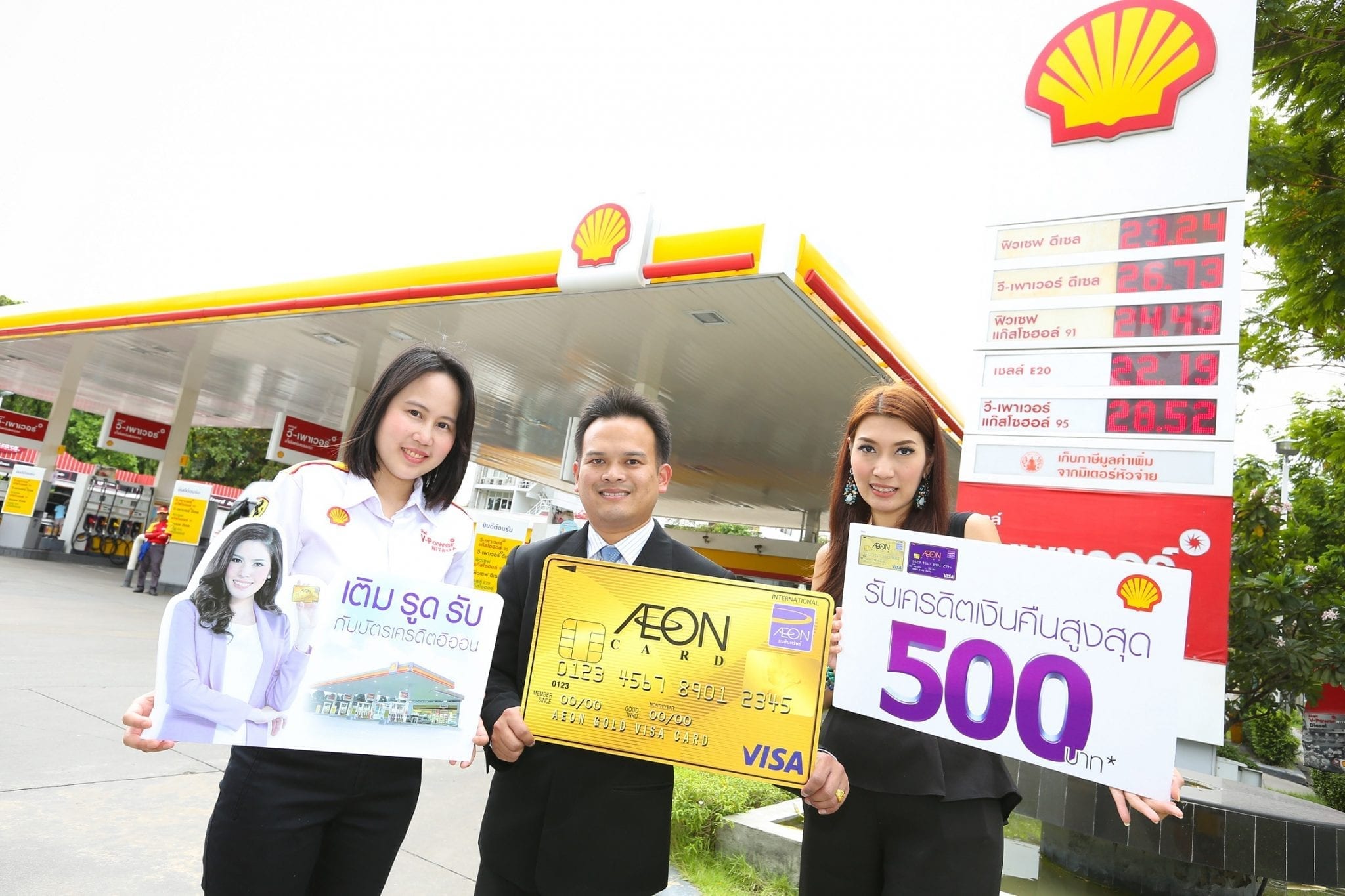
    Mr. Praphan Rangsiyopas (middle), Vice President Marketing and Mrs. Waraporn Nilpanich (right), Vice President Credit Card of AEON Thana Sinsap (Thailand) Public Company Limited together with Ms. Nopchanok Tantiwechwuttikul (left), Payment and Loyalty Manager of The Shell Company of Thailand Limited offer special promotion for AEON credit cardholders, Accumulate spending amount of 3,000 Baht and up at Shell Service Station via AEON Gold and AEON Classic credit card, cardholders will get cash back up to 500 Baht per month.

    AEON credit cardholders can enjoy this promotional campaign by registering through SMS by typing SH follow by 16 Digits of AEON credit card number without space, and send to 4589123 or register free at www.aeon.co.th. This campaign starts now until March 31st, 2017.

  • Shell Malaysia to open dozens of new stations to keep market lead

    Shell Malaysia to open dozens of new stations to keep market lead

    Shell Malaysia Trading Sdn Bhd plans to open more than 20 new petrol stations to maintain its leadership in the retail fuel market in the country.

    About a third of these stations, according to theedgemarkets.com quoting Shell managing director Datuk Azman Ismail, have already been opened.

    Shell Malaysia is the number one fuel retailer in terms of market share and operates more than 900 stations nationwide.

    Apart from quantity, the company also strives to improve the quality of its services with the launch of ‘Welcome to Shell’ campaign, a three-year transformational program which aims to make the oil company the benchmark for hospitality on Malaysian roads.