Tag: Sheng Siong

  • Sheng Siong Posts Q3 Profit of $44.6 Million

    Sheng Siong Posts Q3 Profit of $44.6 Million

    Sheng Siong lifted third-quarter profit by 1.9 per cent to $44.6 million for the period ended Sept 30, up from $43.7 million a year earlier, driven by new outlets and stronger comparable sales.

    Revenue rose 6.2 per cent to $441.5 million, compared with $415.5 million in the prior-year period. Earnings per share climbed 1.7 per cent to $0.0296 from $0.0291.

    The Singapore mainboard-listed supermarket chain attributed top-line growth to higher store numbers and improved same-store demand.

    New Floorspace Carries the Top Line

    Revenue growth came directly from new space and gains across existing aisles. The supermarket operator added eight stores in Singapore over twelve months, lifting its domestic network to 92 locations from 84. Total domestic retail space expanded to 799,775 square feet, up from 723,648 square feet in the prior-year period. Its footprint in China stayed flat at six outlets.

    Management acknowledged that discounting remains intense across the island. Sustained promotional campaigns across the grocery sector continue to squeeze receipts and operating margins, capping the flow-through from higher customer traffic.

    Wage Mandates Push Up Operating Costs

    Staff expenses climbed 9.3 per cent during the quarter to $71.6 million, compared with $65.5 million twelve months ago. The increase reflects state wage adjustments designed to lift compensation for lower-income retail staff across the island.

    Sheng Siong raised floor workers’ pay in September 2025 to comply with statutory Progressive Wage Model requirements for the retail industry. Management identified further overhead pressure coming from updated National Wage Council guidelines spanning 2026 and 2027.

    Cross-Border Shopping Threatens Basket Sizes

    Domestic grocers face a shifting competitive perimeter as regional transport links near completion. The Johor Bahru-Singapore Rapid Transit System Link, scheduled to begin passenger service in February 2027, will allow Singapore residents to cross the border into Malaysia in minutes. That connection threatens to siphon off household spending on packaged groceries and personal care goods, where price differentials between the two markets remain wide.

    For mass-market grocers, structural wage inflation combined with cross-border retail leakage leaves little room for pricing missteps. While premium supermarket operators serve a demographic less inclined to haul pantry staples across the Causeway, Sheng Siong’s value-driven shopper base is directly exposed to Malaysian price competition. Defending market share will require tighter inventory turns and selective promotions that protect basket volumes without eroding gross margins.

    Securing Real Estate in Underserved Estates

    The latest performance extends a multi-year push into newly completed residential developments across suburban Singapore. Securing tenancy in public housing commercial spaces has allowed the company to generate steady revenue growth even as older outlets contend with baseline saturation.

    Shares of Sheng Siong fell 1.4 per cent to close at $2.80 on October 29 before the company released its financial statement.

    The retailer continues to target suburban pockets where it lacks coverage.

    Looking ahead, we will continue to prioritise expansion in areas where the group has limited presence, to extend our reach to customers

    said Lim Hock Chee, group chief executive of Sheng Siong.

    Attention now turns to government commercial lease tenders over the coming quarter, where Sheng Siong must secure additional suburban sites to sustain floor-space growth ahead of the 2027 transit link opening.
  • Sheng Siong Wins Singapore Affluent Shoppers as Consideration Jumps to 52 per Cent

    Sheng Siong Wins Singapore Affluent Shoppers as Consideration Jumps to 52 per Cent

    Singapore grocer Sheng Siong lifted customer consideration among higher-income households to 52 per cent in August 2026, up from 33 per cent a year earlier. That 19-point surge put wealthy shoppers ahead of middle-income consumers for the first time in brand tracking records.

    Across the island, the supermarket chain’s overall consideration score rose 9.1 points to 50.0 between September 1, 2025 and August 31, 2026. Current customer reach climbed 11.2 points to 50.7 per cent, tracking adults who shopped there within the past three months. Total customer satisfaction increased from 39.3 to 49.9 over the same 12-month period.

    Shifting the Customer Base

    YouGov data shows the sharpest demographic realignment occurred among households earning more than 200 per cent of the national median income. That affluent cohort started September 2025 as Sheng Siong’s least frequent customer group at 33 per cent. By August 2026, it became its most frequent at 56 per cent. Middle-income shoppers rose from 41 per cent to 51 per cent, while lower-income patronage reached 51 per cent.

    Higher-income satisfaction showed an even steeper climb. Net satisfaction in that bracket reached 55.7 in August 2026, up from 28.0 a year earlier. That topped the 52.4 score recorded by lower-income households.

    Pricing Staples and Town Locations

    Sheng Siong engineered this shift through steep discounts on core household baskets and real estate expansion outside suburban strongholds. Targeted price cuts included doubling Community Health Assist Scheme discounts in June. The grocer also discounted pantry staples such as eggs and rice by up to 50 per cent through Community Development Council voucher promotions.

    Store location backed the pricing strategy. The company pushed beyond public housing heartlands by opening a town-centre branch at The Cathay in August 2025. The outlet caught central office workers and professional commuters who previously defaulted to premium grocers.

    Margin Pressures on Mid-Tier Rivals

    Competitors in the mid-tier space face immediate pressure, including FairPrice and DFI Retail Group’s Cold Storage network. When budget operators secure affluent volume on everyday staples, mid-tier chains risk margin erosion as they defend market share with matching promotions.

    Operating costs present risks for the value grocer. Serving shoppers in high-rent central commercial spaces lifts baseline overheads, requiring higher spend per ticket to offset narrow margins on discounted staple goods.

    Logistics upgrades and footprint modernization drove these retail gains over the past two financial years. BrandIndex metrics will show whether the numbers hold when government voucher programs taper off ahead of the 2027 fiscal year.

  • Singapore’s Sheng Siong plans 25 more stores during next five years

    Singapore’s Sheng Siong plans 25 more stores during next five years

    Singapore’s supermarket chain Sheng Siong aims to open three to five new outlets every year in the country in the near term, the company said in a bourse filing today (Apr 20). The near term plan will be within the next three to five years, and this adds up to 25 stores by the fifth year, as part of the supermarket chain’s plans to expand its footprint in the country.

    Sheng Siong said it will continue to look out for retail spaces in new and existing public housing estates, particularly in areas where it does not have a presence.

    A check online shows the chain having 65 outlets across Singapore, with 14 outlets in the Northeast, 17 outlets in the West, 12 outlets in the North, 11 outlets in Central, and 11 outlets in the East.

    With a projected 25 more outlets, this will bring Sheng Siong’s total number of outlets to 90.

    According to competitor NTUC Fairprice’s website, the chain has 230 outlets in Singapore. Fairprice claims that it’s the country’s largest retailer. It counts brands like FairPrice supermarkets, FairPrice Finest, and Cheers as its outlets. There are 100 FairPrice supermarkets islandwide.

    Sheng Siong will also continue to build on its e-commerce capability to extend its reach to customers in areas where it does not have a physical presence.

    There are also plans to expand into China although it didn’t lay out the specifics. The company is currently operating four supermarkets in Kunming, China, which continue to be profitable.

    The supermarket chain’s latest financial results showed a 6.4 percent increase in revenue for the second half of the financial year 2021, at S$688.1 million. That’s thanks to the opening of three new stores in Singapore in the same period.

    Net profit for the full year eased 4.2 percent to S$132.8 million, due to a high base in the previous year.

    Sheng Siong expects pandemic-induced demand to taper as consumers loosen their purse strings on discretionary items like social activities and travel.

    “We should build a ‘war-chest’ ready on hand and preferred to conserve cash rather than gear up when the need arises,” it said.

    The company made news last year when it rewarded staff with up to 16 months of bonus after the “tremendous” performance in 2020.

    Internal memos seen by news agencies showed that some of the amount, as well as monthly bonus were distributed in 2020.

    The good performance reflected how well supermarkets perform

  • Sheng Siong profit climbs but management tempers expectations

    Sheng Siong profit climbs but management tempers expectations

    Listed Singaporean supermarket chain Sheng Siong’s profit soared 54.4 percent in the third quarter to US$23.27 million, riding a wave of increased sales in the grocery sector.

    Revenue jumped 28.9 percent to $239.5 million, while gross profit grew 28.7 percent to $64.68 million, largely off the back of increased home cooking and stocking of pantries throughout, and beyond, the country’s Circuit Breaker period.

    However, with stay-at-home orders easing across Sheng Siong’s markets, this elevated demand is likely to begin to stabilize in the following months, said CEO Lim Hock Chee.

    “Competition in the supermarket industry is expected to remain keen and challenging among the traditional brick and mortar operations and e-commerce platforms, which have gained a larger share since the onset of Covid-19,” Chee said.

    “The risks to supply chain disruption because of Covid-19 and other natural disasters are still there and may lead to higher input prices.”

  • Sheng Siong Group boosts sales during virus lockdown

    Sheng Siong Group boosts sales during virus lockdown

    Singapore consumers’ migration from food halls to supermarkets during the Covid-19 pandemic has proven a windfall for grocery operator Sheng Siong Group.

    Sales for the June quarter surged 75.8 percent to US$304.3 million, gross profit margin improved from 27.4 percent to 28.1 percent and net profit soared 150.7 percent year on year to $33.6 million.

    While new stores accounted for 13.3 percent of the 75.8-per-cent increase in sales the vast majority of the balance came from same-store turnover.

    “This was mainly driven by the elevated demand arising from Covid-19, as consumers stocked up to hedge against the risks of disruption to the supply chain and the implementation of the “Circuit Breaker” restricting people’s movements and forbidding eating out, thereby benefiting retailers of fresh and uncooked food,” the company said in a statement.

    However, the company has warned the gradual easing of restrictions on Singaporeans’ movements it expects the elevated demand for goods fuelled by Covid-19 will ease.

    “Competition in the supermarket industry is expected to remain keen and challenging among the traditional brick-and-mortar operators and e-commerce platforms which seem to have gained better visibility because of the Circuit Breaker,” the company said. “Demand may be affected if post-Covid-19, economic recovery is slow or remains depressed.”

  • Profit increased for Singapore supermarket Sheng Siong

    Profit increased for Singapore supermarket Sheng Siong

    Singapore supermarket operator Sheng Siong boosted net profit by 49 percent in the March quarter as sales surged due to the Covid-19 pandemic.

    Sales were up by 30.7 percent in the quarter, or by 19.7 percent on a same-store basis, initially due to stronger Lunar New Year sales. When Singapore’s government introduced a round of restrictions on public behavior due to the pandemic on February 7, demand for groceries soared.

    “Since then, demand has been elevated as more people are eating at home and probably loading up their pantry as well,” the company said in a statement.

    Profit for the March quarter was S$29 million on sales of $328.7 million, with gross margin improving from 26.1 percent to 27 percent, largely due to increased sales of house brands.

    The company says it is uncertain how long Singapore’s economy will take to normalize once the Covid-19 pandemic passes.

    “When that happens, the group expects revenue to taper off from the current elevated levels as buffer stocks kept by households are consumed. In the meantime, the group will continue to hold a higher-than-normal level of inventory to hedge against potential disruption in the supply chain.”

    The group is also wary of Covid-19’s effect on the supply chain, with some international food companies warning of future disruptions and an increase in the price of some goods due to the now worldwide lockdown.

    Sheng Siong CEO Lim Hock Chee says the company remains committed to a strategy of opening supermarkets in areas where potential customers reside but where it has no presence yet.

    “We will continue with our efforts to nurture the growth of the new stores and build on the momentum of improving comparable same-store sales in Singapore and China, while focusing on improving gross margin and cost efficiency by changing the sales mix with a higher proportion of fresh produce and deriving more efficiency gains in the supply chain,” he said.

    Since March 31, the company has secured two new HDB stores in Singapore which were tendered in January – at Block 872C Tampines Street 86 (8490sqft) and Block 455 Sengkang West Avenue (9040sqft). It also won a tender for a 4610sqft shop in the Potong Pasir Community Club at 6 Potong Pasir Ave 2.

    Sheng Siong will open five stores this year taking its network to 64 and its combined retailing area to 575,160sqft.

  • Sheng Siong looks for new store sites as sales and profit grows

    Sheng Siong looks for new store sites as sales and profit grows

    Singapore supermarket operator Sheng Siong says it plans to open more stores across the city in the wake of a 7.4-per-cent profit increase last year.

    Sheng Siong Group achieved a net profit of S$75.8 million (US$54 million) for the December year on revenue up 11.3 percent to S$991.3 million, largely due to store network growth.

    “Our store expansion plan in Singapore is progressing well,” said CEO Lim Hock Chee.

    Five new stores opened last year and two more already this year adding 56,820sqft of trading area and taking the network to 61.

    “Moving ahead, we will stay focused on looking for new retail spaces especially in areas where our potential customers reside with an aim in mind to expand our retail network in Singapore.”  The company says it will focus on continuing to look for retail space in new and existing Housing Development Board housing estates, particularly in estates where the group currently has no presence.

    “Our key priorities are nurturing the growth of our new stores in Singapore and China while enhancing the gross margin and lowering input cost remain as one of the core areas that we will be working on,” said Lim.

    He added the company would seek to adjust stores’ sales mix adding a higher proportion of fresh produce and deriving more efficiency gains in the supply chain in the year ahead.

    The company remains optimistic about trading this year despite expectations Singapore’s economic growth will slow to less than 1.5 percent – potentially even entering a recession – due to the impact of the coronavirus.

    The company’s results commentary said retail sales, in particular at supermarkets had “not been exciting” last year and could be negatively affected this year.

    “Competition in the supermarket industry is expected to remain keen.”

    This year’s openings were a store on the first floor of Block 118 Aljunied Avenue 2, with an area of approximately 18,000sqft on January 1 and at Block 202 Marsiling Drive (5540sqft) on January 11.

  • Sheng Siong profits up on network expansion

    Sheng Siong profits up on network expansion

    Singaporean supermarket chain Sheng Siong has reported a 16.4-per-cent year-on-year increase in net profit to SG$20.6 million (US$15.1 million) for the third quarter.

    The increase is largely attributed to an increase in gross profit arising from the growth in revenue, slightly improved gross margin, and higher other income – but was partially offset by higher operating expenses and net finance expense.

    “We are pleased that we have opened two new stores at Block 182 Woodland Street 13 and Block 602A Tampines Ave 9 with retail areas of 8500sqft and 9000sqft respectively while another store at Block 202 Marsiling Drive which we have secured will be operational by the first quarter of next year,” said the group’s CEO Lim Hock Chee. “Going ahead, we will continue with our efforts in expanding our retail network in Singapore, especially in areas where our potential customers reside.

    “Besides placing focus on nurturing the growth of our new stores in Singapore and China, we remain committed to enhancing the gross margin and lowering input cost by improving the sales mix with a higher proportion of fresh produce and deriving more efficiency gains in the supply chain.”

  • Price Kaki to launched by Customers Association of Singapore

    Price Kaki to launched by Customers Association of Singapore

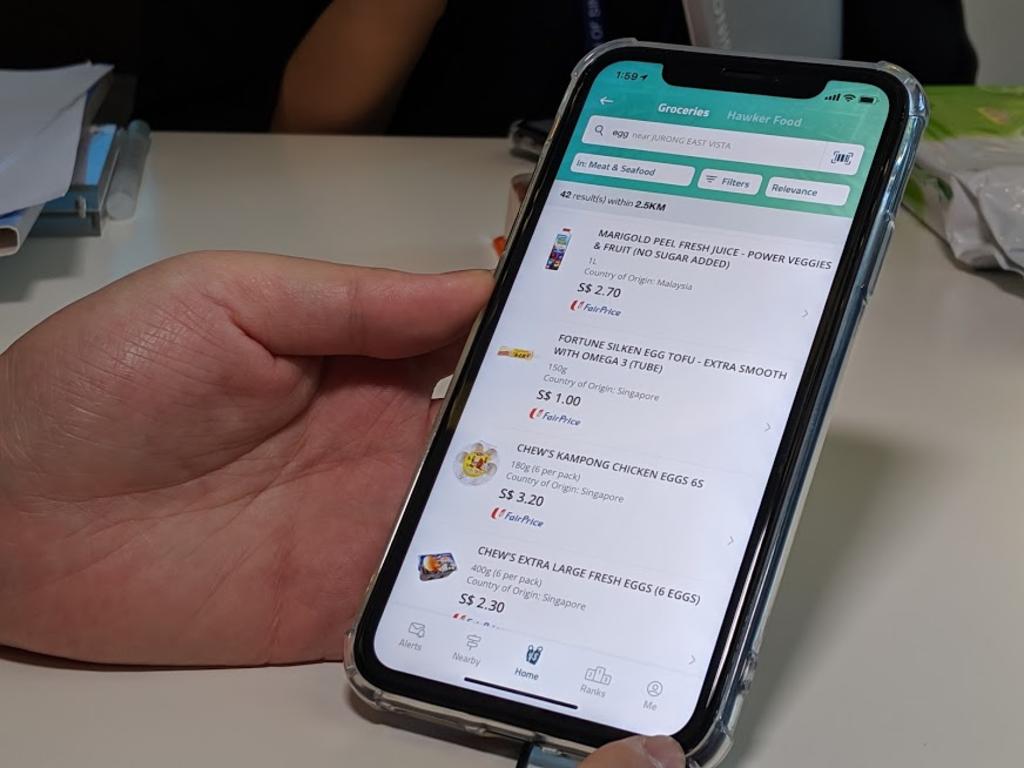
    The Consumers Association of Singapore (Case) has released an app rewarding users for sharing pricing information to allow comparisons while shopping.

    Users of the Price Kaki app, which is expected to launch at the end of this month, can submit photos of any prices they come across while shopping for hawker food or groceries, allowing other users to save costs. Contributors to the pricing information platform are eligible to claim rewards such as film vouchers.

    Price Kaki’s base pricing information will be updated daily by FairPrice, Giant, Sheng Siong and Prime Supermarket.

    Future updates to the app are expected to be broad-ranging and include other businesses such as cafes.

  • Singapore supermarket operator Sheng Siong reports profit boost

    Singapore supermarket operator Sheng Siong reports profit boost

    Singapore supermarket operator Sheng Siong boosted its net profit by 7.4 percent in the June quarter, to S$18.42 million.

    Sales rose 11.8 percent to $238.16 million on the back of 13 new store openings.

    However, the company has warned investors that competition in the Singapore supermarket sector is tough, from both online retailers and rival supermarket chains. Worse, consumer spending may be impacted by a soft economic outlook.

    In the half-year to date, Sheng Siong recorded a 6.6 percent increase in net profit to $37.78 million, on sales up 11 percent to $489.59 million.

  • New stores boost sales for Sheng Siong Group

    New stores boost sales for Sheng Siong Group

    Singapore supermarket chain Sheng Siong Group has reported a 1.4 per cent year-on-year rise in net profit to S$70.5 million for 2018. Revenue, gross profit and gross margin all improved in both the final quarter and full year, but they were offset by a reduction in other income and higher operating expenses. Government statistics show sales in supermarkets across the city state shrank during the year, but Sheng Siong Group said it was able to mitigate that with new stores, its revenue rising 7.4 per cent for the year.

    The company’s gross margin increased to 26.8 per cent, from 26.2 per cent, mainly because of better buying prices, higher rebates from suppliers for special promotions and volume discounts, improvement in efficiency in the central distribution centre and higher mix of fresh versus non-fresh offerings.

    In a statement, Sheng Siong Group said it expects competition in Singapore’s supermarket industry to remain keen, “exacerbated by the proliferation of new supermarkets in HDB residential areas, as well as the push by new and existing e-commerce players for market share”.

    The group will continue to look for new retail spaces in new and existing HDB housing estates, particularly in estates where there is no presence. It has delayed a planned expansion of its central warehouse, which is now likely to be completed about mid year.

    The company’s store in Kunming, China, which opened in November 2017, recorded a loss of $700,000 last year.  It has has leased a site for a second supermarket in the city and hopes this will commence trading in the third quarter

    “Our store expansion plans have been well on track where we have opened 10 new stores during the year, bringing our total store count to 54 and expanding our total retail area to 496,200sqft,” said CEO Lim Hock Chee.

    “Going ahead, we remain on the lookout for new retail opportunities, especially in areas where we do not have a presence. Besides nurturing the growth of our new stores in Singapore and China, we will continue with our efforts in enhancing the gross margin via more efficiency gains in the supply chain and higher sales mix of fresh produce. We will remain vigilant on costs.”

  • Sheng Siong targets big expansion in 2018

    Sheng Siong targets big expansion in 2018

    Singapore’s Sheng Siong supermarket group is on track to open its 50th store this year, with bids in play for locations in Bukit Batok and Sumang Lane.

    And an analyst familiar with the business, CGS-CIMB’s Cezzane See, says the group’s pipeline is robust, with at least 10 bids coming up before the year is over.

    “If successful, the wins could take Sheng Siong’s number of stores beyond the 50-store target by the end of FY2018, and beyond six new store openings in FY2018 (just shy of the 8 store additions in FY2012),” See said in a report.

    The supermarket operator ended the first quarter of this year with 48 stores, five more than at the same time last year. It achieves revenue per square foot of $226, according to See.

    The fact Sheng Siong had failed to secure any new sites for about six months was down to unrealistic expectations of landlords, and no cause for concern, said See.

    “We believe this is positive for Sheng Siong as it is generally reluctant to overbid for the sake of expanding. Hence, a rationale bidding environment improves Sheng Siong’s odds of winning store bids, in our view.”

    Sheng Siong’s same-store sales growth in the first quarter was 5.6 per cent, as consumer sentiment recovered, aided by the expansion of its Block 506 Tampines store, the reopening of the Loyang store, and the migration of customers from its closed Verge and Woodlands Block 6A outlets to to Jalan Berseh and Woodlands Block 301.

  • Sheng Siong profits surge 25 per cent

    Sheng Siong profits surge 25 per cent

    Sheng Siong profits rose a stunning 25.3 per cent for the three months to September 30, to S$19.6 million.

    The supermarket operator cited higher sales, a tax refund and lower operating costs for the improved fortunes. Excluding its $2.2 million tax refund, the profit rise was a more modest 11.5 per cent.

    Revenue for the quarter rose 4.2 per cent. New stores contributed an increase of 3.9 per cent, with same-store sales up 1.7 per cent.

    Sheng Siong said consumer sentiment remained cautious during the quarter and sales at supermarkets “remained flattish” for the greater part of the first nine months of the year.

    Lim Hock Chee, the group’s CEO, said competition in the supermarket industry is expected to remain keen, particularly with the influx of large online retailers.

    “Moving ahead, we will remain focused on our store expansion plans in Singapore, particularly in areas where our potential customers are residing. Concurrently, we will continue to drive growth of our new and existing stores.

    Besides this, we remain committed to improve cost efficiencies through lowering input costs and operating overheads. Such initiatives include increasing direct purchasing, bulk handling, changing the sales mix to a higher proportion of fresh produce and reducing operating expenses by improving productivity,” he said.

    During the quarter, Sheng Siong opened a new store of 4000sqft in Fajar 446, expanding its total retail square footage to 431,000sqft.

    The group has successfully bid for three new HDB shops at Woodlands Street 12 (11,800sqft), Edgedale Plains Block 660A in Punggol (3100sqft) and Anchorvale Crescent Block 338 in Sengkang (5100sqft). Subject to the execution of tenancy agreements with HDB, these three new stores should be operational by the end of this year.

    The group is still looking for suitable retail space particularly in areas where it does not have a presence. However, competition for retail space, particularly for new HDB shops is expected to remain keen but rational, judging by the prices at the recent biddings.

    The store at Woodlands, with an area of 41,500sq ft will be permanently closed in November because the HDB is redeveloping the area.

    Meanwhile, the fit-out of the new store in Kunming China is now completed and subject to regulatory approvals, the supermarket should commence operation before the end of the year.

  • Sheng Siong puts top bid on Punggol property

    Sheng Siong puts top bid on Punggol property

    Supermarket chain Sheng Siong Group (SSG) has put in the highest bid for a 3100sqft (287.9sqm) store in Edgedale Plans, Punggol.

    It has also submitted the second-highest bid for another store the same size along Woodlands Drive.

    SSG’s 41,500sqft Woodland store is set to close next month, but two are set to open – a 4000sqft store at Bukit Panjang this month and a 12,000sqft property in Woodlands St next month.

  • Profit lift for Sheng Siong Group

    Profit lift for Sheng Siong Group

    Supermarket chain Sheng Siong Group had a 6.1 per cent increase in net profit to S$16.1 million (US$11.8 million) for its second quarter, to the end of June.

    It attributes this to higher gross profit generated by revenue growth and improved gross margin, partially offset by higher running expenses because of increased activity.

    Revenue grew by 6.8 per cent year-on-year of which 5.2 per cent was contributed by new stores, 0.9 per cent by comparable same-store sales and 0.7 per cent by Loyang Point and The Verge stores.

    Growth in same-store sales improved on the first quarter’s “flattish” growth, mainly because of improved consumer sentiment, but was offset by a drop in footfall of stores in areas affected by the slowdown in the oil and gas industry, the Tampines store’s renovation and the Woodlands store, where most residents in nearby blocks affected had moved. Excluding the contraction from the Woodlands store, comparable same-store sales growth would be 1.2 and 1.7 per cent for the first and second quarters respectively.

    Gross margins increased to 26.6 per cent for the second quarter (26.1 per cent in the same quarter last year), mainly because of input cost being lowered by efficiency gains derived from the central distribution centre, a higher level of supplier rebates, and a better sales mix of higher-gross-margin fresh versus non-fresh produce.

    The store at The Verge was closed in the third week of June, and The Woodlands store may be closed in October instead of August, as the HDB is redeveloping the area. Both these stores accounted for 7.6 per cent of the first half’s revenue.

    The group has entered into a lease for a new shop of about 4000 sqft (370 sqm) at Fajar Road, Bukit Panjang, and successfully bid for a new HDB shop of about 12,000 sqft in Woodlands Street. The stores are expected to be open in September and October respectively.

    An extension of the distribution has been started, to add another 50,000 sqft of storage space in the third quarter of next year.

    Renovation of a supermarket to be run by a subsidiary in Kunming is expected to be complete in September.