Tag: shifts

  • Vietnam Gold Prices Hit Two-Week Downtrend Amidst Global Market Shifts

    Vietnam Gold Prices Hit Two-Week Downtrend Amidst Global Market Shifts

    On Tuesday, Vietnam witnessed its lowest gold prices since the start of July, resulting from a decline in worldwide prices due to escalating tensions in the Middle East. The price of a gold bar from the Saigon Jewelry Company fell 0.88%, to VND147.1 million (equivalent to US$5,604.76) per tael. In Vietnam, a tael is a unit of weight equivalent to 37.5 grams or 1.2 ounces.

    Gold Market Trends

    The price of gold rings also saw a decrease, falling by 0.54% to VND146 million per tael. The drop in gold prices this year has amounted to a 3.7% decrease overall.

    On the worldwide stage, after experiencing a 3% drop on Monday, gold prices made a minor recovery. This was following an announcement by U.S. President Donald Trump that he was re-establishing a naval blockade on Iran. This action led to a rise in oil markets, renewed fears about inflation, and the potential for the longevity of higher U.S. interest rates. As a result, spot gold increased by 0.28% to $4,011.10 per ounce.

    Expert Insights

    Market analyst at Forex.com, Fawad Razaqzada, commented on the situation, explaining that the rally in oil prices was a result of the conflict in the Middle East and suggested policy tightening by the Federal Reserve. He also noted that these developments spelled bad news for assets like gold, which yield no interest.

    Razaqzada further speculated, “If oil prices continue to surge, gold prices might experience a downfall, potentially dropping to the $3,800 level initially. There is also a chance they could drop to $3,500 over time if the selling pressure intensifies.”

    Questions & Answers

    What caused the drop in Vietnam’s gold prices?
    The decrease was primarily due to a dip in global gold prices, spurred by increased tensions in the Middle East.

    How has the global gold market reacted to recent events?
    After a 3% plunge on Monday, global gold prices have slightly recovered following the US President’s decision to reinstate a naval blockade on Iran.

    What impact could rising oil prices have on the gold market?
    According to market analysts, if oil prices continue to surge, gold prices could potentially drop significantly, possibly down to $3,500 over time if the selling pressure increases.
  • H&M Shifts Southeast Asia HQ to Kuala Lumpur, Triggers Job Cuts in Singapore

    H&M Shifts Southeast Asia HQ to Kuala Lumpur, Triggers Job Cuts in Singapore

    Swedish fashion conglomerate, H&M, has recently undertaken a restructuring exercise which has led to job cuts in Singapore. This move comes as the retailer transfers its Southeast Asian hub from Singapore to Kuala Lumpur in Malaysia.

    The restructuring operation resulted in a reduction of 78 roles from a total regional workforce of 256 employees. While the exact breakdown of the redundancy hasn’t been made public, it has been confirmed that the majority of job cuts took place in the Singapore office.

    In replying to inquiries, H&M Singapore said that it is “fully backing” employees through the organizational shifts. However, the company did not disclose the exact number of dismissed staff members or specify the affected roles. H&M stated that as a company, they constantly strive to meet customer expectations and this includes regular reviews of their operational efficiency and agility.

    Despite the recent layoffs, H&M maintains that Singapore remains a crucial market for them. The retailer confirmed that it would continue to sustain an office in the country. “We will continue to maintain our retail presence reflecting our long-term commitment,” said a representative of the company.

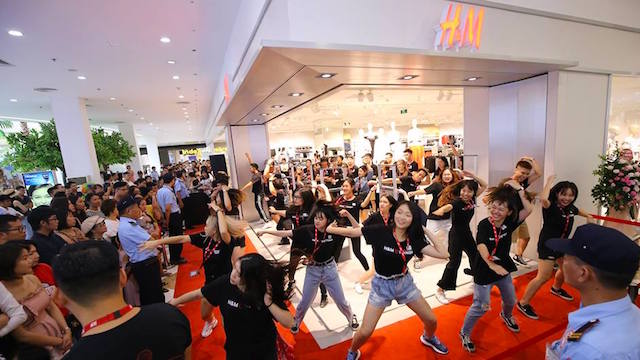
    H&M first entered the Singapore market in 2011 with its Somerset outlet. Currently, the brand operates six stores in the country. Over the past couple of years, however, H&M has been closing some of its physical stores. In March 2023, the retailer closed its two-storey outlet at Ion Orchard after serving customers for over a decade. The Tampines Mall store was shut in August 2020, followed by the Waterway Point outlet in Punggol in January 2021.

    The Singapore Manual and Mercantile Workers’ Union (SMMWU) released a statement saying that while H&M Singapore is not a unionized entity, some employees could be union members. SMMWU secretary-general Andy Lim asserted that both the National Trades Union Congress and the SMMWU are prepared to offer assistance to these members and help them transition to new job opportunities.

    Questions & Answers

    Why is H&M moving its Southeast Asian headquarter from Singapore to Malaysia’s Kuala Lumpur?
    – Although H&M did not provide a specific reason for the shift of its Southeast Asian headquarters, such decisions are often influenced by cost factors, market opportunities, or strategic alignment.

    What are some of the steps H&M is taking to support its affected employees?
    – Although additional details were not provided, H&M Singapore stated that they are “fully supporting” their employees during these organizational changes.

    How will H&M’s presence in Singapore change as a result of this move?
    – Despite the layoffs and the shift of its regional headquarters, H&M has affirmed that Singapore remains an important market for them. The company will maintain a retail presence in the country, reflecting their long-term commitment.

  • US Dollar Gains Momentum against Vietnamese Dong Amid Global Currency Shifts

    US Dollar Gains Momentum against Vietnamese Dong Amid Global Currency Shifts

    On Wednesday morning, the US dollar experienced a surge against the Vietnamese dong while simultaneously witnessing a decline against several of its other major counterparts. In the currency exchange, Vietcombank sold the US dollar at VND26,309. This represented a marginal increase of 0.02% compared to the previous day’s rate. On the unofficial currency market, the US dollar saw a slightly larger gain of 0.1%, reaching around VND26,858.

    Monetary Policy Moves

    The State Bank of Vietnam responded to these fluctuations by increasing its reference rate by 0.02% to VND25,057. This move typically reflects the government’s effort to manage the value of the Vietnamese dong and ensure economic stability in the country.

    Global Currency Trends

    In broader international markets, Asian currencies made a recovery on Wednesday, bouncing back from losses sustained the previous day. Many investors are closely monitoring the US Supreme Court’s recent decision to block President Donald Trump’s tariffs that were imposed using emergency powers. They are also keenly observing his speeches for any potential indicators of future trade policy changes.

    The dollar index, a key benchmark used to gauge the value of the US dollar relative to a basket of other major currencies, including the yen and the euro, fell slightly by 0.05% to 97.84. In parallel, the euro saw a mild increase of 0.05%, reaching $1.1777.

    The value of the yen against the US dollar saw a modest uptick of 0.12%, reaching 155.7 per dollar. This comes after a significant drop of 0.8% on Tuesday.

    In other parts of the world, the Australian dollar experienced a rise of 0.3% to $0.7074. This followed a surge in inflation which has increased the likelihood of future rate hikes. Additionally, the New Zealand dollar saw a minor increase in its value, reaching $0.5971.

    Questions & Answers

    How did the US dollar perform against the Vietnamese dong on Wednesday?
    The US dollar saw a marginal increase against the Vietnamese dong on Wednesday, selling at VND26,309 in Vietcombank, which is a 0.02% increase from the previous day.

    How did other major currencies perform against the US dollar?
    The yen and the Australian and New Zealand dollars all strengthened against the US dollar. The yen increased 0.12%, while the Australian dollar rose by 0.3%. The New Zealand dollar also saw a minor increase.

    How did global events impact the currency market?
    Investors are closely monitoring recent decisions by the US Supreme Court and speeches from President Donald Trump for signals on future trade policy. These global events have an impact on currency movements and investors’ actions.

  • Gasoline Prices in Vietnam Hit 5-Week Low: Global Factors and Market Shifts Explained

    Gasoline Prices in Vietnam Hit 5-Week Low: Global Factors and Market Shifts Explained

    As of Thursday afternoon, gasoline prices in Vietnam have reached their lowest point since October 23rd. The commonly used fuel, RON95, fell by 2.63% to VND20,000 (equivalent to US$0.76) per liter.

    Decreased Prices Across Fuel Types

    Along with RON95, the biofuel E5 RON92 saw a reduction in price of 2.63%, bringing the cost per liter to VND19,280. Diesel prices took a more significant hit, with prices plunging 5.15% to VND18,800.

    Global Factors Influencing Prices

    The worldwide gasoline market has been impacted by a variety of factors over the past week. One such factor was a proposal by U.S. President Donald Trump aiming to resolve the military conflict between Russia and Ukraine, as reported by Vietnam’s Ministry of Industry and Trade.

    Additionally, a decrease in U.S. crude oil inventories, accompanied by a rise in gasoline and diesel supplies, also played a role in the reduction of prices.

    Impact on Barrel Prices

    The price of RON95 per barrel also experienced a decrease, dropping 3.4% to $79.6. Diesel prices per barrel fell by an even larger margin, at 6.2%.

    Questions & Answers

    What has caused the recent drop in gasoline prices in Vietnam?
    The decrease in prices is due to a variety of factors, including a proposal by the U.S. President to end the military conflict between Russia and Ukraine, as well as an increase in gasoline and diesel supplies in the U.S.

    By what percentage have RON95 and diesel prices fallen?
    RON95 prices fell by 2.63%, while diesel prices plunged 5.15%.

    What is the current price of a barrel of RON95 and diesel?
    The price of a barrel of RON95 has fallen to $79.6, while the price of a barrel of diesel has decreased by 6.2%.

  • Alibaba Challenges Meituan In Local-lifestyle Domain With Amap’s Ai-powered ‘street Stars’ Feature

    Alibaba Challenges Meituan In Local-lifestyle Domain With Amap’s Ai-powered ‘street Stars’ Feature

    Alibaba’s navigational application, Amap, is diversifying its functionality beyond its primary aim of providing directional services. It is venturing into the local-lifestyle domain, a territory traditionally occupied by competitor Meituan. This move is marked by the introduction of its own classification system for restaurants, hotels, and tourist attractions.

    Competing for Market Share in “Instant Retail”

    Alibaba and Meituan are well-established tech enterprises in China. Currently, they are deeply engaged in an intense rivalry for dominance in the “instant retail” sector. This field is characterized by immediate delivery services and has seen a rapid influx of consumers due to the provision of extensive discounts and coupons.

    The competitive landscape of this sector has led to increased attention from regulatory bodies, who are concerned about a potential harmful price spiral. In the Chinese context, sluggish property rates and unstable employment conditions have contributed to a consistent dip in consumer confidence. This has pressured corporations to adopt aggressive pricing strategies and provide subsidies to stimulate consumer spending.

    “Street Stars”: Amap’s New Feature

    Amap announced a new feature named “Street Stars” on Wednesday. This feature, powered by advanced artificial intelligence algorithms, aims to rank destinations for its 170 million daily active users. To promote this new feature, Amap is offering subsidies amounting to 1 billion yuan (approximately US$140.43 million). These subsidies are intended to provide users with coupons for ride-hailing or in-store services. The initial launch phase is expected to encompass 300 cities, and will include around 1.6 million local business listings.

    In China, consumers have historically depended on applications such as Meituan’s Dazhong Dianping for restaurant suggestions, reservations, and other services. Meituan recently announced that it would distribute 25 million consumption coupons as part of an overhaul of Dianping’s takeaway service from highly-rated restaurants.

    During a recent after-earnings discussion with analysts, Alibaba Group CEO Eddie Wu highlighted Amap’s AI-driven transformation. He emphasized the strategic importance of the app’s new direction, positioning it as a “new gateway for future lifestyle services”. This is part of Alibaba’s broader plan to design what it refers to as a “comprehensive consumption platform”.

    Regulatory Challenges

    However, concerns exist regarding the potential interference of Chinese regulators in these plans. E-commerce and food delivery giants in China have already been summoned by authorities for several meetings. The ongoing price war, which contradicts the government’s official stance against cutthroat competition, is a particularly contentious issue.

    Questions & Answers

    What is Alibaba’s Amap diversifying into?
    Amap is venturing into the local-lifestyle domain, traditionally occupied by its competitor Meituan. It plans to introduce its own classification system for restaurants, hotels, and tourist attractions.

    What is “Street Stars”?
    “Street Stars” is a new feature of Amap powered by advanced artificial intelligence algorithms. It aims to rank destinations for its 170 million daily active users.

    What are regulators’ concerns about the “instant retail” sector?
    Regulators are concerned about a potentially harmful price spiral in the sector. This is driven by aggressive pricing strategies and subsidies offered by companies to stimulate consumer spending, especially in the context of sluggish property rates and unstable employment conditions in China.

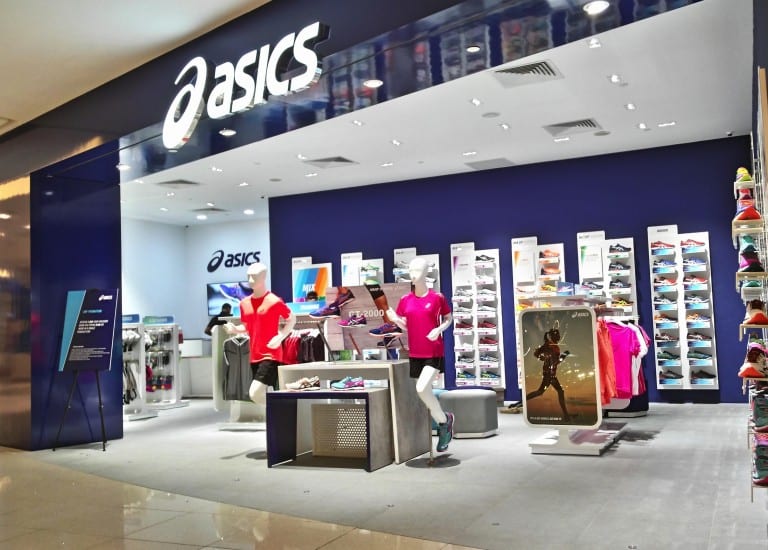
  • Asics Boosts Indian Manufacturing Amid Regulatory Changes, Plans For Brand-owned Stores

    Asics Boosts Indian Manufacturing Amid Regulatory Changes, Plans For Brand-owned Stores

    Asics, the Japanese sportswear giant, has announced plans to increase its manufacturing operations in India from 30% to 40% over the coming years. This move is aimed at maintaining a stable supply chain, following changes in the country’s regulations that have led to a halt in footwear imports.

    The Indian government has recently introduced a set of standards for different footwear types. These regulations demand that both local and international manufacturers secure quality certifications. In response to these rules, Asics has paused its footwear imports, citing the impracticality of importing without the required government certification.

    Local Production Strategy

    In order to navigate this challenging situation, Asics is working towards enhancing its local production capabilities. “We are strategically developing local production capabilities,” stated Rajat Khurana, Managing Director of Asics India.

    During the 2024-25 fiscal year, Asics achieved 30% local production. This achievement meets the government’s required threshold, which permits foreign brands to run their own single-brand stores in India.

    Expansion Plans

    With approximately 125 stores currently being operated via franchise partners, Asics is now planning to open its first brand-owned store within the year. The company is actively exploring potential locations in and around major cities such as Delhi and Mumbai, with plans to establish a few more outlets in the years to come.

    In addition to directly owned stores, Asics also intends to open three new franchise stores every month until the end of the year. The brand, which competes with internationally recognized names such as Nike, Adidas, and Skechers USA in the Indian market, is set to capitalize on the country’s growing fitness culture.

    Financial Outlook

    Asics is optimistic about its financial prospects in India, predicting a revenue growth of between 35% and 37% for the fiscal year 2024-25. This projection follows a 26% increase in revenue during the previous fiscal year, which saw its earnings rise to 4.28 billion rupees (US$49.7 million).

    The company, which is particularly known for its running shoes, is benefitting from the rising interest in fitness, tennis, and pickleball among India’s affluent urban dwellers. The local market for sporting goods and apparel is anticipated to double by 2030, reaching US$58 billion, up from the 2023 levels, as per a 2024 report by Deloitte.

    Questions & Answers

    What is the reason behind Asics’ decision to increase manufacturing in India?
    Asics is boosting its manufacturing in India in response to new regulations that have halted footwear imports.

    What are Asics’ expansion plans in India?
    Asics plans to open its first brand-owned store in India this year and aims to establish more in the coming years. The company is also looking to open three new franchise stores every month until the end of the year.

    What is Asics’ projected revenue growth in India for 2024-25?
    Asics is expecting to see a revenue growth of between 35% and 37% in India for the fiscal year 2024-25.

  • Vietnam’s Gold Market Remains Resilient Amid Ongoing Economic Shifts

    Vietnam’s Gold Market Remains Resilient Amid Ongoing Economic Shifts

    Gold jewelry sparkles in Ho Chi Minh City, where the allure of gold remains steadfast even as prices hold steady. On Thursday morning, the gold market saw a slight uptick, influenced by stabilizing global rates.

    Marginal Gains in Local Gold Prices

    The Saigon Jewelry Company reported a 0.43% increase in gold bar prices, bringing them to VND117.7 million (approximately US$4,509.06) per tael. Meanwhile, gold rings rose by 0.35%, now priced at VND114 million per tael. It’s an impressive year for gold, with prices climbing by 39.8% thus far.

    Global Market Trends and Investor Sentiment

    Globally, gold prices remained stable on Thursday as investors mulled over disappointing U.S. economic data and an ongoing climate of uncertainty in both political and economic arenas. Many eyes are also on the upcoming U.S. payroll figures for potential market guidance.

    Spot gold maintained its position at $3,372.91 an ounce, while U.S. gold futures slipped by 0.1%, landing at $3,396.60. According to Matt Simpson, a senior analyst at City Index, “Like most markets at present, gold finds itself in a holding pattern, subject to the unpredictability of trade headlines. It shows support while remaining cautious about breaking above this week’s highs.”

    Simpson adds that volatility remains muted as investors await statements from FOMC members and Friday’s Non-Farm Payroll (NFP) report, which could potentially pressure gold if the jobs data reflects robust growth. The precious metal, often seen as a safe haven in unstable times, tends to flourish when interest rates are low.

    Questions & Answers

    What was the increase in gold prices on Thursday?
    The Saigon Jewelry Company gold bar rose by 0.43% and is now priced at VND117.7 million per tael, while gold rings increased by 0.35%, reaching VND114 million per tael.

    How much have gold prices increased this year?
    Gold prices have surged by 39.8% so far in 2023.

    What factors are influencing global gold prices?
    Global prices are being influenced by weaker-than-expected U.S. economic data and persistent global uncertainties, with investors awaiting upcoming U.S. payroll data for more direction.

  • Luxury Market Growth Anticipated to Taper Off in 2025 Amid Economic Shifts

    Luxury Market Growth Anticipated to Taper Off in 2025 Amid Economic Shifts

    The luxury goods sector, a dazzling stalwart of economic growth that typically thrives at about 7% annually, is bracing for a slowdown in 2025, according to insights from Morgan Stanley. This promising world of high-end fashion and lavish accessories is finding itself tangled in a web of challenges—rising macroeconomic pressures, constrained pricing power, and plummeting demand from vital markets threaten its golden sheen.

    Challenges from Major Markets

    After a spectacular sales jump of over 80% between 2019 and 2024—boosted by COVID-era savings, U.S. stimulus, and an influx of new consumers—the luxury market is now facing a more uncertain horizon. Key consumer markets such as China, the U.S., and Europe, which cumulatively represent a staggering 75% of the industry’s spending, are showing signs of weakening demand.

    The Post-Pandemic Reality Check

    The industry is grappling with the normalization of growth post-pandemic, compounded by U.S. tariffs, soaring interest rates in Western nations, and widespread expectations of a slower global economy. “We are in a very different environment today,” asserts Edouard Aubin, Morgan Stanley’s Head of European Luxury Brands Research. “Luxury pricing power has eroded following steep price increases after the pandemic, and Chinese demand is likely to remain stagnant at best this year.”

    Shifting Consumer Sentiment

    The once-vibrant spending habits of Chinese consumers, who are typically the biggest patrons of luxury goods, have significantly dialed back. A recent Morgan Stanley AlphaWise survey of over 2,000 Chinese shoppers conducted in April reveals that 60% plan to cut back on spending in the coming six months due to job instability and income worries stemming from new U.S. tariffs.

    Fading Hopes for Recovery

    The outlook for U.S. consumers stepping in to fill the gap appears dim, with hopes for a 2025 rebound rapidly diminishing after a brief surge in April fueled by seasonal buying and pent-up demand. While some companies managed to evade tariff repercussions by shipping their products early, Morgan Stanley warns that the looming risk of recession and declining consumer confidence is a far greater threat to the sector.

    In the short term, demand is projected to remain lackluster, with a flicker of hope that recovery might materialize if U.S. markets continue their climb or if stability returns to China’s beleaguered real estate sector. As the luxury industry faces these turbulent waters, it’s a reminder that even the glitziest of markets must sometimes contend with unpredictable tides.

    Questions & Answers

    What is Morgan Stanley predicting for the luxury goods industry in 2025? They forecast a slowdown in growth, citing rising macroeconomic pressures and weakened demand from key markets.

    Which markets are contributing to the decline in luxury spending? Major consumer markets such as China, the U.S., and Europe are experiencing softer demand, collectively responsible for 75% of the industry’s spending.

    What factors are affecting consumer behavior, especially in China? According to a survey, 60% of Chinese consumers plan to reduce spending due to concerns about job stability and income levels influenced by new U.S. tariffs.

  • Gold Prices Dip as Global Rates Retreat Amid Market Shifts

    Gold Prices Dip as Global Rates Retreat Amid Market Shifts

    Gold prices in Vietnam experienced a dip on Wednesday morning, following a global trend of declining bullion rates. The price of gold bars from Saigon Jewelry Company fell by 0.41%, settling at VND120 million (approximately US$4,622.94) per tael. Meanwhile, gold rings saw a slight decrease of 0.43%, now priced at VND115 million per tael. To put it in perspective, a tael weighs 37.5 grams or 1.2 ounces.

    Global Trends Impacting Gold Prices

    Internationally, gold prices took a hit on Wednesday as easing tensions in U.S.-China trade relations diminished the demand for safe-haven investments. Market participants are eagerly awaiting new inflation data that could shape the Federal Reserve’s future policy decisions, according to Reuters.

    Market Analyst Insights

    Spot gold prices fell by 0.4%, bringing it to $3,234.32 an ounce, while U.S. gold futures decreased by 0.3%, landing at $3,237.00. Financial market analyst Kyle Rodda from Capital.com noted, “Positive developments in U.S. trade policy are diminishing gold’s appeal in the short term. If trade negotiations continue to progress well, gold could see further declines, with $3,200 serving as a critical support level.”

    Future Outlook

    In a related commentary on Tuesday, former President Trump reiterated his push for the Federal Reserve to lower interest rates, citing drops in prices for gas, groceries, and “practically everything else.” Gold, traditionally considered a hedge against inflation, often thrives in low-interest rate environments, making future developments in monetary policy even more pertinent.

    As the sun sets on gold prices, one has to wonder: Will the golden bling experience a shiny resurgence, or darken with market shifts?

    Questions & Answers

    What caused the decline in gold prices in Vietnam?
    The drop in Vietnamese gold prices was influenced by decreasing global bullion rates, linked to easing U.S.-China trade tensions.

    How much did gold prices fall?
    Gold bars fell 0.41% to VND120 million per tael, while gold rings decreased 0.43% to VND115 million per tael.

    What factors could affect future gold prices?
    Future gold prices could be impacted by ongoing trade negotiations and monetary policy decisions from the Federal Reserve.

  • Banque Cramer Reduces Operations Amidst Shifting Retail Landscape

    Banque Cramer Reduces Operations Amidst Shifting Retail Landscape

    In a landscape marked by fluctuating market conditions, Banque Cramer, the Geneva-based private bank, reports a decline in net profit for the fiscal year 2024, even as it sees a notable increase in assets under management. Under the leadership of new CEO Thomas Müller, the bank is poised to undertake modernization efforts to streamline its operations.

    Growth in Assets, Downturn in Profit

    The bank’s assets under management grew by an impressive 15%, reaching 3.7 billion Swiss francs. However, this positive development contrasts sharply with the bank’s declining bottom-line results. According to the annual report released this Wednesday, net profit slid from 9.1 million francs the previous year to 7.2 million francs. Additionally, operating profit saw a significant drop from 14.8 million francs to 10.4 million francs.

    Key Factors Behind Profit Dip

    Two primary factors contributed to the downturn: a decrease in income from trading activities, which fell by 3.7 million francs, and a reduction in net interest income of 3.6 million francs. On a brighter note, the bank experienced growth in commission and service income, which increased from 20.6 million francs to 22.3 million francs.

    Despite these challenges, Banque Cramer successfully attracted net new money amounting to 158.2 million francs; however, this is substantially lower than the 398.2 million francs garnered in the previous fiscal year. The bank also effectively managed to reduce operating costs by 1.3 million francs, bringing them down to 32.9 million francs.

    Strong Financial Foundation

    Banque Cramer maintains a robust equity base, with a total equity of 93.4 million francs at the end of 2024. The bank’s Tier 1 capital ratio stood at a strong 31.9%, while the Liquidity Coverage Ratio (LCR) reached an impressive 363.4%.

    As Banque Cramer initiates modernization strategies under its new CEO, the future could signal increased resilience in an evolving financial landscape. The developments at the bank not only reflect current consumer trends but may also influence broader dynamics in the retail banking sector. This strategic pivot could enhance the bank’s competitiveness, benefiting both its clients and the overall market.

  • The Short Shift: 67% of Australian Workers Unable to Secure Desired Shifts Today

    The Short Shift: 67% of Australian Workers Unable to Secure Desired Shifts Today

    Lack of technology options limiting retail workplace flexibility, forcing 62% of employees to work at multiple businesses to get the number of shifts they need

    Research by Humanforce, a provider of intelligent workforce management solutions, has shown that in spite of a talent shortage across many key industries today, 67% of Australian part-time and casual workers including retail sector employees are still unable to secure the shifts that they desire each week.

    This is leading to over 62% of part-time or casual retail employees seeking work at multiple businesses to get the number of shifts they need.

    “Many Australian retailers have faced worker shortages due to closed borders and Omicron isolation requirements, creating operational and customer service challenges. While there may be an assumption that there is an overabundance of retail work today, new research shows that there is a disconnect with the local flexible workforce who are not able to secure work when they want it each week,” says Bruce Mackenzie, Founder & Managing Director at Humanforce.

    A key workplace challenge for part-time or casual retail employees was the lack of workplace flexibility, with 61% of workers stating that they had experienced multiple instances of being unable to swap shifts with a co-worker over the last twelve months.

    For workers that need to swap shifts, 30% reported they had to find someone to cover their shift themselves, with 63% having to call or text message managers and fellow workers to swap shifts.

    Only 18% of respondents currently work for employees that automate shift-swapping via online or mobile apps – with a further 44% of people saying that such a system would be important in their workplace in the future.

    “A lack of technology in the retail workplace is limiting the flexible working options of many part-time and casual employees. Advanced workplace management solutions can help facilitate a flexible work environment for employees, through automating shift management, onboarding, training, leave management and more,” said Mackenzie.

    “People undertaking flexible work want to be able to fulfill their employment obligations around other important life commitments. They are attracted to flexible work and in a tight labour market, businesses need to position themselves as an employer of choice by having systems in place that can make the lives of their workers easier.”

    About Humanforce

    The intelligent platform for your shift-based workforce.

    Almost every shift has its no-shows, late arrivals, and special requests, but you’ve also got to stay up to date with the big shifts in how people work – everything from new employee expectations to new technologies, new regulations and more. Humanforce brings a whole new approach to managing your teams by simplifying the process, giving you complete visibility and allowing you to stay ahead of the curve. That’s why thousands of businesses of all sizes – from hotels to hospitals, resources to recreation, stadiums to shops and more – use Humanforce to get ready for the next shift. www.humanforce.com