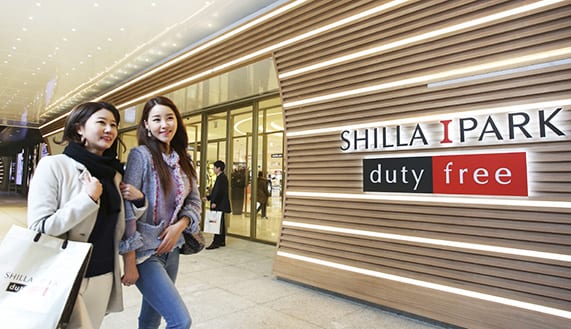
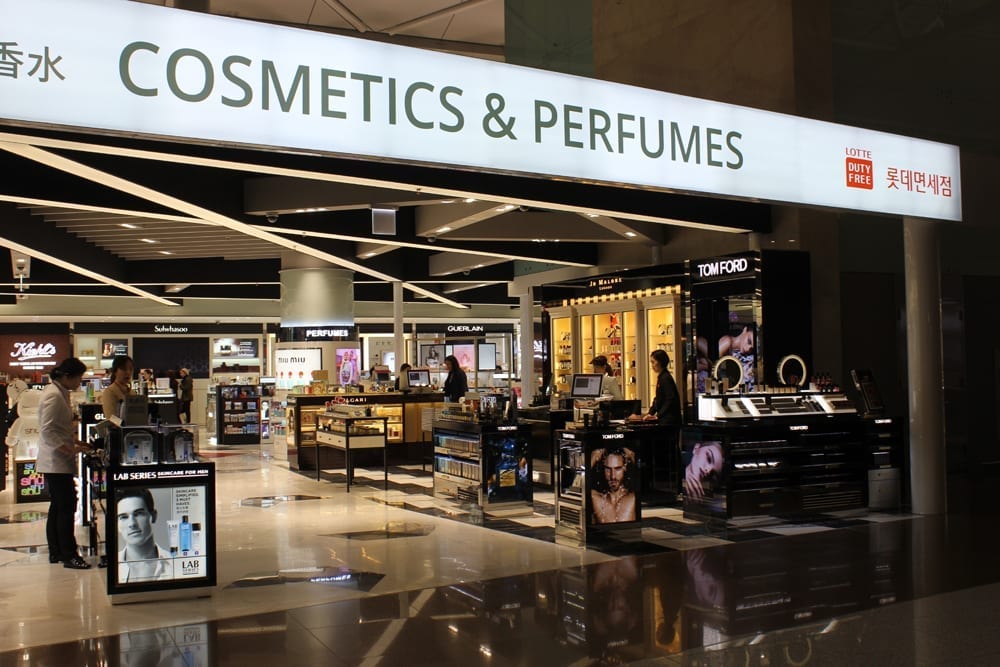
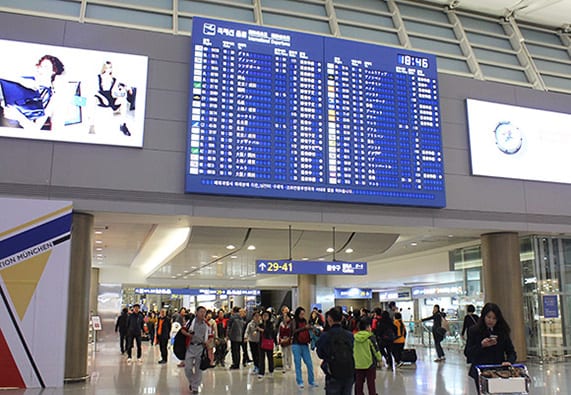
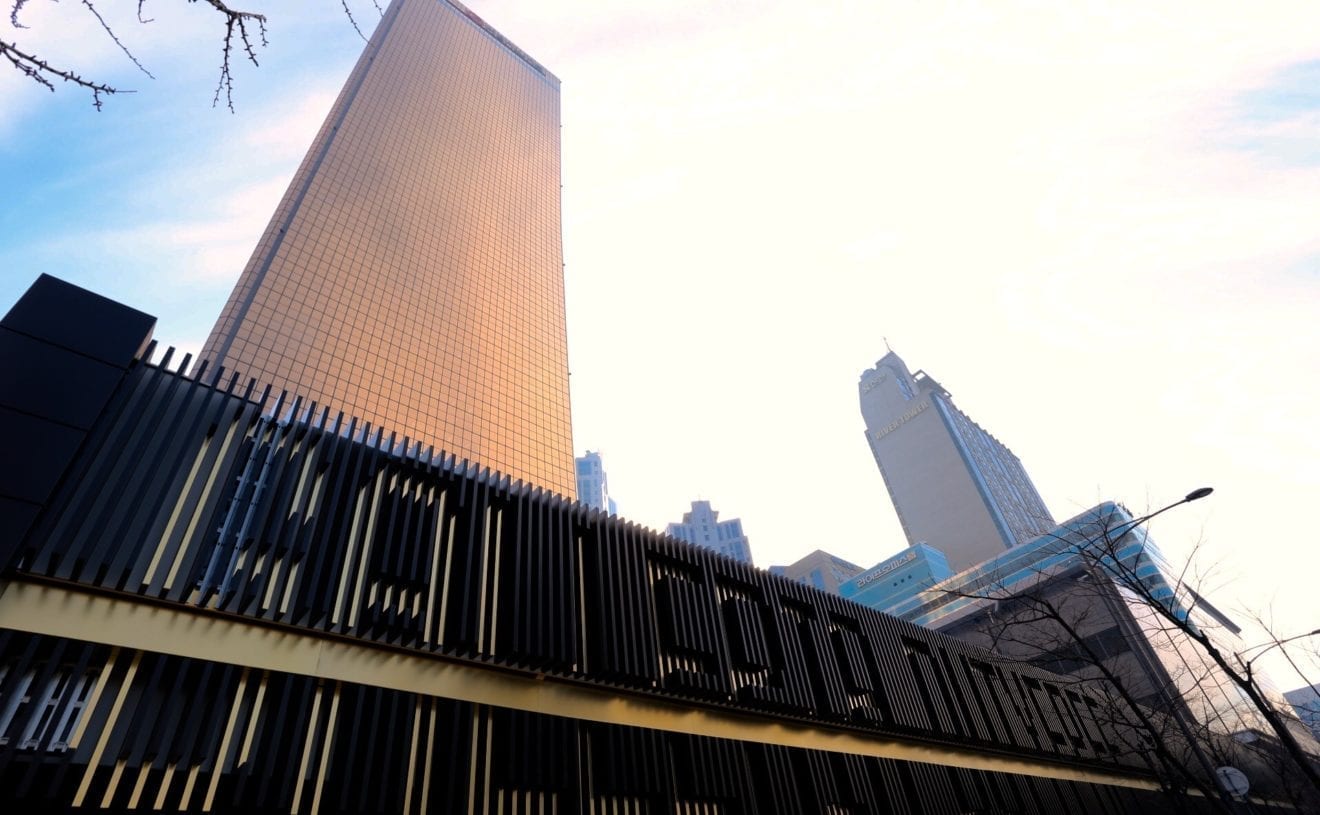
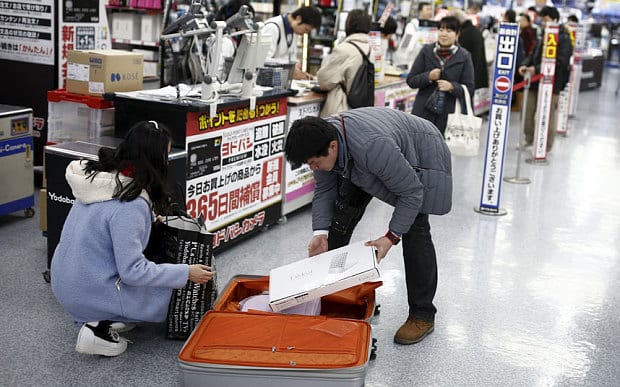
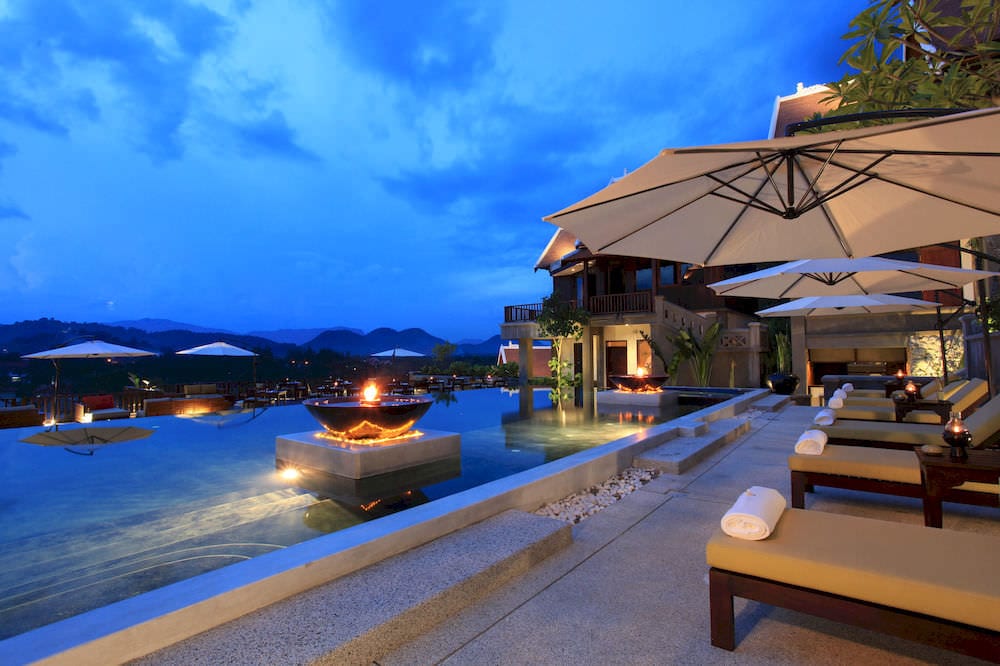
The Shilla Duty Free conducted a soft opening of its new downtown store in Phuket, Thailand at the weekend, which has allowed it to take the next step in its ‘diverse global expansion strategy’, it says.
As reported, the store was slated to open originally in August, but the South Korean TR operator was actually able to officially add the Kathu district store to its growing international store network on 19 November. The retailer first opened a store outside Thailand in 2012 with its Changi Airport concession in Singapore. Since then Shilla has opened in Macau also.
This time Shilla has partnered with two local companies (Gems Gallery and The Mall) to operate the store under a ‘GMS Duty Free’ joint venture first agreed in 2013. However the store fascia with carry ‘The Shilla Duty Free’ company name.
Shilla says it is in charge of ‘general operation of the store including MD and store operation’.
TWO-STOREY 25,000SQ M STORE
“Gems Gallery, sole market leader of Phuket’s jewellery market, and The Mall, operator of top-of-the-class department stores and shopping malls in Thailand, are in charge of sourcing of Thailand local goods and marketing,” reveals Shilla.
Kim Bum Ho, Deputy Executive Director of IIAC’s Commercial Marketing Group, said this morning that although Incheon Airport has planned to issue its T2 tender on schedule [in the first week of December], there could be a delay if the debate surrounding a change in e-commerce regulation – among a few other issues – continues.
Operators at South Korea’s Incheon International Airport (ICN) are currently not permitted to offer online duty free shopping due to regulation that stipulates that downtown DF operators alone command this privilege.
But Kim is all too aware of the increasing importance of e-commerce in South Korea, confirming that online sales growth continues to soar. “In South Korea the increased rate of online duty free shopping is now almost 50%-60% year-on-year…it’s so huge.”
Kim says that many local residents now prefer to only shop online. “So if you go to the downtown duty free store at this hour (evening in South Korea) you will only see Chinese people; no Koreans, no local people. Local people like to shop online. It’s such a big trend.”
In order to attract the most competitive bids (and retailers), Kim is trying to get the current e-commerce regulation for airport duty free operators changed…but it’s not been easy.
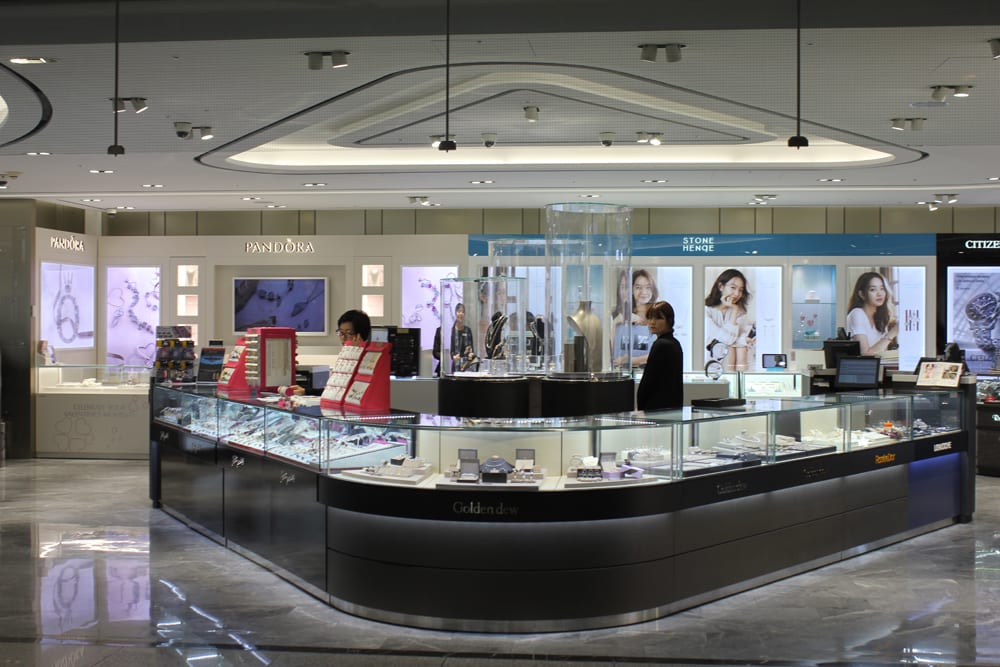
A large jewellery and watches counter at Incheon
“The duty free sales do not match the passenger growth rate unfortunately, but we think at this moment the duty free business has increased by 15% compared to last year,” says Kim.
“We are now talking…it is one of the issues we need to talk with the government about…So we are trying to [eliminate] the barriers to have e-commerce for airport duty free operators. I do think we can solve the problem for T2 operators…We have officially asked the Korean Customs office to permit the e-commerce business for airport duty free operators.”
Kim reveals that IIAC should find out if this is possible in two weeks time. In fact, he plans to write this into the terms of the T2 tender, if negotiations with the Korean Customs Service (KCS) go to plan.
TERMINAL 2 TERMS
“I think it will be determined in two weeks. It’s one of the conditions for the bidding. So yes we are planning to open the tender in early December, but we have to negotiate with the Korean Government Customs office before it opens…if it is takes longer we’ll need more weeks before we open. Anyway, our target date is early in December.”
Kim confirms that most local Korean operators such as Lotte, Shilla, Shinsegae, Hanwha and Doosan are interested in the Terminal 2 tender. Regarding the international operators he admits that two have already approached him, but he cannot reveal the company names at this stage.
T2 TO OPEN IN LATE 2017
Of course once the results have been announced, the retailers can begin to fit out the stores ready to commence trading in late 2017 when the new $5bn terminal opens.
“T2 will be opened late in 2017,” confirms Kim. “We spent almost $5bn on constructing it. It’s a totally new and unique place…we have centralised the duty free shops more…and it will be a more market and customer-oriented place. We can provide a good business environment.”
This year Incheon Airport says it has witnessed a very healthy increase in passengers of around 19%, however unfortunately duty free sales have not kept pace, as Kim concedes.
“The duty free sales do not match the passenger growth rate unfortunately, but we think at this moment the duty free business has increased by 15% compared to last year.”
Of course, Kim says that it’s difficult to make a direct comparison with last year, as the airport and the whole country suffered from the impact of MERS.
“It’s not best to compare directly with last year, but when we compare with two years ago (2014) we had about 10% increase in duty free sales.”
This year Incheon Airport says it has witnessed a very healthy increase in passengers of around 19%.
$2BN SALES TARGET STILL IN SIGHT
Kim also strongly believes that the airport can still achieve the $2bn sales total it predicted earlier this year. “We can hit $2bn again. Last year in 2015, we couldn’t because of the MERS…but this year in 2016 I think we can hit $2bn again.”
As the world’s biggest duty free market, many are interested to see what sort of sales South Korea can register in 2016. As reported, duty free sales rose +36% to $7.9bn in the first nine months of this year.
Kim gave us his updated forecast this morning: “I think the duty free business can hit about $9bn or $10bn in South Korea this year, so there is amazing growth actually.”
However, Kim also admits that for the last few months – maybe even as early as April this year – the growth in the number of Chinese inbound visitors has decreased, for which Kim says ‘there are many reasons’.
CHINESE INBOUND GROWTH SLOWS
One of these could be the new luxury goods import tax introduced by the Chinese Government earlier this year in a bid to protect home-grown businesses. Of course political tension could also be a factor.
[There were earlier concerns that the South Korean Government’s plan to plug into the US’ Terminal High-Altitude Air Defence (THAAD) system by the end of 2017 might cause a drop off in Chinese visitors, considering Beijing’s stiff opposition to the deployment].
LOTTE WILL BID AGGRESIVELY
“Duty free operators, including Lotte and Shilla are worrying about the Chinese changes…they spend less and they visit less.”
Kim believes this is more of a problem for the downtown duty free business and maintains that ‘the airport business is very stable compared to the downtown business’.
“Incheon is the gateway to South Korea and almost all the Chinese visitors have to come through Incheon Airport. It’s the national gateway…so it’s very stable, though their spending per passenger is now decreasing.”
Korean duty-free stores newly opened in Seoul are losing money as heavy marketing costs erode profits.
A review of financial documents from the major players show heavy competition is taking its toll on all players.
Five duty-frees stores opened new shops in the capital city after winning licenses in two bids — one in July and the other in November 2015 — in hopes of courting deep-pocketed Chinese customers, but none of them has reached the break-even point since opening.
Shinsegae Duty Free, which opened in mid-May, posted 121.2 billion won (US$103.8 million) in sales over the past four months, but it accumulated 37.2 billion won of operating losses, its regulatory briefing showed.
Galleria Duty Free 63, a duty-free store run by Hanwha Galleria, said it booked 193.4 billion won of sales between December 28 and September 30, but the operating deficit reached 30.5 billion won over the period.
HDC Shilla Duty Free, a joint venture between Shilla Hotel and Hyundai Development, said it posted 228.7 billion won and 16.7 billion won in sales and operating deficit, respectively, in the January-September period.
SM Duty Free, a unit by leading tour agency Hana Tour, said it logged 71.1 billion won in sales and 20.8 billion in operating losses from its opening on February 15 to September 30.
Doota Duty Free, a unit by power equipment and construction conglomerate Doosan Group, logged 10.4 billion won in sales and 16 billion won in operating losses in the first half of this year. It has not yet disclosed the third quarterly report.
Business prospects remain grim for the fledgling operators as the government is set to give out four new operating licenses in Seoul as a way to promote tourism.
The Korea Customs Service earlier said it will pick the winners next month, but it remains unclear as a snowballing influence-peddling scandal involving the business community has prompted investigation into the companies that donated funds to two sports foundations, involving those vying for duty-free shop licenses.
Increasing numbers of Chinese tourists are travelling alone – and retailers in Asia seeking to cash in on their growing spawning power need to find ways to embrace the trend.
Traditionally, Mainland Chinese tourists have travelled in groups – sold packages before they leave home and effectively herded into shopping destinations, often with commissions paid to tour organisers or guides.
But that is set to change soon with the Beijing-based government tightening the rules on cheap package tours.
South Korea is a case in point where the trend has been identified early and active work is underway to appeal to the new demographic.
Duty-free operators and department stores have stepped up customised marketing targeted at shoppers in their 20s and 30s and deep-pocketed travelers from China, as they have become the main customers over the past few years.
The shifting focus took on a new urgency as the Chinese government has been moving to tighten regulations on cheap tour packages, raising concerns among South Korean businesses relying on them as the biggest source of travel income.
Out of 5.98 million Chinese nationals who visited South Korea last year, nearly 60 per cent were independent travelers, according to the state-run Korea Tourism Organization.
Lotte Duty Free, which is operated by Hotel Lotte, offers a “personal shopper service” for VIP customers to pair them up with stylists who give advice and suggest products that may suit their needs.
The nation’s largest duty-free operator has about 600,000 customers registered for VIP programs and also provides airport pick-up services for those who spend a certain amount of money.
Shilla Duty Free, which is operated by Hotel Shilla, said it regularly holds “beauty classes” to advise on the best cosmetic products and offer makeup services to attract Chinese customers in their 20s and 30s.
Tourism officials stress efforts to develop a wider array of options for Chinese travellers to encourage them to revisit in the future.
“We have focused on attracting more independent travelers over the past years not only from China and Japan but also Southeast Asian nations and the Middle East to meet their diversifying needs and upgrade the tourism industry’s competitiveness,” Hwang Myung-seon, a senior official at the Ministry of Culture, Sports and Tourism, said.
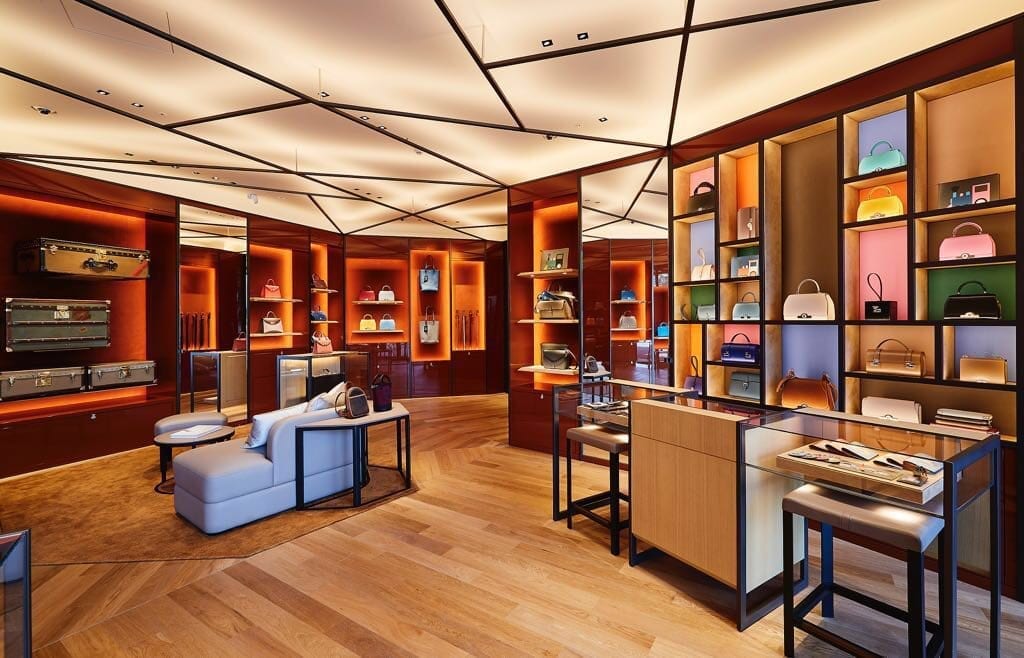
Korea’s first Moynat Boutique has opened inside the Shilla Hotel in downtown Seoul.
The French luxury bag and luggage brand, bought by LVMH in 2011, has been expanding its international network in recent years, and now boats full-scale ‘maison’ stores – or flagships – in Paris, London and New York, and ‘galleries’ in Hong Kong, Beijing, Tokyo, Seoul and Taiwan.
The new store, located on the first floor of the Shilla Hotel, will feature men’s and women’s lines as well as two designs created exclusively for the Seoul store. Customers can use the brand’s signature personalisation services, including made-to-order designs and hand-painted motifs by Moynat’s artists.
The brand was founded in 1849 by Pauline Moynat and initially gained fame for its lightweight, waterproof trunks.
Hotel Shilla has described Phuket as an eventual “crown jewel” of Thai travel-retail after confirming it is to open its first overseas downtown duty-free shop on the island with a local partner in the second half of the year.
While the exact size of the store in Tambon Kathu, Amphoe is unknown, the store will consist of traditional core duty-free products such as liquor and tobacco and a mix of local Thai products. It will also be equipped with “support facilities” to ensure optimum customer experience.
A Hotel Shilla spokesman told DFNIonline that preparation is going quite well and the alliance with the local partner looks very promising.
The spokesman also said Bangkok was an option for the outlet, but the contract between Airports of Thailand (AoT) and King Power (Thailand) made it impossible. He explained: “The Shilla Duty Free chose Phuket, where the pick-up counter is serviced by a common operator which has responsibility to give a service to the duty-free operator.”
He added: “The temporary pick-up counter in [Phuket] terminal one will be operated by The Shilla Duty Free and permanent pick-up counter in T2 by King Power, which will handle the delivery of Shilla Duty Free products due to the contract between AoT and King Power.”
Reflecting on Phuket as a destination for the new store, the spokesman said: “Chinese inbound passengers have been showing constant growth in Thailand and Phuket in particular, the second most popular travel destination in Thailand, which is leading the growth. With The Shilla Duty Free’s accumulated know-how of serving Chinese travel-retail consumers, Phuket is a more than satisfactory destination.”
In order to attract even more Chinese consumers, the retailer, which secured approval this month for a new themed hotel in central Seoul – the Shilla downtown Seoul outlet will eventually move to the new hotel — will focus on travel agencies in Mainland China and Thailand. “In the case of Chinese travel agencies, The Shilla Duty Fee has a good understanding and good relationships.
“Apart from Chinese customers, Russians might be the secondary target since Phuket is also a popular choice for Russian travellers looking for somewhere sunny for holidays.”
Looking ahead, the retailer is expecting the Thai travel-retail market in general to grow significantly and the spokesman admitted it is not as mature as the Korean equivalent. “It is believed to be one the fastest growing markets in global travel-retail and our most important objective is enhancing that growth.”
Two international airports in are set to review operational licenses for South Korea duty free shops.
But the upcoming bids are unlikely to become competitive due to sluggish profitability, industry sources told Yonhap on Wednesday.
Gimpo International Airport in western Seoul is expected to open a bid for tax-free shops later this month as the current operating rights expire in May after five years of operation.
Currently, Hotel Lotte Co. and Hotel Shilla Co. have duty-free shops at the airport.
Gimhae International Airport, west of the southern port city of Busan, also has to select a new operator as Shinsegae Co, a major retailer, shut down its store in December to focus on its city outlets.
Shinsegae won a right to open a new duty-free shop in Myeondong, a popular tourist destination in downtown Seoul.
While several local retailers threw hats into the ring for licenses in downtown Seoul last year to attract affluent Chinese shoppers, the upcoming bid is not likely to fuel competition as current shops at the airports have had difficulty making ends meet.
Sales at the Gimpo and Gimhae outlets stood at 140 billion won (US$116 million) and 130 billion won, respectively, last year, according to their financial reports.
Hotel Lotte said it plans to renew its license for Gimpo and decide on the Gimhae store after considering potential profitability.
The unit under retail giant Lotte Group lost its license in southern Seoul in a tightly contested bid amid a bitter succession feud between the founder’s two sons.
South Korea’s retail and tourism industries are preparing a slew of promotional and cultural events to woo back Chinese tourists during a long-haul holiday season, pinning their hopes on making up for a summer slump in the wake of a viral respiratory illness, sources say.
Since the first outbreak in late May, Middle East Respiratory Syndrome (MERS) made a big dent on domestic spending as foreign tourists canceled their planned trips during the peak summer season, while South Koreans avoided shopping centers and other crowded places in June and July.
While the viral disease hit the tourism and retail industry hard, Chinese tourists have started to return to the once-empty streets of Myeongdong, one of the capital’s most popular shopping districts, over the past month.
The number of Chinese travellers has increasingly recovered to the previous year’s level since late August and marked an on-year rise since mid-September, the state-run Korea Tourism Organization (KTO) said.
About 303,000 tourists with Chinese nationality entered the nation in the first two weeks of September, rising 4.8 per cent compared with the same period a year ago, it said.
“The number of Chinese travelers has sharply risen this month, and the number is expected to completely recover during the Chinese holiday season,” Han Hwa-joon, who oversees the KTO’s Shanghai branch, said. “The recovery pace is faster than expected.”
Chinese Thanksgiving falls on September 26-27, and together with the Chinese National Holiday running from October 1-7, the holiday season can be extended up to 12 days.
As the Chinese holiday season draws near, major shopping centers and duty-free operators are making all-out efforts to draw Chinese tourists to make up for a shortfall in sales amid dormant domestic spending.
According to the KTO, 164,000 Chinese travelers visited the nation during last year’s autumn holiday season and spent 2.4 million won on average, which amounts to about 400 billion won (US$341.5 million) in total.
During this year’s Chinese National Holiday, the tourism agency expected some 210,000 Chinese will visit the nation, up 30 per cent from a year ago, considering the pace of growth over the past three years.
“We will host a variety of events even after the Chinese holiday to make up for the fall in tourists during the peak season from June to August,” said Seo Young-chung, a KTO official in charge of Chinese tourism.
Lotte Department Store plans to host a variety of promotional events targeting Chinese travelers during the golden weeks, providing discounts on payments made through UnionPay, China’s largest credit card issuer, and Alipay, China’s No. 1 mobile payment application.
Shinsegae, the nation’s leading department chain, said it will give special discounts to Chinese customers, while Hyundai Department Store also started the regular sale season earlier than usual to attract the deep-pocketed travelers.
Operators of duty-free shops have also stepped up efforts to bring back Chinese travelers, the largest consumer group, which accounted for about 70 per cent of downtown duty-free spending last year, up from around 15 per cent in 2011.
Lotte Duty Free, the world’s fourth-largest duty-free operator, held a travel fair in Shanghai on September 9, in which senior company officials reached out to Chinese tourism officials to attract Chinese travelers.
Hotel Shilla, part of Samsung Group and the world’s No. 6 duty-free operator, also presented various sales promotions and tour packages during the fair along with other Samsung units, with the attendance of senior officials.
“The Korean tourism industry has mostly recovered after the Mers outbreak came under control, and it will make a full recovery in September,” Hotel Shilla CEO Lee Bu-jin told reporters during her visit to Shanghai.
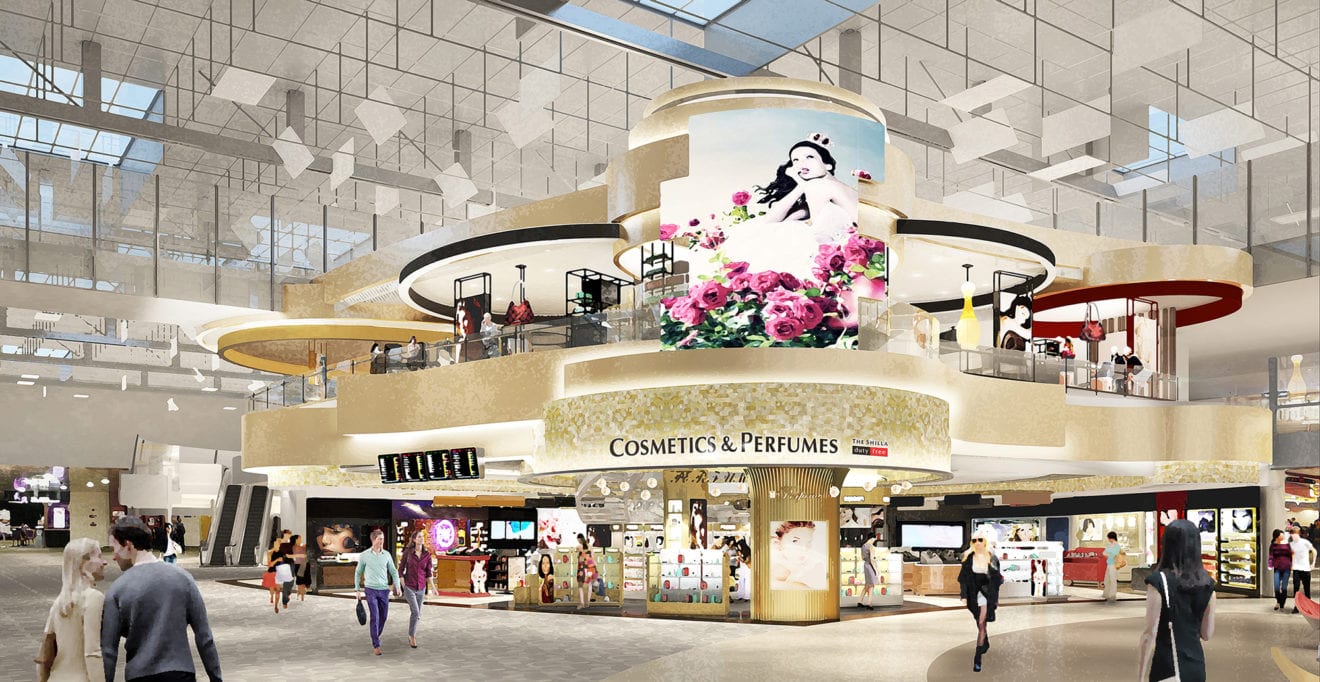
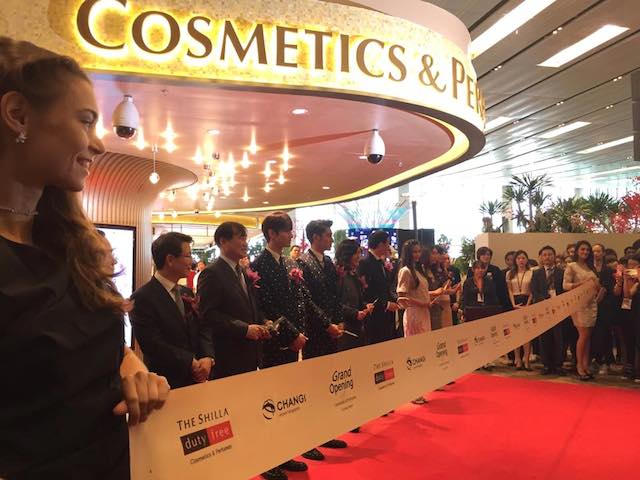
After four months, Korean travel retail Giant Shilla has completed its takeover and renovation of the duty free retail offer at Singapore’s Changi Airport.
Shilla Singapore now boasts 182 brands across the three terminals – about 80 of which are available at the airport for the first time and 26 of which cannot be found in stores anywhere else in Singapore. That list includes Aromatica, Ghost Perfume, cle de Peau, Burberry Cosmetics, Cosme Decorte, Urban Decay, Vichy, La Roche Posay and Jean Louis Scherrer Perfume.
Shilla Duty Free starting taking over cosmetic and perfume retail operations at Changi Airport on October 1. At the time it promised to present the largest collection of cosmetics and perfumes brands among airport duty free shops in Asia.
Shilla won the contract in a tender process, ousting incumbent Nuance Watson to run the 19 stores.
“Singapore has a strong tourism market and we see the tremendous opportunity here. With our positioning as a global leading duty free operator and expertise gained from more than 28 years of experience in the industry, we are confident that we possess the distinctive know-how in providing experiential offerings in-store that would deliver a value-added experience for our customers,” said senior executive VP and head of The Shilla Duty Free, Jeong-Ho (Jason) Cha.
The Shilla Duty Free is an affiliate company of Samsung, which runs six duty free outlets in Korea, two in downtown Seoul and Jeju and four at airports, including Macau. It plans further expansion into China and other Asian markets.
Shilla also operates Prada, Bottega Veneta and Maison de Chronus watch outlets at Changi Airport.