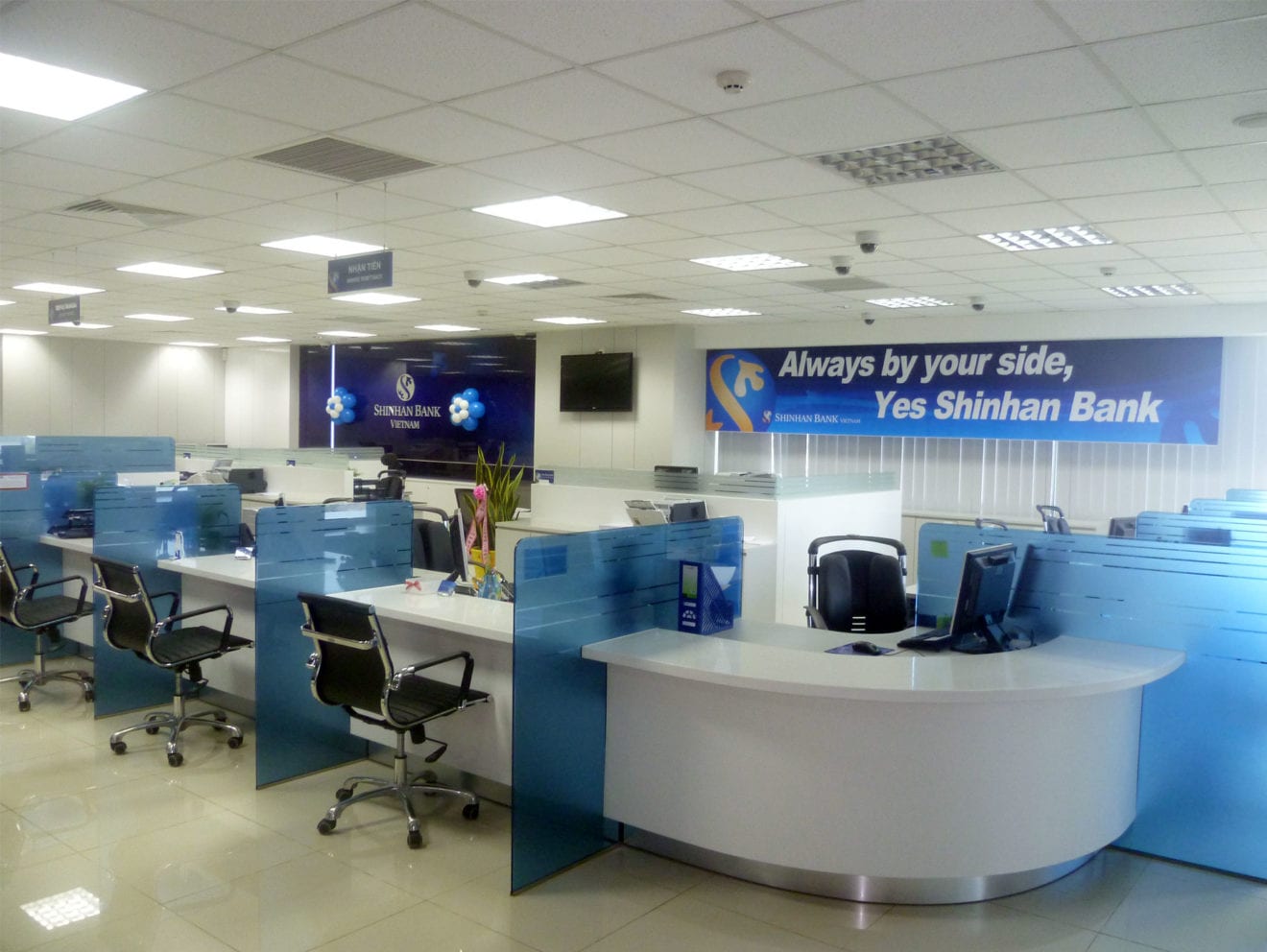
Tag: Shinhan Bank

  • AI Tools Used in Cyberattacks on South Korean Banks

    AI Tools Used in Cyberattacks on South Korean Banks

    Hackers used artificial intelligence agents to breach at least nine South Korean financial institutions in October 2026. The attack compromised personal data from more than 25,000 banking customers.

    Major domestic lenders bore the brunt of the intrusions. Shinhan Bank reported 25,000 compromised customer records, while KB Kookmin Bank confirmed 119 leaked customer profiles.

    Automated Penetration Tools In Action

    Running from late September to early October, the campaign relied on an open-source security tool named ARTEX paired with Anthropic’s Claude Code. A Chinese security researcher using the alias Autumn published ARTEX on GitHub earlier this year. The software functions as an automated penetration agent. It links directly into external large language models including ChatGPT, Claude and DeepSeek to run vulnerability tests across target servers.

    The software repository explicitly restricts use to local testing and research. Even so, the attacker weaponised the framework against live online banking infrastructure. Cybersecurity firm CrowdStrike tracked the interactive sessions. The firm found that the operator fed target environments directly into AI coding interfaces to accelerate intrusion paths and system mapping.

    Traces Left In Model Prompts

    During the operation, the operative inadvertently leaked personal information directly into model prompt logs. Session records show queries asking where threat actors sell compromised Korean databases and requesting specific Korean data-trading channels on Telegram. In a separate prompt, the attacker instructed Claude to compile a curriculum vitae. That document contained a personal Telegram handle, educational background, age and an address in Maoming, Guangdong province.

    Digital infrastructure and Chinese-language prompts pointed investigators toward a 26-year-old individual operating out of southern China. “While this activity has not been attributed to a named adversary, the threat actor is likely a Chinese speaker and financially motivated,” CrowdStrike stated in its findings.

    Operational Risks For Retail Banking

    Automated AI penetration shifts the economics of perimeter defense for financial institutions and retail digital banking platforms across the Asia-Pacific region. Attackers no longer need deep bespoke code writing. Open-source agents can autonomously test attack surfaces and parse enterprise firewalls around the clock at negligible cost. Traditional web application filters now face automated scanning that iterates faster than standard manual patch schedules.

    Commercial banks face compounding costs from consumer notification mandates, regulatory fines and identity theft remediation. Containment protocols must now focus on rapid API throttling and continuous identity verification rather than static perimeter defenses. Retail platforms managing high volumes of consumer payments and stored credentials represent immediate targets as autonomous agent frameworks lower execution barriers.

    Escalating AI Incursions In Asia-Pacific

    Earlier incursions set the stage. In June, an autonomous AI agent breached a government health portal in Australia in one of the region’s earliest documented cases of autonomous agent exploitation. Financial regulators in Japan and South Korea had heightened network surveillance earlier this year as code-generation tools expanded the volume of automated attack scripts circulating in private forums.

    Police in South Korea opened a formal criminal investigation into the nine targeted institutions this week following directives from President Lee Jae Myung for immediate security interventions. Regulatory authorities in Seoul are auditing network logs across commercial lenders to determine if secondary data exfiltration occurred before defensive patches took effect.
  • Hana Bank reveals Vietnam expansion plan

    Hana Bank reveals Vietnam expansion plan

    South Korean banks are setting themselves up to score big in Vietnam as foreign ownership limits would be loosened. South Korea’s second-largest lender by assets, KEB Hana Bank, is interested in buying a 17.65 percent stake in the Bank for Investment and Development of Vietnam (BIDV), a source said. BIDV is currently the second-largest state-owned lender in Vietnam by assets. 95.28 percent of its equity belongs to the country’s central bank, the State Bank of Vietnam (SBV).

    The SBV has “proposed to sell” the stake to KEB Hana for 30 billion won ($26.6 million), said the source, who requested anonymity.

    Last year, Shinhan Bank, a commercial banking unit under Seoul-based Shinhan Financial Group, acquired ANZ Vietnam’s retail unit, bringing along the Australian bank’s 95,000 credit card customers.

    Shinhan Bank has recently become the largest foreign bank in Vietnam with $3.3 billion in assets, surpassing HSBC.

    Vietnam presented a draft securities law in Hanoi earlier this month that would remove the current 49 percent foreign ownership cap in many sectors, allowing majority or even 100 percent ownership of a company.

    Although the limit for banks remains at 30 percent, government economic advisor Can Van Luc said at the draft presentation forum on November 7 that authorities would consider raising this limit for banks on a case-by-case basis, Reuters reported.

    Analysts say Vietnam’s growth potential and deregulation plans make it an attractive market for South Korean banks.

    “Vietnam is the most desirable market among emerging countries,” said Seo Young-soo, an analyst at Kiwoom Securities.

    “It has more advanced urbanization, and its market is more concentrated compared to Indonesia. Its government-driven economic development model is also familiar to South Korean banks, which have grown under the same strategy,” Seo said.

    Data from the Seoul-based regulator Financial Supervisory Service (FSS) show that total assets held by South Korean banks in Vietnam increased 18.9 percent last year to $5.7 billion.

    This ratio is higher than that of foreign lenders overall, whose combined total assets increased 12.9 percent to $42 billion during the same period, FSS said. South Korean lenders’ combined net profit in Vietnam also jumped 28.9 percent last year to $61 million.

    Vietnam has nine wholly-owned foreign banks, four state-owned banks and 31 domestic joint-stock banks.

  • Shinhan Bank completes acquisition of ANZ’s retail biz in Vietnam

    Shinhan Bank completes acquisition of ANZ’s retail biz in Vietnam

    South Korea’s Shinhan Bank said Monday it has completed the acquisition of Australia & New Zealand (ANZ) Banking Group’s retail business in Vietnam.

    The acquisition helps Shinhan Bank increase its assets in Vietnam to US$3.3 billion and its number of Vietnamese customers to about 900,000, the bank said.

    Financial terms of the acquisition were not disclosed.

    In April, ANZ, Australia’s third-largest bank, agreed to sell its retail business in Vietnam to Shinhan Bank as part of its strategy to streamline its businesses in Asia.


  • Shinhan Bank officially launches its Indonesian operations

    Shinhan Bank officially launches its Indonesian operations

    South Korea’s Shinhan Bank has embarked on operations in Indonesia via Shinhan Bank Indonesia, a move that is expected to help the Korean bank expand its presence not only in the Southeast Asian country but also across Asia.

    Shinhan Bank said on Tuesday it officially launched Shinhan Bank Indonesia, which was renamed from Bank Metro Express (BME), a Jakarta-based bank with 19 branches that was acquired by the Korean bank last year. Shinhan Bank Indonesia is newly headquartered in the International Financial Center Tower 2 in Jakarta, the capital city of Indonesia.

    The kickoff of Shinhan Bank Indonesia’s operations follows a series of launches of the Korean bank’s overseas operations in other Asian countries such as Japan, China and Vietnam in recent years. The latest overseas operation is expected to help Shinhan Bank achieve its ambitious goal to build an extensive financial network across Asia.

    The Korean bank also aims to merge Shinhan Bank Indonesia with Centratama Nasional Bank (CNB), another Indonesian bank that it took over last December, later this year. The Indonesian bank has 41 branches across Surabaya, the second biggest city in Indonesia, and other cities in Java Island.

    Once the merger is complete, the Korean bank would have 60 networks across Indonesia, the world’s fourth most populous country. It currently has 141 overseas networks across 19 countries. It would also be the first in the Korean banking industry to purchase two offshore banks and merge them.

    Cho Yong-byung, the president of Shinhan Bank said at the launching ceremony on Tuesday that he expects the merger of the two Indonesian banks would set a new milestone in Indonesia.