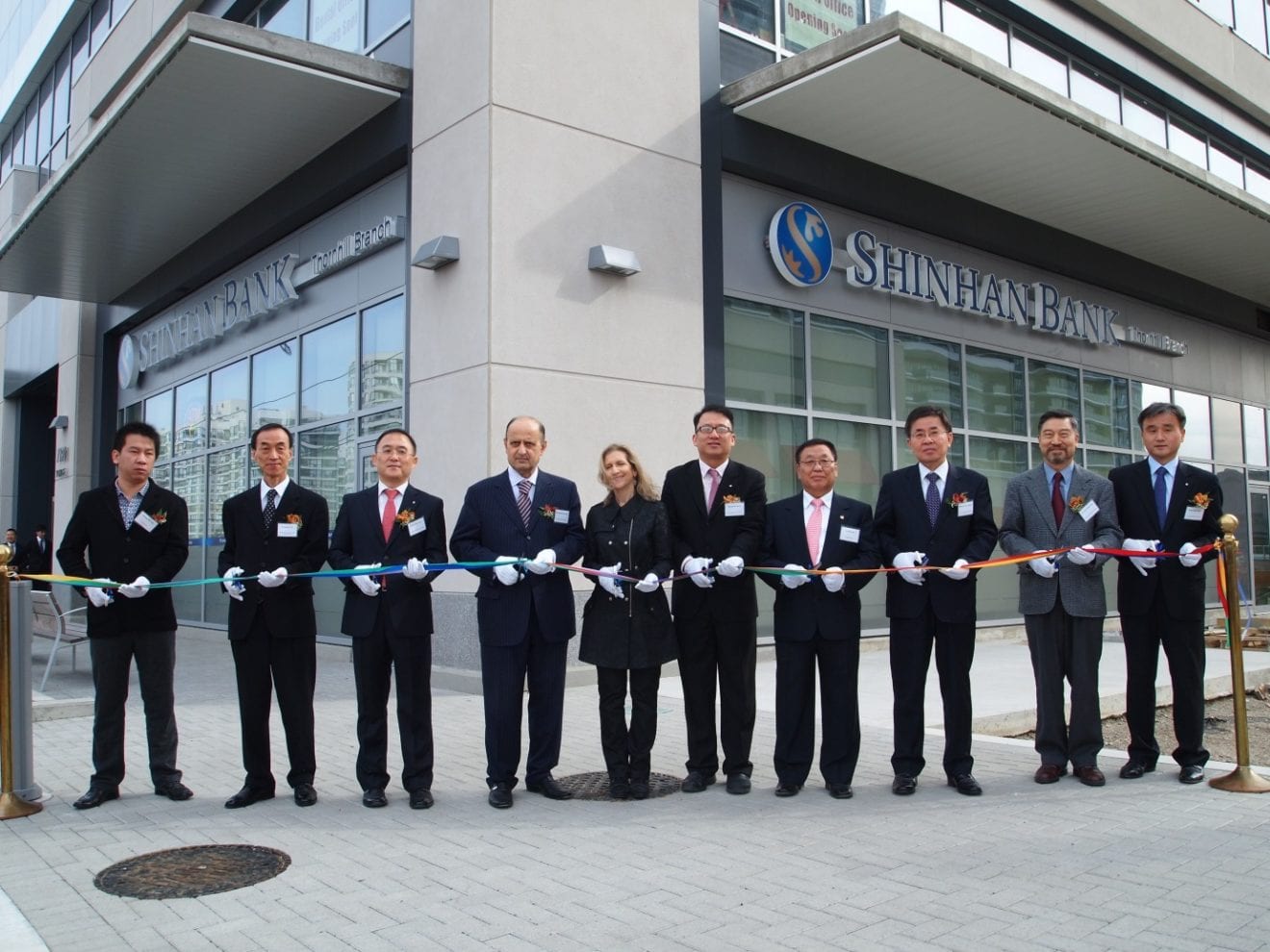
Through steady no-nonsense efforts focusing on retail banking, Shinhan Financial Group has grown to operate more than 150 overseas branches, the most among South Korean financial institutions. Although much smaller than counterparts from Japan, the U.S. and Europe, Shinhan continues to boldly expand operations in such Asian markets as Vietnam and Indonesia.
The bank set up a presence in Vietnam in 1993, following Samsung Electronics, LG Electronics and other South Korean conglomerates into the Southeast Asian country. It plans to open four branches there within the year, bringing the total to 18. This should make Shinhan the foreign financial institution with the most branches there.
As a part of efforts to expand further in the country, the bank has been focusing on boosting lending to individuals. Because wages are low and people tend to change jobs frequently, foreign financial institutions are generally reluctant about extending personal loans in Vietnam, but Shinhan has found a “unique sales approach” for reducing loan default risks. The bank’s salespeople have been visiting labor unions at various factories to seek information on workers who have been working steadily for more than a year or two, since these people would make more secure borrowers.
All over Asia
Shinhan traces its roots to Shinhan Bank, which was established in 1982, using funds raised from ethnic Koreans living in Japan as a part of its start-up capital. Following the opening of a branch in Osaka in 1986, the group has maintained close ties with Japan. In its home country, the group has grown on its strength in retail banking.
With Shinhan Bank at its core, the group now operates more than 150 overseas branches. This puts it ahead of Hana Financial Group to rank No. 1 among South Korean financial institutions in terms of the number of foreign branches, according to research firm CEO Score.
“We will secure the engine for new growth in the global market, centering on Asia,” Chairman Han Dong-woo said at a general shareholders meeting in March.
True to his words, Shinhan has been pushing further into other Asian countries. In Indonesia, the group has acquired Centratama Nasional Bank, which has 41 branches, as well as Bank Metro Express, which operates 19. In addition, credit card unit Shinhan Card has a joint venture with local conglomerate Salim Group.
In Myanmar, Shinhan received approval to open a branch last month, a first for a South Korean bank. The group aims to tap into demand for retail financial services by bringing its credit card and insurance units into the Southeast Asian country.
Small but solid
Moody’s has given Shinhan Bank an Aa3 credit rating, one rung above that of Bank of Tokyo-Mitsubishi UFJ. However, Shinhan Financial Group still pales in comparison to Mitsubishi UFJ Financial Group in scale, as its 370 trillion won ($326 billion) in consolidated assets as of the year ended in December are equivalent to just 12% of the Japanese megabank’s total assets. The Japanese banking group also operates a far larger overseas network, counting more than 1,150 branches as of the end of September.
But Shinhan Bank is set to continue its steady growth by “making the most of its speed and strength in retail sales,” said Executive Vice President Heo Young-taek.