Retail News CRM

Tag: shipment

  • Cracking Into Global Markets: Vietnam’s First Shipment of Ready-to-Eat Eggs Lands in Japan

    Cracking Into Global Markets: Vietnam’s First Shipment of Ready-to-Eat Eggs Lands in Japan

    Vietnam has made significant strides in its food export sector with its first shipment of ready-to-eat poultry eggs to Japan. The delivery was facilitated by Vinh Thanh Dat Food (VFood) on Thursday, following an extensive collaboration with a Japanese partner. The endeavor is notable as Japan is renowned for having some of the world’s most rigorous food safety standards.

    Years of Collaboration Lead to a Successful Shipment

    The partners invested nearly two years in product development, tailoring the ready-to-eat eggs to the specific tastes of Japanese consumers while ensuring they adhered to the country’s stringent food safety regulations. This meticulous process involved comprehensive research, product refining, and assistance from Japanese experts.

    This shipment represents more than just a successful export; it symbolizes VFood’s determination to elevate the worth of Vietnamese eggs. Further, it opens doors for other processed egg products to penetrate demanding international markets and solidify their presence.

    Addressing Oversupply through Increased Exports

    Presently, the poultry egg market in Vietnam is grappling with an oversupply due to a surge in farm expansions when egg prices were high. This expansion has led to production exceeding demand, thereby resulting in a drop in egg prices. Thus, venturing into new export markets is seen as a viable solution to manage the surplus stock, enhance poultry farmers’ earnings, and in turn, instill greater confidence in them to sustain production.

    In the long run, increasing exports can help farmers standardize and upgrade their production processes. Simultaneously, it could serve as a catalyst for growth in Vietnam’s poultry egg sector.

    Questions & Answers

    What is significant about the recent shipment of ready-to-eat eggs from Vietnam to Japan?
    This shipment marks the first time that Vietnam has exported ready-to-eat eggs to Japan, a country known for its strict food safety standards.

    How did VFood prepare for this milestone shipment?
    VFood collaborated with a Japanese partner and invested nearly two years in product research, development, and refinement to ensure the eggs met Japanese consumers’ tastes and the country’s food safety regulations.

    What are the potential benefits of expanding egg exports for Vietnam’s poultry sector?
    Expanding exports can help manage the current oversupply of eggs in the Vietnamese market, improve poultry farmers’ incomes, and encourage them to maintain production. In the long term, it can aid in standardizing and upgrading production processes and boosting the overall poultry egg sector.

  • Venezuela’s Billion-Dollar Gold Exodus: Uncovering the Secret Shipment of 100 Tons to Switzerland

    Venezuela’s Billion-Dollar Gold Exodus: Uncovering the Secret Shipment of 100 Tons to Switzerland

    Between 2013 and 2016, Venezuela sent 113 metric tons of gold to Switzerland, as per data from customs authorities. This gold, valued at approximately 4.14 billion Swiss francs, or US$5.20 billion, reportedly originated from Venezuela’s central bank. This substantial transaction occurred in the early years of Nicolas Maduro’s presidency, a period when the Venezuelan government was selling gold in an effort to bolster its struggling economy.

    Understanding the Situation

    During the years from 2012 to 2016, the Venezuelan central bank engaged in significant distress selling. According to Rhona O’Connell, a markets analyst at StoneX, much of the sold gold likely ended up in Switzerland. After its arrival, the gold may have remained with financial sector counterparts, been re-sold as small bars to Asian markets, or distributed elsewhere globally.

    The customs data revealed a noticeable halt in gold exports from Venezuela to Switzerland starting in 2017. This cessation coincided with the introduction of European Union sanctions and continued until at least 2025. O’Connell from StoneX posited that this drastic reduction in exports was likely a result of the Venezuelan central bank exhausting its gold reserves.

    Recent Developments

    In more recent events, Maduro was apprehended by U.S. special forces during a raid in Caracas on January 3, and is currently facing drug-related charges in a New York court. In response to these events, Switzerland took action on Monday by freezing the assets held within the country by Maduro and 36 of his associates. However, Swiss authorities have not disclosed any details regarding the value or origin of these impounded funds.

    Questions & Answers

    Why was Venezuela selling gold to Switzerland?
    The Venezuelan government was selling gold in a bid to shore up its struggling economy during the early years of President Nicolas Maduro’s leadership.

    What happened to the gold after it arrived in Switzerland?
    Post-arrival, the gold might have remained with financial sector entities in Switzerland, been sold as small bars to Asian markets, or distributed globally.

    Why did the gold exports from Venezuela to Switzerland stop in 2017?
    The halt in gold exports coincided with the enforcement of European Union sanctions against Venezuela. Additionally, it’s speculated that the Venezuelan central bank may have depleted its gold reserves, contributing to the cessation in exports.

  • Indonesia Breaks Ice with First Direct Durian Shipment to China: A Frosty Triumph for the Tropical Fruit Market

    Indonesia Breaks Ice with First Direct Durian Shipment to China: A Frosty Triumph for the Tropical Fruit Market

    Indonesia has recently achieved a significant milestone in its agricultural export sector with the first direct shipment of frozen durians to China. This 48-tonne shipment, valued at Rp5.1 billion (US$305,000), was processed in West Java and shipped from Tanjung Priok Port in North Jakarta to Qingdao Port, China.

    Long Road to Export Success

    The successful export marks the conclusion of an extensive process that spanned nearly two years, according to Sahat M. Panggabean, the head of the Agricultural Quarantine Agency. Before this breakthrough, Indonesia’s frozen durians used to reach China via intermediaries like Thailand and Malaysia. The fruit was processed in these countries and then re-exported to China.

    This practice underwent a change after an export protocol, which would allow for direct shipments, was finalized and signed by China and Indonesia in May. As a result, eight frozen durian packing facilities in Indonesia have met the standards required to serve as export hubs for China. Industry experts also highlight how direct shipments have drastically cut logistics costs, from approximately $18,000 down to $10,000-11,000.

    China’s Durian Market

    China is deemed the world’s largest durian market. In the previous year, China imported a staggering 15.6 million tonnes of durian valued at US$6.99 billion. The majority of these imports came from Thailand and Vietnam, which made up 57% and 41.5% of the shipments, respectively. The remaining shipments came from the Philippines and Malaysia.

    Despite a slight decrease in demand in the first half of this year, which saw a 15% drop in imports to 708,190 tonnes, the market remains robust. Aditya Pradewo, the secretary general of the Indonesian Durian Plantation Association, mentions that durian prices in China are still five to seven times higher than those in Indonesia.

    Pradewo believes that, with premium varieties such as Bawor, Super Tembaga, and Namlung, Indonesia could secure 5-10% of the Chinese market. This percentage equates to potential annual foreign exchange earnings of Rp6.4-12.8 trillion.

    Indonesia’s Durian Production

    Quarantine agency data shows that in the first 11 months of this year, Indonesia exported 10,162 tonnes of durians, primarily to Thailand, China, and Malaysia. The country’s durian production reached 2 million tonnes in 2024, marking a four-year high. Java, Sumatra, Kalimantan, and Sulawesi emerged as the top durian-growing regions.

    According to Zulkifli Hasan, Indonesia’s Coordinating Minister for Food Affairs, “Durian Nusantara is Indonesia’s strength in Asia”, boasting 21 of the 27 durian species recognized globally. As of 2024, Indonesia has registered 114 new superior varieties.

    Questions & Answers

    What was the significance of the recent durian shipment from Indonesia to China?
    This marked the first instance of a direct export of frozen durians from Indonesia to China, a process that took nearly two years to accomplish.

    How has the new export protocol impacted the logistics cost of durian exports to China?
    Direct shipments have significantly reduced logistics costs from around $18,000 to $10,000-$11,000.

    What potential does Indonesia have in China’s durian market?
    With premium durian varieties, Indonesia could potentially capture 5-10% of the Chinese market, yielding annual foreign exchange earnings of Rp6.4-12.8 trillion.

  • Return to Sender: Rethinking Retail Returns

    Return to Sender: Rethinking Retail Returns

    As major sales events reshape Asia’s retail landscape, brands must prepare for a surge in online purchases—and the subsequent rise in retail returns. With processing costs climbing and consumer expectations for seamless experiences higher than ever, efficient returns management has become essential for preserving margins and ensuring customer satisfaction.

    Across all retail sectors, the average return rate is approximately 17%. However, in the fashion industry, that figure is significantly higher, reaching 30%. This indicates that returns are not just a reality—they are a fundamental part of the online shopping experience. For example, the latest data shows that Australians purchase more clothing per capita than any other country, with an average of 56 items per year – of which, roughly one in three garments is returned to retailers.

    As these figures demonstrate, the challenge of managing returns is growing. Consumers today expect a hassle-free, fast, and convenient returns process, and they are increasingly making decisions based on the quality of a retailer’s return policy. This makes it even more critical for retailers to rethink their approach to returns, not just as a necessary cost, but as a potential opportunity to enhance customer loyalty and streamline operations.

    The Consumer’s Evolving Expectations

    Today’s consumers demand consistent, personalised experiences across all touchpoints—whether it’s in-store or online. They expect a range of payment options, faster refunds, and the ability to access products whenever and wherever they want. This level of convenience and flexibility is only achievable through a true omnichannel approach that integrates seamlessly across platforms.

    Returns are no exception. Customers want to return items in the most convenient way possible, whether that means in-store returns and exchanges, or at-home returns collection. Such offerings not only streamline the process but also enhance the post-purchase experience, which is vital for building trust and long-term loyalty.

    Reducing the Cost of Returns with Technology

    The financial impact of returns is substantial. Retail returns in the US saw a dramatic increase, surging from $308 billion in 2019 to $743 billion in 2023. While no equivalent data exists for many Asian markets, regional ecommerce sales are skyrocketing. For example, Singapore’s online retail sales reached record highs during last year’s shopping festivals, with significant portions likely subject to returns.

    Leveraging the right technology can help reduce these costs significantly. For example, optimising return shipment routing can lower shipping costs, prevent cross-border shipments, and ensure that returned items are sent to stores with higher demand or lower stock levels. Many retailers already use intelligent algorithms to optimise outbound shipments—why not apply the same principles to inbound returns?

    Additionally, in an era of workforce shortages, automation offers a solution to reduce the need for manual intervention. When refund failures occur, customer service agents often must manually reprocess transactions or contact customers for new payment details—an expensive and time-consuming process. By automating these retries or offering customers a Pay by Link option, these challenges can be addressed without the need for agent involvement.

    The Return Policy Dilemma: Charging or Not?

    Charging customers for returns is becoming a more common practice. However, this approach can be a deterrent, potentially reducing conversion rates or pushing customers to competitors. A recent study by Manhattan Associates revealed that consumers are now more cautious with their purchases, making flexible and customer-friendly return options more essential than ever. The research found that over 69% of respondents indicated that a store’s return policy affects their decision to purchase, with 40% of respondents will actively research a store’s return policy before making a purchase. While many consumers have come to expect free returns, there is a notable shift in how they view and interact with return policies, showing a growing awareness and acceptance of changing policies.

    When considering the high cost of returns on retailers, rather than passing the cost of returns onto the customer, the focus should instead be on cutting expenses in areas such as shipping, cross-border fees, and replenishment costs. This allows retailers to protect the customer experience while managing returns in a cost-effective manner.

    The importance of a positive returns experience cannot be overstated. Manhattan Associates’ research also revealed that a positive return experience was deemed pivotal for customer loyalty, with 91% of respondents indicating it makes them more likely to become long-term customers. In today’s competitive retail landscape, returns can no longer be seen as a cost but rather as an opportunity to enhance customer loyalty and drive repeat business.

    Returns as a Differentiator

    Retailers should view reverse logistics not as a burden, but as an opportunity for differentiation. Self-service return options are increasingly popular as consumers seek convenience and autonomy in managing their transactions. Providing such options allows customers to take control of their returns experience while also creating opportunities for retailers to drive sales. By leveraging technology to enable seamless returns and exchanges, retailers can transform a transactional process into a sales-driving interaction.

    Optimising the Returns Experience

    Ultimately, a poor returns experience can severely damage the retailer-customer relationship, particularly during peak seasons. To avoid this, brands must ensure that their returns processes delight customers just as much as their shopping experience. This involves optimising return shipment routing, enhancing exchange conversions, and offering transparent, hassle-free return policies.

    By providing expedited refunds, easy exchanges, and accessible self-service options, retailers can turn returns into a competitive advantage. These efforts not only reduce costs but also strengthen consumer loyalty, ensuring a better overall customer experience and driving higher sales—both of which are essential in this rapidly evolving retail landscape.

    Written by Richard Wright, Managing Director, SEA, at Manhattan Associates

    For more information, please visit: https://www.manh.com/en-sg

  • Completion of Heaviest and Tallest Cargo Transportation in the History of Uzbekistan

    Completion of Heaviest and Tallest Cargo Transportation in the History of Uzbekistan

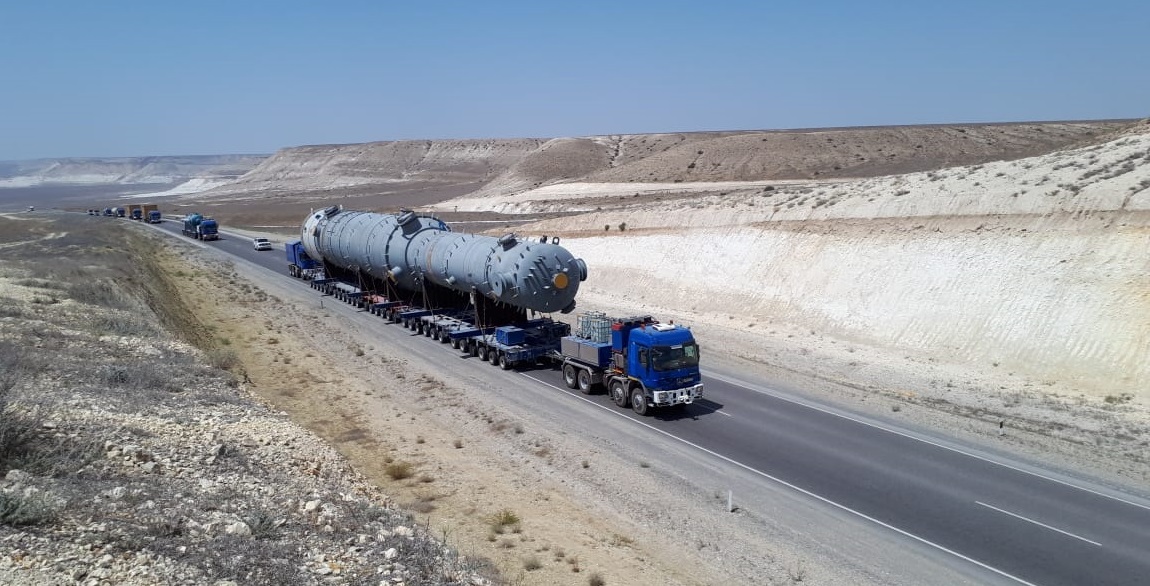
    In 2017, Bolloré Logistics Japan was awarded the transportation of materials and equipment from Mitsubishi Corporation for a large-scale fertilizer plant in Navoiy, a city in the central region of Uzbekistan. By September 2018, our team had successfully transported 24 heavy-lift units by hydraulic conventional trailers, including 17 units over 100 MT each.

    Located in Central Asia, Uzbekistan is one of only two landlocked countries in the world surrounded by five countries, namely, Afghanistan, Kazakhstan, Kyrgyzstan, Tajikistan and Turkmenistan. This makes Uzbekistan one of the most difficult areas to transport cargoes. The port of discharge selected by Bolloré Logistics varied from one time to another as there was no standard transportation route. Depending on the port of loading & discharge, weight, dimensions, transit time, and cost efficiency, Bolloré Logistics Japan provided the best transportation route and mode for Mitsubishi Corporation.

    The heaviest unit, an Ammonia Converter, registered at 422 tons and the widest and tallest unit, a Package Boiler, recorded at LWH (mm) 12,700 x 8,700 x 10,720 – making history as those were the heaviest and tallest cargoes handled in Uzbekistan.

    The scope of work included Free On Board (FOB) from various ports of loading to Navoiy’s site, together with import customs clearance formalities.

    Timely arrangement of breakbulk vessel, Volga-Don class sea river vessel or barge, road permits, conventional hydraulic trailers and more were requested from our team in order to meet the construction schedule’s deadline with all the requirements.

    As for the heaviest and most voluminous cargoes, Bolloré Logistics visited the vendor’s factories several times prior to the breakbulk shipments and physically checked the cargo figures, lifting points, lashing points, to successfully design the transportation plan accordingly.

    But the most challenging part remained the inland transportation from the Caspian Sea port to the job site.
    First of all, the distance from the Caspian Sea port to the job site is around 1,700 km. These days, most cases of heavy lifts are handled by self-propelled modular transporter (SPMT), just for short distances only, but in our case it was transported by conventional hydraulic trailers, for 1,700 km. As 1,700 km is a long journey, Bolloré Logistics Japan had to anticipate unexpected trouble on the way and prepare a backup plan, while respecting the construction schedule.

    Road surveys were carried out several times and we decided to adopt the safest transportation route. However, it was still not enough as infrastructures were limited and could not withstand transportation of such heavy and voluminous cargo; it therefore had to be improved.

    As a result, Bolloré Logistics improved 24 bridges (including the construction of a new bridge and installation of new piles on another bridge), constructed 15 bypass roads (including two long ones), expanded five corners, replaced electric poles at one place, and widened roads at four points.

    Yet, it was still not enough. During the transportation of heavy lifts cargo, Bolloré Logistics mobilized construction machinery teams such as dump trucks, road rollers, wheel loaders, etc., in order to improve unpaved road temporarily. We also mobilized an electrical team such as cherry pickers, mobile cranes to shut down / remove power cables and other overhead obstacles.

    Thanks to Mitsubishi Corporation’s full cooperation and Bolloré Logistics’ team effort; we were able to meet the cargo readiness in accordance with heavy lift transportation schedule and unloading heavy lifts on time at the site.

  • Korea’s manufacturing and mining shipments up 7 percent

    Korea’s manufacturing and mining shipments up 7 percent

    Korea’s manufacturing and mining industry shipments increased in 2017, mainly due to growth in the electronics, refined petroleum and machinery sectors, a government report showed on Tuesday. Combined shipments by companies in the sectors with more than 10 employees reached 1,516 trillion won ($1.34 trillion), up 7 percent, or 99.7 trillion won, from the year before.

    The increase is attributable to a 14.6 percent year-on-year rise in electronics shipments and a 26.6 percent gain in shipments from local refined petroleum businesses during the one-year period, the agency said. The machinery sector posted a 19 percent year-on-year rise last year.

    Such gains offset losses in the shipbuilding and automaking sectors, it said.

    The report also said that the average shipments for manufacturing companies stood at 21.7 billion won last year, up 6 percent from 2016.

    It said value-added product deliveries by mining and manufacturing companies rose 8.1 percent, or 41 trillion won, in 2017 to over 547.7 trillion won.

    As of the end of 2017, there were 69,790 mining and manufacturing companies in the country employing 2.96 million people. This represents a slight fall from the year before.

  • DHL MENA launches new e-com campaign for merchants

    DHL MENA launches new e-com campaign for merchants

    DHL Express, the world’s leading international express service provider, is set to launch its global campaign ‘Where Everything Clicks’ in Middle East and North Africa (MENA) region, to guide online merchants to navigate and access the booming and lucrative global e-commerce marketplace. DHL Express aims for the campaign to reach companies ranging from start-ups to large enterprises, advising merchants on how to optimize their websites for international sales and to create a competitive advantage via shipping options offered. DHL helps sellers traverse an increasingly global landscape, in which buyers progressively make purchases from international websites.

    The campaign reveals purchasing habits of online shoppers, including always important delivery preferences, and shows merchants how to use this information to increase sales.

    ‘Where Everything Clicks’ includes a rich database of how-to videos, white papers, customer insights, and trend videos that inform merchants and business about evolving consumer behaviour.

    A 2017 study by KPMG reports that consumers across Middle East and Africa were the most likely to import consumer products bought online, almost 50 percent of purchases, showcasing  the rise in cross-border shopping that is driving international retail trade.

    The survey also revealed ‘Enhanced Delivery Options’ as one of the key company attributes that contribute to deciding where shoppers choose to buy online.

    The study findings illustrate that companies must continually innovate to improve and shorten delivery times, to satisfy increasingly demanding consumer expectations.

    “The MENA region is witnessing rapid growth and change in e-commerce trends. Cross border e-commerce presents strong growth opportunities that is yet to be tapped into by many businesses in the region,” said Nour Suliman, CEO MENA, DHL Express. “With the proliferation of online trade, a product in one corner of the world today is now easily accessible to customers at the opposite end in just a few clicks. This has allowed online merchants to access markets and customers from around the globe.”

    Faysal Elhajjami, DHL Express MD, Kingdom of Saudi Arabia said: “We recognise that our customers’ success is closely tied to their buyers’ satisfaction with the delivery experience and the delivery options offered. With ‘Where Everything Clicks’ campaign we want to showcase to business across KSA  how an international express shipping option can increase e-commerce value helping merchants boost revenue and tap into new markets.”

    Geoff Walsh, UAE Country Manager, DHL Express said DHL would be particularly focusing on SMEs and start-ups. “We aim to support local ecommerce start-ups by providing them with tailor made solutions that will allow them to easily address potential global consumers, therefore improving their e-commerce proposition within the current market,” he said. “The ‘Where Everything Clicks’ campaign highlights how an international express shipping option can increase e-commerce value helping merchants boost revenue and tap into new markets.”

    DHL has developed services that enhance customer experience and support web merchants as they access new markets. Using advanced market intelligence tools, DHL can quickly identify shopping sites that receive traffic from international locations, identifying potential sales outside of the seller’s core market. DHL can compare website engagement metrics and suggest service enhancement via addition of a cross-border express delivery option.

    With DHL’s On Demand Delivery, buyers are notified proactively via email or SMS about a shipment’s progress. Receivers can schedule delivery for another day, arrange delivery to a nearby DHL Service Point or an alternate address, and even request that a shipment is held during vacation. DHL Express offers On Demand Delivery in over 100 countries, with about 50 more coming this year.