Retail News CRM

Tag: shopping festival

  • 2.5 million buyers shop during Myntra, Jabong special sale

    2.5 million buyers shop during Myntra, Jabong special sale

    About 2.5 million shoppers ordered eight million products during four days of Myntra and Jabong’s special sale from December 22 to 25, a company statement said on Wednesday. “The ninth edition of End of Reason Sale concluded with Myntra and Jabong recording a massive surge in sale and traffic,” city-based Flipkart-owned Myntra said in a statement here. As a result of the sale, the fashion portals saw a 700 per cent surge in sales and 120 per cent increase in online traffic over normal business days, it added.

    American retail giant Walmart-owned leading e-commerce player Flipkart Group includes online fashion portals Myntra and Jabong.

    The Flipkart arms, however, did not disclose the combined value of goods sold in those four days.

    “Sports goods were the highest selling category with a total of eight lakh pairs of shoes sold across the country during the sale,” the statement added.

    The shopping carnival also saw 7.2 lakh new customers ordering through the portals.

    The two portals together sold 1,200 products per minute during the four-day sale.

  • Shopee wraps up a record-breaking 2018 on 12.12 Birthday Sale

    Shopee wraps up a record-breaking 2018 on 12.12 Birthday Sale

    Shopee, the leading e-commerce platform in Southeast Asia and Taiwan, wraps up a record-breaking year with its highly successful Shopee 12.12 Birthday Sale. On 12 December, Shopee saw ​over 12 million orders across the region, surpassing all past records including the recent Shopee 11.11 Big Sale.

    Supported by ​more than 450,000 brands and merchants​​, Shopee recorded ​48million visits as users shopped ​60 million deals across all categories, and the highest number of items sold in 1 minute was ​73,519​​. Shopee’s highly popular in-app game Shopee Shake was played 46 million times​​ throughout the campaign.

    In Singapore, Beauty & Personal Care, Home & Living and Mobile & Gadgets were the top three most popular categories. Leading brands including Laneige, Kao and JBL emerged as favourites amongst users.

    Zhou Junjie, Chief Commercial Officer, Shopee​​, said, “Shopee 12.12 Birthday Sale marks another significant milestone as Shopee celebrate a year of exponential growth. Following the success of Shopee 11.11 Big Sale in November and Shopee 9.9 Super Shopping Day in September, it has been an exciting and fulfilling quarter as past records are surpassed and set new benchmarks to reach next year.

    Since launching in 2015, Shopee has seen tremendous growth across its seven markets, achieving over 195 million downloads across Southeast Asia and Taiwan.

  • What to learn from China’s Singles’ Day?

    What to learn from China’s Singles’ Day?

    Ever since the first Singles’ Day or 11.11 sale began in China in 2009, every year, there would be plenty of commentary explaining the phenomenon to an international audience. This doesn’t appear to be necessary any more.

    In its tenth edition, the event has grown into the world’s largest shopping festival where 180,000 brands participate and consumers take less than two hours to spend a phenomenal 100 billion yuan ($14.5 billion).

    It is an event in its own right. Not an imitation, but something that that consistently pushes the boundaries in terms of content, tie-ins and consumption. In 2012, sales for Singles’ Day first surpassed Cyber Monday and Black Friday in the US.

    And so effectively targeting buying power has been a focus for many international marketers. Given the volume of purchases and the willingness of Chinese consumers to embrace new technologies, it is also a true testing ground for brand owners.

    Three major changes are to take our from this year’s 11.11.

    Mini-programs take centre stage

    For brands and retailers, mini-programs have become a core marketing channel.

    Considering WeChat’s active user traffic of one billion, this comes as no surprise.

    Within WeChat’s ecosystem, mini-programs provide connectivity between social, content and payment. For example, retailers in a shopping mall can distribute free parking vouchers using mini-programs and they will be able to generate information on the arrival time and spending habits, as well as which customers own a car.

    According to official figures from WeChat, as of July 2018, it had over one million mini-programs with users opening them four times per day on average.

    A survey by China’s big data service provider QuestMobile has identified the most important functions of a mini-program: effectively combining online and offline activities; sharing customer information; serving as a standalone e-commerce platform; and the ability to combine the physical aspects of a promotional campaign with social marketing.

    Growth in short videos

    Data reveals companies using short video sharing platforms, such as TikTok and Kuaishou, received the majority of the 11.11 targeted advertising traffic.

    Community is king

    In China there are Social+ platforms that present a lucrative opportunity for both content and word-of-mouth marketing. Xiaohongshu, which is backed by Alibaba, has 150 million users consisting of the social media generation born in the 90s. They use the platform like Facebook and are highly influenced by shopping tips and insight from celebrities.

    A completely different interest group is Babytree, an online parenting platform that uses a similar vertical marketing model and presents another attractive opportunity for advertisers.

    These platforms provide an engaging forum for like-minded people and are realising the tangible benefits of teaming up with major e-commerce operators.

    All the above changes highlight how brands and consumers are moving away from purely a transactional shopping experience. Instead, it’s more collaborative and relationship-based, changing the dynamics of e-commerce. There is ample evidence of this phenomenon developing in other markets.

    Lessons from the East

    At $30.8 billion, the online sales of 11.11 surpassed this year’s figures for Black Friday ($6.22 billion) and Cyber Monday ($7.9 billion) in the US. But both these figures for the US represent a 24% and 20% respective increase on last year.

    While the results illustrate a gap in retail ecosystems between the two largest economies, there is clearly a growing preference by US consumers for digital channels rather than elbowing through crowded stores the day after their Thanksgiving dinner.

    In a poll by Periscope By McKinsey in October 2018, roughly a month before the sales, nearly half of the respondents (48%) said that they plan to shop more online while fewer (28%) said they plan to do so in-store.

    China’s highly sophisticated online shopping behaviour has leapfrogged the development of retail that has been commonplace in most Western countries. In doing so, it now sets the world standard in e-commerce.

    Any marketers who want to successfully compete in this huge and attractive market need to be digital and mobile led in their strategies. But 11.11 does not just represent an opportunity for sales in China. The trends and habits should be understood as they will provide the inspiration for other markets where online spending is also growing.

    Brands that can adapt these successful models may well be able to transfer success.

  • Big success for Korean retailers during shopping festivals

    Big success for Korean retailers during shopping festivals

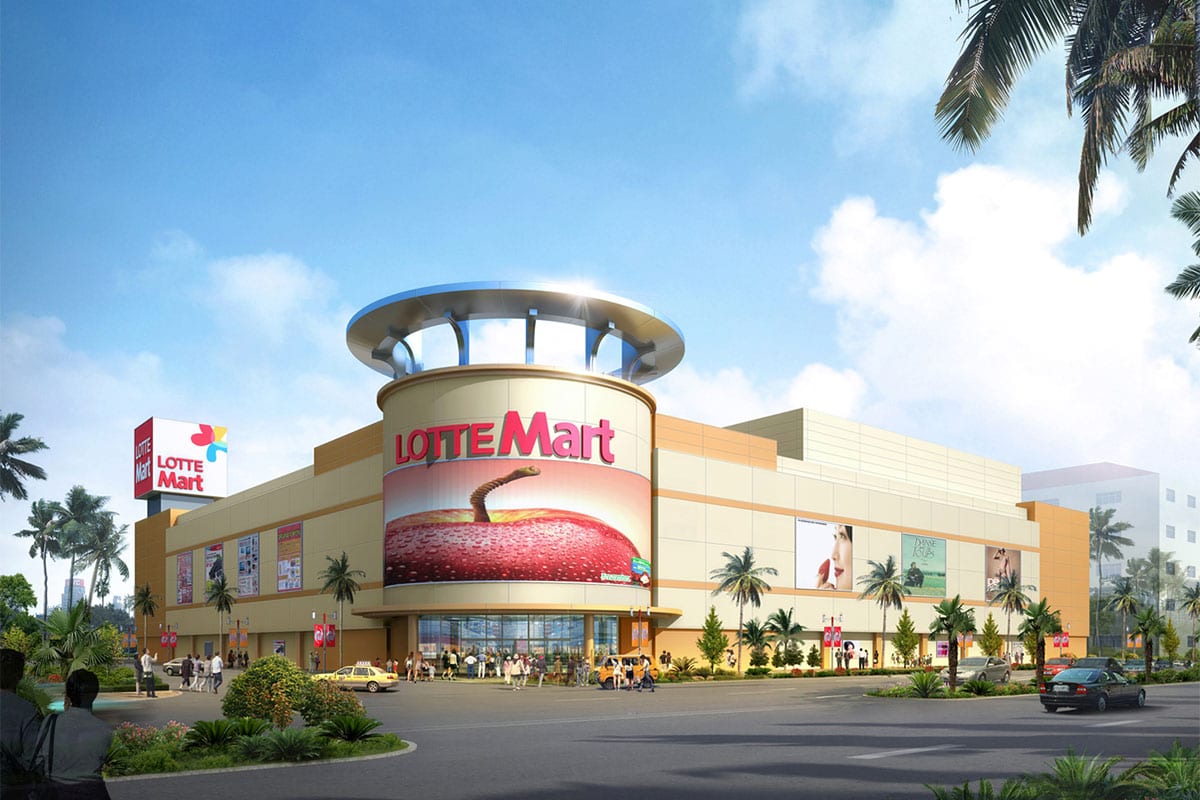
    South Korean retailers enjoyed a big sales boost from annual shopping extravaganza they launched in November to join the world’s major shopping events like Black Friday in the U.S. or Single’s Day in China. According to industry sources on December 2, Lotte Department Store, one of the country’s retail majors saw its sales from Nov. 1 to 29 grow 1.1 percent against the same period last year. Sales of its hypermarket affiliate Lotte Mart also gained 1.7 percent over the same period.

    Home appliance sold especially well during the big sales period, recording a 12.5 percent jump in revenue compared to the same period last year. High-end products were also showed sharp growth – sales of expensive hanwoo or Korean beef soared 25.8 percent on year and luxury fashion items up 9 percent.

    E-Mart., another leading big-box store chain also held a mega sales event in November, slashing prices of nearly 2,000 items worth 300 billion won (US$267.4 million). It sold 180 tons of hanwoo in just four days, doubling sales against the same period last year.

    Online retailers enjoyed even bigger growth in sales through major discount events. G Market and Auction hosted Big Smile Day sales event from Nov. 1 to 11 and their sales transaction amount more than doubled compared to the same period a month earlier.

    11st.com that runs its biggest sales event on Nov. 11 every year said its daily transaction amount on this year’s big sales day reached a record high of 102 billion won. Last year, it recorded 64 billion won through the same event.

    WeMakePrice Inc. also held bargain sales from Nov 1 to 11 this year. It said the transaction amount over the period jumped 77 percent to 230 billion won compared to the same period last year. By volume, it was up 15 percent on year. The company estimated transaction amount to hit a record high of 600 billion won in November.

  • Amazon.in announces wave 2 of it’s biggest celebration ‘Great Indian Festival’

    Amazon.in announces wave 2 of it’s biggest celebration ‘Great Indian Festival’

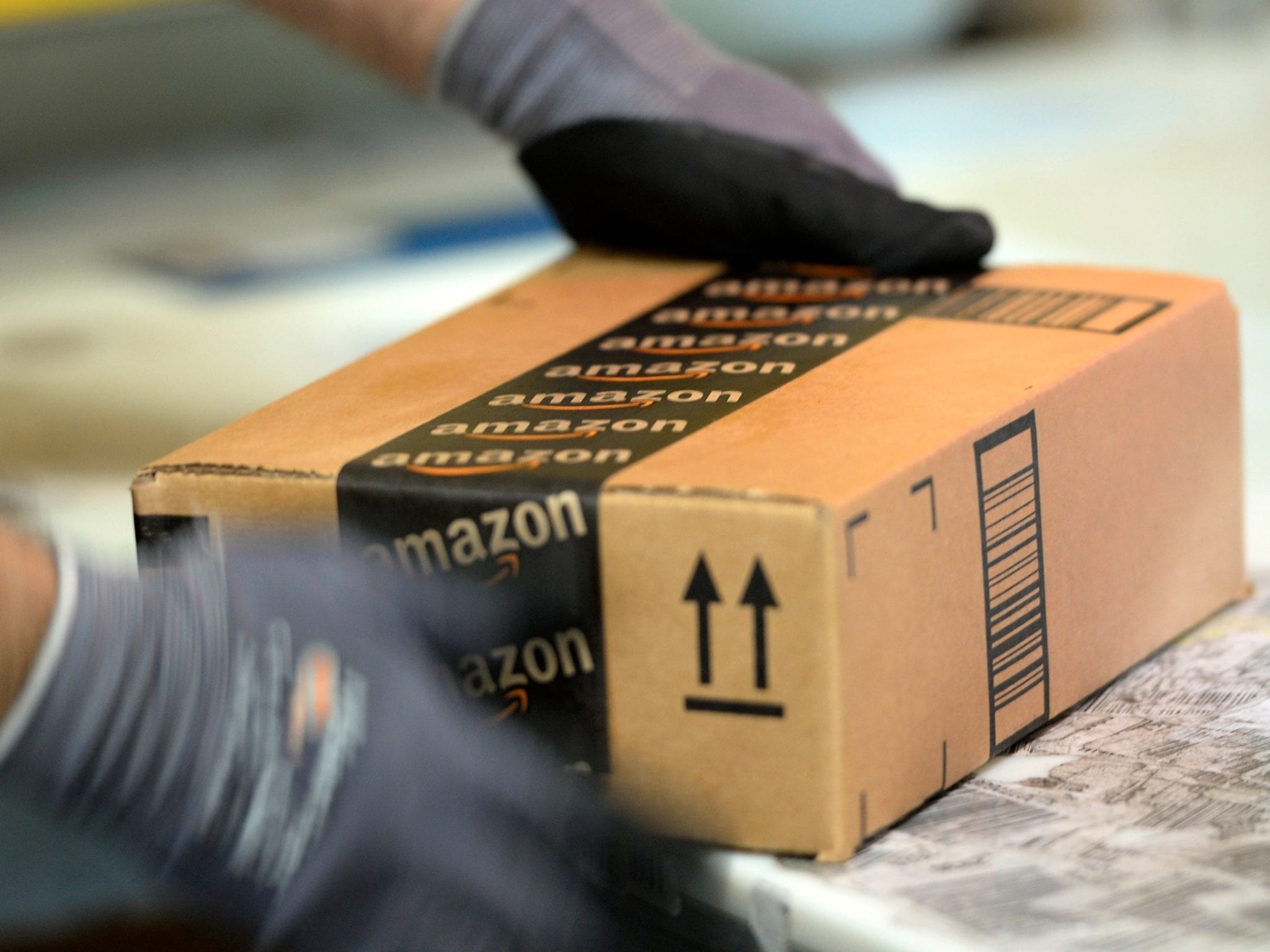
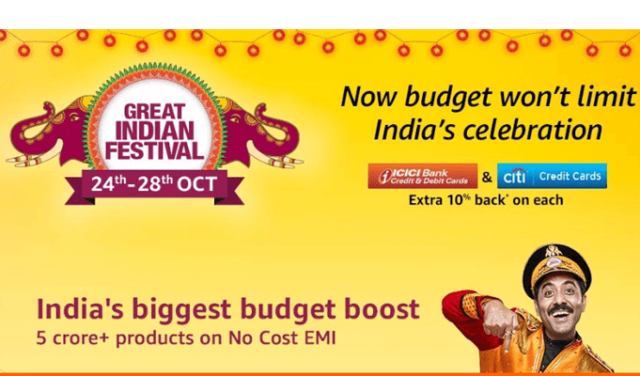
    Amazon.in has announced the return of its biggest festive celebration ‘Great Indian Festival’. Wave 2 of the ‘Great Indian Festival’ will start at 12 midnight on October 24, 2018 and end at 11:59 pm on October 28, 2018. Customers can look forward to getting some of India’s bestselling mobile phones at their lowest ever prices including the Redmi 6A which will go on a flash sale every day at 12 noon; up to 90 percent off and extra 15 percent cashback on Amazon Fashion; up to 80 percent off and extra 10 percent cashback on Home & Kitchen products; up to 60 percent off on TVs; up to 80 percent off on appliances and more.

    Amazon Devices – Fire TV Stick and Echo 3rd generation devices will be available at great discounts. Customers can get up to 70 percent off on Alexa built-in devices with exciting new product launches under speakers and headphones. Kindle eBook bestsellers will start at Rs 19 and Kindle Unlimited will be available for Rs 1,499.

    Customers shopping during the Great Indian Festival can save more by getting extra 10 percent back on ICICI and Citi cards. Customers can get ready for the celebration by topping up Amazon Pay balance with Rs 5,000 or more in advance and get extra Rs 250 back. Customers can shop for more than 5 crore products with no-cost EMI using Bajaj Finserv EMI card, select Credit and Debit Cards.

    “After an overwhelming wave 1 of our Great Indian Festival, we are excited to usher in wave 2 for all customers. We will continue to offer the best selection and biggest deals on our entire selection – from the most sought after smartphones, TVs, appliances to fashion, home & kitchen products, consumer electronics and more.” said Manish Tiwary, Vice President – Category Management, Amazon India.

    During Amazon.in’s Great Indian Festival, customers can avail special benefits with No-cost EMI on Bajaj Finserv EMI card and Debit and Credit cards, fast delivery and installation of appliances, exchange of mobile phones and large appliances, instant bank discounts, exciting cashback and lots more. Customers in Bengaluru, Delhi NCR, Mumbai and Hyderabad can enjoy ultra-fast delivery in 2-hours on popular deals on the Prime Now app.

    Furthermore, customers can unlock Amazon Pay offers of up to Rs 2,000 back on select Amazon Pay partner merchants like Swiggy, MakeMyTrip, Freshmenu and Eazydiner by shopping on the Amazon shopping app and paying through any online payment method.

  • South Korea to Launch Nationwide Shopping Festival in Fall

    South Korea to Launch Nationwide Shopping Festival in Fall

    South Korea will hold a nationwide shopping festival involving major retailers, manufacturers and traditional markets in the fall to draw foreign travelers and jack up lackluster domestic consumption, the government said Tuesday. 

    The Ministry of Trade, Industry and Energy and the Ministry of Culture, Sports and Tourism jointly formed a task force to create the massive shopping campaign, called “Korea Sale FESTA,” scheduled from Sept. 29 to Oct. 31. 

    “The government consulted with major manufacturers in consumer electronics, clothing, cosmetics and food industries, and they were positive about offering discounts on various items,” the ministries said in a release. “As Korea Sale FESTA is prepared well in advance, more manufacturers are expected to participate in this year’s event.” 

    The ministries separately held discount events last year as part of efforts to prop up the national economy hit hard by the Middle East Respiratory Syndrome outbreak last May.

    The culture ministry initiated a shopping festival called “Korea Grand Sale” from early September to mid-October during which retailers knocked down prices to woo back both domestic consumers and Chinese travelers during the long-haul national holiday. 

    Less than a month later, the trade ministry held another nationwide shopping campaign, called “Korea’s Black Friday,” during the first two weeks of October, to stimulate stagnant domestic consumption. 

    As last year’s discount campaign was criticized for hasty preparations and limited participation by retailers, the government formed a joint task force with industry officials this year to negotiate with retailers and manufacturers and offer shoppers better deals. 

    The culture ministry plans to provide support by hosting cultural and entertainment events with K-pop stars to attract foreign travelers, while the trade ministry will push for trade fairs and exhibitions to create a synergy effect. 

    The government will start promotion at home and abroad starting from late July and work with provincial governments and related organizations to link with local festivals during the period. 

    “We will combine shopping, tourism and culture to promote Korean culture and create a festive mood to bring in domestic and international consumers,” the ministries said.