Retail News CRM

Tag: shrimp

  • Radiation-Safe Indonesian Shrimp Lands on US Shores: A Triumph in Seafood Exports

    Radiation-Safe Indonesian Shrimp Lands on US Shores: A Triumph in Seafood Exports

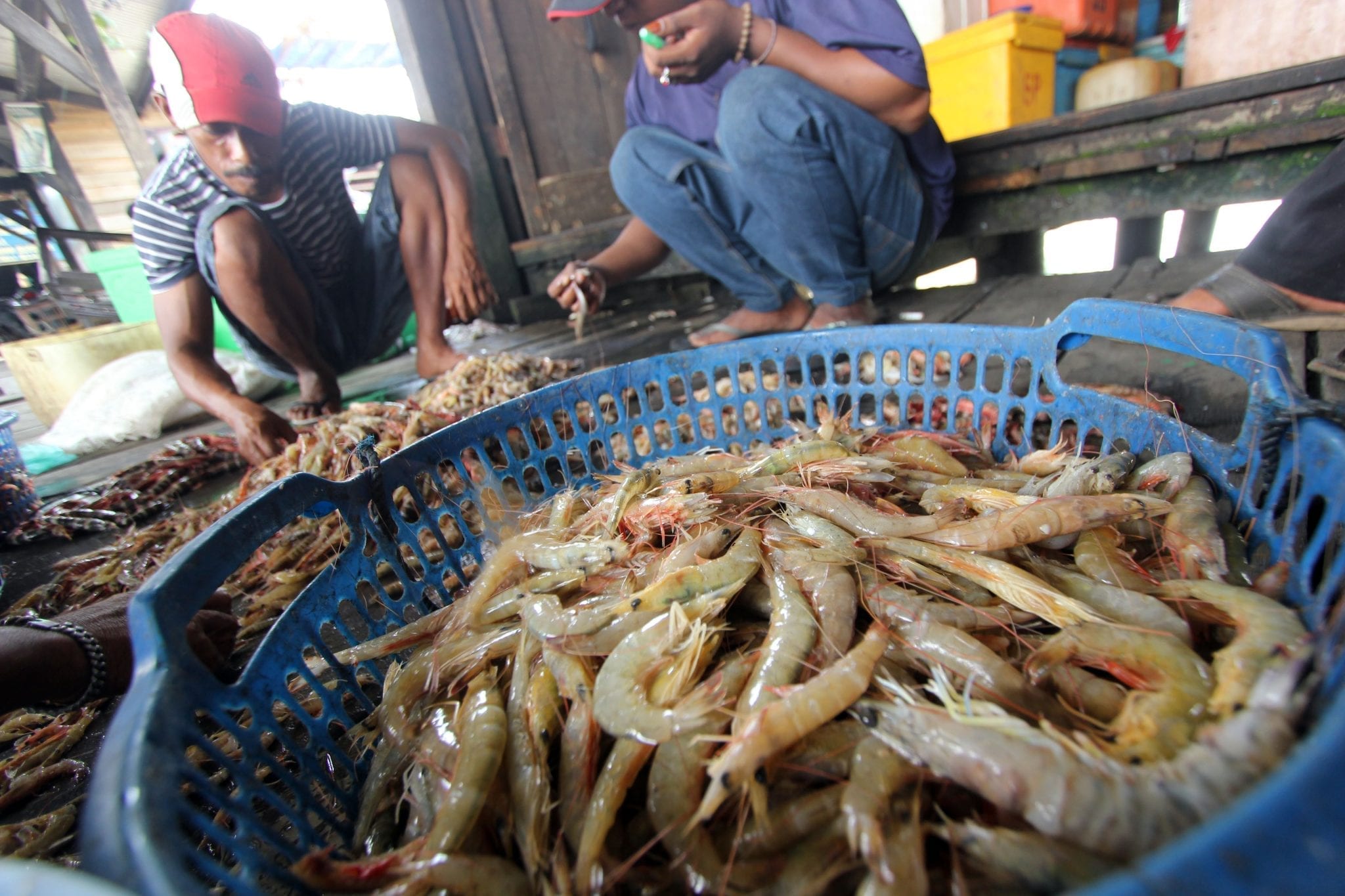
    Indonesia has recommenced its shrimp exports to the United States with a hefty haul of 182 tonnes, valued at IDR25 billion, or approximately US$1.5 million. Importantly, these shipments come bearing certification of being free from Cesium-137 contamination.

    Regaining Market Trust

    Wahyu Sakti Trenggono, Indonesia’s Minister of Maritime Affairs and Fisheries, shared this encouraging news during an event at the Tanjung Priok Port in North Jakarta. He revealed that this marked the second such shipment since the Indonesian government confirmed that their shrimp products adhere to international radiation safety standards. This development seems to suggest that the confidence of the U.S. market in Indonesian shrimp is gradually being restored.

    Ensuring Radiation Safety

    Trenggono also explained that the assurance of the absence of Cesium-137, a radioactive isotope, was made possible through a collaborative effort between the fisheries ministry, the National Research and Innovation Agency, and the Nuclear Energy Regulatory Agency. This cross-institutional cooperation played a crucial role in ensuring the safety and international standard-compliant status of the shrimp exports.

    Quality Assurance

    The head of the MMAF Quality Assurance Agency, Ishartini, provided further insights into the certification process. She disclosed that the U.S. Food and Drug Administration (USFDA) had duly recognized their agency as a certifying body as of October 31 this year. As a result, only fishery products that successfully pass the Certificate of Quality and Safety of Fisheries Products (SMKHP) and radiation tests will be approved for export with this certified status.

    Following the approval, Indonesia had previously exported 121 containers of shrimp in October, after the fisheries ministry executed radiation scanning of a total of 920 containers destined for the U.S.

    Questions & Answers

    What is the significance of the recent shrimp shipment from Indonesia to the U.S.?
    The shipment indicates a recovery of U.S. market trust in Indonesian shrimp products after they were certified free from Cesium-137 contamination.

    Who issued the certification of freedom from Cesium-137 for the shrimp exports?
    The certification was issued through a collaboration between Indonesia’s fisheries ministry, the National Research and Innovation Agency, and the Nuclear Energy Regulatory Agency.

    What criteria must Indonesian fishery products meet to be approved for export to the U.S.?
    Fishery products must pass the Certificate of Quality and Safety of Fisheries Products (SMKHP) and radiation tests to be considered for export to the U.S.
  • Vietnam Shrimp Exports Skyrocket by 22% in 2025: A Triumphant Three-Year High Driven by Global Demand

    Vietnam Shrimp Exports Skyrocket by 22% in 2025: A Triumphant Three-Year High Driven by Global Demand

    Vietnam’s shrimp industry has enjoyed a robust growth of 22% in export value year-on-year, reaching over US$3.4 billion in the first three quarters of 2025. This significant surge is the most considerable for this period within the last three years.

    Growth Drivers

    The notable increase in shrimp exports can be attributed to recovering demands from various markets, including China, the U.S, the EU, and the nations under the Comprehensive and Progressive Agreement for Trans-Pacific Partnership (CPTPP). Furthermore, the ability of Vietnamese businesses to adapt to the flux of the market has also played a key role in this growth.

    The exports to China and Hong Kong alone contributed $966 million, a 65% increase from the previous year, accounting for almost 30% of the total export value.

    Rising Inventories

    Even though there’s been a substantial growth, a surge in inventories in these markets might result in a slowdown in imports during the last quarter of this year and the beginning of 2026.

    Despite potential anti-dumping tariffs, the U.S market has also seen a growth of 4% in shrimp exports, amounting to $587 million. In a bid to diversify and mitigate risks, many businesses are steering their focus towards the EU and other Asian markets. The EU alone had a total export value of $434 million, marking an increase of 21%.

    Exports to CPTPP and Other Asian Markets

    The CPTPP bloc accounted for almost $941 million in shrimp exports, up by 34%. Within the bloc, Japan topped the chart with a total import of $426 million, due to its steady demand for convenient and sustainably processed products.

    Exports to other Asian markets such as South Korea and Taiwan experienced significant growth as well. However, exports to Canada and Russia have shown signs of stagnation.

    Future Projections

    The Vietnam Association of Seafood Exporters and Producers predicts a slight downturn in shrimp exports in the final quarter due to potential hurdles in shipments to the U.S. On a positive note, stricter controls on Indonesian exports and Ecuador’s priority on China might decrease competition in other markets, paving the way for Vietnamese shrimp in the EU, Japan, and South Korea.

    The association expressed optimism for exports to the EU throughout the festive season and into 2026. The industry could further expand its market share by adjusting promptly to market trends and enhancing the national seafood brand.

    Despite the potential slowdown due to abundant global supply and cooling prices, Vietnam’s advantages under the EVFTA, coupled with its strong processing capacity and export experience, are expected to maintain the momentum.

    Questions & Answers

    What factors contributed to the growth in Vietnam’s shrimp exports?
    The recovery of demand from China, the U.S., the EU, and CPTPP nations, along with the adaptability of Vietnamese businesses to changing market conditions, were key to the growth of shrimp exports.

    What challenges does the shrimp industry potentially face in the coming months?
    The surge in inventories could lead to a slowdown in imports in the last quarter of 2025 and the beginning of 2026. In addition, potential anti-dumping tariffs in the U.S. might pose a hurdle to the industry.

    What strategies are Vietnamese businesses employing to maintain momentum in the shrimp industry?
    To mitigate risks, businesses are diversifying their focus towards the EU and other Asian markets. They are also adapting swiftly to market trends and strengthening the national seafood brand to expand their market share.

  • US Implements Anti-Dumping Duties Targeting Vietnamese Shrimp Exporters Amid Trade Tensions

    US Implements Anti-Dumping Duties Targeting Vietnamese Shrimp Exporters Amid Trade Tensions

    In a recent decision that has sent ripples through the seafood industry, the U.S. Department of Commerce (DOC) released its 19th administrative review of frozen warmwater shrimp imports from Vietnam. This review, covering shipments between February 1, 2023, and January 31, 2024, has raised eyebrows among exporters, revealing surprising outcomes that are reshaping trade dynamics.

    Unexpected Outcomes for Vietnamese Shrimp Exporters

    The Vietnam Association of Seafood Exporters and Producers (VASEP) announced that the DOC found Thong Thuan Co.—including its Cam Ranh branch—has not sold shrimp below fair value, resulting in a commendable zero dumping margin for the company. However, the situation turned grim for STAPIMEX, which was slapped with a staggering preliminary dumping rate of 35.29%. This hefty rate was also assigned to 22 other companies with separate rate status that were not selected as mandatory respondents, diverging from the customary practice of using a weighted average of the mandatory respondents’ rates.

    VASEP and the affected companies expressed astonishment and concern over the unexpectedly high preliminary rate. “In the 19 years that Vietnam has participated in the administrative reviews of the anti-dumping case, no company has ever been subjected to a double-digit preliminary duty,” the association stated in frustration. This sentiment is compounded by memories of the 12th review, when a preliminary rate of 25.76% assigned to FIMEX was later revised to a mere 4.58% due to calculation errors.

    The possibility of miscalculations looms large as VASEP and the affected enterprises call for a review of the current findings. Confident in its meticulous accounting records, STAPIMEX plans to submit supplementary evidence in a bid to sway the outcome. Both VASEP and the company remain optimistic that the final ruling, expected in December 2025, will accurately reflect the true state of Vietnamese shrimp exports, reaffirming their position against any claims of dumping.

    Though these preliminary results are not final, they have already cast a shadow over U.S. importers, disrupted trade plans, and shaken the confidence of Vietnamese shrimp farmers. This unsettling development emerges amidst the U.S. administration’s broader strategy of imposing high reciprocal tariff policies on Vietnam and other nations, presenting yet another hurdle for the industry.

    VASEP has urged the DOC to meticulously review and reconsider its preliminary calculations, highlighting the necessity for fairness, consistency with previous reviews, and protection of Vietnamese seafood exporters’ interests to ensure stable trade relations between the two countries.

    Vietnam ranks as the fourth-largest supplier of frozen shrimp to the U.S., trailing only India, Ecuador, and Indonesia, with an impressive $691 million in export value last year. As the shrimp saga unfolds, one can only wonder what other surprises lie ahead for this vibrant industry.

    Questions & Answers

    What was the DOC’s preliminary finding regarding Thong Thuan Co.? The DOC determined that Thong Thuan Co. did not sell shrimp below fair value, resulting in a zero dumping margin for the company.

    Why are VASEP and companies concerned about the high dumping rate assigned to STAPIMEX? The 35.29% preliminary dumping rate is unprecedented; VASEP noted that no company has ever faced a double-digit rate in the 19 years of reviews, raising concerns about potential miscalculations.

    What impact could these preliminary findings have on the shrimp industry? The preliminary findings have already unsettled U.S. importers, disrupted trade plans, and shaken the confidence of Vietnamese shrimp farmers, complicating an already challenging trade environment.

  • China replaces US as Vietnam’s largest shrimp export market

    China replaces US as Vietnam’s largest shrimp export market

    China imported US$834 million worth of Vietnamese shrimp last year, surpassing the U.S. as the largest buyer of the seafood.

    According to the Vietnam Association of Seafood Exporters and Producers (VASEP), the figure marked an increase of 39% year over year.

    The decline in China’s supply due to unfavorable weather conditions is among the factors attributed to the import hike, VASEP said.

    Ecuador’s reduced shrimp shipment to China allowed Vietnamese exporters to snap up sale opportunities, which were also driven up by China’s many policies to promote general domestic consumption of goods, it added.

    In total Vietnam’s shrimp exports in 2024 reached $3.9 billion, up 14% from 2023.

    It was the biggest category in Vietnam’s seafood exports, which reached $10 billion.

    Pangasius contributed $2 billion. Vietnam’s shrimp exports to China seem to remain strong this year. In the first two weeks of January exports jumped 191% to $51 million.

    China was also the largest buyer of Vietnamese lobster last year, accounting for about 99% of total exports volume.

    VASEP advises exporters to prioritize lobster, salmon, and king crab this year as consumers have shown steady demand for them.

  • Shrimp exports expected to hit $4B in 2024

    Shrimp exports expected to hit $4B in 2024

    With double-digit growth in key markets, Vietnam’s shrimp exports are projected to rake in $4 billion in 2024, according to insiders.

    While this figure is lower than the record of $4.3 billion achieved in 2022, it marks a strong recovery compared to 2023, when shrimp exports totalled only $3.4 billion. This recovery highlights the resilience of the shrimp industry as it continues to regain momentum.Vietnam’s shrimp exports showed impressive growth in the first 11 months of 2024, reaching nearly $3.6 billion, a 22% increase compared to the same period last year.

    According to the Vietnam Association of Seafood Exporters and Producers (VASEP), the shrimp sector is performing well in several key markets. Exports to both US and European Union have shown consistent growth, while China’s recent policies to stimulate domestic consumption could further drive demand for Vietnamese shrimp.

    Along with an uptrend in shrimp export prices, the processed shrimp sector is growing rapidly, marking a shift towards higher value-added products.

    However, experts held that the Vietnamese shrimp industry faces significant challenges that need to be addressed to ensure sustainable growth.

    Tran Dinh Luan, Director of the Fisheries Department under the Ministry of Agriculture and Rural Development, stressed that, to compete on the international market, Vietnam must improve shrimp quality and reduce production costs. Key issues include enhancing the quality of shrimplets, managing breeding cycles, controlling diseases, lowering production costs, and accurately forecasting the consumption patterns of importing markets. Addressing these challenges is vital to improving the shrimp value chain and boosting farmers’ incomes.

    Meanwhile, diseases on shrimps are considered a threat to the production and quality of shrimp products, he said.

    Phan Thanh Lam at the Research Institute for Aquaculture No. 2 noted that upgrading the shrimp industry’s value chain is a significant challenge, noting the industry’s poor linkages between production and consumption, and small scale of the majority of shrimp producers.

    Tran Ngoc Hai at the Can Tho University highlighted the importance of adopting high-tech, environmentally friendly shrimp farming practices that are resilient to climate change. The industry must also focus on meeting international standards and linking production across the value chain to better serve market demands.

    Despite environmental, disease, and production challenges, Luan highlighted that Vietnamese shrimp businesses have introduced many innovative solutions, such as applying new technologies and improving infrastructure. These efforts are helping to reduce emissions, extend the value

  • Shrimp exports to US surge in September

    Shrimp exports to US surge in September

    Shrimp exports to the U.S. in September increased 23% compared to the same period last year, marking the third consecutive month of positive growth.

    The 23% growth in September was also the highest compared to the previous two months, according to the Vietnam Association of Seafood Exporters and Producers (VASEP).

    However, in the nine months of 2023, shrimp exports to the U.S. reached $520 million, down 23% compared to the same period.

    The bigger export is due to higher consumption in the U.S. market. The International Monetary Fund raised its U.S. growth projection for this year by 0.3 percentage points, compared with its July update, to 2.1%. It hiked next year’s forecast by 0.5 percentage points, to 1.5%, according to CNBC.

    Vietnam’s shrimp exports to all markets reached $2.5 billion in the first nine months of this year, down 26% from 2022.

  • Shrimp prices plummet on stubbornly low global demand

    Shrimp prices plummet on stubbornly low global demand

    Shrimp prices have fallen by up to 30% within a month, and threaten to cause losses to southern farmers.

    In the Mekong Delta provinces of Tien Giang and Ca Mau, the prices of shrimp sized 100 to a kilogram have declined by a third from four weeks ago to VND70,000-80,000 (US$3-3.41).

    Larger ones, sized 30 to a kilogram, are priced at VND108,000, down 20%.

    Minh, a farmer in Ca Mau, said with prices dropping by 20-30%, he is not earning profits.

    “I have been trying to cut expenses, but at these prices I might record a loss.”

    Trong in Tien Giang Province faces potential losses of hundreds of millions of dong (VND100 million = $4,260).

    Other farmers are saying on online forums that they had been expecting prices to rise for weeks and are hit by the decline.

    The fall has been caused by lower demand in major export markets while supply has been rising in Vietnam, the Ministry of Agriculture and Rural Development said in a recent report.

    Rising inflation has caused a drop in consumption in the E.U. and the U.S., two main export markets, the Vietnam Association of Seafood Exporters and Producers said.

    Exports to China fell by 40% year-on-year in the first quarter to $54 million, according to Vietnam Customs.

  • Shrimp exports set for difficult year

    Shrimp exports set for difficult year

    Vietnam’s shrimp exports face challenges with prices decreasing and competition from Ecuador and India intensifying, according to the Vietnam Association of Seafood Exporters.

    Global prices have decreased since the second half of last year and are expected to fall further this year as supply rises sharply to six million tons, VASEP general secretary Truong Dinh Hoe said Friday at a shrimp industry conference.

    VASEP general secretary Truong Dinh Hoe says shrimp exporters face fierce competition from Ecuador and India this year. Photo by Anh Minh

    The U.S. has extensive shrimp inventories, and so is sure to reduce imports in the first half of this year.

    When it increases imports in the second half, it will likely opt for small shrimp from Ecuador because of its abundant supply and geographical proximity.

    Vietnamese exports to European markets will be affected by the economic turmoil there.

    Le Van Quang, chairman of Minh Phu Seafood Corp., said Vietnamese shrimp costs are too high due to low aquaculture productivity, making it difficult to compete with Ecuador and India.

    “Our shrimp farming success rate is less than 40%. It is over 90% in Ecuador and more than 60% in India.”

    According to the Directorate of Fisheries, the shrimp output this year is likely to be 1.08 million tons, and exports will fetch US$4.3 billion.

    But VASEP forecast exports to be worth only $4 billion out of total seafood exports of $10 billion.

    Last year shrimp exports had risen by 11% to $4.3 billion.

  • Shrimp exports fall by half in January

    Shrimp exports fall by half in January

    Shrimp exports plummeted by 55% year-on-year in January to US$141 million due to weaker global demand and stronger competition from other countries.

    According to the Vietnam Association of Seafood Exporters and Producers, exports to the U.S. were worth $23 million, down 65%, the sharpest decline among all markets.

    Shipments to the EU were down 55% to $24 million. Vietnam’s largest market, Japan, imported $29 million worth of shrimp, a 47% decline.

    A major reason for the fall in exports was that demand in the EU was weaker because of the impact of inflation and uncertainties related to the Russia-Ukraine conflict.

    Vietnam also saw heightened competition from rivals such as Ecuador and China.

    Shrimp exports would face a lot of challenges this year due to the unfavorable global economic situation, which would drive down demand, and high inventories in many markets, the association said.

    Exporting to Japan is becoming increasingly difficult because of the high hygiene, safety and sustainability standards the country has, it said.

    However, China’s reopening in January would help the Vietnamese fisheries sector realize its export target of over $10 billion this year, including $4 billion worth of shrimps, it added.

  • Vietnam eyes $4 bln in shrimp exports

    Vietnam eyes $4 bln in shrimp exports

    Vietnam targets a 5 percent increase in shrimp exports this year to $4 billion.

    It also targets output of 930,000 tons and having 740,000 hectares of shrimp farms, said Tran Dinh Luan, director of the Directorate of Fisheries, said at the VietShrimp Aquaculture International Fair in Can Tho City on Wednesday.

    He expected Vietnam to become the world’s biggest producer of farmed shrimp by 2045 with an output of four million tons and a 25 percent global market share.

    Now there are 200,000 hectares of high-tech shrimp farms, 95 percent of them in the Mekong provinces of Bac Lieu and Soc Trang, mostly belonging to foreign companies.

    Shrimp exports face difficulties since costs have risen by 20 percent due to a 200-500 percent jump in transport costs, Luan said, pointing out that shipping a container of shrimp to Europe has increased from $1,500 to $6,500, and even $7,500.

    Last year, shrimp exports were up 11.7 percent to $3.8 billion, and output had been 900,000 tons.

  • Shrimp exports to rise 15 pct

    Shrimp exports to rise 15 pct

    Vietnam has advantageous conditions to increase shrimp exports by 15 percent year-on-year to top $4 billion in 2021, industry insiders say.

    Global demand has remained stable while other shrimp exporting countries have not recovered from pandemic impacts, according to the Vietnam Association of Seafood Exporters and Producers (VASEP).

    China is the biggest shrimp producer in Asia, yet it lacks shrimp supply for processing and consumption.

    Vietnam’s shrimps will benefit from tariff cut under new-generation FTAs that the country has signed.

    However, Vietnamese shrimp exported will have to face strong competition from India, where low production costs make its export prices more competitive, according to the Agro Processing and Market Development Authority.

    China has imposed import restrictions based on quality, quarantine, and procedural issues which can result in a plunge in shrimp exports to the neighboring giant.

    Shrimp exports are set to increase by 12.4 percent in 2020 to $3.78 billion despite the major impact Covid-19 has had on the seafood industry.

  • Vietnam looks for shrimp farming to save the Mekong Delta

    Vietnam looks for shrimp farming to save the Mekong Delta

    About 700 000 hectares of rice and other agriculture crops in Vietnam were destroyed by climate-induced natural disasters in 2016, reports the Ministry of Agriculture and Rural Development.

    Consequently, rice production, which was hit the hardest, fell by some 800,000 tons, which has forced the Ministry to fast track implementation of remedial climate change adaption measures.

    Under one initiative, rice cultivation in several Mekong Delta provinces has been converted to growing fruit trees and grapes that require less water yet provide suitable alternative sources of income for farmers.

    Vietnam is the third largest exporter of rice, behind India and Thailand. Nicknamed the ‘rice bowl’, the Mekong Delta region comprises 12% of the arable land of the country and is responsible for nearly 50% of the rice production.

    This past paddy season, the culprit was salt water intruding upstream from the coast, said Mekong wetlands ecologist Nguyen Huu Thien.

    In turn, he places the blame squarely on dams that have been constructed at locations in Laos and Cambodia that are blocking the free flow of water and sediment, which allows for saltwater to make its way in the opposite direction the waters of the river naturally flow.

    Last year, a severe drought in much of Southeast Asia compounded the problem.

    In May, the Vietnam government observed the Mekong River at its lowest level since 1926, but eventually successfully convinced China to release water from its upstream dams, which helped to alleviate some of the problem.

    The Ministry has also helped other farmers migrate elsewhere in the country where they can earn a living and, as part of their main initiative, assisted many rice farmers to experiment with saltwater shrimp farms in lieu of growing rice.

    The Mekong Delta is gradually losing the capacity to support the populace, say Ministry spokespersons and it will fall apart if a corrective action plan isn’t put in place to address the fundamental problems post haste.

    Shrimp farming appears to be the best alternative but even the farming of shrimp, a salt-tolerant creature, can be challenged by excessively salty conditions.

    However, Ministry spokespersons say some of the challenges facing shrimp farming in the Mekong are being addressed by using a three-pond shrimp and fish farming strategy, in which one pond holds fresh water that is used to dilute water in the other two ponds when they become too salty.

    Research is also underway to find the most suitable commercial shrimp species to raise and to identify synergies in the processes that may benefit shrimp production in the Mekong Delta.

    Many Vietnamese and global organizations, say Ministry spokespersons, are supporting these efforts and others intended to help sustain food production in the Mekong.

    Shrimp farming seems to be a win-win situation for all involved. The farmer in the Mekong can earn more money with it than rice and the consumer in the main importing regions of the EU, US and Japan, can eat healthier shrimp.

    Shrimp farms can also play a role in ensuring the future of the Mekong Delta. Even when the saltwater rises.

  • Vietnam requests Australia roll back ban on shrimp imports

    Vietnam requests Australia roll back ban on shrimp imports

    The Vietnam government contends the ban by the Australian Department of Agriculture on raw imports is ‘causing serious damage’ to the country’s shrimp farmers and exporters, and has requested it be reversed.

    Australian Agriculture Minister Barnaby Joyce announced a six-month suspension on the import of raw shrimp this past January, following an outbreak of white spot disease in the northeast state of Queensland.

    Vietnam Deputy Minister of Industry and Trade, Tran Quoc Khanh, has now asserted the ban has damaged the country’s shrimp farming industry that on average exports roughly US$55 million worth of raw product to Australia annually.

    Deputy Minister Tran recently told Australian ABC news that the ban is not in line with common practices and the spirit of nurturing and enhancing the existing good trade relationship between the two countries.

    The Deputy Minister pointed out that the temporary ban on uncooked shrimp was issued with no advance warning for Vietnamese shrimp exporters to take needed actions to avoid large economic losses.

    In addition, Deputy Minister Tran noted there is no hard evidence as to the cause of the breakout of white spot disease in Queensland and maintained that it is premature to blame Vietnamese exports.

    Ban could contradict WTO rules

    Absent evidence of a causal relationship between Vietnamese shrimp exports and the breakout of the disease, Mr Tran suggested the ban may be in contravention of certain World Trade Organization agreements.

    Australian ABC news reports that the Seafood Importers Association of Australia has taken a position that favours lifting the ban, saying it damages the international trade reputation of Australia.

    Biosecurity failures

    The Australian Department of Agriculture defended the move, saying it was necessary for biosecurity protection of the farm raised fish and seafood industry.

    A spokesperson insisted the ban complied with the provisions of WTO agreements that allow a member to temporarily suspend imports in certain circumstances.

    The spokesperson also argued the decision to suspend shrimp imports would not be in place any longer than necessary to ensure the protection of the domestic aquaculture industry.

    Deputy Minister Tran noted he respected the sovereignty of Australia and the biosecurity concerns, but nonetheless asked the Australian Department of Agriculture to reconsider the propriety of the ban.

    Vietnamese uncooked shrimp products have been exported to many countries around the globe, said the Deputy Minister, without any reports of white spot disease or other biosecurity concerns having arisen.