Tag: Siemens

  • PepsiCo Revolutionizes Supply Chain Management with AI, Launches Groundbreaking Partnership with Siemens and Nvidia

    PepsiCo Revolutionizes Supply Chain Management with AI, Launches Groundbreaking Partnership with Siemens and Nvidia

    PepsiCo, a multinational food, snack, and beverage corporation, is set to revolutionize its plant and supply chain operations through an unprecedented partnership with Siemens and Nvidia. This strategic move employs artificial intelligence (AI) to meet the growing demands for production and distribution capacity.

    Digital Transformation for Enhanced Operations

    PepsiCo aims to upgrade its existing operations by integrating AI into every aspect of its large-scale and multifaceted business. This integration will allow the company to have an improved understanding of its consumer base and business partners’ needs. Ramon Laguarta, PepsiCo’s CEO and Chairman, emphasized that this collaboration with Siemens and Nvidia would help facilitate the company’s transition into a future-ready organization marked by agility and foresight.

    The company has also adopted a digital-first planning strategy, utilizing Siemens’ digital twin composer, which is powered by Nvidia’s tools.

    The Dawn of AI in Physical Industries

    Jensen Huang, Nvidia’s founder and CEO, highlighted that the era of AI is entering physical industries. He pointed out that digital twins serve as the foundation for companies owning real-world assets to embark on their AI journey. By collaborating with Siemens and Nvidia, PepsiCo is reconfiguring its operations, using digital twins and AI to revolutionize how it designs, optimizes, and operates its global operations.

    Siemens’ innovative software enables the creation of ‘industrial metaverse’ environments that assist companies in making decisions virtually and on a large scale. PepsiCo now has the capability to reproduce every machine, conveyor, pallet route, and operator path with physics-level accuracy. This allows AI agents to simulate, test, and refine system changes, identifying up to 90% of potential problems before any physical changes are made.

    Roland Busch, Siemens AG’s CEO, expressed his pride in partnering with PepsiCo and Nvidia to digitally transform their manufacturing facilities. He highlighted the digital twin composer as a vital tool in enabling PepsiCo’s transformation in manufacturing and warehousing.

    Questions & Answers

    What is the purpose of PepsiCo’s collaboration with Siemens and Nvidia?
    The collaboration aims to integrate AI into PepsiCo’s operations, enhancing its production and distribution capacity to meet growing demands.

    What role do digital twins play in this new operational strategy?
    Digital twins, powered by Nvidia’s tools and built using Siemens’ digital twin composer, allow for the physical reproduction of every aspect of PepsiCo’s operations. This enables AI agents to simulate, test, and refine system changes, identifying potential issues before they occur.

    How will this change impact PepsiCo’s operations?
    The integration of AI and the use of digital twins will revolutionize how PepsiCo designs, optimizes, and runs its global operations. This could lead to increased efficiency, reduced potential issues, and improved capacity to meet consumer and partner demands.
  • Siemens Plans Ambitious High-Speed Rail Project to Transform Vietnam’s Transportation Landscape

    Siemens Plans Ambitious High-Speed Rail Project to Transform Vietnam’s Transportation Landscape

    In a compelling dialogue at the 16th Annual Meeting of the New Champions, held by the World Economic Forum in Tianjin, China, Siemens’ Chief Technology Officer and Chief Strategy Officer, Peter Keotre, presented an ambitious invitation to Vietnam’s Prime Minister Pham Minh Chinh. The offer reflects Siemens’ ongoing commitment to strengthening its presence in the region.

    Siemens, which operates across sectors including industry, infrastructure, transportation, and healthcare, has distinguished itself in the arena of industrial AI. Last year, the company reported impressive revenues of EUR 75.9 billion (US$ 89 billion). Since establishing a foothold in Vietnam in 1993, Siemens has operated offices in Hanoi, Da Nang, and Ho Chi Minh City, alongside a manufacturing facility located in Binh Duong Province.

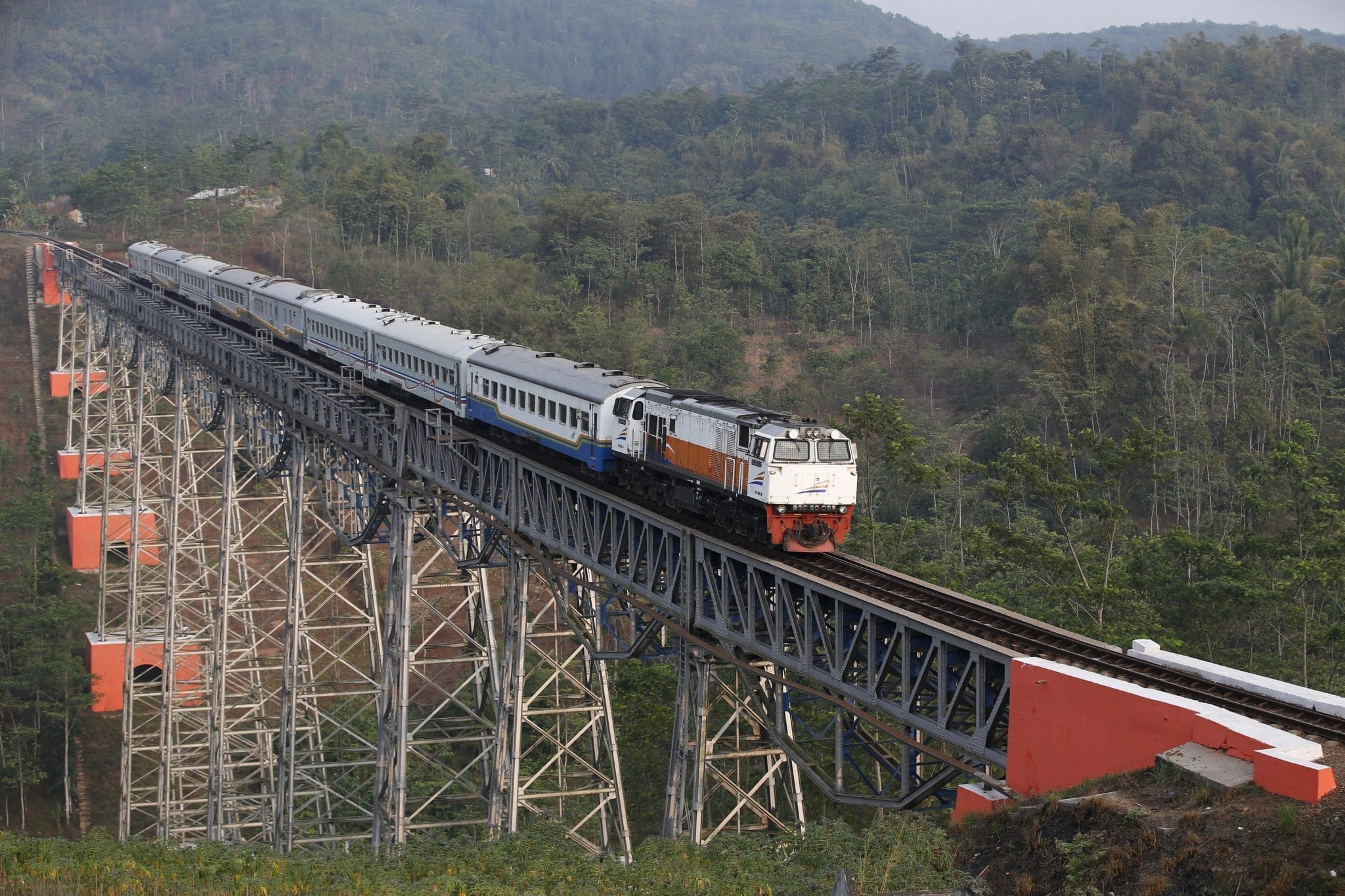
    Prime Minister Chinh lauded Siemens for its substantial global operations and meaningful contributions to Vietnam, expressing enthusiasm for the company’s intentions to escalate investments, particularly in critical infrastructure projects like the North-South high-speed rail. This project, which received National Assembly approval in November 2024, carries a hefty price tag of VND 1.7 quadrillion (US$ 67 billion) and will stretch 1,541 kilometers, linking Hanoi to Ho Chi Minh City through 20 provinces and cities.

    The North-South rail initiative isn’t drawing interest solely from Siemens; various foreign firms have also shown eagerness to participate. On the domestic front, major players like VinFast, backed by Vietnam’s wealthiest individual Pham Nhat Vuong, and automaker Thaco are also vying to invest.

    In addition to the high-speed rail, Vietnam is eyeing enhanced rail connections with China to streamline routes extending to Central Asia and Europe. Chinh has encouraged Siemens to collaborate with relevant ministries, agencies, and the Vietnam Railways Corporation to explore potential involvement in these transformative projects.

    Infrastructure development is a focal point for the Vietnamese government, viewed as a vital catalyst for economic growth. Chinh shared that public-private partnership models are being considered to attract investments in essential national initiatives encompassing transportation, energy, and digital infrastructure.

    His remarks underscored recent institutional reforms aimed at creating more open mechanisms and policies, expanding investment opportunities for businesses eager to be part of Vietnam’s progressive development narrative. With plans covering roads, railways, air transport, and maritime infrastructure, the government is laying the groundwork for a robust economic future, where even trains can hit the high speeds of innovation.

    Questions & Answers

    How is Siemens planning to deepen its investments in Vietnam?
    Siemens aims to enhance its investments primarily in infrastructure projects, with a keen focus on the North-South high-speed rail initiative that promises to revolutionize the country’s transportation landscape.

    What are the key features of the North-South high-speed rail project?
    The rail project, approved by the National Assembly in November 2024, will span 1,541 kilometers, connecting Hanoi to Ho Chi Minh City and traversing 20 provinces and cities, with a projected cost of VND 1.7 quadrillion (US$ 67 billion).

    How does Vietnam view infrastructure development?
    Vietnam considers infrastructure development as a crucial driver for economic growth and is exploring public-private partnerships as a means to attract investments into vital national projects, particularly in transportation and digital infrastructure.

  • Siemens offers locomotives for Vietnam’s highspeed railway By Viet Tua

    Siemens offers locomotives for Vietnam’s highspeed railway By Viet Tua

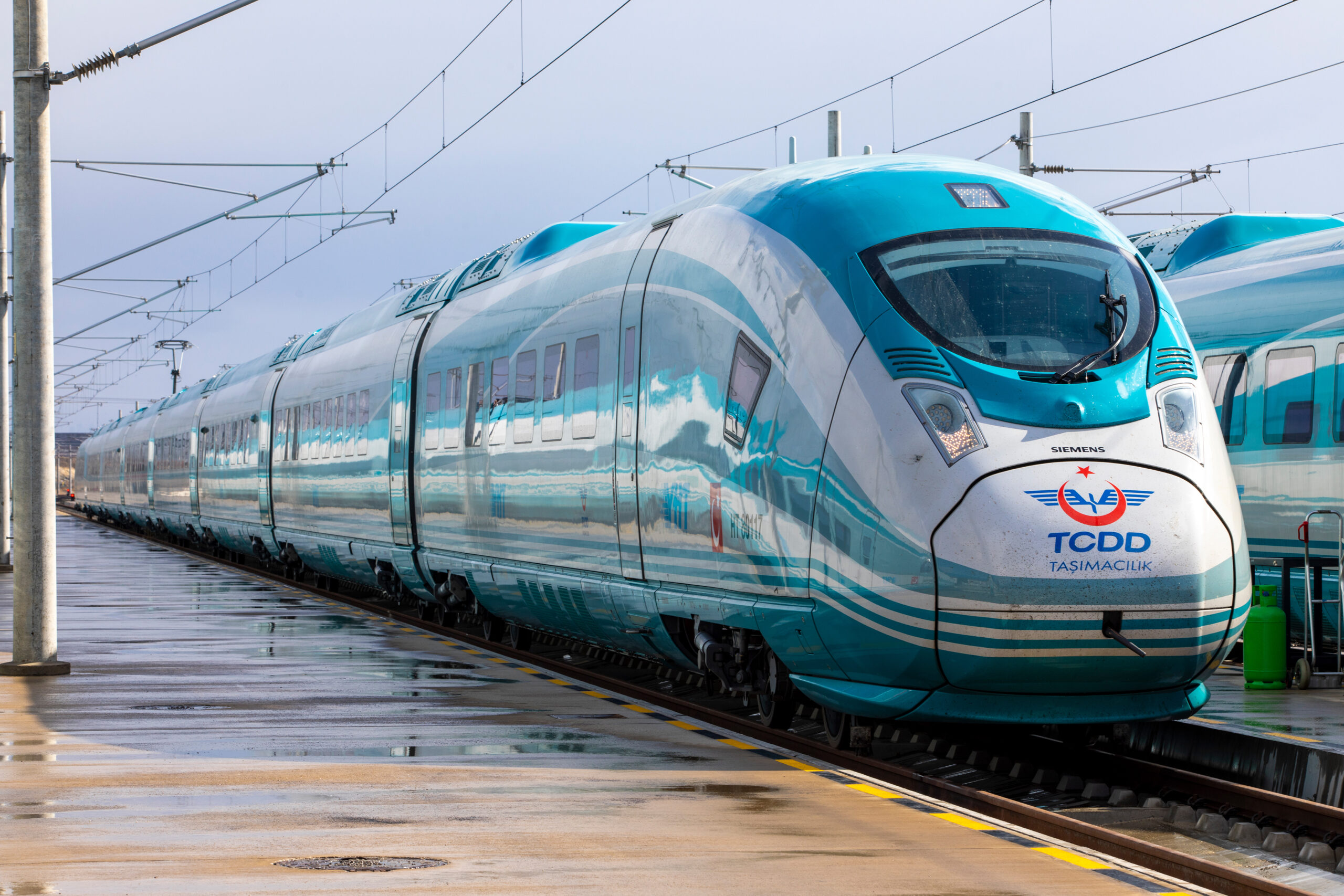
    Siemens has expressed interest in Vietnam’s North-South highspeed railway and offered to provide vehicles for the project.

    Siemens president and CEO Roland Busch told Prime Minister Pham Minh Chinh at a meeting in Hanoi Monday that the company can transfer the technology of building carriages and can provide the trailway signal system for the project.

    The North-South highspeed railway is among the largest transport projects that Vietnam plans for the upcoming decades.

    It should be approved in policy by next year and construction is scheduled to begin before 2030.

    Two sections of the railway, one from Hanoi to Vinh and the other from HCMC to Nha Trang, will begin construction before 2030 and the whole route should be finished by 2045.

    Busch made the offers after PM Chinh proposed that Siemens consider participating in the construction of the railway as well as the second metro line in HCMC, a 11-kilometer that mostly runs underground with a price tag of VND47.8 trillion.

    The PM asked Siemens to partner with Vietnam in the fields of high technology and innovation, green transformation, renewable energy, transportation and digital transformation.

    He also asked about potential for Siemens to build a research and development center built in Vietnam and urged the company to cooperate with the National Innovation Center. He also wants the group to expand cooperation with Vietnamese technology enterprises.

    Vietnam would create favorable conditions for businesses like Siemens to invest long-term, Chinh said.

    In Vietnam, Siemens established a representative office in 1993 and now has three representative offices in Hanoi, Da Nang, and Ho Chi Minh City. It also has a manufacturing factory in the southern province of Binh Duong.

    Siemens cooperates with Vietnam in many fields, especially renewable energy and transport. Its participation in one solar power project is estimated to contribute one billion kilowatt-hours of electricity to the country’s electricity system each year.

    The company has also designed and supplied 16 diesel locomotives for Vietnam Railway Corporation.

  • Siemens Gamesa signs $400 mln wind gear agreement with Vietnam’s BCG Energy

    Siemens Gamesa signs $400 mln wind gear agreement with Vietnam’s BCG Energy

    Siemens Gamesa Renewable Energy has signed a preliminary agreement to supply wind turbine gear worth up to $400 million to Vietnam’s BCG Energy, Vietnam’s government said on Monday.

    The memorandum of understanding is part of the Vietnamese firm’s move to develop wind turbines with a capacity of over 500 megawatts, the Ministry of Industry and Trade said in a statement, adding the deal was signed on the sidelines of the United Nations COP26 summit.

  • Switch Mobility And Siemens Partner To Work On Electric Mobility Projects In India

    Switch Mobility And Siemens Partner To Work On Electric Mobility Projects In India

    Home-grown commercial vehicle manufacturer, Ashok Leyland’s global electric mobility arm, Switch Mobility has entered into a partnership with German technology conglomerate, Siemens Limited. The two companies have signed a Memorandum of Understanding (MOU) towards building a cooperative technological partnership in the electric commercial mobility segment and work on eMobility projects in India. The company says that the main objective of this partnership between the two brands is to offer efficient, cost-effective and sustainable e-mobility solutions to various commercial vehicle customers in India.

    Commenting on the partnership, Nitin Seth, Director, Switch Mobility said, “Our collaboration with Siemens will focus on key identified areas, which will be critical to propel ourselves as an industry, towards clean and sustainable mobility solutions. Our overarching objective is to achieve the lowest Total Cost of Ownership (TCO) and our endeavour with Siemens will focus on it to make eMobility a compelling solution for businesses and the environment in India.”

    At the same time Sunil Mathur, Managing Director and Chief Executive Officer, Siemens Limited, said, “Siemens is a global leader in e-mobility solutions for commercial vehicles. We have been implementing projects for electric commercial vehicles across the globe. Together with Switch Mobility, we intend to implement high-quality techno-commercial solutions to address the needs of the growing E-mobility market in India.”

    To achieve their joint objective, for its part, Switch Mobility will offer its strong electric commercial vehicle industry experience. Siemens, on the other hand, will bring its flexible, high-efficiency charging infrastructure technology to the table, which comes with efficient and reliable medium-voltage grid connection solutions. The company says that Siemens’ charging infrastructure management software solution would enhance the energy-efficient operations of the chargers.

    As part of the MOU, Siemens Financial Services (SFS), the financing arm of Siemens AG, will consider a minority investment in OHM Global Mobility Private Ltd., the eMaas platform company to be formed as a subsidiary of Switch Mobility Automotive Limited.

  • Siemens MindSphere Offers Cloud-Based Motorcycle Analytics

    Siemens MindSphere Offers Cloud-Based Motorcycle Analytics

    A team of scientists from Siemens is developing a new cloud-based real-time motorcycle analytics program called MindSphere. The system uses a series of sensors fitted around the bike that monitor the machine as well as the environment around it. The MindSphere system automatically uploads data to the cloud in real-time, so in case of a competition machine, the team in the pits can review the information within seconds of the bike entering a corner, or while negotiating a bump on the tarmac. While there are already systems in place which monitor motorcycle performance, the current system uses telemetric data which is recorded and stored and then needs to be downloaded to review after a few laps or test runs.

    The system can monitor the lean angle of the bike, rear tire temperature, GPS position, air temperature, the speed of the bike, acceleration, and deceleration, and also fork travel. The number of systems monitored by MindSphere is limited only by the number of sensors that can be fitted on the bike. And if it’s any indication, the system opens up a long list of possibilities and measuring almost all kinds of parameters related to a race bike, like pitch, yaw, brake pressure, rear-wheel slip, and more.

    The MindSphere system is being developed by a team of scientists led by Petra Fuchsikova, a Siemens scientist from the Czech Republic. Fuchsikova works as a consultant for the digital enterprise and the open, cloud-based Internet of Things (IoT) operating system from Siemens. She is also an accomplished motorcycle racer and has been at the forefront of testing the new system by connecting her race bike to the cloud.

  • Siemens helps Vietnam build smart infrastructure

    Siemens helps Vietnam build smart infrastructure

    The deal, inked by Minister of Industry and Trade Tran Tuan Anh and a representative of Siemens AG, is part of the roadmap towards realizing the joint statement issued by the Ministry of Industry and Trade and the German Ministry of Economic Affairs and Energy last month.

    Smart infrastructure development for Vietnam is made based on the country’s economic, energy, and industrial production situation with a view to making Vietnam an industrialized economy that pursues sustainable development in the near future.

    It looks to ensure sufficient and sustainable energy, train high-quality human resources, and carry out the Green Growth Strategy and infrastructure development plan in the country.

    Before the signing ceremony, Minister Anh had a working session with German Minister of Economic Affairs and Energy Peter Atmaier and leaders of Siemens AG, during which they reviewed cooperation between the two sides under the joint statement, and urged the engagement of the German corporation in smart infrastructure building in Vietnam.

  • Vietnam’s VinFast in deal with Siemens for technology to make electric buses

    Vietnam’s VinFast in deal with Siemens for technology to make electric buses

    VinFast Trading and Production LLC has signed two contracts with Siemens Vietnam, a unit of Siemens AG.

    The contracts involve the supply of technology and components to manufacture electric buses in the Southeast Asian country.

    VinFast, a unit of Vietnam’s biggest private conglomerate, Vingroup JSC, said on Monday the deals will enable it to launch the first electric bus by the end of 2019.

    “Electric buses are an essential element of sustainable urban public transportation systems,” Siemens Vietnam President and CEO Pham Thai Lai said in the statement.

    VinFast will also produce electric motorcycles, electric cars and gasoline cars from its $1.5-billion factory being built in Haiphong City, it said.

    In June, General Motors Co agreed to transfer its Vietnamese operation to VinFast, which will also exclusively distribute GM’s Chevrolet cars in Vietnam.

  • Siemens building global SD-WAN network

    Siemens building global SD-WAN network

    Global electronics and electrical engineering company Siemens has engaged Orange Business Services to deploy a global “Siemens Digitalization Network” (SDN) built on an SD-WAN infrastructure, connecting 1,500 sites in 94 countries.

    The increased performance of its communications infrastructure will enable Siemens to take full advantage of further digitalization to improve its Industry 4.0 processes.

    Under this new six-year contract worth €240 million ($295.9 million), Orange Business Services will migrate Siemens’ entire global infrastructure to an SD-WAN network which will connect cloud applications as well as IoT devices.

    Consolidating network design and maintenance with one single provider will further reduce complexity and strengthen application performance and agility.

    “As a globally operating company with subsidiaries and divisions all over the world, we need a reliable and flexible communication network that is a critical business enabler and can evolve with our growing business,” Siemens head of IT infrastructure portfolio and strategy Frederik Janssen said.

    “We chose Orange Business Services because we see it as a prime partner with the ability to deliver seamless worldwide SD-WAN coverage with the highest degree of security standards – especially to protect against threats from the internet, quality of service, local support and an attractive price-performance ratio. We were also impressed by the flexibility and the service level Orange Business Services has been providing as a trusted partner to Siemens over the past several years.”

    Demands on the Siemens WAN have increased with virtual teams and teleworkers collaborating on global projects. Orange Business Services can meet Siemens’ needs by combining SD-WAN technology with cloud- and web-based services and solutions.

    With a single-point-of-contact service desk and local presence in 166 countries, Orange Business Services provides Siemens with managed network services in the 94 countries in which it operates. This builds on the long-standing cooperation and governance established throughout Siemens’ worldwide divisions and the headquarters in Munich.

  • Siemens launches Digitalization Hub in Singapore

    Siemens launches Digitalization Hub in Singapore

    Siemens has launched its first fully integrated Digitalization Hub in Singapore in a bid to bring its expertise and innovations in the IoT to the Southeast Asian market.

    The company will be co-creating future digital applications with customers and partners to build a digital ecosystem.

    Supported by the Singapore Economic Development Board (EDB), the Hub brings together data scientists, solution architects, software engineers, system experts and domain specialists from the urban infrastructure, industrial and healthcare sectors. These professionals will experiment, learn, develop and test-bed innovations and future-ready digital solutions that help businesses become more efficient and sustainable.

    An integral part of the Digitalization Hub concept is MindSphere, an open, cloud-based IoT operating system that offers data analytics, connectivity capabilities and tools for developers, applications and services. This platform helps evaluate and process data to gain insights and optimize asset performance for maximized productivity.

    “Singapore is the ideal location for this Hub because of its distinctively advanced industrial and urban infrastructure development, combined with the government’s Smart Nation thrust to enable a digital economy,” Siemens CEO Joe Kaeser said.

    Sixty specialists from a variety of disciplines will work at the Hub at the outset. The number of digitalization experts is expected to reach 300 by the year 2022. The key target areas for the Hub are urban infrastructure, advanced manufacturing and healthcare.

    To mark the launch of the Siemens Digitalization Hub, three collaboration agreements were signed with Singapore partners. Nanyang Technological University, Singapore (NTU Singapore) will partner with Siemens to create and showcase data-driven innovations for urban infrastructure.

    SP Group will collaborate with Siemens to build a next-generation energy management software platform for SP’s 24/7 control centers, to enable more robust planning, surveillance and predictive maintenance of Singapore’s electricity network.

    The electronics arm of Singapore Technologies Engineering, Singapore Technologies Electronics, and Siemens also signed a partnership agreement to co-create and proactively market innovative digital use cases in the field of transportation (roads, harbors, airports and mass transit).

  • Siemens enhances relationship with user community in Southeast Asia

    Siemens enhances relationship with user community in Southeast Asia

    The Siemens Process Automation Conference & Exhibition (SPACe) Innovation Tour 2017 will visit five countries in Southeast Asia this year. A biennial event, SPACe focuses on automation, technology and challenges, as well as drives topics that are shaping Process Industries today.

    Themed “Driving the Digital Enterprise in Process Industries of Southeast Asia” this year, the roadshow will begin from Vietnam on 23 June, followed by countries such as Singapore, Thailand, Philippines and Malaysia in August and September. The conference sessions will consist of customized topics based on specific country’s’ industry requirements, including process automation, integrated drives system, process safety, industrial communication, process instrumentation and emerging industry trends such as digitalization. This enables Siemens community of users to engage with in-house experts and fellow users in the region.

    SPACe is an enriching platform that gathers users, partners and Siemens experts from different parts of the world to allow the sharing of ideas and opinions. Activities include presentation and technology sessions, microfairs and exhibitions, as well as industry workshops and networking sessions that attendees can choose to participate in according to their specialization and interests.

    Through these activities, Siemens’ user community and potential users can gain knowledge from industry peers, discover more about Siemens technologies and network with fellow users as well as Siemens technical experts. This enables them to learn from each other and gain first-hand access to new technologies and its creative applications.

    Dr. Friedhelm Geiger, Head of Siemens PD PA ASEAN Solution Business, Siemens Thailand and SPACe Siemens Advisory Board Chairman, ASEAN, said, “Based on the feedback and support from the user community, we have evolved SPACe to cover more markets this year in order to reach out to and engage with the wider user community. Since the inception of SPACe in 2010, we have had very successful sessions with participants, and we look forward to continuing this outreach by showcasing our expertise in the Process Industries space, and at the same time discussing opportunities available in each of the Southeast Asia markets.”

    Moving forward, the SPACe community in each of the countries will form their local user advisory board, to increase engagement locally and enhance the relationship among members in the industry.

    Tindaro Danze, vice president and country division lead of Siemens Vietnam, said, “Through the conference, we aim to strengthen our relationship with Siemens users in Vietnam and the overall region. We are very keen to hear from them the challenges they face, as well as understand more about the industry requirements to better provide them with relevant technology solutions. We look forward in engaging with them through the various activities organized on-site.”

  • Siemens partners with MMH to provide technology for Myanmar’s ports

    Siemens partners with MMH to provide technology for Myanmar’s ports

    Myanmar Mahar Htun (MMH) to provide technology and solutions for Myanmar’s busy ports with ever-increasing requirements. Through this collaboration, MMH will equip ports with cranes that feature Siemens’ technology, which would enable them to upgrade their services, enhance safety features and improve productivity. This is in alignment with the focus of Myanmar Port Authority (MPA) to increase capabilities of the country’s port facilities.

    Myanmar, with its strategic location that is connected to key regional markets China and India, and bordering three other Asian countries, Bangladesh, Thailand and Laos, currently is able to handle around 20 small tankers with around a total of 220,000 deadweight tonnes (DWT). This number is set to further rise with the expansion of its ports. In particular, its Yangon port is expected to handle ships with maximum of 50,000 DWT, putting it in front of ports in other Southeast Asian markets.

    Christian Beckers, head of business development, Digital Factory and Process Industry and Drives, Siemens Myanmar and Cambodia, said: “Growing demand for quality goods plus increase in trade and investments will create new opportunities for expansion of Myanmar’s port and logistics sector. Hence, it is important for the terminals to be equipped with the ability to handle the surging amount of imports and exports expected in the coming years.”

    “Siemens’ innovative technologies can enhance productivity, energy efficiency and flexibility while at the same time fulfil the highest international safety standards and increased competitiveness in the market. Along with MMH and the MPA, we aim to enhance port optimization to reliably handle increased traffic and trade volumes,” he continued.

    Yamon Win, executive director, Myanmar Mahar Htun Co., Ltd said: “Through our solid joint partnership, Siemens and Myanmar Mahar Htun Co. Ltd are able to provide a value-added product range which comprise of a combination of totally integrated and complete range of technologies and tailor-made solutions as well as local contact support for our customers in Myanmar. Our aim is to make Myanmar’s ports more efficient as they expand, and this will in turn make the country more competitive on a regional level, and all the more attractive to investors and operators.”

    Cranes are indispensable for transporting loads in terminals, industrial operations and shipyards. Wherever they are used, they must operate with the greatest performance and safety, as well as optimal availability, reliability, maintainability and cost-effectiveness.

    To underline their commitment to the industry in Myanmar, Siemens and MMH have also recently organized a seminar for their customers to discuss challenges faced by different terminals and identify potential solutions to address these challenges. The seminar, which was also organized with the support of MPA, enabled Siemens to showcase how its technology would enable the companies to enhance their offerings to meet with current and future industry demands.

  • Siemens to set up global logistics HQ in Dubai

    Siemens to set up global logistics HQ in Dubai

    Highlighting the importance of Dubai as a strategic logistics hub between East and West, North and South, Siemens has announced plans to set up its global logistics headquarters including its portfolio for airports, cargo infrastructure and ports in the emirate in the near future. The company will also target the site of Expo 2020 Dubai as the future location for this business after the exposition ends. The move supports the legacy aspirations of Expo 2020 Dubai, as well as the industrial and logistics developments in the emirate. Siemens sees great growth potential in the Middle East region and in the logistics market globally. The company expects this development to support its Vision 2020 and related logistics businesses, creating new growth opportunities globally.

    “This strategic decision highlights Dubai’s significance as a major player in global transport and logistics, with some of the world’s biggest airlines and ports operating in and around the emirate. Siemens wants to further expand its operations in order to be close to key customers and markets. The Expo site would be a perfect match, featuring state-of-the-art facilities, infrastructure and technology, coupled with enviable transport connections,” said Siemens’ managing board member and chief technology officer Roland Busch. “We are committed to contributing to Dubai’s economic development goals with the latest innovations in technology. By using digitalization and leveraging MindSphere, our open, cloud-based IoT operating system, we support growth and boost efficiencies in logistics.”

    The headquarters in Dubai would include Siemens’ competences in its portfolio fields for airports, cargo infrastructure and ports. All levels of value addition would be represented locally, including global management and strategy, innovation, digitalization software development, sales, assembly and production. The global logistics market is growing at a compounded annual growth rate (CAGR) of 7.5 percent, according to Transparency Market Research. In a recent report, Frost Sullivan estimated the

    UAE’s logistics sector will grow at a CAGR of 5.7 per cent between 2015 and 2020.
    Siemens has been operating in the UAE for more than 40 years across its different businesses, and currently directly employs 2,600 highly-skilled workers of more than 80 nationalities and enables more than 15,600 jobs in the country. Digitalization is one of the company’s key pillars, alongside electrification and automation, and is implemented across its portfolio. The company uses innovative digital technology to merge the physical and virtual worlds, harnessing data to create value for customers.

  • Massive O2O plan by Alibaba and Suning

    Massive O2O plan by Alibaba and Suning

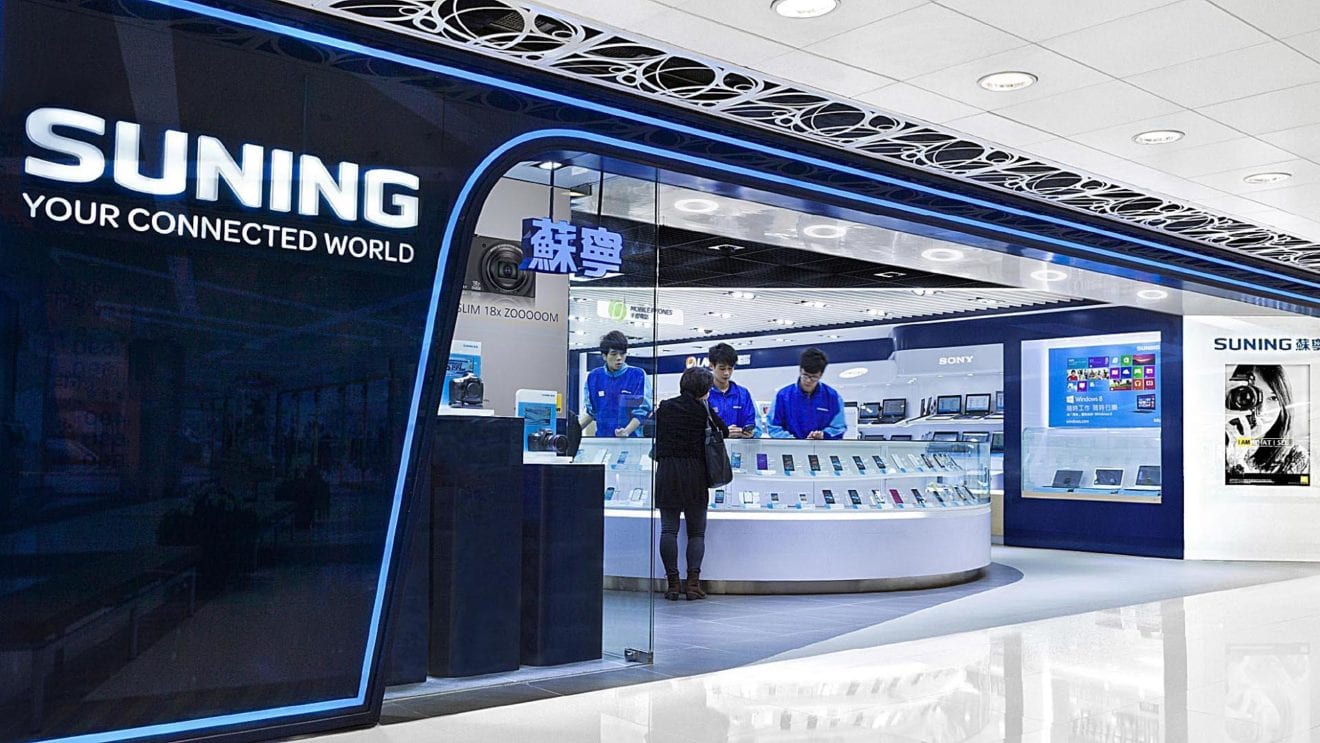
    Alibaba and Suning, one of China’s largest electronics retailers, plan to fuel Chinese and international consumer electronics brands sales over the next three years by investing in an online-to-offline (O2O) retail initiative.

    The pair will work together to build out an O2O, or “omni-channel,” network combining the former’s online retailing assets with the latter’s physical stores and distribution facilities to make purchasing of consumer electronics and home appliances easier for consumers, officials for the companies said at a press conference in Beijing.

    The two companies expect to quadruple sales of major electronics brands – including Haier, Samsung, Xiaomi and Lenovo – over the next three years, using big data from both businesses, said Alibaba Group CEO Daniel Zhang.

    “This can be achieved by integrating the online and offline sales channels under a digitalisation process,” Zhang said.

    Alibaba and Suning began working together on omni-channel retailing last year after Alibaba agreed to invest RMB 28.3 billion (US$4.63 billion) for a near 20 per cent stake in the bricks-and-mortar retailer. Suning’s network of 1600 stores and 5500 after-sales service centers are linked with Alibaba’s online platforms, and Suning’s distribution network, which includes 4.55 million sqm of warehouse space, is used to deliver products purchased online by consumers via Alibaba’s Taobao Marketplace and Tmall.com shopping sites.

    Working with Alibaba’s logistics affiliate Cainiao, Suning and Alibaba currently offer 12-hour delivery of appliances and consumer electronics in Beijing, Shanghai, Guangzhou, Hangzhou, Shenzhen and Nanjing.

    Alibaba and Suning said they will also support electronics brands by allowing them to leverage consumer data on Alibaba’s 423 million annual active buyers and Suning’s 250 million members. Big data technology can enable more targeted sales and marketing campaigns and even provide insights that allow electronics manufacturers to make products that better meet consumer needs, the companies said. Using consumer data, German electronics company Siemens launched a refrigerator customised for Tmall users in March and Chinese appliance maker Midea in May began selling a rice cooker that was designed partly based on Tmall data.

    “We build a bridge between brands and consumers by leveraging data,” Zhang said.

    International and domestic brands joining the Alibaba-Suning support program, called the Super Brand Alliance, include Midea, Haier, Samsung, Hisense, Huawei, Xiaomi, Lenovo, Siemens, Sony, Skyworth and Canon.

  • Siemens studies participation in Indonesia`s electricity program

    Siemens studies participation in Indonesia`s electricity program

    German company Siemens Energy Sector is studying the possibility of taking part in the governments program in the electricity sector.

    The government has a program to build power plants with a total capacity of 35,000 megawatts until 2019.

    Member of the board of management of Siemens Lisa Davis met Vice President M. Jusuf Kalla on Tuesday discussing Siemens interest in taking part in carrying out the program.

    Lisa said Siemens has long been venturing in Indonesia taking part in the government development program especially in development of power plants.

    She also expressed interest in cooperating with the state power utility company PLN in building power plants.

    “We discussed a lot of things in the energy sector such as in power generating plant, power transmission facility and distribution of power,” she said.

    She said involvement of Siemens in the 35,000 MW electric program would open many jobs in the country.

    Siemens has produced electrical components and Indonesia is a potential market for the products.

    “We see Indonesia a potential market for our manufactured products. That is the reason for our interest in cooperation with the Indonesian government,” she added.

    German Ambassador Georg Witschel, who accompanied Lisa at the meeting with the vice president, said Germany will also be ready to offer help for Indonesia in the implementation of its programs including in its electricity program.