Tag: Sinarmas Land

  • Indonesian Conglomerate Passes Away at 98

    Indonesian Conglomerate Passes Away at 98

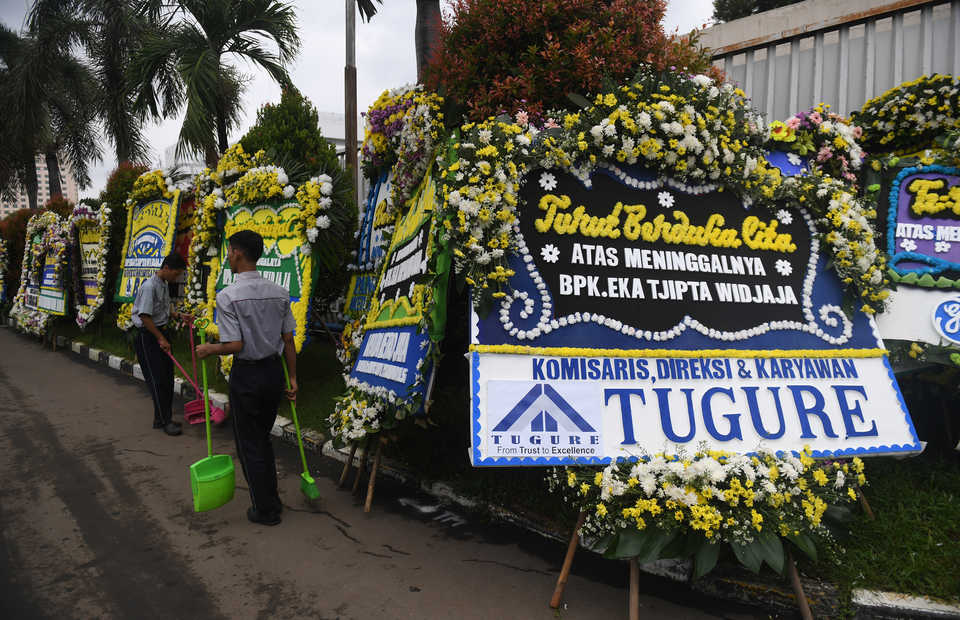
    Eka Tjipta Widjaja, founder of the Sinar Mas Group, one of Indonesia’s largest conglomerates, passed away on Saturday, one month short of his 98th birthday. Eka, born Oei Ek Tjhong in Quanzhou in China’s Fujian Province on Feb. 27, 1921, was known as a tough and proven entrepreneur, which saw him become one of Indonesia’s richest tycoons, despite his humble origins.

    “He will be buried in his family’s cemetery in Marga Mulya village, Karawang district, West Java,” Sinar Mas managing director Gandi Sulistiyanto Soeherman said in a statement on Sunday.

    Eka passed away at his home in Menteng, Central Jakarta, at 7.43 p.m. His body was taken to the Gatot Soebroto Army Hospital in Senen, Central Jakarta, for a funeral service.

    Gandi said colleagues, relatives and friends were expected to express their condolences on Sunday, starting from 7 p.m., after the funeral service.

    The statement did not specify the cause of death, but Gandi mentioned in another statement to local media that Eka’s health had been deteriorating due to his advanced age.

    Eka’s family controls a widely diversified business through the Sinar Mas Group, which he founded in 1962. The group’s interests span palm oil, pulp and paper, real estate, financial services, agribusiness, telecommunications and mining, represented by various entities listed on the Indonesian and Singaporean stock exchanges.

    GlobeAsia’s 2018 Rich List estimated Eka’s net worth at $13.9 billion.

    Moved to Indonesia

    Eka and his mother migrated to Indonesia in 1931, during the Dutch colonial era, to join his father who had already settled in Makassar, South Sulawesi. There he helped his father run a small shop.

    Eka, who according to his biography only had an elementary school education, became a door-to-door salesman, peddling various goods, including candies, biscuits and various products from his father’s shop.

    He experienced both success and failure in various businesses, which included sales of coconut oil, biscuits and sesame oil, during the Japanese occupation, the early period of Indonesia’s independence and the rule of the country’s first two presidents, Sukarno and Suharto.

    King of Copra

    His business empire started in 1955 when he became a copra trader in North Sulawesi, which earned him the title, “king of copra.”

    Through the Sinar Mas Group, which he founded in 1968, Eka managed to expand his business into various areas, including banking, vegetable oil and real estate. He became well known after the establishment in 1969 of Bitung Manado Oil, which catered to up to 50 percent of demand in the Indonesian cooking oil market at the time.

    In 1972, Eka acquired caustic soda producer Tjiwi Kimia, which he transformed into the Sinar Mas Group’s first pulp and paper manufacturer. In the same year, he started Duta Pertiwi, a property developer and real estate business, and 10 years later, Sinar Mas Multiartha, an integrated financial services company.

    The group started operating its own industrial forest in 1986 through Sinar Mas Forestry, while it also has interests in communications and technology, including mobile phone operator Smartfren.

    Eka overcame many downturns during his nine decades in business, with the largest being the $14 billion default by his crown jewel, Asia Pulp and Paper, due to the 1998 Asian financial crisis. The crisis also forced him to relinquish control of many of his businesses to the government, including his flagship lender, Bank Internasional Indonesia, now known as Maybank Indonesia.

    However, Eka bounced back and his Singapore-listed Golden-Agri Resources has since become the world’s second-largest palm oil producer.

    “Despite only having completed elementary school, there was no hope or ambition too high for him,” Gandi said in the statement. “The philosophy of being honest, credible and responsible, toward family, work and social affairs, became his life’s compass.”

    The tycoon spent millions in scholarships to Indonesian students over the past decade through the Eka Tjipta Foundation and also distributed necessities to disaster-affected areas across the archipelago.

    The patriarch is survived by six children and dozens of grandchildren, who now run the family businesses.
  • Sinarmas Land eyes Reit to unlock value of Indonesian investments

    Sinarmas Land eyes Reit to unlock value of Indonesian investments

    Sinarmas Land is looking to unlock the value of its investment properties in Indonesia by spinning them into a real estate investment trust (Reit) but has not decided on whether to list in Singapore or Jakarta, with tax benefits on offer likely to be a key determinant.

    “The unlocking of recurring income assets into a Reit is something which we will definitely look into in the next 12 to 18 months,” executive director Robin Ng told The Business Times.

    “Whether it is going to happen in Indonesia and Singapore, we do have the vision to make it happen. However, we are unable to commit to a certain timeframe as this will be largely driven by market conditions.”

    About S$70 million of Sinarmas Land’s annual revenue is derived from recurring income-generating properties in Indonesia. Some of these office and retail properties will be injected into the Reit while some others could be granted under an option for the Reit to acquire in the future, according to Mr Ng.

    “In the past, we’ve looked at a potential listing in Singapore. But now, Jakarta has a possibility of growing its Reit listing business, so we will definitely compare the pros and cons of the two markets,” he added. “It all depends on how efficient the Indonesian government rolls out its double-taxation relaxation rules.”

    All of Sinarmas Land’s properties and assets, including investment properties, are held at historical cost on its balance sheet. “Any restructuring of our portfolio to bring it into a Reit will definitely enhance share-holders’ value through the mark-to-market valuation of these assets that we own,” Mr Ng said.

    Like its peers in Indonesia, Sinarmas Land has been holding back from a Reit listing of its Indonesian assets in Jakarta given the hefty capital gains tax that it would have otherwise incurred for revaluing its assets. Many Indonesian firms have not revised the value of their assets for years to avoid paying a 10 per cent tax on the incremental value. Dividends paid to Reits’ investors by special purpose companies holding the underlying assets were also taxable.

    But this is changing with recent policy changes announced by the Indonesian government to spur the growth of a Reit market there. Indonesia had in October announced incentives aimed at encouraging firms to revalue their fixed assets and set up Reits by scrapping double taxation that may apply to such businesses.

    Mr Ng said that the group is still awaiting greater clarity on the implementation guidelines from the Indonesian government. If the new structure works out well, the group will soon be talking to tax advisers and bankers on how to restructure its assets.

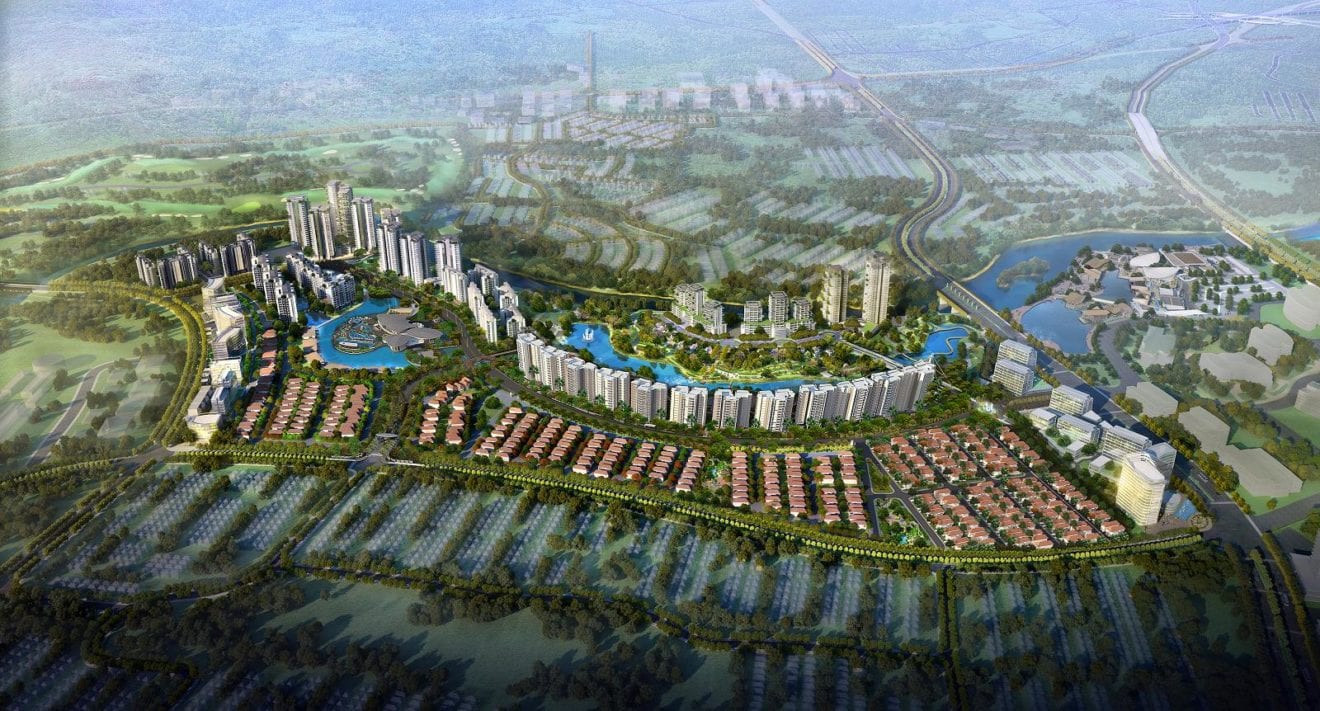
    Its Indonesian portfolio of recurring-income assets comprises six offices (Sinar Mas Land Plaza in Jakarta, Surabaya and Medan, Green Office Park in integrated development BSD City, Wisma BCA and Wisma Eka Jiwa), 14 ITC brand retail malls and The Breeze mall in BSD City, Le Grandeur hotels in Jakarta Balikpapan, golf resorts and resort parks.

    Even though commercial Reits in Singapore are mainly trading at a discount to revalued net asset value, Mr Ng said that the group has not ruled out listing the Reit in Singapore yet. But news of the new Indonesian tax incentives have already prompted some property developers to express interest in issuing Reits in Indonesia. Lippo Group CEO James Riady told the press last month that Lippo Group plans to transfer its two Reits – Lippo Malls Indonesia Retail Trust and First Reit – worth a combined 35 trillion rupiah (S$3.6 billion) from Singapore to Indonesia.

    Sinarmas Land, part of Indonesia’s Widjaja family-founded conglomerate Sinar Mas, still derives its revenue predominantly from Indonesia.

    In August, it turned away from becoming a strategic investor in the stalled listing of China’s Kailong Reit in Singapore, an investment that would have offered the group immediate exposure to mainly business space assets in Shanghai and provide further income diversification. Kailong Reit’s sponsor KaiLong Holdings, part of a Shanghai-based private equity firm, was reportedly not making much headway in finding interest from other investors in the Reit.

    “We have dropped out of that investment opportunity. As of now, there has not been a re-opening of discussions with Kailong Reit,” Mr Ng said. Other than some 10 per cent of units left to sell in its Shenyang residential project, the group has no landbank left in China but hopes to enhance its presence there by focusing on residential sites in first-tier cities.

    “We do not rule out M&A opportunities in China by acquiring a direct stake in a company or Reit because that gives us immediate ownership of a portfolio of properties,” he added.