Tag: Singapore Post

  • SingPost Partners with Tech Startup Shippit to Fuel Small Business Growth in Asia

    SingPost Partners with Tech Startup Shippit to Fuel Small Business Growth in Asia

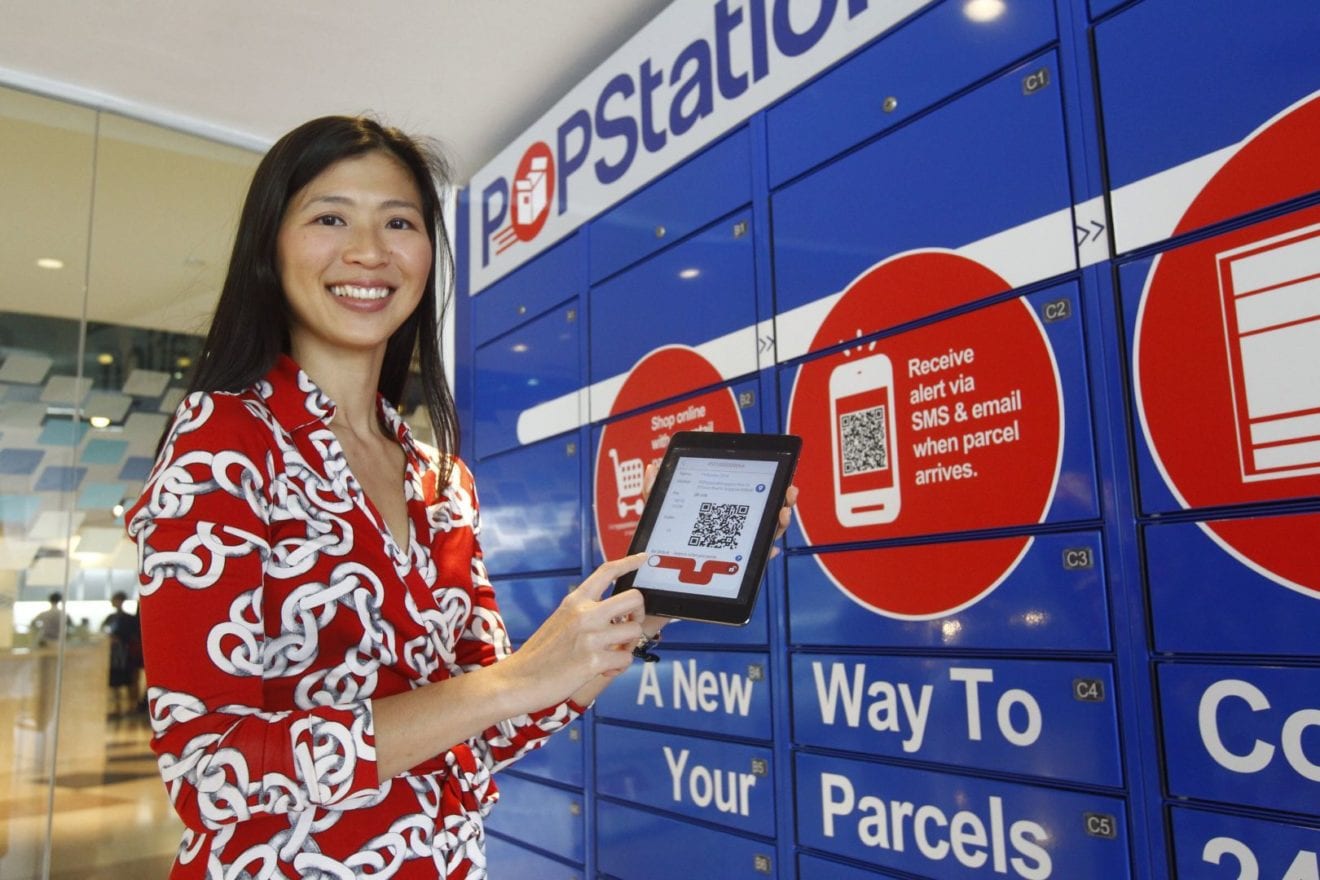
    Today, fast-growing logistics technology company Shippit, announced a new partnership with Singapore Post (SingPost), Singapore’s leading homegrown e-Commerce courier. The deal allows Shippit to empower small and medium-sized enterprises (SMEs) to scale by providing them with instant access to more delivery options — including packages to be delivered directly to Pick Own Parcel Station (POPStations) and letterboxes — a service typically reserved for larger companies. As part of the deal, Shippit will also offer SingPost’s Speedpost Express Service to SMEs, alongside discounted, pre-negotiated rates for next day and economy delivery services.

    SMEs on the Shippit platform will now be able to also offer end-customers parcel collection at any time by tapping into the islandwide POPStation network that SingPost currently operates. This brings added convenience to end customers, since parcels can be deposited directly at their closest available POPStation for pickup, without the need to wait for delivery at home.

    These SingPost services are integrated directly into Shippit’s existing online platform, which enables SMEs to access data-driven delivery insights that can be used to optimize shipping costs and share better customer experiences. SMEs also get access to pre-negotiated, delivery SingPost rates on the platform, enabling them to tap into SingPost’s large delivery network and fleet, at a lower cost.

    Lavneesh Arora, Director of Market Development at Shippit, said: “Shippit aims to disrupt the way legacy logistics firms operate. We are always looking for great partnerships to expand our capabilities and give clients a competitive edge. Through the latest partnership with Singapore’s largest and most prominent logistics company, SMEs can use Shippit to get direct access to SingPost’s premium, enterprise-grade delivery services at a fraction of the cost.”

    Shippit’s intelligent tracking system benefits both senders and receivers through proactive delay avoidance technology and accurate delivery estimates — SMEs will know exactly where the parcel is, ensure delivery issues are resolved before customers find out and can also send branded push emails and SMSes to keep their customers informed. On the receiver’s end, one-link tracking and smart notifications are automated, so customers can easily track their shipment, get real-time updates and access delivery support directly from the track page.

    Sara Kalle, Senior Vice President of Group Sales at SingPost, said: “We are tremendously excited to offer our last-mile services to Shippit. Customers can look forward to a hassle-free shipping experience from the moment they confirm their order on Shippit’s award-winning platform, to collecting their shipments from us at their doors or at a nearby POPStation.”

    Shippit officially launched in Singapore on 14 July, to serve as the startup’s regional headquarters. It plans to expand into Malaysia, Philippines, and Indonesia in the near future. Shippit’s existing client base currently includes Sephora, UNIQLO, CottonOn, and Harvey Norman — to name a few.



  • Y Ventures Group establishes new subsidiary to develop a Global Buying Concierge With SingPost

    Y Ventures Group establishes new subsidiary to develop a Global Buying Concierge With SingPost

    Singapore’s Y Ventures Group has established a subsidiary to develop the Aora platform, a global buying concierge that will focus on cross-border purchases on behalf of consumers in Asia.

    The group has also signed a memorandum of understanding with e-commerce logistics and communications service provider Singapore Post with the aim of collaborating on developing an e-commerce platform with last-mile delivery services, plus share data on buying trends and consumer preferences in new markets.

    The group’s wholly owned subsidiary Luminore 8 will also focus on developing logistics-related technology and algorithms to enhance efficiency across the vertical logistics chain to accelerate the global expansion of both parties.

    “This collaboration reflects SingPost’s commitment in building a strong ecosystem for e-commerce logistics,” sats Singapore Post VP Lee Hon Chew.

    The Aora buying platform is slated for a limited beta launch late this year.

  • Singapore Post launches eComm Log Hub

    Singapore Post launches eComm Log Hub

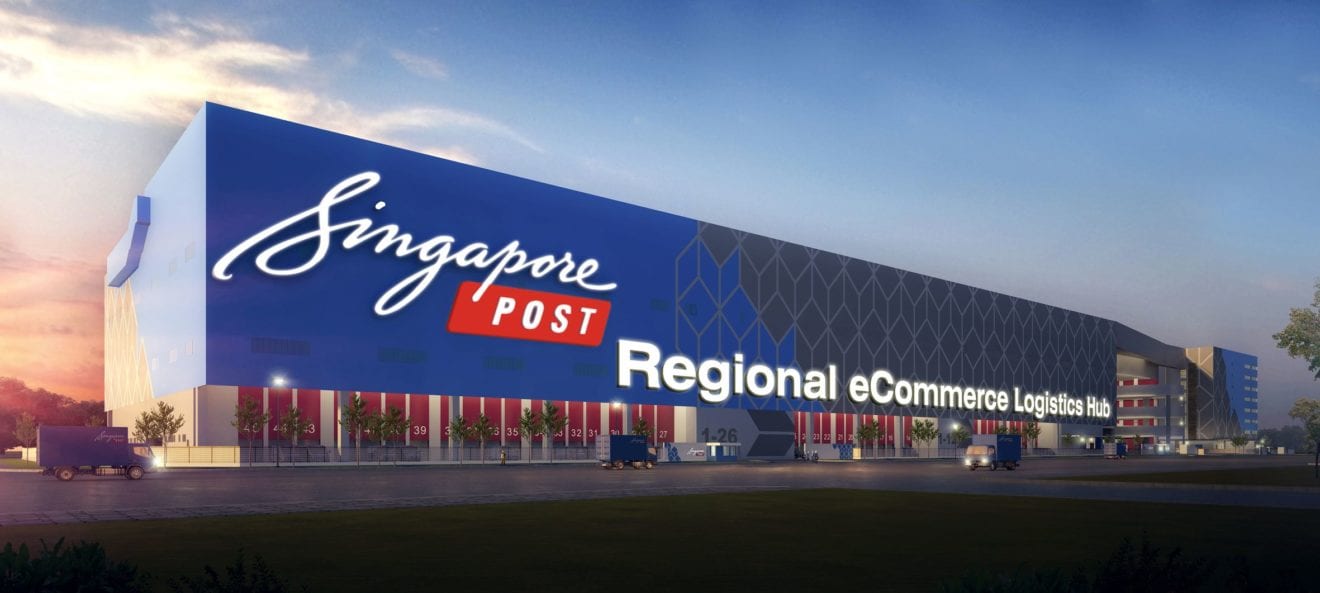
    Singapore Post has launched its Regional eCommerce Logistics Hub (eComm Log Hub) at Tampines Logistics Park.

    Costing S$182 million (US$131 million), the hub is SingPost’s largest eCommerce logistics investment in Singapore to date.
    Officially opened by Singapore’s deputy-Prime Minister and Co-ordinating Minister for Economic and Social Policies Tharman Shanmugaratnam, the three-storey hub comprises two warehousing floors, 150 simultaneous loading bays and an office block. The total built-up area covers 553,000 sqft (51,375 sqm).

    On the ground floor is a fully automated parcel-sorting unit that can handle up to 100,000 packages a day, while the second floor has the automated warehouse. End-to-end sorting, shipping and returns management capabilities enable quicker order fulfilment.
    The eComm Log Hub will process parcels for delivery within Singapore and those to be shipped internationally.
    “The opening of our Regional eCommerce Logistics Hub is another milestone in the expansion of SingPost’s eCommerce logistics network, which now spans 19 markets across Asia Pacific, Europe and the US,” says SingPost chairman Simon Israel. “Singapore’s regional connectivity makes it ideally positioned to be a centre for eCommerce.”

    He says everything in the new building is scalable, “which means we can keep upgrading it to meet the needs of the future”.
    Also at the opening ceremony, SingPost launched its Centre of Innovation (COI). This was set up last year with support from the Economic Development Board to research logistics and postal services and products, in collaboration with research institutions.
    Initiatives from the SingPost COI include:
    * Enhancements to the eCommerce logistics platform to help support smart logistics;
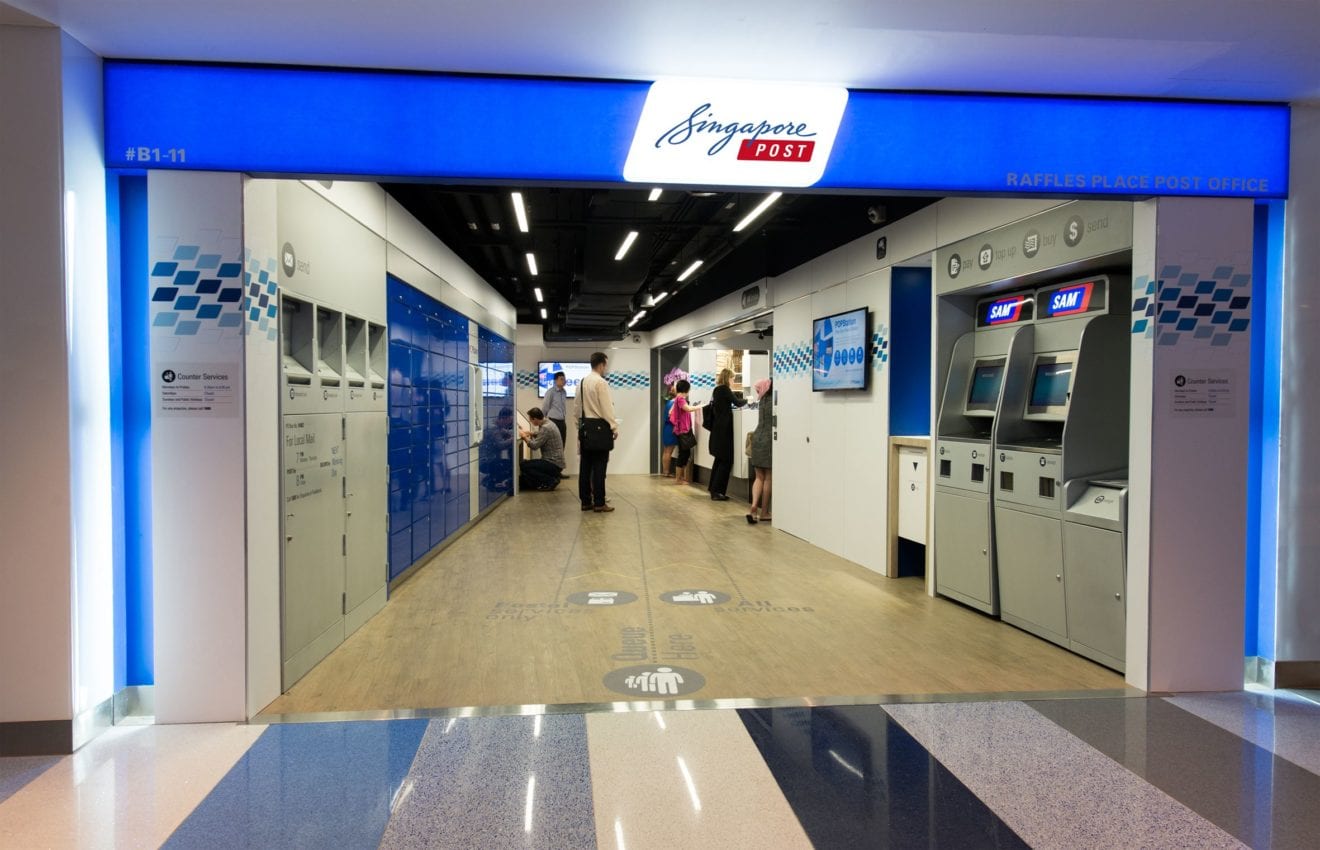
    * A new version of the Self-service Automated Machine (SAM) platform to enhance customer experience and provide a seamless omni-channel experience encompassing the kiosk and the digital postal office;
    * Taking the online and offline world of retail shopping to the SingPost mall, allowing retailers to experiment with customer interaction;

    • Digitally transforming the post office so customers can conduct transactions faster and easier;
    • Innovating last-mile delivery options through building next-generation PopStations and experimenting with drone delivery.
  • Uniqlo Thailand launching online store

    Uniqlo Thailand launching online store

    Japan’s global fashion label Uniqlo Thailand is launching an online store, offering its full Thai range.

    The online store will help strengthen the firm’s “made for all” brand promise, says Uniqlo Thailand marketing and PR director/head of eCommerce Chanvit Khieonavavongsa.

    After nearly five years in Thailand, Uniqlo has 32 branches in nine provinces, covering about a third of the population. The eCommerce channel will meet the demand from customers in areas where the brand does not have an outlet.

    Exclusive to the Thai online store, Uniqlo will offer a cash-on-delivery service to cater for consumers who are still not confident about using credit cards for online transactions.

    Chanvit says the online channel will not affect Uniqlo’s expansion in the kingdom.

    “As long as there are good locations and customers, we will open a store,” he says. “There is no intention of reducing the opening of branches.”

    Two branches opened in the first half of this year, with two more to follow in September, at Blu Port in Hua Hin and at the Mall Korat.

    The online store is the brand’s 12th worldwide, with similar stores launching in Singapore in 2014 and in Malaysia last year.

    Uniqlo has assigned Singapore Post to handle logistics and deliveries for online orders, with guaranteed nationwide delivery of between one and three days. There is no delivery fee, while the packaging charge is waived for orders of Bt1500 (US43) or more. Customers have 30 days to return their goods to the company if they are not satisfied.

    Scheduled to go live on Friday, the online store will offer exclusive items and collections such as Kaws companion t-shirts and the HeatTech line of thermal wear. The mark the launch, there will also be special prices for popular items.

    Chanvit says the eCommerce expansion is part of Uniqlo’s global target to have 30 per cent of its sales derived from the online channel by 2020. The brand has already built awareness online in Thailand through Line, where it has 12 million subscribers, and Facebook, where it has had more than 1 million likes. Further awareness will be built through an integrated marketing communication plan across offline and online channels nationwide.

  • 3 Things Investors Should Know About Singapore Post Limited Now

    3 Things Investors Should Know About Singapore Post Limited Now

    Singapore Post Limited is a postal and logistics services company. Its business is currently organised into three major segments: Mail, Logistics, and Retail & eCommerce.

    Here are three things about the company investors may want to know:

    1. Latest results

    Singapore Post had released its fourth-quarter and full-year results just last week. For the fiscal year ended 31 March 2016 (fiscal 2016), the company’s revenue had jumped by 25% to S$1.15 billion while the profit attributable to shareholders had grown by 58% to S$249 million.

    Singapore Post’s top-line had benefitted from new acquisitions and organic growth in its Logistics and Retail & eCommerce segments. The even faster profit growth meanwhile, had come on the back of one-off divestment gains. If that were stripped away, the company’s underlying net profit in fiscal 2016 would have been 4.1% lower than in the previous year.

    It’s worth noting too that Singapore Post’s cash flow performance had deteriorated from fiscal 2015, with both operating cash flow and free cash flow falling.

    2. Dividend history

    Singapore Post has had a long history of paying an annual dividend, which goes back all the way to fiscal 2003, the year it got listed. In fiscal 2003, Singapore Post paid a dividend of S$0.042 per share and has been paying an annual dividend ever since.

    The company’s dividend in fiscal 2016 is S$0.07 per share, which gives it a yield of 4.6% at its current share price of S$1.535.

    Singapore Post total dividend per share
    Source: Singapore Post

    3. Valuation

    Singapore Post is currently trading at a price-to-earnings ratio of 14. For perspective, the company’s valuation had reached a peak of 31 in the last five years.  In addition, the PE of 14 is also near the lower end of Singapore Post’s valuation range over the last five years.

  • Singapore Post Ramps Up China E-commerce Push

    Singapore Post Ramps Up China E-commerce Push

    Despite signs of a slowdown of imports into China, Singapore Post (SingPost) remains bullish on the prospects for e-commerce flows into Asia’s largest economy. The postal agency has upped its stake in Shenzhen-based e-commerce provider 4PX Information Technology.

    SingPost forked out US$25.6 million to acquire an additional 17.91% position in 4PX, one of China’s top e-commerce cross-border players, whose scope of services ranges from forwarding, express delivery and warehousing to software and consulting services for e-commerce vendors. The postal operator now holds a 36% stake in the Chinese firm.

    4PX runs warehouses in China, Australia, UK, Germany and the US, employing north of 2,600 staff. The company has over 20,000 customers in more than 50 locations in China and globally.

    “The additional investment in 4PX, with its extensive logistics capabilities in warehousing, express delivery and freight forwarding, is a key part of SingPost’s strategy to strengthen our integrated end-to-end e-commerce logistics solutions and to leverage on the rapid growth in China’s e-commerce activities,” said Goh Hui Ling, deputy CEO (international mail) of SingPost.

    With general cargo growth in the doldrums, logistics providers are keen on developing a footprint in e-commerce, which promises rich pickings and robust growth momentum. According to one estimate, global B2C volume is expected to reach US$2.26 trillion a year by 2020, with an annual growth rate of 15 to 20%.

    International carriers are particularly gung-ho on China, citing Chinese consumers’ rising cravings for international brands. Anselm Eggert, head of e-commerce at Lufthansa Cargo, stated that they are showing strong interest in European brands, especially health and beauty products.

    Freighter leasing firm Airborne Global Solutions invested US$16 million last September for a 25% stake in the nascent United Star Express, a new Chinese freighter operator that is expected to take to the skies halfway through this year. Its partners in the venture are Chinese Boeing 737 operator Okay Airways, a developer and an investment company, and Vipshop, the third-largest e-tailer in China, according to AGS president Rich Corrado.

    Postal agencies are pushing aggressively into this arena, their eagerness intensified by a need to make up for the ongoing shrinkage of their traditional letter mail business. With their delivery networks they have a strong advantage over competitors in the critical final-mile segment in their home markets, but they are also increasingly targeting international flows to other markets.

    Japan Post established its own website in China last autumn to offer Japanese merchandise to Chinese consumers. Orders are consolidated and moved by ocean vessel to Shanghai for overland distribution.

    China Post has been in hot pursuit of e-commerce business, which is reflected in the rapid growth of China Postal Airlines. According to one source, China Southern Airlines’ decision last year to bring two parked 747-400 freighters back into service was prompted by the Chinese postal agency.

    To develop its traffic from the postal agencies of Hong Kong and China, Cathay Pacific has implemented barcode scanning of mail at its stations in China and in Hong Kong. This enables the electronic transmission of departure, transit and arrival information. In a second phase, the airline is looking to integrate various IT interfaces – from booking to space management and mail warehouse transit management – to establish real-time data flow, said Mark Sutch, the airline’s general manager of cargo sales and marketing.

    For now many airlines view postal business as the biggest inroad into B2C e-commerce, but this will likely change. Eggert envisages greater involvement from carriers down the road. At this point Lufthansa is studying the market in order to be able to develop more targeted options later on.

    “I think in the future we will go beyond mail. I think the industry needs to think how to work together with partners,” Eggert said. This will require closer alignment, including some degree of IT integration. In light of the fact that the air cargo industry does not have a stellar track record in developing joint solutions, this will be a challenging avenue for operators to pursue, he added.

  • SingPost GD Express sale to boost eCommerce

    SingPost GD Express sale to boost eCommerce

    Singapore Post (SingPost) has sold off part of its stake in GD Express (GDEX) for S$78.4 million (US$55.88 million) and will use the proceeds to drive global growth for its eCommerce logistics.

    This is a net gain of S$64 million – about five times return on the initial investment.

    Yamato Asia, a wholly owned subsidiary of Japanese transportation and forwarding group Yamato Holdings, has bought the 137,418,000 shares.

    Proceeds from the SingPost GD Express sale will be reinvested into its eCommerce services and networks in the US, Europe, China and the rest of Asia Pacific, in line with the group’s strategy to continue strengthening its integrated end-to-end eCommerce logistics, including front-end web management, warehousing and fulfilment, last-mile delivery and international freight-forwarding.
    SingPost deputy group CEO Mervyn Lim says the group is gearing up “on an accelerated path” to becoming a global leader in end-to-end eCommerce logistics.

    “This deal gave us a good return on our investment and also boosted our available resources to drive SingPost’s eCommerce logistics growth as it pivots into the US with the recent investments inTradeGlobal and Jagged Peak.”
    With interlinked systems with GDEX, the group will continue to reap business synergies with the added uplift Yamato brings to GDEX.

    “Collaborations and partnerships are vital to SingPost as we connect the dots in building a global eCommerce logistics ecosystem,” says Lim. “We continue to work with strategic partners in Malaysia and the rest of Southeast Asia while leveraging the Quantium Solutions commercial network, as well as those of our associated companies, to reinforce the ecosystem we are building.”

    SingPost now holds a 11.2 per cent strategic stake in GDEX and retains its board seat.