Tag: Singapore Press Holdings

  • Parcel Santa to Collaborate with Singapore Press Holdings and Buzz Express to Expand E-Commerce delivery coverage

    Parcel Santa to Collaborate with Singapore Press Holdings and Buzz Express to Expand E-Commerce delivery coverage

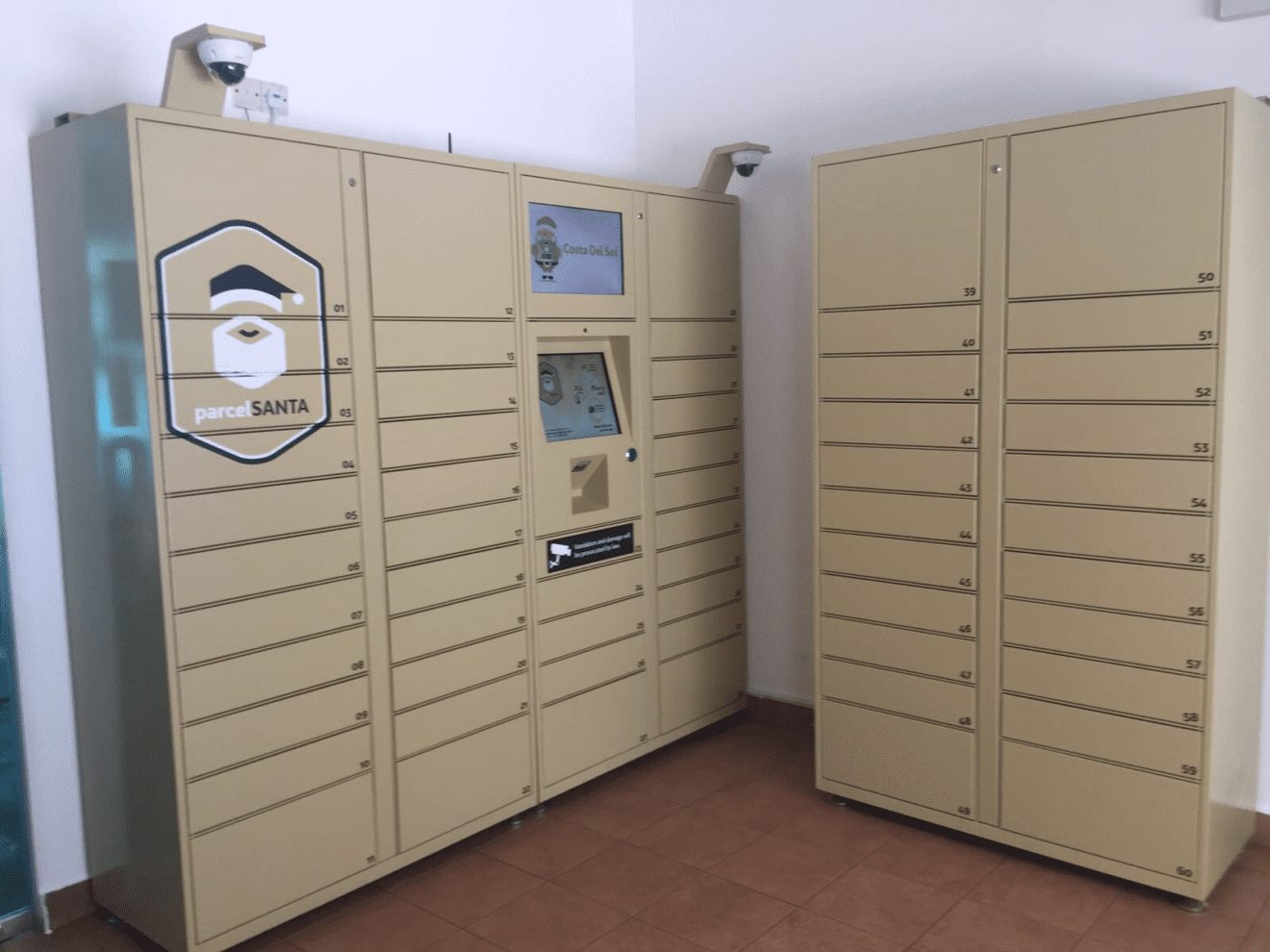
    One-year old sensor technology and parcel locker start up, Parcel Santa, has inked an agreement with Singapore Press Holdings and Buzz Express to utilize the latter’s extensive delivery network to make e-commerce deliveries to Parcel Santa lockers, located in Singapore condominiums.

    Parcel recipients will be informed via SMS when their parcels are delivered to secured lockers, which they have up to twenty-four hours to collect, using a One Time Password (OTP).  Recipients may choose to reschedule delivery to lockers or pay a small fee to extend the collection period.

    The entire delivery process is monitored by Parcel Santa’s back office system, with sensors able to identify when authorized recipients have collected their parcels.  The use of sensors and real-time communication ensures that parcels are received without repeated delivery attempts – which is in line with Parcel Santa and SPH’s corporate objectives to be environmentally friendly corporate citizens.

    As part of this collaboration, non-perishable items delivered by SPH’s network may also leverage Parcel Santa’s back office system and lockers as an end-mile collection point by recipients.

    The service offers the following benefits to the ecosystem:

    1. Environmental Sustainability – minimizes the use of motor vehicles to make repeated delivery attempts
    2. Safety and Security – parcels and couriers are pre-registered and tracked, and only authorized recipients may collect them
    3. Consumer Empowerment – to facilitate e-commerce, shoppers can make purchases and not have to wait for delivery
    4. Property Asset Enhancement – condominiums can offer this service with the latest customer-recognition, IoT (Internet of Things) and 3G/4G wireless transmission technology

    Parcel Santa lockers have been installed in one hundred residential condominium locations across Singapore.  The company is in the process of Series A fund raising to expand its target footprint of 500 condominium installations in Singapore – and initiate its expansion into the Southeast Asian region.  With the latest addition of SPH, Parcel Santa’s delivery partners include DHL Express, FedEx, UPS and WMG Delivery.  Once registered, couriers from partner companies may use Parcel Santa lockers to facilitate deliveries.

    “Since launching one year ago, we have been playing catch up with increasing e-commerce activity in Singapore as the demand for online shopping and other deliveries is on the rise, said Mr. Jim Huang, Co-Founder and Chief Executive Officer of Parcel Santa.  “The addition of SPH and Buzz Express’ networks is a very natural progression in partnering with one of Singapore’s most established delivery networks to provide wider convenience and brings great value to our customers”, he said.

    “SPH has a long history of delivering media and parcels in Singapore, with a reputation of being always on-time and reliable, said Mr. Spencer Tan, Deputy General Manager of SPH.  “With a delivery network of 3,000 delivery staff, SPH and its Buzz Express reaches every corner of Singapore as we deliver media and consumables.  As we strive to become a Greener player in the end mile logistics industry, Parcel Santa offers a unique ability to prevent or minimize failed or missed delivery attempts”, he said.

  • Snapcart docket scanning concept wins funding

    Snapcart docket scanning concept wins funding

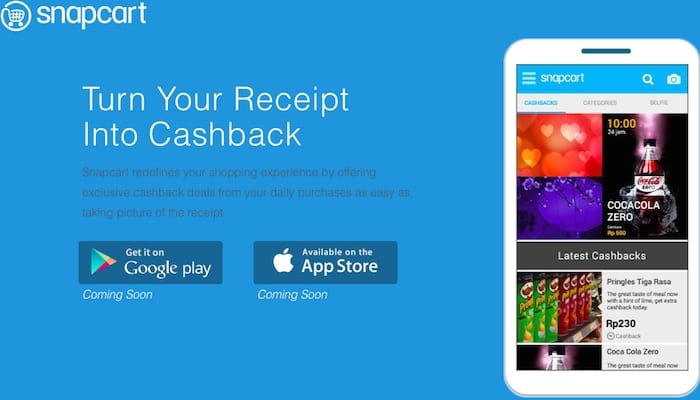
    An Indonesia-based startup that runs a service offering consumers rewards in exchange for scans of their shopping receipts has received US$1.675 million in funding just four months after launching.

    New investors in Snapcart, Wavemaker Partners and Singapore Press Holding’s SPH Media Fund, along with existing backers SMDV (Sinar Mas Digital Ventures) and Ardent Capital, launched the funding round – described as “pre-Series A” – as the company started exploring expansion options in Southeast Asia, reports Techcrunch.

    Snapcart’s business is two-fold: one one side it allows customers to scan their store receipts in exchange for cashback and rewards; on the other side, information from the receipts is compiled and used to provide clients, such as consulting agencies, with reports and information about consumer spending and shopping habits – valuable, because it is not easy to track offline commerce.

    Snapcart CEO and founder Reynazran Royono says the company has scaled faster than initially anticipated, with the funding round being wrapped up a few months ahead of schedule.

    He says the new capital will be used to develop more products, including engagement videos and analytical dashboard tools that will enable client brands to view customer behaviour in real time. There are more than 35 Snapcart clients including L’Oreal, Nestle, Procter & Gamble and Unilever.

    “The amount of data we’re receiving is humongous,” says Royono, who previously worked as a consultant for Procter & Gamble and Boston Consulting.

    So far, Snapcart for Android has clocked 150,000 downloads and has 85,000 monthly active users in Indonesia. An IOS app is about to be released.

    TechCrunch.com says Snapcart is expected to push beyond its initial focus on FMCG into other verticals, and the company is looking at other options that could involve small retails.

    Snapcart is also investigating regional expansion, adding former Procter & Gamble market research director Mayeth Condicion as chief data officer and co-founder. Condicion is based in Manila, which will be Snapcart’s first international expansion and soon home to its data analytics team. Jakarta will remain its technology hub.

    Meanwhile, the company is thinking of a second funding round about the middle of this year so it can push ahead with its expansion plans. Snapcart aims to achieve one million user downloads in less than 12 months.

  • SE Asian consumers switch to ecommerce

    SE Asian consumers switch to ecommerce

    International information technology players have been piling in.

    Japanese telecoms group Softbank has made a string of acquisitions across Asia. It invested $250m in the region’s ride-hailing app GrabTaxi at the end of last year. In Indonesia, it invested $100m in online marketplace Tokopedia and mobile device retailer Trikomsel.

    Singaporean blue-chip companies such as Singapore Press Holdings and MediaCorp, the latter controlled by Temasek Holdings, Singapore’s government-controlled investment company, have also been involved in a raft of deals.

    This month, Temasek said it would partner with United Overseas Bank to set up a venture and debt financing fund of nearly $500m to help finance the growth of ecommerce and other technology and healthcare initiatives around the region.

    Online sales account for only 1 to 2 per cent of total retail sales in many southeast Asian countries, providing ample scope for the kind of breakneck growth that online trade has enjoyed in China — where ecommerce now accounts for 11 per cent of total retail sales, up from 2.5 per cent just five years ago, according to estimates by FT Confidential Research, a Financial Times research service.

    But ecommerce operations in Southeast Asia are often hindered by factors such as high logistics costs and the limitations of online payment systems. In Indonesia, more than 95 per cent of ecommerce transactions are settled in cash on delivery, and more than 90 per cent of visits to ecommerce sites do not result in sales.

    Nevertheless, online retailers Lazada and Zalora, both owned by German tech investor Rocket Internet, have built up robust online sales across the region. They have tackled logistical constraints by investing heavily in their own in-house logistics and supply chain providers.

    Chinese ecommerce giant Alibaba, meanwhile, is expanding its international ecommerce site AliExpress across the Asean region. It recently acquired a 14.5 per cent stake in Singapore Post, which last year announced plans to spend $145m on a regional ecommerce logistics hub. Its rivals in the logistics sector include Singapore-based aCommerce, which is backed by Japan’s NTT Docomo.

    A number of pan-Asean online payment systems are in the process of being established, meanwhile, such as 2C2p and Coda Payments.

    As ecommerce expands, consolidation is set to follow. Many domestic start-ups have focused excessively on building initial sales volume at the expense of profitability. At some point soon, a shake-out appears inevitable.

  • Qoo10 parent raises $82m

    Qoo10 parent raises $82m

    Singapore-based Giosis, the parent company of Pan-Asian eCommerce platform Qoo10, has raised US$82.1 million in new funding led by Singapore Press Holdings.

    Other investors in the mix included eBay, Saban Capital Group, UVM 2 Venture Investments LP, Brookside Capital and Oak Investment Partners.

    Qoo10 operates six online eCommerce marketplaces across Asia – in Singapore, Japan, Indonesia, Malaysia, Hong Kong and China. Qoo10 has 17.6 million registered users across the region and combined, turned over US$408 million in 2014. Of the six markets in which the company operates, Qoo10 Singapore is the best performer with 1.8 million registered users as of June 2015 and US$182 million in gross merchandise volume in 2014.

    “Through this Series A investment, Giosis will deploy the new funds to accelerate Qoo10’s technology growth and service development, while investing in additional infrastructure and talent acquisition,” the company said in a statement.

    “The new funds will also help Qoo10 strengthen its position as a leading Pan-Asian platform in its key markets Singapore, Japan and Indonesia, and accelerate its expansion in its other rapidly growing Asian markets Malaysia, Hong Kong and China.”

    As the lead investor in this Series A round, SPH will also partner with Qoo10 to explore strategic collaborations on the e-commerce platform across various content, marketplaces, retail, advertising and classifieds opportunities.

    Alan Chan, SPH CEO, said Qoo10 is the number one ranked eCommerce website in Singapore and its parent company Giosis has established itself as a market leader in the region’s e-commerce space.

    “The investment in Qoo10 will enhance our portfolio of digital assets and open up opportunities for future marketing collaborations. With the region’s eCommerce market poised to grow, this investment puts us in a good position to tap on the industry’s growth and be an active player in this space.”

    A joint venture between Gmarket Inc founder Ku Young Bae and eBay, Qoo10 was founded in 2010 with US$20 million seed capital, after Gmarket was acquired by eBay in 2009 for US$1.2 billion.

    Ku Young Bae, CEO of Qoo10, said: “From the beginning Qoo10 has strived to be a hyperlocal eCommerce platform which enables local merchants, big and small, to sell their products to a local and regional customer base across Asia.  Today, 90 per cent of our staff and merchants are local, in order to provide consumers with a seamless shopping experience in a specialised marketplace. With this new funding, we aim to further strengthen our position as the leading Pan-Asian marketplace.”