Tag: Singapore retail

  • Digital Private Bank Hits Singapore

    Digital Private Bank Hits Singapore

    Another digital wealth manager is poised to enter the Singapore market. How does the newest entrant seek to grab market share off rivals?

    Kristal will launch in Singapore on Thursday, as reported. The city-state would be the wealth manager’s third market, after Hong Kong and India.

    The platform allows investors to pick and choose investment strategies – so-called Kristals – among independent advisers and portfolio managers.

    With the glut of digital efforts hitting the market, how is Kristal carving itself a niche?

    «Sandbox» Shield

    It is meant to service mass affluent clients who are not getting the service that they want today from their wealth managers and private bankers,» co-founder Asheesh Chanda said.

    Kristal will operate under a shielded «sandbox» permit offered as a regulatory light-touch testing ground for start-ups which allows them to take a limited amount of client money.

    DBS and Cyberport Ties

    Kristal already manages an undisclosed amount of funds from retail and affluent clients, and says it will keep working on a machine-learning algorithm to feed its own strategies for its portfolios.

    «We expect to exit the sandbox in nine months and then we have to decide what kind of licence we take,» Chanda said.

    Kristal completed a «pre-accelerator» program backed by DBS last year, and is part of Cyberport’s incubation in Hong Kong this year.

    Interactive Brokers, Saxo Bank

    Clients can invest as little as S$1,000 in exchange-traded funds for equities, bonds, foreign exchange, options and futures.

    Kristal’s fees hinge on investment strategies: bond portfolios are cheap, while an alternative investment-heavy one will cost more, Chanda said.

    Kristal uses Interactive and Saxo Bank in Singapore and Hong Kong for execution and as asset custodians. 
  • Singapore Sovereign Fund Invests $136 Million in Korean Retail Complex

    Singapore Sovereign Fund Invests $136 Million in Korean Retail Complex

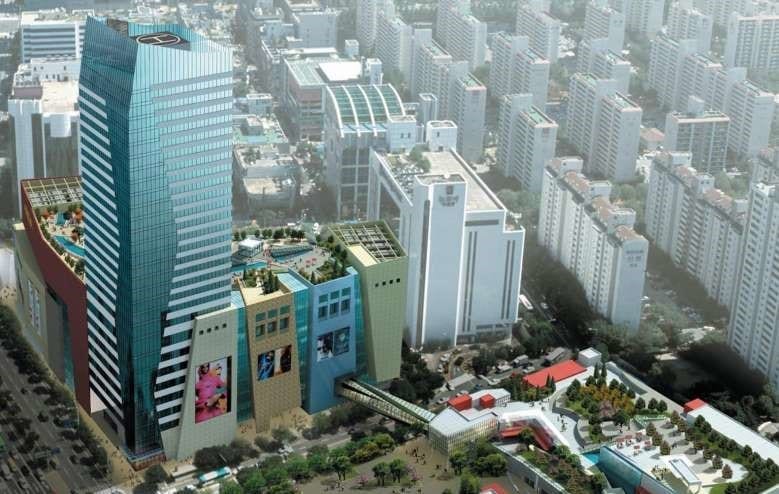
    Singapore’s sovereign wealth fund, GIC Real Estate Pte Ltd, has acquired GG-Square, a Seoul-based retail complex, for $136 million.

    The complex was completed in 2014 and is spread over an area of 238,248.43 square meters. It has 28 stories and is located in the heart of Anyang, a bustling metropolitan area in the southern part of Seoul. The complex is strategically located as it offers direct access to the city’s subway. Besides retail outlets, G-Square also has offices, spread over an area of 34,681 square meters.

    The complex is operated by one of the largest retail operators in South Korea, Lotte Shopping Co. However, after acquisition, it will be managed by IGIS Asset Management, a leading real estate management company in South Korea.

    GIC has been showing interest in the real estate, of late. Earlier in 2016, the sovereign wealth fund entered into an agreement with Shingsegae Inc., a South Korea-based department store franchise, to develop a retail mall based in Songdo.

  • New roadmap issued for Singapore retail

    New roadmap issued for Singapore retail

    Guidelines aimed at spurring new life into the Singapore retail industry have been launched by the government.

    Its Retail Industry Transformation Map (ITM) follows the release of a food services roadmap as the city-state’s economy slows.

    According to Spring Singapore, an agency under the Ministry of Trade and Industry responsible for helping Singapore enterprises grow, the launch of the Retail ITM takes into consideration such challenges as fewer business travellers, lower spending per individual, and consumer shifts from brick-and-mortar to eCommerce. Consumers have also turned to foreign eCommerce sites to find a wider variety of goods at lower prices.

    “Retailers can look to expand their markets locally and internationally through e-channels,” says Spring Singapore, which encourages retailers to adopt an omni-channel strategy to better reach out and support targeted end-to-end consumer needs across both online and offline channels.

    Singapore has about 21,000 retail establishments which contribute nearly 1.4 per cent to GDP and employ about 3 per cent of the total workforce.

    Aside from optimising productivity, the ITM also aims to focus on innovation and the adoption of new technologies to drive competitiveness. It will also work on the industry’s flexibility to adapt to evolving trends in jobs and skills.

    Strong industry partnerships and internationalisation are considered key elements in pushing the industry’s transformation.

    Doubts over sale

    Meanwhile, the future of the Great Singapore Sale (GSS) could be in jeopardy after 23 years of helping bolster the city’s reputation as an international shopping destination.

    After three years of falling sales during the GSS, the organiser, the Singapore Retailers Association(SRA), and the Singapore Tourism Board (STB) are about to look at the annual event’s direction.

    “We need to discuss if there is a point in continuing it, or whether there is a need to reformat it,” says SRA president R. Dhinakaran after official sale figures confirm that efforts this year to arrest the slide have failed (this year the GSS ran for 10 weeks from June to the middle of last month).

    Singapore Department of Statistics figures released last week show a 3 per cent fall in July retail sales, excluding motor vehicles. This follows a similar dip in June’s figure.

    Orchard Road Business Association (ORBA) executive director Steven Goh believes it is time to reformat the event. He says it should be held when Singaporeans are not away during the school holidays.

    He urges retailers to come to a consensus on saving their best deals for the GSS. “That way, it will be really one-off and impactful.”

    Singapore is also competing with similar events in the region, such as the 1Malaysia Mega Sale Carnival, usually from June to August. Started in 2000, the nationwide promotion includes contests, prizes and street food.

    Launched the same year, the Korea Grand Sale runs from August to October, and January to February each year. It features celebrity performances and opening-day events at the country’s airports.