Tag: singles

  • Diminished Excitement Dampens China’s Singles Day Sales: A Deep Dive into the World’s Largest Shopping Festival

    Diminished Excitement Dampens China’s Singles Day Sales: A Deep Dive into the World’s Largest Shopping Festival

    China’s annual Singles’ Day shopping bonanza is drawing to a close following more than a month of promotional strategies across the nation’s main e-commerce platforms. However, this year’s event failed to generate the same level of consumer enthusiasm as previous editions due to an ongoing property crisis and increasing concerns about income security, resulting in a considerable drop in spending.

    Overcoming the Shopping Slump

    In an attempt to counteract the reduced spending, retailers have resorted to more aggressive discounting strategies throughout the year. Sales events have been extended, with billions of yuan being provided in the form of consumer subsidies and coupons. This year’s Singles’ Day, which occurs on November 11 and is also referred to as “Double 11,” started in early October, making it the longest-running event in its history.

    Josh Gardner, CEO of Kung Fu Data, a firm that handles online stores in China for global fashion and lifestyle brands, commented on the event’s performance. According to him, the results have been mixed, and the term ‘muted’ might best describe the overall public sentiment and sales outcome of this Singles’ Day event.

    Sales Performance: A Mixed Bag

    “Sales performance varied widely among brands. While some brands significantly exceeded their sales expectations, others experienced flat sales or a minor increase or decrease compared to the previous year,” Gardner said. Last year, the event generated a staggering 1.44 trillion yuan (US$202 billion) in sales, marking it as the longest-running event to date.

    In the past, major platforms, including Alibaba and JD, held extravagant celebrations to announce their record-breaking sales. Unfortunately, these companies haven’t disclosed their total Single’s Day sales for the past few years. However, JD announced that its turnover reached a new high this year, with a 40% increase in users placing orders and a nearly 60% surge in the number of orders.

    Attracting High-Spending Consumers

    In a strategic move to attract high-spending consumers, Alibaba pledged to provide 50 billion yuan in subsidies to its 88VIP members, who currently number around 53 million. Alibaba reported a 39% increase in daily active buyers from the previous year during the festival.

    Jacob Cooke, co-founder and CEO of WPIC Marketing + Technologies, mentioned that targeting 88VIP consumers is crucial. He said, “These consumers are high-spend and high-frequency buyers, which helps maintain consumption at the upper-end of the market.”

    Expanding Internationally

    Chinese e-commerce companies have been making significant efforts to expand globally. For instance, Alibaba’s Taobao extended Singles’ Day-related sales to over 20 countries this year. According to a report released in October by Bain, Chinese e-commerce companies should focus on global expansion given the lackluster consumer outlook at home.

    Questions & Answers

    Why has consumer excitement decreased during Singles’ Day?
    A slump in consumer spending has been observed due to an ongoing property crisis and concerns about income security in China.

    What strategies have retailers adopted to counteract the reduced spending?
    Retailers have implemented aggressive discounting strategies throughout the year, extended the duration of sales events, and offered billions in consumer subsidies and coupons.

    What is Alibaba’s strategy to attract high-spending consumers?
    Alibaba has pledged to provide 50 billion yuan in subsidies specifically for its 88VIP members in an effort to attract high-spending consumers.

  • China’s Singles’ Day Sales Fall Flat Amid Consumer Apathy and Economic Concerns

    China’s Singles’ Day Sales Fall Flat Amid Consumer Apathy and Economic Concerns

    With the conclusion of China’s Singles’ Day sales festival, the largest shopping event worldwide, it’s clear that the country’s most significant e-commerce platforms were unable to stimulate widespread consumer enthusiasm. This comes in light of the lingering property crisis in China and rising concerns over income security, making it increasingly challenging to convince consumers to part with their money.

    Retailers’ Response

    Retailers, in response to the economic climate, have amplified their efforts in providing year-round discounts, introducing billions in consumer subsidies and coupons, and extending the duration of sales events. For this year’s Singles’ Day, many platforms commenced their sales in early October, making it the longest festival yet.

    However, the response has been mixed, according to Josh Gardner, CEO of Kung Fu Data, a company that manages online stores in China for various global fashion and lifestyle brands. He described the sales sentiment during the Singles’ Day period as “muted,” noting that some brands had performed exceptionally well while others observed flat or minor changes compared to the previous year.

    Last year’s sales event, also known as “Double 11” in China, reached an impressive total of 1.44 trillion yuan (US$202 billion). However, the figures for this year remain undisclosed, as companies such as Alibaba and JD have stopped revealing their total Singles’ Day sales in recent years.

    Platform Sales Performance

    JD reported on Wednesday that its turnover reached a “new high,” with a 40% increase in the number of users placing orders and a nearly 60% increase in the number of orders. Several brands on JD.com, including Bellamy Organic baby products from Australia, the American pet brand Instinct, and French skincare brand Avène, saw a surge in sales by over 150% compared to the previous year.

    Meanwhile, Alibaba’s Tmall and Taobao platforms have continued their Double 11 deals until November 14, yet they have not released any information regarding their sales performance for the entire period.

    Gardner reported that the Singles’ Day sales surge is not as robust as it was in the past, but October and November still account for approximately 30% to 40% of annual revenue for the brands he manages.

    Strategies for Attracting High-Spenders and International Growth

    In an attempt to lure high-spenders, Alibaba pledged 50 billion yuan in subsidies specifically for its 53 million 88VIP members in October. The company reported a 39% increase in daily active buyers from the previous year during the festival among those members.

    Moreover, Alibaba’s Taobao introduced Singles’ Day-related sales in over 20 countries this year, signalling a widespread push from Chinese e-commerce firms for international growth. According to a report released by Bain in late October, it is crucial for Chinese e-commerce companies to pursue global growth, considering the lukewarm consumer outlook domestically.

    Questions & Answers

    What is Singles’ Day in China?
    Singles’ Day is a Chinese sales festival held annually on November 11. It’s considered the world’s largest shopping event, with massive discounts offered by e-commerce platforms to stimulate consumer spending.

    How did Singles’ Day perform this year?
    This year’s Singles’ Day results were mixed. Some brands reported exceeding sales expectations, while others experienced flat or minor changes compared to the previous year.

    What are some strategies adopted by retailers during Singles’ Day?
    Retailers have introduced year-round discounts, billions in consumer subsidies and coupons, and extended sales events. Some are also attempting to attract high-spenders with exclusive offers and expanding their sales to international markets.

  • Chinese Giants Alibaba, Jd Extend Singles’ Day Sales Amid Economic Challenges

    Chinese Giants Alibaba, Jd Extend Singles’ Day Sales Amid Economic Challenges

    Chinese retailers are capitalizing on the annual ‘Singles’ Day’ phenomenon by extending the sales event for up to five weeks. The sustained retail strategy is being deployed by industry giants Alibaba and JD as they strive to stimulate consumer interest amidst economic challenges.

    The Chinese economy, which is the second largest in the world, has suffered from weak consumer spending this year. Various factors, including negotiations over trade policies with the US, fierce domestic rivalry, inclement weather, and an ongoing property crisis have worked against the economic growth.

    Alibaba recently unveiled an exceptional investment into the biggest annual sales event during a launch event in Shanghai. The e-commerce behemoth has committed 50 billion yuan (US$7 billion) in subsidies for its highest spending 88VIP members. The extensive sales period began recently and will continue until November 11, which is the traditional Singles’ Day, named after the numerical representation of the date.

    Leveraging AI and Instant Retail

    Alibaba reported that 35 brands, which include globally renowned names like Nike and L’Oreal, as well as local companies Anta and Proya, sold over 100 million yuan worth of products in the first hour of the sale.

    To further stimulate sales, Alibaba has integrated artificial intelligence (AI) into its search and recommendation functions. This AI-enhanced system is predicted to boost click-through rates by approximately 10%.

    Instant retail, defined by the delivery of online orders within an hour, is another focal point for this year’s sales strategy. Both Alibaba and JD have invested billions into subsidies to entice customers towards their rapid delivery channels, which have been growing at a faster rate than e-commerce as a whole.

    Changing Shopping Patterns as Consumers Grow Choosier

    JD initiated its campaign on October 9, aligning with China’s return to work post the eight-day Golden Week holiday. However, consumer spending during Golden Week hit a three-year low, even with growth in holiday travel, which raised some concerns regarding the forthcoming Singles’ Day promotions. Additionally, extended promotions this year may not necessarily encourage consumers to splurge more.

    JD announced during a recent press briefing that it would offer over 100,000 popular products at the lowest prices of the year. Included in the sale are 50,000 pairs of thermal long johns, priced at 2 yuan ($0.30) each which includes the cost of shipping.

    Jacob Cooke, co-founder and CEO of WPIC Marketing + Technologies, posits that products that enhance consumers’ perception of themselves, such as beauty brands, outerwear, and packaged food and drink, are likely to perform well this year. However, home appliances, which enjoyed a sales boom in 2024 due to government subsidies, are projected to see a decline. Analysts from Nomura predict a 20% drop in home appliance sales in the last quarter of the year.

    Questions & Answers

    What is Singles’ Day in China and when is it?
    Singles’ Day is an annual sales event in China that takes place on November 11. It was named after the numerical representation of the date, and it is considered the biggest sales event of the year.

    What strategies are Chinese retailers employing this year to boost sales during Singles’ Day?
    Chinese retailers such as Alibaba and JD are extending the sales period up to five weeks, investing in subsidies, leveraging artificial intelligence for search and recommendation functions, and focusing on instant retail or one-hour delivery of online orders.

    What types of products are expected to be popular during this year’s Singles’ Day sales event?
    Products that help consumers feel good or enhance their perception of themselves like beauty brands, outerwear, and packaged food and drinks are expected to be popular. However, home appliances, which saw high sales in the past due to government subsidies, are expected to decline this year.

  • Alibaba’s Singles Day sales reach $17.8b

    Alibaba’s Singles Day sales reach $17.8b

    Alibaba Group Holding Ltd.’s Singles’ Day shopping festival (now known as the 11.11 Global Shopping Festival) broke sales record this year with a reported 120.7 billion yuan ($17.79 billion) in gross merchandise volume in just 24 hours.

    The figure represents a 32% jump over last year’s 91.2 billion yuan ($14.3 billion) in transactions over Alibaba’s e-commerce platforms – B2C site Tmall.com and C2C site Taobao Marketplace.

    Alizila, the news portal of the Chinese e-commerce giant, also reported that the festival saw a number of other new records set, including 98.97 billion yuan ($14.6 billion) in GMV generated on mobile devices and 657 million delivery orders, compared with $9.8 billion and 467 million, respectively, in 2015.

    “There were also 1.04 billion payment transactions processed compared with 710 million last year,” the report noted.

    Daniel Zhang, chief executive officer of Alibaba Group, was quoted as saying that this year’s 11.11 shopping festival is a preview of the future of retail.

    “11.11 showcased how online and offline retail will be reinvented to offer brand new shopping experiences to our hundreds of millions of mobile, digitally savvy active users,” he said.

    The shopping marathon started on November 11 at midnight China Standard Time (CST).

    An IMAX-sized data screen at the media center at the Shenzhen Universiade Sports Center in Shenzhen, China continuously flashed updates all throughout the day, complemented by live blogging reports from Alizila.

    The first report at 12:017 showed that total GMV blew up to 10 billion yuan ($14.6 billion) just six minutes and 58 seconds after the sale began. Total GMV exceeded $100 million in just 40 seconds.

    During the first hour of the sale, order volume also reached a record-breaking peak of 175,000 orders in one second, while 120,000 payments were settled per second at the peak.

  • China’s Singles Are Big Spenders

    China’s Singles Are Big Spenders

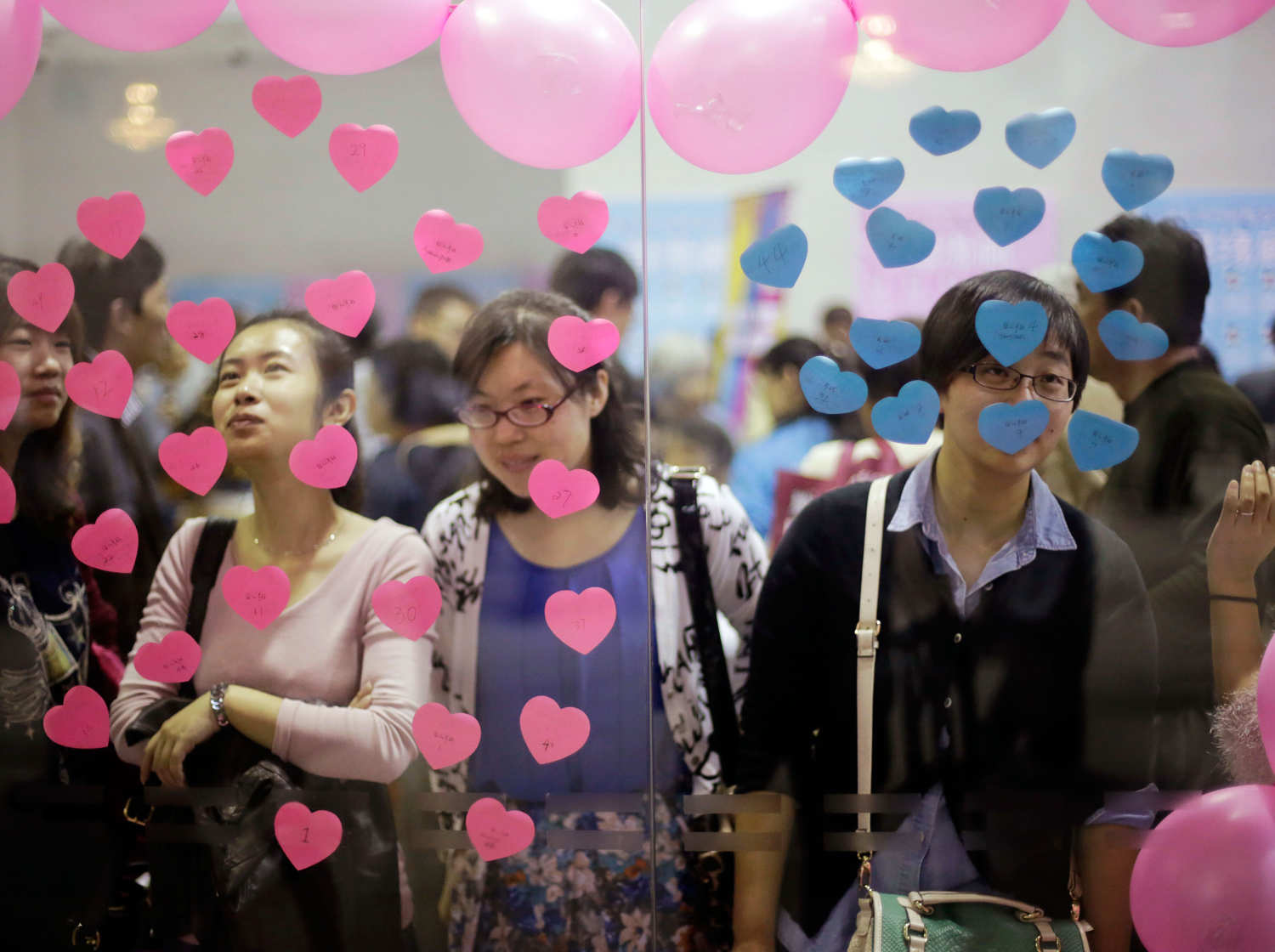
    The U.S. has holidays like Valentine’s Day and Christmas when couples are expected to exchange gifts, but China’s Singles’ Day proves even lonely hearts can get in on the retail action — and according to a recent Nielsen study, China’s lone wolves plan to do just that.

    In a study conducted by Nielsen and released to Reuters, 56 percent of 1,000 Internet users in China said that they planned on spending more on Singles’ Day than they had in 2014. Nearly 33 percent indicated they would purchase roughly the same amount, and only 6 percent said that they planned on pulling back on Singles’ Day spending.

    “It’s not a huge surprise that consumers are planning to spend more during this year’s [Singles’ Day],” Yan Xuan, president of Nielsen Greater China, told Reuters. “Income levels and Internet penetration continue to rise throughout China, so this is a natural progression.”

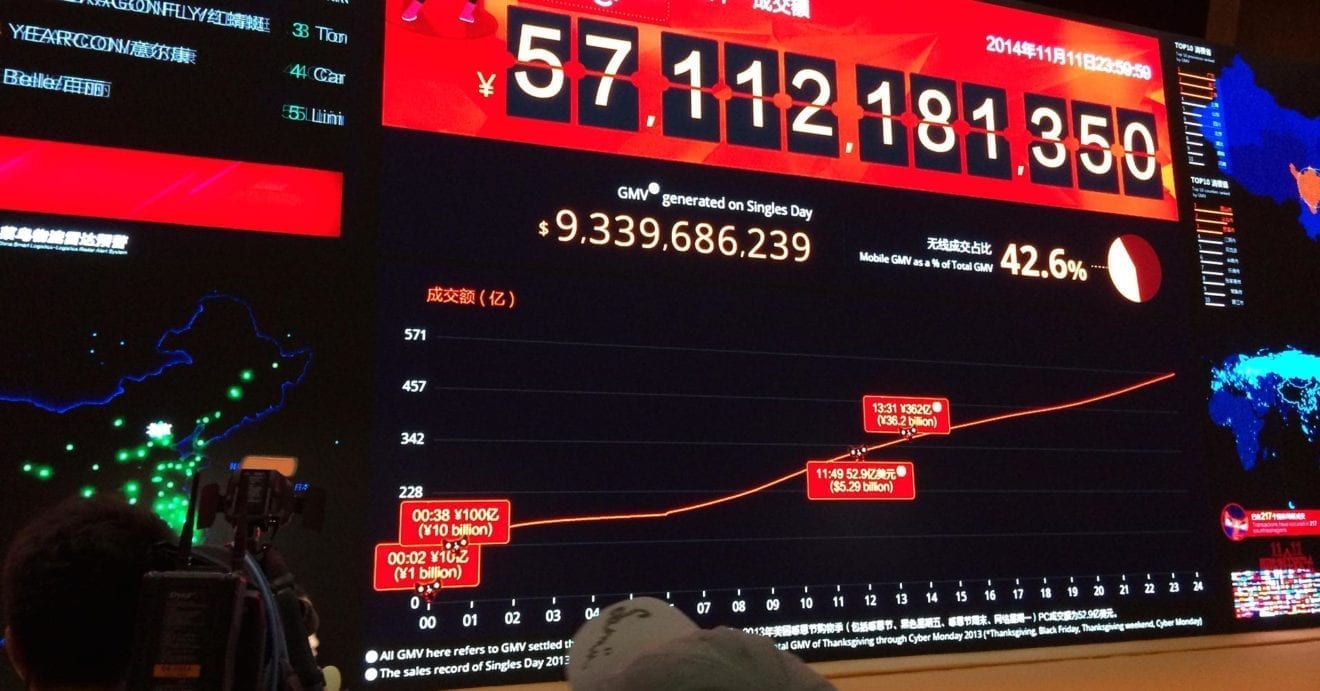
    Greater spending totals in 2015 could push Singles’ Day into unprecedented territory for retail holiday traffic. MarketWatch reported that Alibaba, China’s largest eCommerce marketplace, processed more than $2 billion in sales in the first hour, 11 seconds of Singles’ Day 2014 alone. By the time the day drew to a close, the site had surpassed $9 billion, 43 percent of which was due to mobile purchases.

    Since the first “official” Singles’ Day in 2009, Alibaba’s sales alone have skyrocketed by more than 5,740 percent, and it appears that trend will continue. According to Reuters, the average Singles’ Day shopper is projected to spend about $277.76 in 2015, 22 percent more than the average shopper spent in 2014.

    MarketWatch explained that Alibaba CEO Jack Ma has expressed a desire to turn China’s Singles’ Day into a global retail holiday on the same level as Black Friday and Cyber Monday, and if these sales numbers continue, retailers in other countries might have no choice but to follow China’s lead.