Tag: sk hynix

  • AustralianSuper Holds A$3.05 Billion in Nvidia as It Targets AI Infrastructure

    AustralianSuper Holds A$3.05 Billion in Nvidia as It Targets AI Infrastructure

    AustralianSuper is focusing its artificial intelligence investments on chipmakers and hyperscaler data centres as turbulence hits global technology equities. Australia’s largest pension fund oversees A$430 billion ($301.7 billion) in assets from its Melbourne headquarters.

    Recent regulatory filings reveal the fund holds roughly A$3.05 billion worth of Nvidia stock within its balanced portfolio alone, alongside additional holdings in other fund options. It also maintains equity stakes valued at about A$2.3 billion each in tech giants Microsoft and Alphabet.

    Mark Hargraves, head of international equities and private equity at AustralianSuper, detailed the strategy on October 28. Beyond its primary holdings, the institution owns stakes in SK Hynix, SpaceX, Meta, Broadcom and Micron.

    Hardware Over Software Deployment

    Institutional allocators in the Asia-Pacific region are redirecting capital away from consumer-facing software applications toward the base physical infrastructure required to operate generative models. Chip foundries, memory makers and server rack builders secure immediate capital expenditure, while application developers face longer roads to operational profit.

    High valuations across global equity markets have prompted fund managers to trim speculative software stakes. By holding physical suppliers such as SK Hynix and Micron, institutional investors capture enterprise spending budgets regardless of which retail or corporate applications ultimately dominate consumer markets.

    Concentration in Global Tech Portfolios

    Hargraves noted that artificial intelligence and related supply chain businesses now represent approximately 40 per cent of global equity benchmarks. The speed of this sector’s expansion surpassed any single market theme observed over his three decades managing institutional equities.

    Capital requirements for infrastructure remain massive. Large language models demand extensive compute capacity, funneling money directly into hyperscale server facilities and the semiconductor fabricators that supply them.

    Venture Stakes and Private Valuation Tests

    Beyond public equity holdings, AustralianSuper entered artificial intelligence developer Anthropic as an early backer prior to any public listing. The United States software maker is preparing for a public offering that could value the business between $1.5 trillion and $2 trillion.

    Hargraves would not comment on the fund’s intention in the upcoming share sale. Financial disclosures filed during the listing process will provide outside investors with concrete audit figures on revenue and operational spending across major foundation model developers.

    Next Steps for Institutional Allocators

    The fund maintains its active rebalancing mandate, adjusting exposure sizes as quarterly earnings reports test current market multiples. Institutional portfolios across Australia and the wider region face continuous reviews as companies publish capital expenditure totals for upcoming infrastructure buildouts.

    Investors now await the formal filing paperwork from Anthropic to evaluate true operating margins for commercial language models against hardware depreciation costs.
  • South Korea Projects Semiconductor Demand Boom to Run Through 2027

    South Korea Projects Semiconductor Demand Boom to Run Through 2027

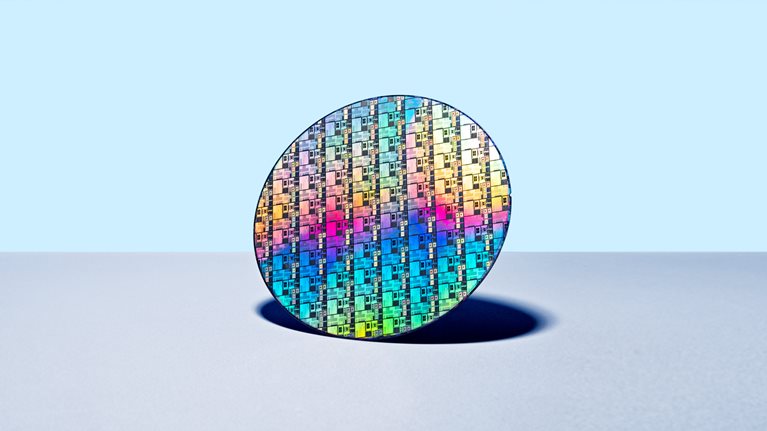
    South Korea expects its semiconductor boom to run through at least 2027 as global demand outpaces production, Finance Minister Lee Hyoung-Il said in Bangkok.

    A persistent imbalance between hardware orders and factory output keeps the export cycle expanding across the region.

    Speaking on the sidelines of the IMF-World Bank meetings, Lee noted that production capacity is broadening while orders remain heavy. The minister confirmed that stronger corporate returns from device fabricators will lift South Korea’s total tax collections above earlier fiscal targets for the current year, providing cushion against broader economic drag.

    Equities Suffer While Demand Stays High

    Equity markets told a more conflicted story during the week. Shares in South Korean component makers including SK Hynix and Seoul Semiconductor dropped sharply, matching pullbacks at US tech giant Nvidia.

    Traders dumped technology holdings because of interest rate concerns and direct pressure from Chinese semiconductor competitors. That market swing weighed heavily on Seoul’s headline benchmarks, where electronics manufacturers account for a dominant share of trading volume compared with rival Asian bourses.

    Hardware suppliers in Asia face a widening gap between short-term equity pricing and actual factory shipments. Consumer electronics assemblers, server operators, and device vendors still order stock faster than fabrication lines can deliver it, limiting downside risk for upstream producers over the next two years.

    Supply Threat Looms Beyond the AI Expansion

    The principal threat to sustained margins sits later in the investment cycle. Analysts and domestic industry commentators warn that massive capex across global foundries could trigger severe component gluts by 2029.

    Rapid factory construction across China and North America threatens to turn memory pricing into cut-throat competition once artificial intelligence hardware installations reach saturation. Operators that invest heavily in capacity today risk carrying idle cleanrooms when demand normalize.

    The current market rally follows two years of volatile post-pandemic hardware adjustments, during which consumer electronics vendors slashed component inventories before artificial intelligence workloads spurred memory demand.

    South Korean trade authorities will track export volume numbers over the fourth quarter to confirm whether device shipments continue to outpace assembly line expansions.

  • Samsung and SK Hynix Upgrade China Memory Plants Past 200 Layers

    Samsung and SK Hynix Upgrade China Memory Plants Past 200 Layers

    Samsung Electronics and SK Hynix are upgrading their manufacturing plants in China to produce NAND flash memory chips with more than 200 layers. The retrofits target swelling demand for artificial intelligence hardware and push back against domestic rival Yangtze Memory Technologies Co, which recently took the top position in China’s memory market.

    Yangtze Memory Technologies Co captured 38.5 percent of China’s NAND flash market during the second quarter, rising from 28 percent across all of 2025. That expansion pushed Samsung’s local market share down to 33.5 percent from 36 percent, while SK Hynix dropped to 17 percent from 20 percent.

    Samsung runs its primary overseas memory fabrication site in the northwestern city of Xian. The complex accounts for roughly 40 percent of the South Korean group’s global NAND flash output and currently builds chips stacked to approximately 200 layers.

    Retooling Xian for 286 Layers

    Under an internal project named Monami, Samsung is converting the Xian factory lines to produce 286-layer V9 NAND chips. The plant is scheduled to process 5,000 wafers monthly starting in December this year, stepping up to 40,000 wafers each month by December 2027. Samsung confirmed the plant updates are proceeding in compliance with Washington’s export regulations.

    The upgrade is aimed at meeting growing demand from global customers, including those in the US. The company is not expanding production capacity or constructing new manufacturing facilities.

    SK Hynix Pushes Dalian Operations

    SK Hynix is pursuing a parallel upgrade at its site in Dalian in northeastern China. The facility currently manufactures 192-layer NAND chips, and the company plans to transition lines toward 240 layers or higher.

    The South Korean group took over the Dalian factory in 2021 through its acquisition of Intel’s NAND flash business. The subsidiary, operating under the Solidigm brand, relies on Dalian as its sole NAND manufacturing site while preparing for an initial public offering in the United States.

    SK Hynix holds clearance to assemble chips up to 240 layers at Dalian. The company may request permission from the United States to run research and development on chips with more than 300 layers there, creating technical groundwork for planned manufacturing on American soil.

    Regulatory Pressure and Domestic Competition

    For hardware brands and electronics assemblers operating across Asia, the plant refits determine component pricing and local component availability. Samsung and SK Hynix have faced operational hurdles since the United States rolled out export controls on advanced semiconductor equipment in 2022. Both manufacturers must obtain annual American licences to import specialized tools such as etching gear into mainland China.

    The US Commerce Department’s Bureau of Industry and Security announced in 2025 that it did not intend to authorize technology upgrades or capacity expansions at foreign-owned semiconductor plants in China. Restricting foreign lines gave YMTC room to run. The Chinese manufacturer relies on 160-layer and 232-layer designs for volume shipments, but it already yields limited batches of 294-layer memory and is preparing architectures exceeding 300 layers.

    Fab Limits and the Next Phase

    South Korean chipmakers have kept their most advanced production lines at home to safeguard proprietary designs. Outside mainland China, Samsung sells NAND chips stacked up to 286 layers and showed a prototype with more than 400 layers in August, while SK Hynix markets finished memory chips reaching 321 layers.

    Operating legacy processes in China risks shutting both suppliers out of high-density solid-state drive contracts for mainland data centres and premium smartphone manufacturers. SK Hynix is concurrently holding discussions with the Trump administration regarding plans to build a new NAND factory in the United States. Samsung’s retrofitted Xian facility is aiming for an initial monthly output of 5,000 wafers in December this year.

  • Asian Stocks Dip 0.2% as US 10-Year Treasury Yield Hits 5.306%

    Asian Stocks Dip 0.2% as US 10-Year Treasury Yield Hits 5.306%

    Asian stocks were subdued on Oct 1 as global bonds remained under pressure, with MSCI’s broadest index of Asia-Pacific shares outside Japan falling 0.2 per cent following a brutal September.

    Blockbuster earnings from AI chipmaker Micron failed to lift market sentiment, while stalling US-Iran peace talks kept oil prices elevated and benchmark US 10-year Treasury yields touched 5.306 per cent.

    Regional equity performance was mixed as South Korea’s KOSPI slipped 0.14 per cent, Japan’s Nikkei gained over 1 per cent on chip shares, and European stock futures fell 0.75 per cent.

    Treasury Yields Test Multi-Decade Highs

    Bond markets ended September with heavy losses after rising energy prices revived inflation concerns across major economies. The United States 30-year Treasury yield traded at 5.634 per cent after touching 5.6517 per cent, a level unseen since June 2002.

    Sustained yields above 5 per cent have weighed on equity valuations and corporate balance sheets. United States federal debt has now crossed the $40 trillion mark, leaving investors focused on debt sustainability and rate velocity. Darren Shames, global head of rates sales at Nomura, noted that the speed of the yield move has drawn intense scrutiny from institutional allocators.

    Currency markets reflected the bond pressure. The United States dollar traded near a two-month peak, while the euro held at $1.1334 after sliding 2.5 per cent through September. In Tokyo, the Japanese yen weakened 0.3 per cent to 157.95 per dollar, even after Bank of Japan summary documents showed several board members favored accelerating the pace of domestic interest rate hikes.

    Chip Earnings and Hardware Valuation Pressure

    Strong quarterly figures from memory maker Micron failed to sustain broader technology gains across Asian exchanges. Hardware and consumer electronics supply chains remain caught between record artificial intelligence infrastructure demand and broader macroeconomic drag.

    Official trade figures from Seoul showed South Korea’s total exports jumped 83.5 per cent year-on-year in September to a record $120.94 billion, led by a 262 per cent surge in semiconductor shipments to $60.3 billion. Computer product shipments surged 435.3 per cent to $7 billion as suppliers fulfilled high-bandwidth memory orders for global computing platforms, including multi-billion supply agreements involving Samsung Electronics, SK hynix, and Nvidia.

    “Micron’s numbers are another strong validation of AI and memory demand, but markets may increasingly be asking whether we are closer to peak memory shortage, even if demand continues to exceed supply,” said Charu Chanana, chief investment strategist at Saxo.

    Energy Pressures and Policy Shifts

    Elevated commodity prices continue to complicate central bank calculations across Asia-Pacific import hubs. Brent crude futures hovered at $98.15 per barrel on October 1, after climbing more than 14 per cent in September to register a third straight month of price gains.

    Diplomatic friction and stalled peace negotiations between the United States and Iran regarding the seven-month conflict in the Middle East have kept shipping risks elevated across crucial energy corridors. Higher bunker and fuel costs are feeding directly into freight rates, hitting import-reliant consumer goods distributors and retailers across Southeast Asia.

    Data released on September 30 showed United States consumer price inflation rose less than expected in August, offering brief relief to equity trading desks. Pricing data from CME FedWatch showed traders assigned a 38 per cent probability to a Federal Reserve rate increase on October 28, down from a 50 per cent probability priced a day earlier.

    What Operators and Investors Face Next

    For retail conglomerates, electronics manufacturers, and commercial property owners across Asia, persistent capital costs are forcing tighter inventory control and reduced reliance on floating-rate debt. Higher discount rates limit speculative store rollouts, prompting operators to favor proven high-density retail corridors over aggressive regional expansion.

    The current market tension follows the Federal Reserve’s September decision to raise borrowing costs for the first time in three years. While New York Fed President John Williams indicated on September 29 that there was no immediate urgency for another policy move, energy market volatility keeps headline inflation risks open.

    All eyes now turn to the Federal Reserve’s rate-setting meeting on October 28, alongside third-quarter earnings releases from Asia’s leading consumer hardware and semiconductor manufacturers as South Korea aims for $1 trillion in annual exports.

  • South Korea KOSPI Tests 7,100 on Chip Gains Before Pre-Holiday Selling

    South Korea KOSPI Tests 7,100 on Chip Gains Before Pre-Holiday Selling

    South Korea’s benchmark KOSPI broke past 7,100 in early Tuesday trading as semiconductor heavyweights tracked a Wall Street rally before profit-taking trimmed gains ahead of the Chuseok holiday.

    The index opened 1.94 percent higher at 7,153.99, gaining 136.08 points at the opening bell, before retreating to the late 7,020 level as domestic traders liquidated positions ahead of a two-day market closure.

    Semiconductor Heavyweights Drive Early Surge

    Tech issues led the opening advance, tracking overnight strength in the United States where the Philadelphia Semiconductor Index gained 2.06 percent and the tech-heavy Nasdaq Composite reached a record close of 27,244.28. Samsung Electronics advanced as much as 2.80 percent intraday to touch 285,000 won (approximately $210) before paring its advance to around 2 percent. SK Hynix climbed 1.96 percent to reach 1.9 million won (approximately $1,400) in early deals before flattening out.

    Chip-adjacent suppliers and affiliate holdings tracked the initial rally. SK Square rose 4.41 percent, Samsung Electronics preferred shares gained 3.31 percent, and Samsung Electro-Mechanics climbed 2.22 percent. On the junior KOSDAQ board, equipment maker Wonik IPS added 4.68 percent while Simmtech and HPSP gained 2.57 percent and 2.03 percent respectively.

    Retail Debut Sparks Household Goods Rally

    Wise Planet Company delivered the session’s sharpest single-stock move during its KOSDAQ debut. The household goods retailer jumped 230 percent above its initial public offering price of 12,000 won (approximately $8.9) to trade at 29,200 won (approximately $22), reaching an intraday peak gain of 243.33 percent. The listing lifted the broader household goods index by 134.92 percent.

    Other consumer and industrial names showed sharp dispersion. POSCO Future M opened more than 4 percent higher after confirming a 1.1 trillion won (approximately $814.1 million) lithium iron phosphate cathode supply contract with battery maker SK On, but selling pressure pulled the stock into negative territory by midday. Shipping operator KSS Line gained roughly 15 percent following a share buyback disclosure, while cyber-security provider Xgate posted double-digit gains.

    Institutional and Foreign Positioning

    Trading flows fluctuated sharply as domestic retail participants moved into cash. Retail investors on the main board sold a net 366 billion won (approximately $270.9 million) in opening deals, while foreign and institutional desks recorded net purchases of 174 billion won (approximately $128.8 million) and 142.9 billion won (approximately $105.8 million) before shifting volume across the morning session.

    In the foreign exchange market, the South Korean won traded around the early 1,350 won level against the US dollar, opening at 1,349.8 won as dollar conversions from exporters provided currency support.

    Holiday Consolidation Mirrors Previous Session

    Tuesday’s price action repeated the pattern of the prior trading day. On Monday, the KOSPI opened 2.20 percent higher at 7,161.61, reached an intraday high of 7,171.44, and then gave up nearly all its gains to close at 7,017.91, up just 0.15 percent after retail accounts sold a net 1.8886 trillion won (approximately $1.4 billion).

    South Korean financial markets remain closed on Wednesday and Thursday for the Chuseok holiday, leaving domestic bourses scheduled to resume regular trading on Friday, September 26.

  • Global Used ETF Managers Court South Korea as Retail Assets Hit 25 Percent

    Global Used ETF Managers Court South Korea as Retail Assets Hit 25 Percent

    Global ETF managers are expanding in South Korea. They want to reach retail investors, who now account for up to 25 percent of their total assets.

    Russell Tencer, president of Tradr ETFs, visited Seoul on Thursday to meet investors. His trip followed a promotional roadshow by Tuttle Capital Management last week.

    Direct pitches in Seoul

    Tradr operates as an ETF brand under AXS Investments. It oversees roughly $500 million across about 60 used products, with South Korean retail accounts making up approximately 10 percent of that pool.

    Individual Korean traders took note of the issuer in 2022. That interest followed the launch of single-stock inverse vehicles for Tesla and Nvidia under tickers TSLQ and NVDS. Today, its catalogue covers single-stock used funds tied to Coupang, SK hynix, SanDisk and SpaceX.

    “We want to meet with our investor base,” Tencer said at a press briefing in Seoul. “We would love to meet and educate Korean investors.”

    Tuttle Capital Management holds an even larger share from the country. South Korean accounts represent 25 percent of the firm’s $5 billion in assets across 70 active funds, which include its double-exposure T-REX series. The US firm ran its own investor presentations in Seoul earlier this month.

    Trading volumes eclipse direct shares

    Korean retail activity in used overseas instruments now beats direct equity buying in major global tech firms. Direxion Daily Semiconductor Bull 3X Shares, traded under ticker SOXL, generated $72.64 billion in combined buy and sell volume from Korean traders this year.

    That turnover was nearly six times the $12.6 billion worth of Tesla shares traded locally over the period. High-beta exposure drives these offshore flows across Seoul desks.

    Domestic brokerage houses are aiding the shift. Many host issuer seminars and marketing events for offshore managers seeking local distribution.

    Domestic curbs push capital abroad

    Local regulations helped push retail capital into US-listed instruments. Financial authorities allowed domestic single-stock used funds to trade in late May. However, they attached heavy friction to the rollout.

    Regulators enforced minimum cash deposits and mandatory order-size caps on domestic single-stock used instruments. These rules slowed domestic turnover. Individual accounts turned to offshore equivalents instead, using standard global brokerage accounts to trade higher use multiples.

    Shifts in currency added extra volatility. The South Korean won recently strengthened into the 1,300 won range against the US dollar. That move led some retail traders to trim dollar gains, but overall trading velocity stayed high.

    New products tied to Korean tech

    Appetite from Seoul is reshaping product design in the US ETF market. Foreign managers now build instruments tailored directly to retail demand for domestic tech and semiconductor names listed abroad.

    Filings from Tradr show additional funds coming for the country’s hardware sector. These target active trading in memory chips and display components.

    US regulators will review incoming offshore single-stock filings as foreign issuers test how deeply South Korean retail capital backs specialized tech funds heading into 2027.

  • Global Memory Shortage to Squeeze Device Makers Through 2027

    Global Memory Shortage to Squeeze Device Makers Through 2027

    A global memory chip shortage will squeeze independent phone and laptop makers through 2027, forcing product redesigns and price increases across entry-level consumer electronics.

    Counterpoint Research forecasts worldwide smartphone shipments will drop 13.9 per cent this year to 1.08 billion units, marking the steepest annual decline on record as memory costs make low-cost handsets uneconomical to produce.

    Memory now accounts for almost 60 per cent of the bill of materials on handsets priced around $400, according to Raymond van Eck, chief executive of Dutch repairable-phone maker Fairphone. Component availability rather than unit price has become the primary operational bottleneck for smaller manufacturers.

    Surging Prices and Supply Bottlenecks

    Market researcher TrendForce expects conventional volatile memory (DRAM) contract prices to climb 13 to 18 per cent this quarter, following a 93 to 98 per cent surge in the first quarter. The prolonged imbalance stems from severe production limits at major Asian fabricators.

    In July, the chief executive of South Korea’s SK Hynix warned that 2027 would be the worst year in industry history for supply availability, projecting that demand will exceed fab capacity past 2030.

    If you don’t have allocation, you’re out of the game anyhow.

    Smaller hardware makers are taking defensive operational measures to secure volume. Framework, a US-based modular laptop producer, now submits noncancelable purchase orders without confirmed delivery schedules, prices or volumes to maintain supplier allocation.

    Engineering Workarounds on the Factory Floor

    Hardware teams are altering board layouts to bypass supply chokepoints. Finnish handset maker Jolla created two distinct motherboard configurations so production lines can switch between integrated memory packages and discrete silicon chips.

    Counterfeit risks have mounted alongside component costs. Jolla now runs stress tests on sample components from every incoming batch to confirm shipments contain new silicon rather than recycled parts repackaged as firsthand inventory.

    Retail pricing strategies differ across hardware brands. Framework reprices machines immediately as raw component invoices arrive, Jolla introduced a standalone paid tier for memory upgrades, and Fairphone has held retail prices steady to protect volume.

    Shifting Inventory Dynamics

    Supply hoarding accelerated late last year when hardware makers realised the severity of Asian fabrication deficits. Companies attempted to build inventory buffers simultaneously, pulling forward chip volumes and compounding market tight spots.

    Jolla executives noted that combined storage and DRAM module costs peaked in late March and held flat through summer, averting earlier projections that component prices would double by autumn. Supply parity across mobile and personal computing memory lines is not projected to return until 2028.

  • Exchange Traded Concepts Launches 20-Stock Korea Semiconductor ETF on NYSE Arca

    Exchange Traded Concepts Launches 20-Stock Korea Semiconductor ETF on NYSE Arca

    Exchange Traded Concepts announced Monday it has partnered with Kiwoom Securities (USA) to launch the KICK Korea Semiconductor Index ETF on NYSE Arca under the ticker KCHP.

    The fund tracks an index of 20 semiconductor companies listed on the Korea Exchange across memory, foundry, equipment, materials, packaging, and design, anchored by Samsung Electronics and SK Hynix.

    How the Index Structure Works

    American institutional and retail buyers can now trade direct exposure to South Korea’s chip supply chain through standard brokerage accounts. They do not need local accounts on the Korea Exchange. Because underlying assets trade in Korean won, currency swings against the US dollar will directly affect net investor returns.

    Exchange Traded Concepts uses a modified market-capitalization weighting model to cap exposure to individual heavyweights. This structure prevents Samsung Electronics and SK Hynix from dominating the fund. Beyond the two primary chipmakers, the basket holds domestic producers of specialty materials, design houses, packaging contractors, and manufacturing equipment.

    The Play on Asian Hardware Suppliers

    Most broad Asian equity funds dilute exposure across consumer internet, banking, and conglomerates. That dilution blunts direct participation in the memory chip cycle. Packaging Korea’s specialized fabrication network into a single product targets investors seeking pure hardware exposure tied to global computing infrastructure, bypassing single-stock settlement risk on Seoul’s bourse.

    Earnings power remains heavily concentrated at the top. The supply chain beneath Samsung and SK Hynix relies directly on the capital spending plans of those two anchor tenants. When memory pricing or capital budgets swing in Seoul, ancillary tooling and packaging vendors face sharper revenue volatility.

    Tracking Capital Shifts Across the Pacific

    Yoon Gu Eric Lee, president and CEO of Kiwoom Securities (USA), said the index captures the secondary equipment, materials and design companies built around the country’s memory and foundry sectors.

    Trading in KCHP will test US investor appetite for targeted Asian hardware suppliers. Portfolio managers will have to balance foreign-exchange risk against direct equity holdings in Seoul.

  • Samsung and SK Hynix Slump Drags Seoul Benchmark Down 3.12 per Cent

    Samsung and SK Hynix Slump Drags Seoul Benchmark Down 3.12 per Cent

    South Korea’s benchmark KOSPI index dropped 3.12 per cent on Monday as sharp declines in Samsung Electronics and SK hynix dragged down Seoul equities. The semiconductor sell-off erased gains from the previous two sessions, leaving Samsung tumbling 8.70 per cent and SK hynix down 3.41 per cent by the close.

    The benchmark index settled at 6,696.96 points, down 215.99 points from Friday after opening 0.46 per cent lower. Foreign institutional funds drove the retreat, offloading a net 3.69 trillion won ($2.67 billion) in shares, while domestic institutions sold 1.29 trillion won. Local retail buyers absorbed 3.32 trillion won of the selling pressure.

    Divergent Shareholder Return Strategies

    Investor disappointment centered on the stark contrast between the capital return programs announced by the two semiconductor giants. SK hynix revealed a plan last Wednesday to repurchase and cancel 40 trillion won of its own stock, alongside a pledge to return at least 50 per cent of its free cash flow over the next three years. The chipmaker immediately started buying roughly 650,000 shares a day, accounting for up to 15 per cent of its daily trading volume.

    Samsung took a different approach, winning board approval on Friday for a capital allocation package worth between 90 trillion and 110 trillion won this year. That total includes about 30 trillion won in cash payouts and regular third-quarter dividends. Traders reacted negatively to the lack of immediate share cancellations, dumping the stock after management deferred specific allocation mechanics.

    Retail Buyers Cushion Foreign Outflows

    Across regional tech capital, institutional funds increasingly reward immediate share retirements over cash dividends because equity cancellations permanently reduce share count. Samsung’s reliance on cash payouts left investors exposed to timing uncertainty while SK hynix locked in direct daily buying demand.

    Capital that fled Samsung found a temporary home in smaller technology names. The secondary Kosdaq index gained 1.42 per cent to close at 813.33 points as money rotated into secondary battery suppliers and electronic materials manufacturers. In foreign exchange trading, the Korean won ended onshore trade at 1,382.4 per US dollar, strengthening by 4.1 won.

    Samsung’s board of directors is scheduled to meet in late October to determine the final dividend allocation and exact cash distribution timetable for the remaining portion of its 110 trillion won plan.

  • Asian Tech Giants Taiwan and South Korea Form AI Hardware Alliance Amid Surging Demand

    Asian Tech Giants Taiwan and South Korea Form AI Hardware Alliance Amid Surging Demand

    Long-standing technological competitors Taiwan and South Korea are joining forces to address the booming global demand for AI accelerators, the specialized hardware critical for training generative AI models. This alliance marks a significant shift from decades of intense rivalry to a necessary partnership in the digital age.

    The insatiable demand from tech giants for computing power has strained the capacity of key accelerator suppliers like Nvidia and AMD. Their products rely on an increasingly interconnected supply chain linking Taiwan and South Korea, making cooperation essential to meet the massive market need.

    Nvidia CEO Jensen Huang highlighted the urgency at Computex 2026 in Taipei, personally requesting more memory wafers from South Korean firm SK Hynix. This collaboration underscores that no single country can satisfy the current scale of AI infrastructure expansion alone.

    From Intense Competition to Interdependence

    For decades, South Korea and Taiwan fiercely competed for supremacy in technologies ranging from televisions and smartphones to memory chips. Both nations, former Japanese colonies, built their economies on exports, initially focusing on labor-intensive goods before advancing to electronics. This rivalry saw Taiwanese brands like Acer and Asus compete against South Korean giants Samsung and LG.

    South Korea often pulled ahead due to the integrated structure of its conglomerates, such as Samsung, which controlled multiple stages of the supply chain. A notable example involved Samsung reportedly aiming to dominate industries where Taiwanese firms competed, though Samsung denied such a specific ‘Kill Taiwan’ strategy.

    Taiwan’s strength, however, lay in its highly specialized contract manufacturing ecosystem. Unlike South Korea’s vertically integrated companies, Taiwan developed a dense network of firms each focusing on a narrow part of the manufacturing process. This specialization allowed for greater flexibility and adaptability, enabling enduring partnerships with global tech firms like Apple, which eventually made Taiwan Semiconductor Manufacturing Company (TSMC) its primary chip supplier over Samsung.

    Taiwan’s AI Hardware Dominance and Future Outlook

    In the current AI era, Taiwan’s multifaceted ecosystem has proven highly advantageous. Taiwanese companies now hold dominant positions in crucial niches, from power supplies to chip packaging and advanced cooling systems. This allows global customers to select and combine suppliers, maintaining production flexibility. Nomura’s May report ranked Taiwan first globally in AI hardware production, with its AI-related exports contributing to a 15-year high economic growth of 8.7% last year.

    This economic divergence saw Taiwan surpass South Korea in GDP per capita in 2025 for the first time in over two decades. However, this has not deepened the rivalry; instead, the AI boom has fostered greater interdependence. South Korea excels in High Bandwidth Memory (HBM), with SK Hynix and Samsung together accounting for approximately 80% of global HBM production. These critical memory components are then integrated with computing chips from Taiwan’s TSMC using advanced packaging techniques, a final step in creating AI accelerators.

    This dynamic has resulted in South Korea achieving a record trade surplus with Taiwan last year. The relationship is best described as a ‘frenemy’ dynamic, driven by the sheer scale of AI demand. Despite lingering competitive sentiments, the complementary strengths of Taiwan’s contract chipmaking dominance and South Korea’s memory market stronghold make them indispensable partners in powering the next wave of artificial intelligence.

  • Asian Stocks Soar as US Treasury Intervention Calms Bond Market Fears

    Asian Stocks Soar as US Treasury Intervention Calms Bond Market Fears

    Asian stock markets rallied strongly on Thursday after the US Treasury intervened to calm fears over rising bond yields. The announcement that the Treasury would significantly increase its long-term bond issuance provided a much-needed boost to investor confidence, leading to a rebound in equities across the region.

    This intervention comes after weeks of heightened concern over US bond yields, which had climbed to near two-decade highs. The prospect of sustained high inflation, increased government borrowing, and potential further interest rate hikes by the Federal Reserve had pushed yields on 10- and 30-year US Treasuries to unsustainable levels, sparking a sell-off in riskier assets, including Asian stocks.

    Yield Concerns Eased By Treasury Move

    The US Treasury’s unexpected decision to “at least double” the amount of long-term bonds it issues is a clear signal to the market that authorities are uncomfortable with the recent spike in borrowing costs. This move is intended to inject liquidity and bring down yields, which had seen the 30-year US Treasury yield reach its highest point since June 2007 earlier in the week. The immediate effect was a reversal of losses in US equities and a decline in the dollar against other major currencies.

    For Asian markets, the impact was immediate and positive. Technology firms, which often rely on significant debt for capital expenditure, particularly in areas like artificial intelligence, had been hit hard by rising yield concerns. Seoul’s Kospi index led the charge, jumping over six percent at one point. South Korean chipmaker SK hynix saw its shares rocket more than 12 percent, partly bolstered by its recent US$29 billion share buyback announcement, with Samsung also climbing almost nine percent. Elsewhere, Tokyo, Hong Kong, Shanghai, Sydney, Wellington, and Manila also reported strong gains. RetailNews Asia has observed that stability in financial markets is crucial for regional consumer brands planning expansions or significant capital investments, as it directly influences their cost of funding and investor sentiment.

    Future Outlook For Rates And Oil

    Despite the current relief, market observers question how long the fall in yields will last. Key factors that could reignite pressure on the long end of the Treasury curve include persistently high oil prices and ongoing concerns about US government borrowing. Crude prices have been on an upward trend for the past two weeks, fueled by fading hopes for a US-Iran deal regarding the Strait of Hormuz, with tensions in the region remaining high.

    Investors are also closely watching the US Federal Reserve’s stance on interest rates. Minutes from the Fed’s July meeting indicated that many policymakers believe further rate hikes might be necessary if inflation does not sufficiently decline. Three of the twelve voting members of the Federal Open Market Committee advocated for an immediate rate increase, noting robust economic activity driven largely by the AI industry. Attention now turns to the upcoming annual meeting of central bankers in Jackson Hole, Wyoming, next week, where Fed boss Kevin Warsh is expected to provide further clarity on the central bank’s rate strategy.

  • Samsung Eyes over $72 Billion Shareholder Return Amid AI Chip Surge

    Samsung Eyes over $72 Billion Shareholder Return Amid AI Chip Surge

    Seoul, South Korea based Samsung Electronics is expected to announce a substantial new shareholder return policy later this month, reportedly exceeding 100 trillion won (approximately $71.75 billion). This initiative comes as the technology giant seeks to share record profits with investors, largely fueled by the ongoing AI-driven chip supercycle.

    According to media reports, the South Korean memory-chip maker’s board is scheduled to convene at the end of August to approve the new shareholder return plan. Industry sources suggest the program will include a special dividend and allocate 50 percent of the company’s free cash flow to this new scheme.

    Rival Actions and Market Impact

    This anticipated announcement from Samsung follows closely on the heels of a significant move by its local competitor, SK Hynix. On Wednesday, SK Hynix, the world’s second-largest memory-chip producer after Samsung, revealed its own 40 trillion won share buyback and cancellation program. This represents the largest shareholder return initiative ever declared by a publicly listed South Korean company. SK Hynix also committed to dedicating over 50 percent of its free cash flow generated between 2025 and 2027 to shareholder returns.

    Such large-scale financial commitments from key players like Samsung and SK Hynix highlight the robust profitability within the global semiconductor industry, particularly in the memory chip segment. The surge in demand for chips due to advancements in artificial intelligence has created a lucrative environment for these technology powerhouses, allowing them to reward investors handsomely. These moves are likely to influence investor sentiment and financial strategies across Asia’s tech sector, setting a precedent for how major corporations manage their excess capital in times of high growth.

    Rewarding Investors Amid Strong Performance

    The reported shareholder return program from Samsung underscores a period of strong financial performance for the company. The AI-driven surge in demand for high-performance memory chips, essential for AI applications, has significantly boosted revenues and profits for chip manufacturers. By distributing a substantial portion of its free cash flow, Samsung aims to enhance shareholder value and maintain investor confidence. The company has not yet commented on the media reports.