Retail News CRM

Tag: skyrockets

  • Vontobel Skyrockets to Record-Breaking Profits with an 87% Earnings Leap in H1 2026

    Vontobel Skyrockets to Record-Breaking Profits with an 87% Earnings Leap in H1 2026

    Vontobel, a Zurich-based investment manager, has reported a record profit of CHF 216 million for the first six months of 2026. This is an impressive 87 percent increase compared to the same period the previous year.

    Vontobel’s Financial Performance

    The company’s operating income jumped by 24 percent, reaching CHF 852 million. Meanwhile, operating expenses amounted to CHF 579 million. This combination resulted in a significant improvement in efficiency, indicated by the drop in Vontobel’s cost-income ratio from 77.9 percent to 67.9 percent. This is lower than the company’s ongoing target of 72 percent. Additionally, the return on equity increased to 16.9 percent, a notable rise compared to 10.2 percent in the first half of 2025.

    Company co-CEOs, Christel Rendu de Lint and Georg Schubiger, acknowledged the excellent results. They attributed the significant profit increase to higher revenues driven by robust client activity, coupled with a reduction in costs.

    Assets under management grew by 5 percent, totaling CHF 252.2 billion at the end of June. Net new money rose to CHF 2.5 billion, an improvement from the CHF 2 billion reported during the year-earlier period. Vontobel also mentioned two key factors affecting these inflows: CHF 1.3 billion in outflows linked to the return of Raiffeisen’s Futura fund management mandate, and CHF 2.5 billion in outflows from Vontobel’s Quality Growth strategies. However, excluding these factors, net new money would have amounted to CHF 6.3 billion.

    Expansion and Corporate Developments

    Vontobel’s private clients business expanded across all regions, generating CHF 2.5 billion in net new money. This corresponds to an annualized growth rate of 4.1 percent. With regards to institutional clients, assets under management increased to CHF 112.5 billion. If adjusted for outflows related to Raiffeisen and Quality Growth, net new money would have reached CHF 3.8 billion. This is equivalent to an annualized growth rate of 7.4 percent.

    Vontobel’s CHF 100 million efficiency program significantly contributed to the company’s improved profitability. The program is progressing faster than initially planned and is expected to be completed by the end of 2026. Also, Vontobel has continued to invest in growth initiatives, technology, and client-facing capabilities, integrating Quantitative Investments into its broader investment organization.

    Changes to the senior management team were also announced. Antoine Boublil will join the Executive Committee of Vontobel Holding as the Chief Financial Officer in August 2026. Meanwhile, others joining the Executive Committee, pending regulatory approval, include Gianpiero Galasso, Andrew Jackson, and Christoph von Reiche.

    Vontobel enters the second half of the year with a stronger operating performance and an improved capital base, with its CET1 ratio rising to 23.2 percent, comfortably surpassing regulatory requirements and the firm’s own continuing targets.

    Questions & Answers

    What was Vontobel’s reported profit for the first half of 2026?
    Vontobel reported a record profit of CHF 216 million for the first half of 2026.

    How much was Vontobel’s net new money for the same period?
    Vontobel’s net new money for the first half of 2026 amounted to CHF 2.5 billion.

    What changes were made to Vontobel’s senior management team?
    Antoine Boublil was appointed as Chief Financial Officer and is set to join the Executive Committee of Vontobel Holding in August 2026. Gianpiero Galasso, Andrew Jackson, and Christoph von Reiche will also join the Executive Committee, subject to regulatory approval.


  • Vietnam’s Economy Skyrockets: UOB Predicts Record-Breaking 8.5% Growth Amidst AI Boom

    Vietnam’s Economy Skyrockets: UOB Predicts Record-Breaking 8.5% Growth Amidst AI Boom

    United Overseas Bank (UOB), a leading financial institution based in Singapore, has increased its prediction concerning Vietnam’s GDP growth for the current year. Previously, the bank estimated a 7% increase; however, based on the country’s stronger-than-anticipated economic performance in the first six months, moderating energy costs, and the influence of artificial intelligence, UOB has revised its forecast to an 8.5% growth rate.

    Encouraging Economic Performance

    This revised prediction follows the announcement that Vietnam’s economy expanded by 8.18% in the first half of the year. This growth rate, which surpassed UOB’s initial projections, is the highest in Southeast Asia. The robust economic performance is attributed to widespread growth across various sectors, including industrial, construction, services, and agriculture.

    Manufacturing emerged as a key driver of this growth, bolstered by a global surge in demand for artificial intelligence, as stated by UOB. The bank also noted an impressive 61% upswing in foreign direct investment (FDI) during the first six months, reaching a total of US$34.7 billion. This significant increase strengthens the prediction that 2026 could set a record for Vietnam in terms of attracting FDI.

    Demonstrating Economic Resilience

    Despite the impacts of political tensions in the Middle East, Vietnam’s economy has displayed remarkable resilience which is expected to provide a solid foundation for economic growth in the second half of the year. UOB’s GDP growth prediction is currently one of the most optimistic among international organizations.

    In fact, the Asian Development Bank recently released a report forecasting Vietnam as the fastest-growing economy in Southeast Asia this year with a projected growth rate of 7.2%. Vietnam itself is aiming for a minimum growth rate of 10% this year and has outlined a plan that necessitates an 11.9% growth rate in the second half of the year.

    UOB will continue to observe global economic developments, particularly the impending U.S. tariffs expected to be implemented in late July. These tariffs could potentially add more strain on global trade and impact Vietnam’s economic growth trajectory.

    Despite general weakness among Asian currencies in June, the Vietnamese dong demonstrated notable resilience. UOB maintains its outlook that the dong will remain relatively stable, potentially strengthening against the dollar to 26,500 in the third quarter and 26,400 in the fourth.

    Questions & Answers

    What factors led UOB to increase its GDP growth prediction for Vietnam?
    This decision was influenced by Vietnam’s stronger-than-expected economic performance in the first half of the year, moderating energy prices, and the impact of artificial intelligence.

    Which sector was identified as a primary driver of Vietnam’s economic growth?
    Manufacturing has emerged as a key contributor to Vietnam’s economic growth, supported by surging global demand for artificial intelligence.

    What is the projected stability of the Vietnamese dong in the near future?
    UOB maintains that the Vietnamese dong will remain relatively stable, potentially strengthening against the dollar to 26,500 in the third quarter and 26,400 in the fourth.

  • Luxshare Skyrockets, Raking in $3bn from Hong Kong Listing for AI and Auto Tech Expansion

    Luxshare Skyrockets, Raking in $3bn from Hong Kong Listing for AI and Auto Tech Expansion

    Luxshare Precision Industry, headquartered in China, announced on Tuesday that its Hong Kong listing has been priced at the upper limit of its target range, resulting in the raising of approximately HK$24.27 billion (US$3.09 billion).

    The Apple supplier, listed in Shenzhen, revealed the offer price was set at HK$63.28 per H-share, resulting in the sale of 383.5 million shares.

    Luxshare plans to use the proceeds from the listing to enhance its manufacturing capacity within the automotive and consumer electronics sectors. The raised capital will also be used to fund artificial intelligence-powered factory upgrades, facilitate potential acquisitions, repay existing debt, and bolster the firm’s working capital.

    A significant part of the raised funds will be dedicated to the expansion of Luxshare’s automotive electronics business. This is indicative of the firm’s strategic move beyond consumer electronics and into the rapidly expanding field of intelligent vehicle supply chain.

    Luxshare revealed that it anticipates announcing the level of investor demand for its international offering, as well as the allocation results, on July 8. The company’s shares are expected to commence trading on the Hong Kong Stock Exchange at 9:00am local time on July 9.

    Luxshare was founded by Chinese billionaire Wang Laichun and is counted among Apple’s largest suppliers. The firm is responsible for the manufacturing of a range of electronic devices, comprising routers, wireless charging modules, and video conferencing equipment.

    Questions & Answers

    What does Luxshare Precision Industry plan to do with the proceeds from its Hong Kong listing?
    Luxshare plans to use the raised capital to expand its manufacturing capacity, fund factory upgrades, pursue acquisitions, repay debt, and support working capital.

    How is the company expanding its business?
    Luxshare is looking to move beyond the sphere of consumer electronics and delve deeper into the rapidly growing intelligent vehicle supply chain.

    When does Luxshare plan to begin trading its shares?
    Trading of Luxshare’s shares is expected to begin on the Hong Kong Stock Exchange at 9:00am local time on July 9.

  • Sa Sa International Skyrockets Profits by 160% with Boost in Online Sales Strategy

    Sa Sa International Skyrockets Profits by 160% with Boost in Online Sales Strategy

    Sa Sa International, a leading cosmetics retailer listed in Hong Kong, concluded the previous fiscal year with a significant boost in sales and profits. The company’s annual profit, which ended on March 31, witnessed an impressive growth of 160.5% amounting to HK$200.5 million (US$25.5 million). Additionally, the total turnover increased by 14.2% to HK$4.38 billion, while the gross profit augmented by 10.5% reaching HK$1.67 billion.

    A Remarkable Turnaround

    This remarkable financial performance reflects a complete shift from the previous year when the company experienced a 9.7% decrease in sales and a 64% drop in profits. The management attributes this achievement to an increase in regional operational efficiency. The company strategically shut down its physical operations in Mainland China, shifting its focus towards online sales and enhancing operations in its primary markets – Hong Kong and Macau.

    Hong Kong and Macau account for nearly 80% of the total turnover. Both markets registered a 16% growth in offline sales and a 20% rise in online sales, with the company operating 85 stores as of March 31. The markets also observed significant increases in the same-store sales, the number of transactions, the average sales per transaction, and the number of items per transaction, leading to a 62.7% surge in profits.

    In contrast, online sales in Mainland China experienced a slight dip of 5.4%. However, the closure of physical stores allowed Sa Sa to reallocate resources, resulting in a profit of HK$9.1 million within the year.

    Regional Performance and Future Prospects

    The Southeast Asia region, encompassing Singapore and Malaysia, increased offline sales by 9% and online sales by 40% across its 75 stores. However, the region suffered a loss of HK$14.8 million due to the escalating cost of living and macroeconomic challenges.

    Moving forward, Sa Sa aims to expand its footprint in high-traffic tourist districts and residential areas, with plans to open six to seven new stores in the first half of the new fiscal year. The company will also introduce measures to enhance product display and operational efficiency.

    In the first quarter ending on June 21, the company reported a 24% increase in turnover, marked by a 30.9% rise in offline sales and a 3.2% dip in online sales.

    Questions & Answers

    What growth did Sa Sa International experience in the last fiscal year?
    Sa Sa International saw a 160.5% increase in annual profit and a 14.2% increase in total turnover in the last fiscal year.

    How did the company’s operational shift affect its performance in Mainland China?
    After closing its physical stores in Mainland China, Sa Sa was able to reallocate resources, which contributed to a profit of HK$9.1 million in the year.

    What are Sa Sa’s future expansion plans?
    Sa Sa plans to further expand its presence in high-traffic tourist districts and residential areas, with the opening of six to seven new stores planned for the first half of the new fiscal year. The company will also implement measures to optimise product display and operational efficiency.

  • Vietnam’s Stock Market Blazes into 2026: Skyrockets to Historical Highs in Opening Sessions

    Vietnam’s Stock Market Blazes into 2026: Skyrockets to Historical Highs in Opening Sessions

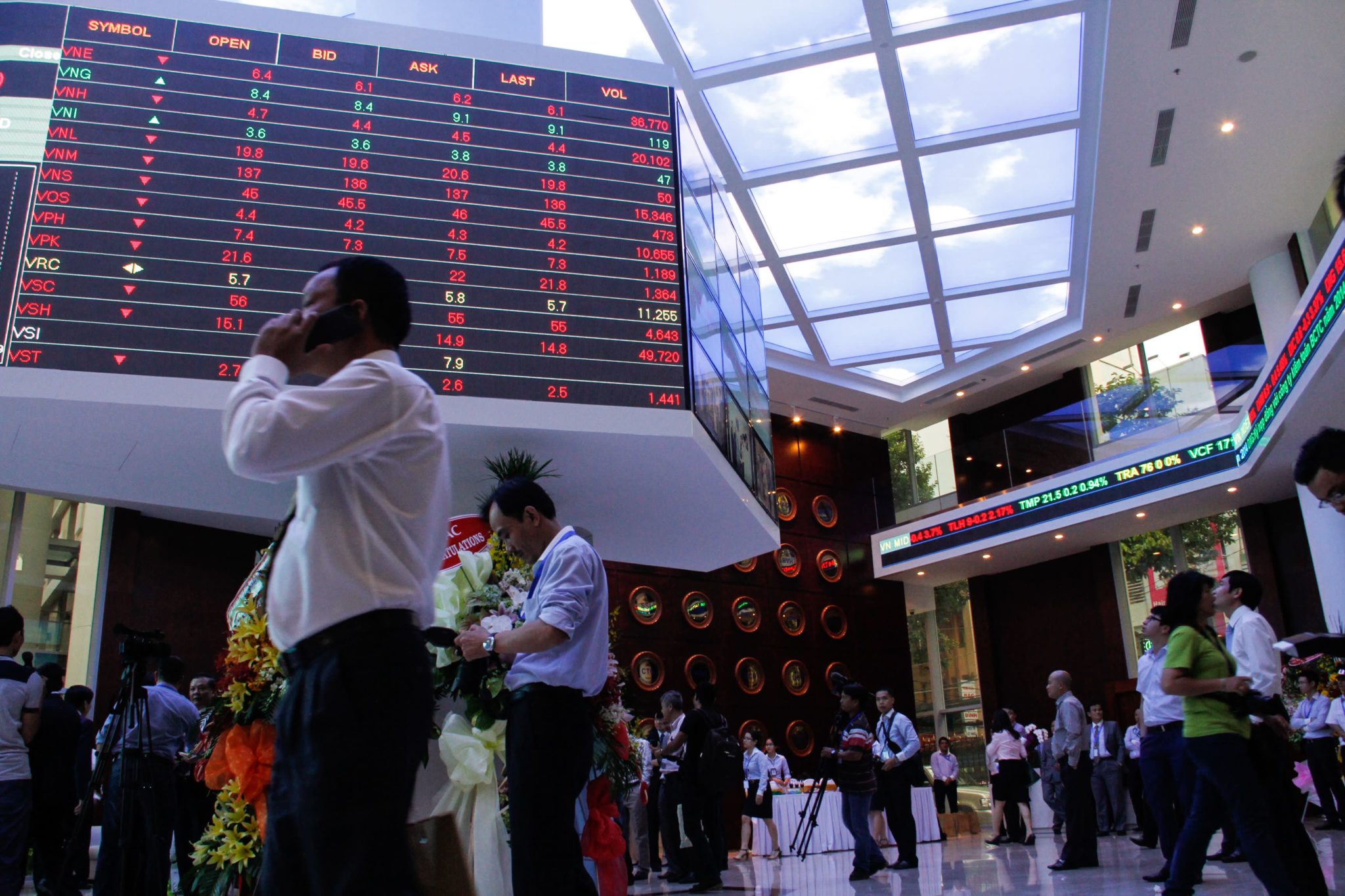
    The Vietnam stock market began the year on a high note, setting two new historic peaks within the first two trading sessions. The VN-Index, Vietnam’s benchmark stock index, closed at a record-breaking 1,788 points on Monday and escalated a further 1.56% to a fresh peak of 1,816 points on Tuesday. After closing the previous year 40% higher, it now ranks as the tenth best-performing stock index globally.

    The Ho Chi Minh Stock Exchange, the basis for the VN-Index, experienced a 6% gain in trading on Tuesday, reaching VND27.45 trillion (US$1.04 billion).

    On the other hand, the VN30 basket, which consists of the thirty largest capped stocks, saw 23 stock tickers rising. Leading the way was GAS, a state-owned Petrovietnam Gas, with a 7% increase, closely followed by property titan Vinhomes’ VHM, which climbed 6.9%.

    Fuel distributor Petrolimex’s PLX finished 6.7% higher, while MB’s MBB, a lending company, rose by 5.1%.

    However, two prominent stocks experienced a decline. Duc Giang Chemicals Group’s DGC dropped 3.8%, while Sacombank’s STB, a lender based in Ho Chi Minh City, fell by 2.1%.

    Foreign investors mainly sold off stocks of the private conglomerate Vingroup’s VIC and VHM, resulting in net sales of approximately VND387 billion.

    Meanwhile, the HNX-Index for stocks on the Hanoi Stock Exchange, which primarily consists of mid and small-cap stocks, fell by 0.09%. The UPCoM-Index for Unlisted Public Companies Market also experienced a drop, declining by 0.39%.

    Questions & Answers

    What were the new historic peaks for the Vietnam stock market at the beginning of the year?

    The VN-Index, Vietnam’s benchmark stock index, closed at a record-breaking 1,788 points on Monday and escalated a further 1.56% to a new peak of 1,816 points on Tuesday.

    Which were the top-performing stocks in the VN30 basket?

    Leading the way was GAS of state-owned Petrovietnam Gas with a 7% increase, followed closely by property giant Vinhomes’ VHM, which climbed 6.9%.

    Which stocks did foreign investors predominantly sell off?

    Foreign investors mainly sold off stocks of the private conglomerate, Vingroup’s VIC and VHM, resulting in net sales of approximately VND387 billion.

  • Amazon’s Q3 Profit Skyrockets, Thanks to Cloud Services and AI-Driven Sales Boost

    Amazon’s Q3 Profit Skyrockets, Thanks to Cloud Services and AI-Driven Sales Boost

    Amazon recently announced robust profit growth for the third quarter, showing sustained double-digit growth due to advancements across the company.

    Strong Sales and Revenue Growth

    The net income for the quarter ending on September 30 experienced a 13% increase, reaching a total of $180.2 billion. Sales in North America grew by 11%, while international sales saw a 14% rise. AWS sales also experienced substantial growth, increasing by 20%.

    According to CEO Andy Jassy, Amazon’s sustained momentum and growth during this quarter can be attributed to the meaningful improvements brought about by AI across all aspects of the business. “AWS is growing at a rate we haven’t seen since 2022. We are witnessing strong demand in AI and core infrastructure, and our focus has been on boosting capacity,” Jassy remarked.

    Key Business Developments

    The most notable achievement for Amazon this quarter was its ability to sustain the high momentum from the last reporting period. This was driven by broad developments across all business areas, which included a 16.3% increase in service revenue and a 9.6% rise in product sales.

    Despite a $2.5 billion legal settlement with the FTC and severance fees related to layoffs, net income increased by 38.2% to $21.2 billion. However, these extra costs resulted in flat operating income growth. Excluding these costs, operating income would have seen a 24.6% rise.

    The 30.2% growth in technology and infrastructure costs signified Amazon’s increased investment in areas like fulfillment and technology, despite its current success. While these investments are critical to foster new growth avenues and maintain competitive sharpness, there is a need for increased efficiency, which is being partially achieved through the elimination of certain roles and corporate hierarchy streamlining.

    Robust Retail Business

    Amazon’s retail business continues to exhibit strong growth, fueled by the ongoing expansion of fast delivery services into more rural areas and the competitive pricing and convenience of household essentials.

    Considering the broader Amazon ecosystem, the increasing sophistication of seller services is helping drive fee revenue and push up advertising sales, while also ensuring one of the widest possible selections for shoppers.

    For the fourth quarter, the company projects net sales to grow between 10% and 13%. Operating income is expected to range from $21.0 billion to $26.0 billion, compared to the $21.2 billion from the previous year.

    As Amazon looks to the future, potential for growth remains. The company is well-positioned to leverage AI more effectively to personalize customer journeys and decision making, and to drive efficiency savings in operations and logistics.

    Questions & Answers

    What led to Amazon’s growth in the third quarter?
    Amazon’s growth in the third quarter was primarily due to improvements across the business, driven by AI and broad advances in all business areas.

    What challenges did Amazon face in its operations this quarter?
    Operational challenges for Amazon this quarter included a $2.5 billion legal settlement with the FTC and severance fees related to layoffs, which affected operating income growth.

    What are Amazon’s plans and expectations for the fourth quarter?
    Amazon expects net sales to grow between 10% and 13% in the fourth quarter, with operating income estimated to be between $21.0 billion and $26.0 billion.