SM Retail posted first-half 2026 revenues of 223.6 billion pesos ($3.7 billion), up 5.6 per cent from a year earlier. Regional consumer spending gathered pace across the Philippines.
Net income rose 6.0 per cent to 8.9 billion pesos ($270 million). Same-store sales grew 2.9 per cent across a nationwide network of 4,837 stores.
Food and Speciality Stores Drive Turnover
Food retail generated roughly 60 per cent of total sales across 2,824 points of sale. It rose 6.1 per cent with same-store gains of 3.3 per cent. SM Store, the group’s 79-location department store chain, grew revenue 3.2 per cent. Speciality store sales expanded 5.9 per cent, even after the operator closed a net 73 outlets to trim marginal locations.
The company relies on an asset-light format by leasing space within sister developer SM Prime’s commercial properties. Of the 490 physical stores opened over the past year, 80 per cent sit outside Greater Manila. These target provinces where modern retail still represents less than half of household shopping spend.
Mall Developer Backs Bay Reclamation
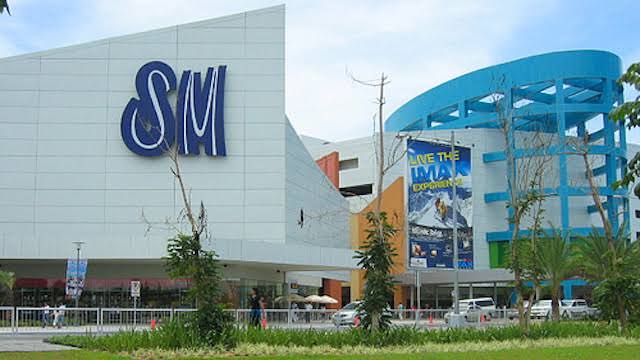
SM Prime lifted first-half revenue 5.3 per cent to 71.7 billion pesos ($1.2 billion). The developer operates 90 malls across the Philippines and nine in mainland China. Rental income provided more than 60 per cent of that total. Revenue from leisure facilities, including cinemas and ice-skating rinks, rose by more than 10 per cent during the same period.
Expansion into secondary provinces mirrors retail decentralisation across Southeast Asia, where operators such as Central Group in Thailand and Vincom Retail in Vietnam build commercial centers ahead of rising provincial incomes. Remittances from overseas workers feed directly into these regional retail hubs. They underpin Philippine private consumption at 75 per cent of gross domestic product.
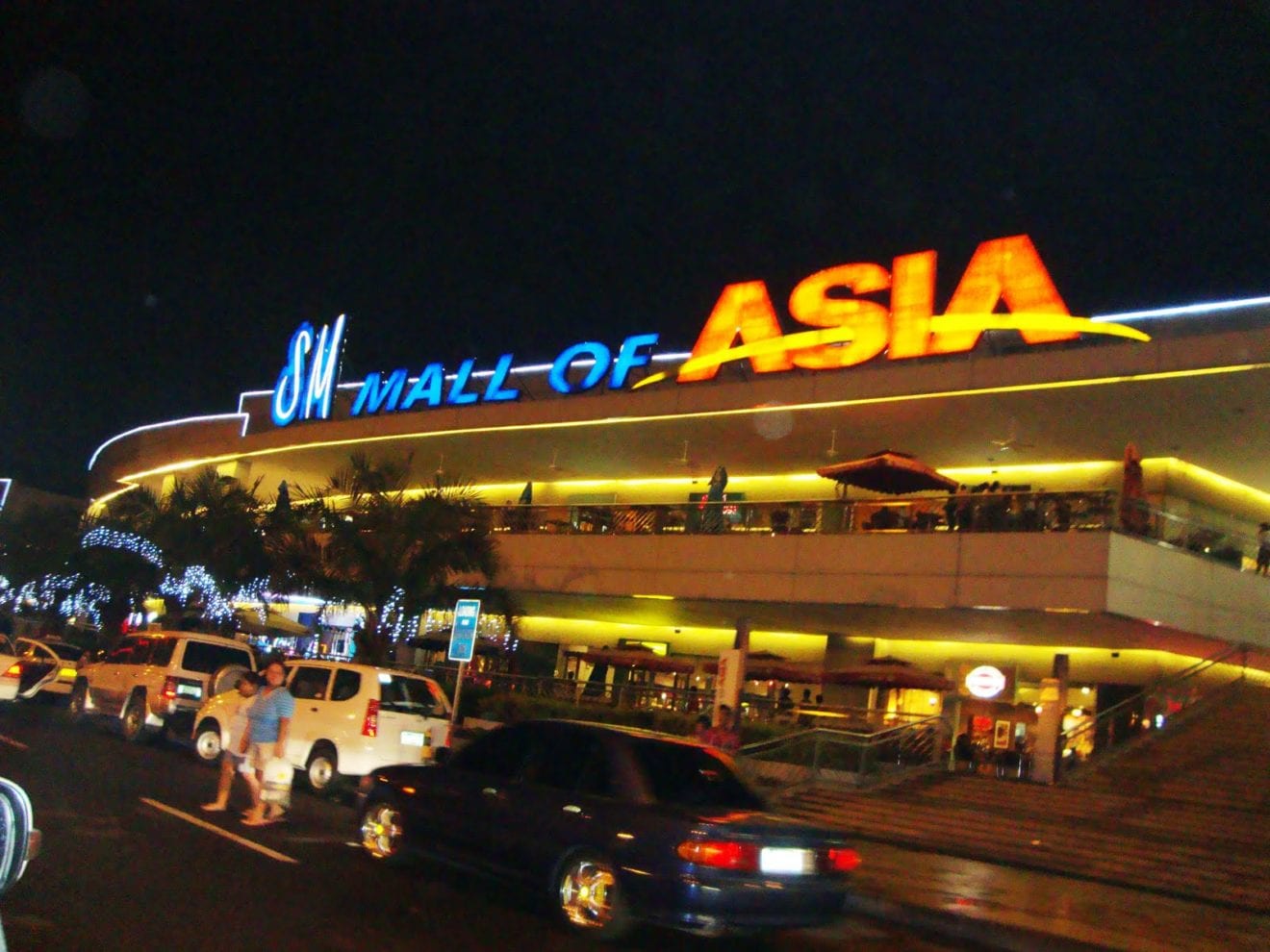
Work continues on Pasay 360, a 360-hectare Manila Bay reclamation joint venture with local authorities. The project will expand the Mall of Asia complex with new commercial, hotel, and residential districts over multiple development phases.
SM Investments, a conglomerate with operations in retail, banking, and property, experienced solid retail sales during the first three quarters of the year. These robust sales contributed to a consolidated net income of US$1.09 billion, a 6% rise compared to the same period in the previous year.
The Impact of Weather Disruptions
Despite significant weather disturbances in the Philippines, the company maintained steady performance. Frederic DyBuncio, President, and CEO of SM Investments remarked on the resilience of the company. He said, “In the face of adversities such as severe weather and flooding, our businesses have demonstrated sustained financial performance.”
Income Breakdown
Banking was the predominant contributor to SM Investments’ net income, accounting for 50% of the total. This was followed by property at 28%, retail at 15%, and portfolio investments at 7%.
SM Retail’s Performance
SM Retail disclosed a net income of $206.78 million, marginally lower than the $216.95 million recorded last year. Despite this slight dip, revenues grew by 5% to reach $5.39 billion. As a result, consolidated revenues climbed 4% to $8.17 billion.
Consumer Behavior Shifts
DyBuncio highlighted changes in consumer expenditure patterns as a factor impacting quarter-to-quarter comparisons. He explained that the earlier start of the school year in June shifted some expenditures from the third quarter to the second. Despite this shift, there was growth in niche retail spending, particularly in health and beauty, fashion, and kids categories. Essential spending also continued to bolster growth in food retail.
Category Performance
In terms of categories, department stores recorded a 3% revenue growth in fashion and children’s items. Food retail saw a 7% surge, largely attributable to store expansions. Specialty retail grew by 4%, driven mainly by increased demand in children’s and home categories.
DyBuncio expressed confidence in the company’s outlook despite external challenges, declaring, “While external factors may impact the overall economic growth, we remain positive as we head into the fourth quarter.”
Questions & Answers
What was the significant factor contributing to SM Investments’ net income?
Banking was the main contributor, accounting for 50% of the total net income.
What consumer behavior change affected SM Investments’ quarterly comparison?
The shift in school opening from the third to the second quarter caused some changes in consumer spending patterns.
Which categories demonstrated notable growth in SM Investments’ retail sector?
There was notable growth in specialty retail spending, particularly in health and beauty, fashion, and kids categories, as well as in food retail due to store expansions.
Hyflux said that creditor Maybank was terminating its collaboration agreement with the troubled Singapore water infrastructure player with immediate effect due to its failure to reach a binding deal with a bidder or investor.
This constitutes a breach which is incapable of remedy under the collaboration agreement,» the letter said, according to the Hyflux filing. In addition, Maybank has sent notices to Singapore water regulator PUB and the Energy Market Authority of Singapore, Hyflux said.
«These notices are in respect of an enforcement event and acceleration of the maturity of all amounts owing under the Tuaspring financing documents,» Hyflux said in the filing. «Maybank has also stated its intention to appoint receivers and managers over the assets of Tuaspring save for the desalination plant and shared infrastructure.» Maybank’s loans to Hyflux were substantial: A CGS-CIMB research note from August said that the exposure was at S$658.6 million as of the end of the first half of last year.
The Malaysian bank had agreed to hold off on enforcement action against Hyflux on the condition that the Singapore company would execute a deal with a successful bidder or investor which would fully settle with Maybank. A deal had appeared within reach and Maybank had provided Hyflux with multiple deadline extensions of their agreement.
SM Investments, a consortium of the Salim Group and the Medco Group, had entered a binding agreement in October to invest S$530 million for a 60 percent stake in Hyflux, which had filed for court protection in May. Hyflux had said the oversupply of gas in Singapore’s market had resulted in depressed electricity prices, which hit earnings in 2017 and drove losses in the first quarter of 2018.
But in early April, Hyflux terminated the deal, saying it had «no confidence» that SM Investments would complete the investment after the Indonesian consortium failed to provide a written commitment it would do so.
The deal’s termination led to Singapore’s water regulator PUB rescinding its extension of the default cure period for the contractual obligations of Hyflux’s Tuaspring Desalination Plant. Last Wednesday, PUB issued a notice to Hyflux that it would terminate its water purchase agreement (WPA) and take over the plant.
Maybank’s move was likely to mark another headache for Hyflux: «The termination of the collaboration agreement is expected to have a material impact on the financial performance of the group,» Hyflux said.
The founding father of Philippine retail, Henry Sy, has passed away. Sy, who has topped the Philippines Rich List for the last seven years, was chairman emeritus of SM Investments, one of the country’s largest business conglomerates. A Chinese immigrant who arrived in the Philippines at the age of 12 with his parents, his introduction to retailing began with helping out in his father’s neighbourhood store. He saved enough money to open a shoe store which he named ShoeMart, and whose initials later became the most recognisable brand name in the nation.
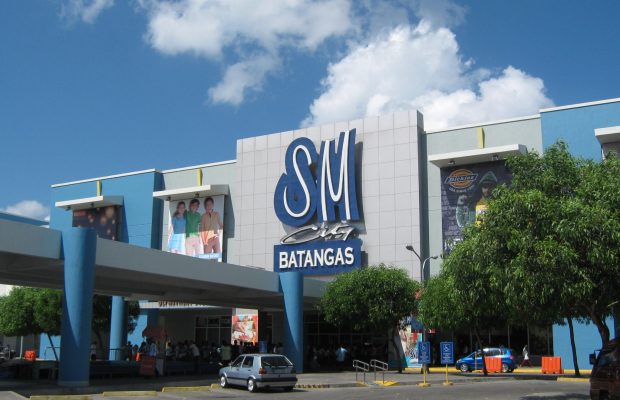
From a single shoe store, his business expanded into department stores, the first of which opened in 1972, then into malls, with 70 shopping centres bearing the SM brand in the Philippines and more in Mainland China.
SM Investments also owns supermarkets, BDO Unibank, almost 50 residential developments, six hotels and nine office towers.
Sy, who died on Saturday, stepped down as chairman of the company in 2017, taking on the title chairman emeritus and leaving the business under the leadership of his family and his long-time business partner Jose Sio, who is now chairman.
He had six children: Teresita Sy-Coson, Elizabeth, Henry Jr, Hans, Herbert and Harley. Teresita and Henry Jr are vice chairpersons of SM Investments and Harley serves as executive director of SM.
Forbes last year estimated the 94 year old’s net worth at US$19 billion, ranking him the most wealthy Filipino and 53rd richest man in the world.
The Board of Directors of SM Investments Corporation (SM) announced key organizational changes that will support the company’s next phase of growth.
The Board has already conferred upon Mr. Henry Sy, Sr. the role of Chairman Emeritus, in recognition of his role as the founder of SM and all of its core businesses. Mr. Sy, who is a multiawarded entrepreneur and philanthropist, opened the first ShoeMart store in 1958, a business now simply known as SM, and fostered it to become one of the largest holding companies in the country.
SM has likewise evolved into a dynamic and highly synergistic group of businesses with market leading positions in retail, banking and property development as well as a growing portfolio of other investments that can capture the high growth opportunities in the emerging Philippine economy.
Board Changes
Mr. Jose T. Sio was appointed to succeed Mr. Sy as the Chairman of the Board. Mr. Sio, as SM’s Chief Financial Officer for 26 years, was highly instrumental in supporting the phenomenal growth of SM and its subsidiaries. He instilled strict financial discipline across all businesses that later helped the company achieve optimal results even as the whole group maintained a sound and stable financial position. Mr. Sio was a senior partner at Sycip Gorres Velayo & Co prior to joining SM on November 1990.
New members of the board include Mr. Frederic C. DyBuncio as Director and Mr. Alfredo Pascual as Independent Director replacing Mr. Ah Doo Lim who joined the Board in 2008 and has served the full term as an independent director.
Mr. DyBuncio brings with him a wealth of experience in banking where he spent over 20 years with JP Morgan Chase and its predecessor companies. He was assigned to various places apart from the Philippines such as New York, Seoul, Bangkok, and Hong Kong and held various executive positions where he gained substantial professional experience in the areas of credit, relationship management and origination, investment banking, capital markets, and general management.
Mr. Alfredo Pascual just completed his six-year term as President of the University of the Philippines (UP). Prior to his involvement in the academe, he worked at the Asian Development Bank (ADB) for 19 years in such positions as Director for Private Sector Operations, Director for Infrastructure Finance, and Advisor for Public-Private Partnership.
Mr. Pascual was also among the pioneers in investment banking in the Philippines having held executive positions in State Investment House, Inc., First Metro Investment Corporation, Philippine Pacific Capital Corporation now known as RCBC Capital, and Bancom Development Corporation which eventually merged with Union Bank.
Management Appointment
Mr. DyBuncio will assume the role of President of SM Investments in place of Mr. Harley T. Sy who will remain as Executive Director of the Board. Mr. DyBuncio joined SM in 2011 as Senior Vice President and eventually as Executive Vice President handling the company’s portfolio investments. This portfolio has since grown to include Belle Corp., Atlas Mining, the Net Buildings, CityMalls, MyTown, and most recently, 2Go.
These changes affirm the continuing role of professionals in executing the larger vision of SM while further strengthening the group’s good governance and sustainability practices.
Philippines property developer SM Prime Holdings is looking to acquire shopping malls in China as well as buying more land for expansion.
But it is interested only in the Fujian province, says SM Prime executive committee head Hans Sy.
“We are still continuing to really look,” he says.
With “phenomenal development” in the past 10 years, the value of land has risen in China, and Sy says the group is assessing different areas that could offer value for money.
While there are malls up for sale, SM Prime is being careful about possible acquisitions. “I’m being choosy,” says Sy. “I only want within Fujian province.”
Fujian is the home province of his father, Henry Sy, the richest man in the Philippines, who built his retail empire from a small shoe store in Manila.
“We have the advantage right now [in Fujian] because of our success,” Sy says.
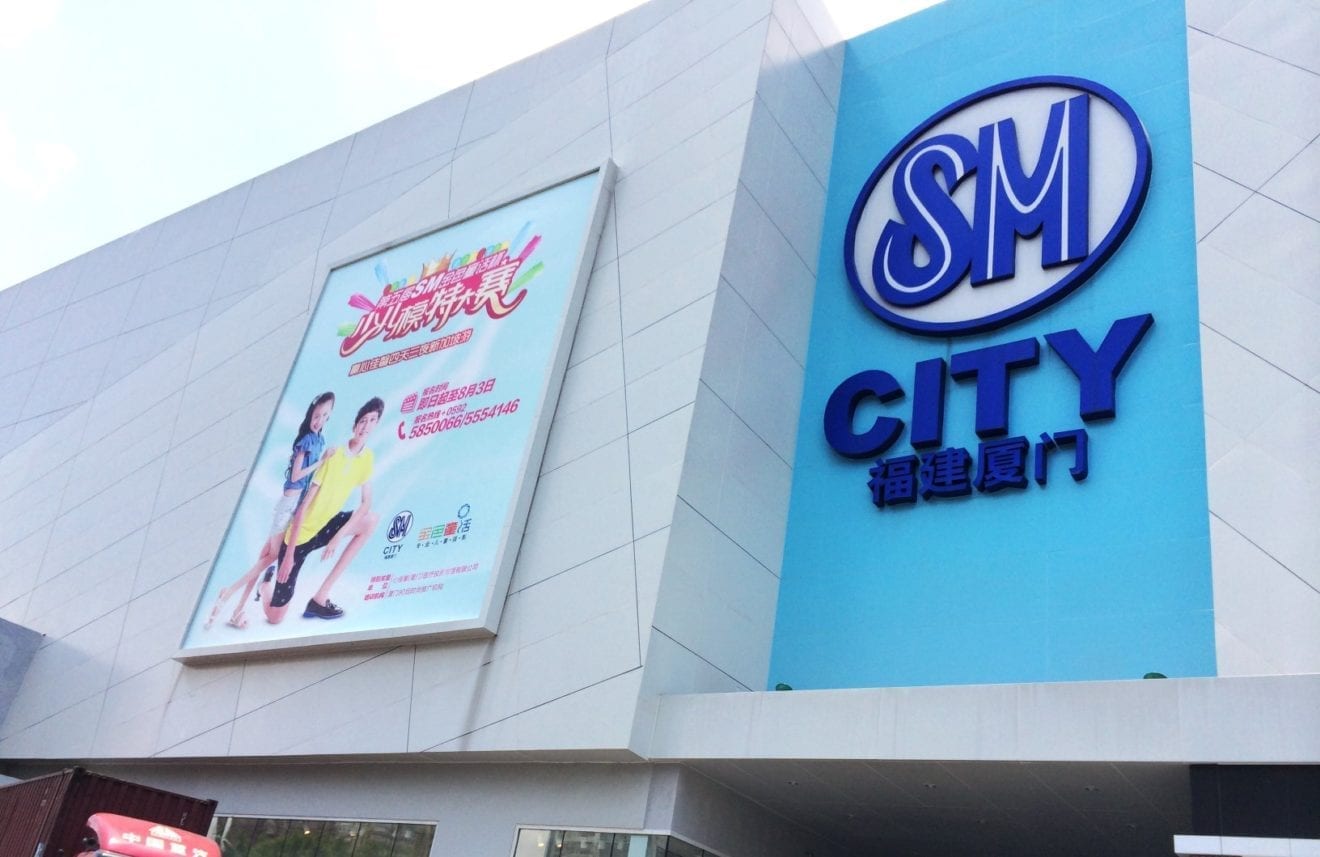
SM’s malls in China include Chengdu (166,665 sqm), Chongqing (149,429 sqm), Jinjiang (167,830 sqm), Suzhou (72,552 sqm), Xiamen (238,125 sqm) and Zibo (150,600 sqm) for a total gross floor area of 945,200 sqm. The company’s mall in Tianjin, which partially opened this year, has a gross floor area of 540,000 sqm.
In all, SM is targeting to further expand its mall network in the Philippines and China to 10.6 million square meters of gross floor area by 2018, according to documents presented in a briefing by SM Investments. This would be an extra 28 per cent from the 8.3 million gross floor area the company hit last year.
Of the target, 85 per cent would be accounted for by malls in the Philippines while 15 per cent would be in China.
With the Philippines’ consumption-driven economic boom showing no signs of abating, modern retail enterprises are sprouting outside the capital. Some are new companies eager to make a mark alongside the country’s established conglomerates.
DoubleDragon Properties is one of the up-and-comers. Back in April 2014, when its valuation was less than $100m, the company listed on the Philippine Stock Exchange. In its first day of trading, the stock shot up by 50 per cent, hitting the bourse’s daily limit. Since then, it has continued to be a strong performer.
The share price on Friday was nearly 30 times the price at flotation. This year, DoubleDragon’s stock has surged 140 per cent, making it the best-performing real estate company in the PSE’s property index. The price has climbed in conjunction with the rise of Rodrigo Duterte, the country’s first president from the southern island of Mindanao who came into power in June. He has promised to boost economic activity in rural areas.
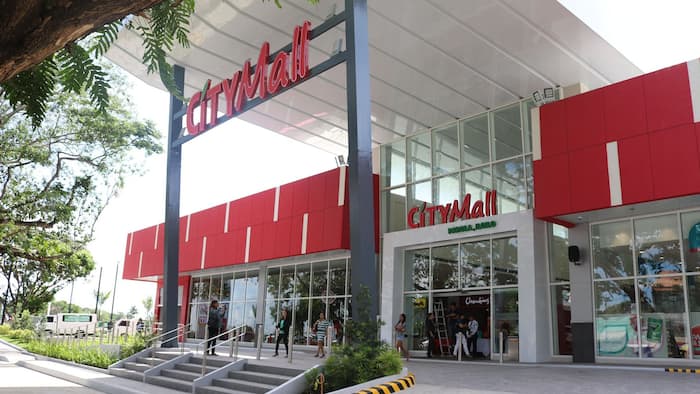
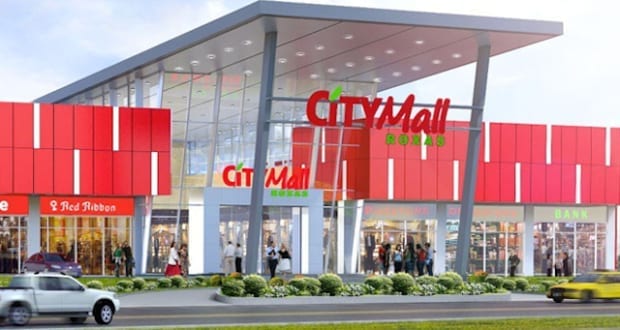
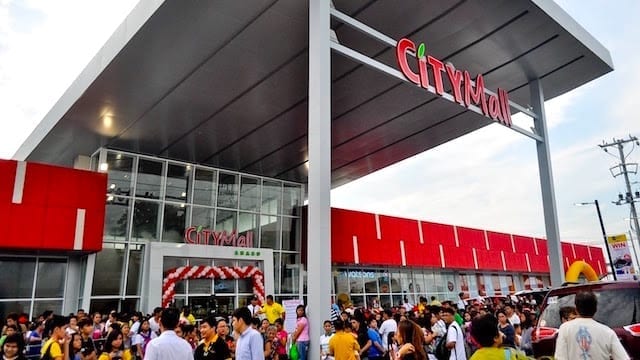
DoubleDragon’s priority is the construction of 100 shopping centers, each measuring 5,000 to 10,000 sq meters, by 2020. As of June, the company had secured 53 sites for these CityMalls, as it calls them, but built only eight.
Yet, even if some of the projects are behind schedule, its market capitalisation of 131.5bn pesos ($2.72bn) has eclipsed that of Robinsons Land — a unit of conglomerateJG Summit Holdings that has built 44 large shopping complexes and dozens of residential and office developments nationwide.
DoubleDragon is led by Edgar “Injap” Sia, a 39-year-old businessman from Visayas in the central Philippines. The self-made entrepreneur is best known locally as the founder of Mang Inasal, a fast-food company that specialises in grilled chicken.
When Mr Sia started his entrepreneurial journey about a decade ago, success was anything but a foregone conclusion. Born to a Chinese-Filipino-Japanese parents that own a grocery store in Roxas City in Visayas central Philippine region, Mr Sia dropped out of college to go into businesses. In 2003, he opened a grilled chicken eatery in the parking lot of a mall in Iloilo City, also in Visayas. Its chicken specialty, paired with unlimited rice, became a phenomenon, shaking up a fast-food market dominated by western-style fried chicken.
In 2005, Mr Sia established Mang Inasal as a franchise operation, creating the nation’s quickest-growing fast-food chain at the time.
An encounter with Tony Tan Caktiong, the founder of Jollibee Foods, the Philippines’ largest fast-food group, proved to be a key turning point. The two men share Chinese ethnicity and were both born in the Year of the Dragon in the Chinese lunar calendar, albeit 24 years apart. The “two dragons” opened a dialogue about the future of Mang Inasal.
Mr Sia’s business was becoming a threat to Jollibee. Mr Tan Caktiong offered to take control. In 2010, Mr Sia agreed to sell Jollibee a 70 per cent stake. This past April, he sold it the remaining 30 per cent. The transactions valued Mang Inasal at 5bn pesos.
From Mr Sia’s perspective, selling to Jollibee made sense on two levels. First, it would put Mang Inasal under the control of an experienced fast-food company that would nurture — rather than kill — his brand. Second, he needed the money to pursue his second dream: building a property and retail empire.
“I really like the [real estate] business, but it needs substantial resources,” Mr Sia said.
In late 2011, after Mr Sia relinquished management of Mang Inasal to Jollibee Foods, Mr Tan Caktiong approached him again. He, too, had been eyeing real estate. Sometime in 2012, the pair mapped out a plan to transform Injap Land, an Iloilo-based developer, into DoubleDragon, a nationwide player.
“We want to become one of the largest property companies in the Philippines,” Mr Sia said.
While clearly ambitious, Mr Sia is also pragmatic. Before the IPO, he accepted an offer from SM Investments — the Philippines’ largest conglomerate, owned by the Sy family — to acquire a 34 per cent stake in City Mall Commercial Centers, the entity that runs CityMalls under DoubleDragon.
This gave Mr Sia two powerful backers: Jollibee, a giant on the Asian fast-food scene; and SM Investments, which owns top Philippine lender BDO Unibank, mall developer SM Prime Holdings and retailer SM Retail.
All sides stand to benefit. Jollibee and SM Group see DoubleDragon and CityMalls as vehicles to tap provincial markets. As the principal shareholders of each company, Jollibee and SM will be priority tenants in the CityMalls.
The malls are “barely in Luzon and mostly in Visayas [and] Mindanao, which are exactly the under-penetrated regions where we think we would like to grow,” SM Group consultant Tim Daniels was quoted as saying in a local media report in 2014.
Mr Sia is avoiding Manila and broader Luzon, where more established players have secured land strategically. Instead, DoubleDragon plans to open 70 per cent of its branches in Visayas and Mindanao. To this end, he is taking advantage of know-how gleaned from the expansion of Mang Inasal. The fast-food chain now has about 450 locations, many in the same outlying areas where Mr Sia intends to build CityMalls.
He sees Mang Inasal as a barometer of local readiness for a modern shopping experience. Like the chicken restaurants, CityMalls will be situated in places with large concentrations of people — near transport terminals and markets, for example.
In October, a CityMall is set to open in the Mindanao city of Cotabato. The city is located west of Davao — the home town of Mr Duterte. Cotabato used to be a hotspot for terrorism and Muslim insurgents. “There are no SM or Robinsons malls there,” Mr Sia said, “but there has been Mang Inasal for eight years.”
Mr Sia is confident he has chosen the right target markets. “We strongly believe in the great potential of Visayas and Mindanao,” he said. “I personally had a very good first-hand business experience … in [the] Visayas and Mindanao areas during the expansion of Mang Inasal.” He added that the chain had “over 150 stores in Visayas and Mindanao in operation for several years.”
In 2015, Metro Manila’s annual economic growth rate of 6.6 per cent topped Luzon’s 5.4 per cent, Visayas’ 5.8 per cent and Mindanao’s 5.3 per cent. However, the Duterte government’s agenda for achieving “inclusive growth” is expected to brighten the prospects for rural regions. The president aims to preside over annual growth in the 7-8 per cent range for the next six years, with provinces making a greater contribution than in the past.
Since the Metro Manila market is maturing, established retail players are also eyeing opportunities in the provinces. Their strategies vary. SM Retail is building its own shops while tapping CityMalls to expand its network. Robinsons Retail Holdings and Puregold Price Club, the second and third-largest players, are in a race to acquire provincial retailers with a couple of branches.
Meanwhile, around 70 per cent of the retail sector remains informal, with myriad mom-and-pop shops. There are also independent provincial shopping centre operators running scattered locations in first-tier cities. Of the 145 cities in the Philippines as of June 30, a third were so-called “first class” municipalities, meaning they have annual revenues exceeding 400m pesos.
When it comes to creating a strategic network of shopping malls in the first-tier cities, Mr Sia hopes to be a step ahead. He envisions CityMalls as one-stop shops for daily errands. He said he did not intend to compete with bigger malls, where customers often spend the whole day on weekends, for dining, shopping and entertainment.
“The transition from the traditional unbranded fast food to modern fast food [was] already done in the Philippine provinces a decade ago,” Mr Sia said. “The transition from traditional retail to modern retail in the provincial areas has just started, and is expected to be completed in the next few years.” Mr Sia hopes to spearhead this new phase of retail industry through the expansion of CityMalls in the provinces
He continued: “That is the market where we are currently positioning CityMall, and once the transition cycle is done, CityMalls are poised to be the biggest beneficiary.”
Still, while the stock market is cheering Mr Sia’s strategy of focusing on Visayas and Mindanao, DoubleDragon does face its share of challenges.
Some analysts argue the company is overvalued, partly because most of its investors are retail investors, who tend to play up stocks. It was only in July last year that DoubleDragon managed to attract long-term institutional investors, and it may need to do more to improve its credibility with bigger funds.
“The price is not warranted at this time,” said Richard Laneda, an analyst at COL Financial in Manila.
The company’s first-half net income rose 16 per cent to 144m pesos, as revenue jumped 15 per cent to 706m pesos. It is targeting net income of 4.8bn pesos by 2020.
DoubleDragon’s price-earnings multiple is 100, higher than those of SM Prime andAyala Land, which are both trading at around 30, noted Luis Limlingan, managing director of Reginal Capital Development.
Mr Sia said analysts should look beyond that metric. “Clearly, our investors are not looking at the ‘now,’ they are looking at the next five, 10 or maybe 15-year horizon.”
Anton Alfonso, an analyst at RCBC Securities, warned that Visayas’ and Mindanao’s under-developed infrastructure could hamper DoubleDragon’s mall network build-up. Convenience store chains looking to expand there have faced similar challenges.
Despite some delays in branch openings, Mr Sia said the company was confident it would meet its targets. “We should be able to announce the next phase of our business in the next few years,” he said, adding that DoubleDragon is open to overseas opportunities as well.
To be sure, DoubleDragon has the Philippines’ consumption-driven growth going for it. Consumption generates two-thirds of the country’s gross domestic product, and projections indicate the economy should keep expanding by an average of over 6 per cent for the next six years on the back of steady remittances from overseas Filipino workers and a growing business process outsourcing industry.
Mr Sia is hardly the only new-generation entrepreneur looking to ride this wave. Steve Benitez, from the central Philippine island of Cebu, hopes to turn his Bo’s Coffee chain into the world’s next Starbucks. It currently has 60 domestic branches. Ben Chan, another self-made entrepreneur, is building an apparel company, Bench, and is taking it into other Southeast Asian countries and China.
Then there are the heirs who are taking the reins of their family businesses. In 2015, Puregold Price Club appointed the son of founder Lucio Co, Ferdinand Vincent, as chief executive. Puregold’s parent company, Cosco Capital, plans to compete with Mr Sia in the community mall segment.
Mr Sia believes the completion of the 100 CityMalls is just the beginning of his new empire — and a rock-solid foundation. “Once we complete that, our presence will be powerful, and the confidence in our company will be higher.”
In Southeast Asia huge family businesses, conglomerates and state-owned companies still dominate the region’s economies. While it remains to be seen whether Mr Sia will accomplish his ambitions, the new-generation entrepreneurs will be key in taking the region to its next stage of growth.
Listed Philippine property developer Double Dragon plans to build a network of 100 neighbourhood style shopping malls across the Philippines by 2020.
The company has already opened eight CityMall centres and secured 53 sites to date. The new centres will range anywhere between 5000 sqm and 10,000 sqm.
Last week DoubleDragon announced it was issuing P15 billion in retail bonds to fund the development of its projects next year.
“The majority of the proceeds will be deployed in our projects within 2017 as by 2018, we expect to already have substantial rental revenues from our provincial community mall chain, CityMalls and our Metro Manila office projects such as Double Dragon Plaza in DD Meridian Park and Jollibee Tower in Ortigas CBD, both of which are expected to be completed within 2018,” Sia said.
Listed back in April 2014, Double Dragon Properties, has increased its stock value 29-fold since then – it’s risen 140 per cent this year alone.
CEO Edgar “Injap” Sia, 39, from Visayas, co-founded Double Dragon with Jollibee founder Tan Caktiong, who bought a controlling interest in Sia’s fast food chain Mang Inasal in 2010, acquiring the 30 per cent balance last April. Each deal was valued at 5 billion pesos.
In 2012, the two businessmen acquired an Iloilo-based property developer, turning it into Double Dragon and setting a course for a nationwide property group. Before the float, Sia accepted an offer from SM Investments to acquire a 34 per cent stake in City Mall Commercial Centers, which runs CityMalls on Double Dragon’s behalf. That gives fast food entity Jollibee a ready entry into regional markets – and SM Investments an interest in retail property outside the main cities in which it dominates with its larger-sized malls. As part of the broader SM group, CityMalls has a large, ready-made pool of potential tenants every time it opens a new facility- across food, hardware, health & beauty, grocery retailing and fashion, among other categories.
About 70 of the 100 malls planned initially will be built in the Visayas and Mindanao. The next scheduled to open – in October – will be at Cotabato in Mindanao, west of Davao and a location where neither Robinsons or SM have yet opened shopping centres.
One of those is at the 116ha Northtown residential complex being developed by Alsons Development and Investment in the northeastern part of Davao.
Sia said the mall, expected to be completed by the end of 2017, will anchor the residential development, serving residents and locals.
“We can clearly see the vision behind Northtown to soon become one of the most vibrant areas in Davao City,” he said.
CityMalls are positioned in the market as one-stop shops for daily purchases – not destinations to spend a day shopping, watching movies and eating with family or friends. Sia does not aim to compete with larger regional malls, the likes of which SM is rolling out across urban areas nationwide.
Sia is also considering opportunities outside the Philippines long-term, as well as more locations at home.
“Once we complete [100 malls], our presence will be powerful, and the confidence in our company will be higher,” he said in a recent interview.
Soon all SM’s retail-related businesses will come under a single umbrella company.
The planned SM Retail consolidation is expected to boost sales by 16.6 per cent to Php251 billion.
SM Investments Corp, Henry Sy’s holding company, said in an investor presentation that the merger of all retail-related businesses under SM Retail would ratchet up footprint and diversity in the group’s portfolio.
Aside from higher revenues, the combined merger will result in 1927 outlets and 2.4 million sqm of GFA across a diverse portfolio of food, household appliances, DIY, furniture, apparel, footwear, pharmaceuticals, cosmetics and specialty retailing stores.
Currently SM Retail has only 553 stores and 1.8 million sqm of GFA.
SM Investments is also expanding its minimart concept store Alfamart. While Alfamart is in the testing phase, it now has 126 branches mostly in provincial areas south of Metro Manila and in residential areas.
The conglomerate said the minimart concept was different to convenience store, as it offers supermarket pricing and ready-to-cook items versus ready-to-eat products.
Prior to the merger, SM Retail operates 53 SM department stores, 44 hypermarkets and 213 supermarkets and majority stakes in the local operations of Alfamart, Forever21, Crate & Barrel and other specialty and apparel retailers in addition to a minority stake in Uniqlo.
SM Retail brands include Ace Hardware, SM Appliance Center, Homeworld, Our Home, Toy Kingdom, Watsons, Kultura, Baby Company, Sports Station and several other specialty stores.
SM Retail is one of the leading retail companies in the Philippines, along with Robinsons Retail Holdings of the Gokongwei group and Puregold Price Club.
Leading Philippines retail, banking and property developer SM Investments Corp has entered into a partnership with e-commerce giant Lazada. Through this alliance, it hopes to leverage Lazada’s popularity in the Philippines (6th most popular website) to push sales of its merchandise online.
According to Teresita Sy-Coson, vice chairwoman of SM Investments Corp, it will initially carry light-to-carry non-food items through Lazada’s online store, then eventually offer bulkier items such as furniture and appliances.
This venture will drastically boost SM Investments Corp’s existing e-commerce presence. In Dec 2014, its retail arm, SM Store, launched an e-commerce platform, selling a gamut of goods from apparel, bags and shoes to luggage and gift vouchers. At the end of February, SM Investment Corp sought to consolidate all its retail businesses including Watsons and Toy Kingdom under the SM Store banner.
According to a report, its combined retail stores number 1,374 and netted a revenue of US$1.14 billion in 2015.
With this consolidation and partnership with Lazada, it will both drastically expand its online repository of merchandise, as well as extend its online reach.
E-commerce in Philippines has been picking up steam over the recent years. According to a Statista report , e-commerce will bring in US$1.26 billion in 2016 and is expected to hit US$2.69 billion in 2020. The number of e-commerce users is also projected to reach 46.1 million.
Lazada will play no doubt a key role in boosting Philippines e-commerce growth – last year, it captured 20 per cent of all online sales in the country. This, in part, was due to the filipinos appetite for consumer electronics, which bagged a whopping US$581.5 million of online sales in 2015.
Lazada’s climb to e-commerce dominance in the Philippines was not without setbacks. Late last year, it was accused of carrying fake products.
Retail king Henry Sy, Sr. remains the Philippines’ richest person, according to the Forbes 2016 Global Billionaires’ list.
Sy, 91, has an estimated net worth of $12.9 billion – roughly P562.3 billion – as of this month, making him the world’s 71st richest person.
His net worth dropped from $14.2 billion in 2015 due to the volatile global market, weak oil prices and strong US dollar.
Born in Xiamen, China in 1924, Sy migrated to the Philippines and conquered the retail scene becoming the SM founder. His eldest daughter, Teresita Sy-Coson, has become one of Asia’s most powerful businesswomen.
Sy’s family business empire, SM Investments Corporation (SMIC), includes retailing, real-estate, hospitality, banking, mining, education and healthcare services.
In 2015, SMIC reported a 13 per cent growth in recurring income, with consolidated net income of P28.4 billion and consolidated revenues of nearly P300 billion. The increase came on the back of 17 per cent growth in retail earnings, 14 per cent growth in property net income and 10 per cent growth in bank income.
SM Investments Corporation (SM) was cited anew by Hong Kong-based magazine The Asset as a winner of the Platinum Award, the highest award for excellence in corporate governance, corporate social responsibility and investor relations for seven years running. SM’s Senior Vice President for Finance Franklin Gomez received the awards on behalf of the company.
SM was also awarded as the Best Investor Relations Team, a new category this year. SM is the sole Philippine company awarded this category among only seven companies in the Asian region. SM’s Investor Relations department is headed by Senior Vice President Corazon P. Guidote. She is supported by a team of IR and communications professionals whose main goal is to address the requirements of both its major and minority shareholders through direct communications, mainstream and social media communications, domestic and international IR roadshows, conferences and forums. They reach out to as many investors as possible both equity and fixed income who have interest in the Philippines given that SM is widely considered by the investment community as an ideal proxy for investing in the country.
Attesting further to SM’s adherence to global standards across the group, its major listed subsidiaries SM Prime Holdings Inc. and BDO Unibank, Inc. likewise received the Platinum Award. BDO and SM Prime have also been excellence awardees of The Asset for the past six years.
The Asset’s Corporate Awards, which focuses on Excellence in Governance, CSR and Investor Relations, uses a rigorous research process for benchmarking the region’s listed companies. The criteria used to assess the companies include a range of metrics on financial performance, which are also a proxy for gauging management acumen. The purpose of the awards is to recognize the importance of sustainable growth where companies are also evaluated according to the quality of their corporate governance, social responsibility, environmental responsibility and investor relations. A total of 56 companies were awarded on December 15 at the Four Seasons Hotel in Hong Kong.
Philippines retail conglomerate SM says it’s in talks to purchase grocery retailer Cherry Foodarama.
In a disclosure to the inventory trade, SM Investments stated the 2 corporations are planning to enter right into a three way partnership, topic to agreeing on phrases.
SM additionally operates in a JV association with Waltermart and rival retail big Ayala Group has a partnership with Puregold.
Cherry Foodarama was based within the 1950s and is seen as one thing of a pioneer within the Philippines grocery enterprise. It has three shops in metro Manila – at Quezon Metropolis, Antipolo Metropolis and Mandaluyong.
If the deal is sealed, it might take SM’s grocery retailer community to 232, the prevailing shops working underneath the SM Grocery store, Hypermarket, Savemore and Waltermart manufacturers.
Puregold Worth Membership has 254 shops nationwide.