
Tag: small business

  • 5 Reasons for Loyalty Program from Small Business

    5 Reasons for Loyalty Program from Small Business

    Several businesses have implemented a loyalty program, and for a healthy reason. They increase purchases volumes, improve customer loyalty, encourage repeat clients, and much more.

    According to studies, it costs five times as much to attract a new client than retain an existing one. That’s why small firms need to turn a one-time customer into a loyal, repeat customer.

    And yes, a loyalty program from small business is your secret weapon. According to statistics, 40 percent of customers are likely to buy again from businesses and brands that reward loyalty.

    Here are the main reasons why small businesses should invest in loyalty programs for their customers.

    1. Gather Customer Data

    Yes, a customer loyalty program gives you a high quality of data associated with having their purchases synched into an organized system. Rather than play a guessing game about how new and existing customers are spending money with your firm, the loyalty program provides insightful information on their shopping habits.

    The valuable data helps you make market-specific products or promotions to the existing clientele. All this will be based on their spending habits.

    1. Helps You Retain Existing Customers

    Yes, retaining an existing customer is exponentially easier, less costly, and more beneficial than attracting new ones. According to studies, increasing the retention rate by five percent increases profits by anywhere from 25 to 95 percent. But that’s not all, attracting a new customer will cost your firm 5 times more than retaining an existing one. And yes, existing customers are known to spread the gospel about the quality of your products, services, and loyalty program to their friends and relatives. All this helps grow your business.

    1. Increase in Sales

    A customer is always looking for a better deal in terms of quality and price or both. So, why would a customer pay more for a deal when they can pay less or get loyalty perks for buying the same products or services in your store?

    According to statistics, over 70 percent of buyers are likely to purchase products from a business that offers a loyalty reward program. Therefore, a loyalty program is a perfect tool to increase sales and revenue for a business.

    1. Increases Brand Awareness

    Yes, brand awareness is among the major factors driving customer’s buying decisions. Markets are extremely competitive and overcrowded, therefore, customers are likely to stick with a company or brand they know.

    The market instability –previous and current- makes the price a major factor when buying products. This creates a gap in the market for firms that give back to their customers allowing them to stand out from the rest.

    And yes, customers share their experiences with their friends and relatives, therefore don’t underestimate the power of referrals. If a client is receiving a discount or cashback from your purchase, there’s a probability they’ll share the information with their friends and relatives.

    1. Measure Customer Loyalty Value

    Other than gathering data for customer loyalty programs, it is also providing you an opportunity to measure how valuable an individual customer is to your firm. For instance, you can gather data on how much data they spend annually or how frequently they shop in your stores.

    All this information helps you connect and relate with your most engaged fans. The continuous data feed helps you refine the loyalty program to reach the repeat top customers as efficiently as possible.

    Conclusion

    As a small business owner, you want to grow your business to greater heights. Well, investing in loyalty programs may help you realize this dream. It does so by increasing your building customer loyalty, which in turn results in higher sales. And yes, you can use the program to measure the loyalty value and tailor your programs to reach the top customers as efficiently as possible.
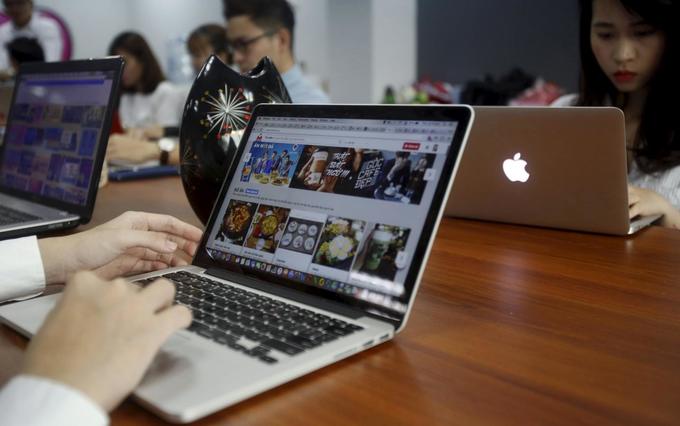



  • Vietnam’s startup potential lures international students, overseas Vietnamese

    Vietnam’s startup potential lures international students, overseas Vietnamese

    Founders of Wisepass, Base.vn and WeFit are educated overseas, drawn back to Vietnam by its startup potential. Lam Tran, 34, is a French overseas Vietnamese with over 10 years’ experience in marketing at Google Europe. He returned to Vietnam and founded Wisepass, a lifestyle app that connects users to a wide range of dining, leisure and entertainment services through paid membership packages.

    In 2018, Lam made WisePass available in Thailand and the Phillipines. “I believe to succeed businesses must lead their home market first, before thinking of expanding overseas,” said Lam.

    Having set up the business in HCMC and then expanded to Hanoi, Lam regularly flew to the capital city to attend events and promote his products. After selling 10 memberships in a day, Lam was able to show employees the direction and potential of WisePass.

    “Global expansion may sound intimidating, but after all, founders must start from the smallest things: talk to customers, selling products,” Lam said. There is no need to wait for big events, he added, “all you need to do is show up and market your product at appropriate places.”

    WisePass currently operates in three countries, with 300 partners and over 1,000 monthly active users.

    The founder of Base.vn, Pham Kim Hung, is well-known  in Vietnamese math circles. He won Gold and Silver medals at the International Mathematical Olympiad and is the author of a math textbook published in four languages. Graduating in computer science from Stanford University, Hung did not stay on to work in Silicon Valley but decided to return to Vietnam.

    In 2016, he launched Base.vn, a business management software under the Software-as-a-Service (SaaS) model, where software is leased under a subscription instead of installed. The app is built to unify corporate governance processes, from administration to human resources, task management, financial management to sales marketing.

    Base.vn currently serves over 500 enterprises, including many large organisations like VIB, VPBank, ACB, The Coffee House, McDonald’s and VinCommerce.

    Base.vn currently has the highest investment in all business-to-business startups in Vietnam.

    “After Indonesia, Singapore and Malaysia, we believe that Vietnam can become the next major technology powerhouse in the region,” Chandra Tjan, co-founder and partner of Indonesian fund Alpha JWC Venture said.

    In addition to Base.vn and WisePass, in the past few years, the Vietnamese startup community has received many other innovations: WeFit (fitness), Elsa (language learning), Logivan (van hiring), GotIt (gift delivery), and Uiza (video streaming). Most of these entrepreneurial efforts have been successful at carving their own niche in the Vietnamese startup ecosystem.

    Experts have said that with over 100 million people, Vietnam has great potential for socio-economic development, and with a rapidly growing middle class combined with quick adaption of digital developments, the ground is fertile for new ventures, especially startups.

    Apart from the economic potential, young people returning to Vietnam also have a sense of duty and obligation to their homeland, as also a realization that their efforts here can have greater positive impact on society as a whole, according to experts.

    Investment in Vietnamese startups rose to $889 million in 2018, three times that of 2017, according to a report recently released by Topica Founder Institute (TFI), a startup accelerator program in Vietnam and Thailand run by Hanoi-headquartered multinational educational technology company Topica.

  • Alipay to support China’s micro and small businesses to embrace digitization

    Alipay to support China’s micro and small businesses to embrace digitization

    Alipay has announced that it will launch new initiatives to provide more digital tools, safeguards, loan services and training to further improve efficiencies and support the growth and digitization of small and micro businesses (SMBs) in China.

    SMBs form the cornerstone of Chinese society and create millions of job opportunities. However, shifts in industry models mean that online and offline operations are increasingly merging together and this group has lacked the services and tools needed to improve efficiencies and seize the opportunities from digitization. Aiming to tackle this on-going issue, Alipay, will provide the following support to bolster the development of SMBs in China.

    Ÿ   Provide tools and services to support digital operations, including business analysis, customer engagement, and supply chain services aiming to help 100 million SMBs across China.

    Ÿ   Provide an additional safeguard to SMB owners. SMBs using Alipay services will be offered a maximum of RMB1000 (USD $144) rebate every half year on out-patient services. Alipay expects to extend coverage to 50 million SMBs by the end of 2018 and rebate more than RMB500 million (‪USD $71.8 million) in total.

    Ÿ   Provide MYbank’s loan services to 30 million SMB owners and self-employed people over the next three years.

    Ÿ   In collaboration with 100 start-up entrepreneurs, Ant Financial, the parent company of Alipay, will tailor 100 lessons in corporate development and operations with the aim of training 10 million SMBs and facilitate their digital transformation.

    A great number of SMBs have benefited from Ant Financial’s range of services, including those provided to QR code merchants, who are typically SMBs that use Alipay’s QR code to collect payment from customers. These services include business analysis, financial management, loan and insurance services. Powered by Artificial Intelligence, Ant Financial enables SMB owners to apply for business loans in less than three minutes by smartphone, receive near-instant approval without human intervention. One QR code merchant from Wuhan, for instance, applied for a RMB20,000 (USD $2,874) business loan during Chinese New Year and received approval within one second. In the year ending October 2018, over three million QR code merchants have applied for loans through this service with an average loan size of less than RMB8,000 (USD $1,150).

    AI facilitates the entire process of out-patient benefits offered to QR code merchants, from guiding users to upload their invoices correctly, to identifying key data points on the invoice (such as hospital name and fee amount), to reviewing the information and materials submitted. Ant Financial’s blockchain technology secures the authenticity of the invoices. Tens of millions of QR code merchants have begun to take advantage of this offer with 20,000 merchants on average signing up for the service each day.

  • Indonesia Gov’t Cuts Tax for Small and Medium Enterprises

    Indonesia Gov’t Cuts Tax for Small and Medium Enterprises

    Indonesia will cut the final income tax rate for small and medium-sized enterprises by half, to 0.5 percent of their annual sales, in a move to help businesses manage their cash flow and expansion.

    President Joko “Jokowi” Widodo announced the cut at the East Java Expo in Surabaya, East Java, on Friday.

    The new regulation will be effective on July 1.

    Today, businesses with annual revenue of less than Rp 4.8 billion ($340,000) pay a 1 percent tax on their total sales. Other businesses pay 25 percent of their profit as income tax and set aside 10 percent of sales for value added tax.

    While the current arrangement only demands simple accounting, small and medium-sized enterprises say it also means they have to pay income tax when they are at loss, which disrupts their cash flow.

    “The new regulation is intended to encourage SMEs to be more active in economic activities by providing a fairer taxpaying scheme,” Directorate General of Taxation spokesman Hestu Yoga Saksama said in a statement.

    To lower their tax bill, SMEs must file an application to the tax office. Individual taxpayers can enjoy the lower tax rate for seven years, corporate taxpayers for four years and limited liability companies for three years.

    “The cut from 1 percent to 0.5 percent is expected to facilitate SMEs in maintaining their cash flow, which can then be used as additional capital for their businesses,” said Yustinus Prastowo, executive director at think tank Center for Indonesia Taxation Analysis.

    The cut will cost the government around Rp 2.5 trillion a year, which according to Yustinus should be seen as an investment, as the policy is expected to increase the tax base.

    Tax office data show that tax revenue from SMEs last year amounted to Rp 106.3 trillion — only 60 percent of the government’s target. It was also nearly Rp 12 trillion lower than in the previous year.