Tag: smartwatches

  • Fitbit co-founder reveals the future of Fitbit smartwatches

    Fitbit co-founder reveals the future of Fitbit smartwatches

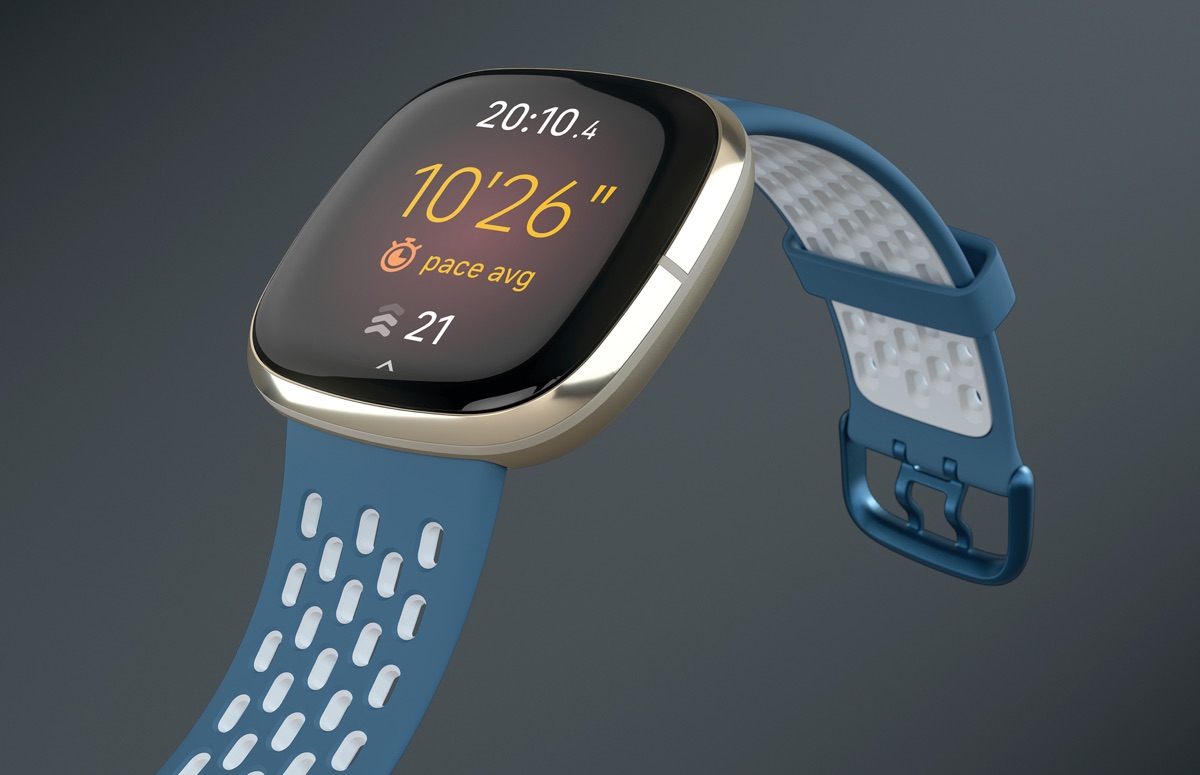
    During Google I/O 2022, Big G announced the Pixel Watch, its long-awaited, first-ever smartwatch. But, although the new wearable bears the Google branding, it has a lot in common with Fitbit smartwatches. The search giant acquired Fitbit in 2019, and we can safely say that the Pixel Watch will be the first Wear OS device with Fitbit integration.

    So, considering that Google is launching its own watch now, we can’t help but wonder what will happen to Fitbit smartwatches. Well, according to Fitbit Co-Founder and the head of Google’s wearables division, James Park, Google releasing a smartwatch doesn’t mean that Fitbit watches are getting the ax.

    Park stated that Google’s Pixel Watch was designed for users who want LTE and, at the same time, all the advanced health and fitness features the tech industry can currently offer. In other words, the Pixel Watch is targeted at users that prefer the Apple Watch or the Samsung Galaxy Watch experience.

    Park further stated that, according to him, there will always be people for whom LTE and the other stuff that watches, such as the Apple Watch Series 7 and the Samsung Galaxy Watch 4, offer are completely unnecessary. According to him, such people will always prefer the tracker with the most advanced health capabilities and reliably long battery life, implying that Fitbit smartwatches will continue to be designed for hardcore fitness enthusiasts.

    In this regard, Park said, “The great thing about combining Pixel and Fitbit is that we’re able to collectively offer these different devices. People can pick and choose what’s best for them.”

    During the interview, James Park also revealed if the Fitbit app will replace Google Fit or vice versa now that Google has its own smartwatch. Park stated that for now, both apps will continue to exist as is, since they are each used by a pretty hefty amount of users, and that both groups like their chosen apps for a variety of reasons. Google doesn’t want to mess with the experience with either one subset of users for the time being.
  • Smartwatch market set for a shakeup: Juniper Research

    Smartwatch market set for a shakeup: Juniper Research

    Big brands are set to lose share in a major shakeup of the smartwatch market. According to Juniper Research, the largest brands in the category now will see their market share fall by 2023 as new niche players gain ground. Four leading brands including Apple, Samsung, Fitbit, and Fossil will see sales decline from an estimated 58 per cent of the market last year to 47 per cent by 2023. The decline is due to the growth of smaller players such as Garmin, Huami and Huawei.

    Smaller players will thrive thanks to strategies tailored for niche markets, their choice of cases or price points, while other brands are releasing premium smartwatches combining the best of fitness, outdoor activity and health features. While Apple will remain the largest single vendor in terms of shipments over the next four years, Huawei will enjoy the fastest growth, at a CAGR of 20 per cent.

    An intensified focus on healthcare integration will also contribute to an increase in smartwatch shipments over the next few years. Juniper forecasts that Apple and Withings will lead this section, followed by Fitbit and Garmin.

    China to become the biggest market

    The rise of smaller players is linked to the rapid expansion of the Chinese market offering lower-priced smartwatches. The Far East and China have now overtaken North America as the largest geographical market, with more than 24 million smartwatches shipped last year, compared to 19.5 million in North America.

    The gap between these two markets will widen by 2023, with the Far East and China trebling its shipments by then.

    Slower hybrid market

    The adoption of hybrid smartwatches will be slower than expected. Last year, hybrid smartwatches represented about 22 per cent of all smartwatch sales. The slower growth is linked to smaller players focusing on digital smartwatches offering more possibilities in terms of apps, connectivity and sensors than hybrid watches, which remain limited in their functionality.

  • Wearable power supplies: the next new retail category

    Wearable power supplies: the next new retail category

    What’s the next new retail category in electronics? Wearable power supplies, judging by product innovations just revealed in Korea.

    Samsung SDI Co and LG Chem Co, South Korea’s two major battery makers, are expanding their product portfolios into flexible cells for wearable devices, a move seen to meet increasing global demand for bendable gadgets such as smartwatches.

    The two battery-making units of Samsung Group and LG Group showcased their latest flexible battery lineups at an exhibition in Seoul.

    Samsung SDI unveiled two types of flexible batteries – a stripe and band-type — that are designed to be applied for use in various wearable devices as necklaces and hair bands, the company said.

    The ultra-slim, 0.3mm-thin stripe battery, showcased for the first time, is a next-generation battery made with fibre which enables far greater flexibility than existing bendable cells, the company said.

    The band-type battery is designed to be used in smartwatches and is proven to resist over 50,000 bendings and enhance a gadget’s capacity by up to 50 per cent, it added.

    The Samsung unit supplies the bulk of its batteries to its bigger affiliate Samsung Electronics Co, the world’s top smartphone maker. Recently there have been market speculations that Samsung’s next flagship smartphone, the Galaxy S7, will come in a bendable form. The smartphone is forecast to be released early next year.

    LG Chem also put on display a wristband-type battery called “wire battery” that can be folded into half. The company developed a wire-type battery in 2013 for the first time in the world, before it came up with the world’s first hexagonal-shape battery in June.

    LG Chem said the band-type and hexagonal batteries will likely double the battery capacity for smartwatches.

    According to global market tracker Gartner, smartwatches are forecast to account for 40 per cent of wrist-wearing devices in the world by 2016, with its global shipments to surpass 100 million in 2020.