Tag: smb

  • Citi to End Small Biz Banking in Singapore

    Citi to End Small Biz Banking in Singapore

    The bank will shut its consumer unit serving small businesses in Singapore in mid-August.

    Citibank has decided to close its Citibusiness unit, which will affect some 2,000 customers, following an ongoing strategic review of the business.

    About 20 to 30 staff will be affected by the changes, saying that Citi would be re-allocating its resources and our people to support other growth areas and sharpen its client focus.

    Citibusiness, which serves small-sized businesses, is part of its consumer banking division. The bank will continue to serve small and medium-sized enterprise (SME) clients through Citi Commercial Bank.

    Singapore is a priority market for Citi. We continue to invest and focus on growth areas of the bank including the SME and commercial banking business,» the spokesperson said.

    Citi recently announced that it is considering downsizing its consumer business worldwide, with an eye on selling some of its businesses in the Asia Pacific region.

    At the same time, the U.S.-headquartered bank has placed its bets on four wealth hubs, which includes Singapore, as it consolidates its operations globally.

    It aims to double its wealth management market share in Singapore from the current 5 percent and triple the number of clients by 2025. To achieve this, it is looking to hire over 330 relationship managers.

  • Help small businesses instead of AirAsia

    Help small businesses instead of AirAsia

    A political economist has questioned the decision of the government-owned Sabah bank to lend AirAsia RM300 million and said the money should instead be spent to help small and medium enterprises in the state.

    Firdausi Suffian of Sabah UiTM said he was surprised to read reports that the budget airline has secured an RM300 million loan from Sabah Development Bank, a wholly-owned subsidiary of the state government.

    Firdausi said while there was nothing wrong with a bank to issue loans to a company, a state-owned bank’s priority should be to assist companies in Sabah, particularly SMEs, which have been badly affected by Covid-19.

    “Against the backdrop of Covid-19, one would think that the focus would be on SMEs rather than a company which has been making huge profits for the past few years.”

    Last week, SAPP president Yong Teck Lee had urged the state government to stop the loan, as the bank was mandated to provide financing for projects in Sabah and not on “risky ventures”.

    However, in a stock exchange filing on Friday, the airline said the loan had been secured and disbursed and would be used to enhance logistics in Sabah, helping to create over 100,000 new jobs.

    Firdausi said SMEs were the backbone of the economy, and that Sabah had 55,000 SMEs employing over 150,000 people.

    “SMEs are only getting the assistance of around RM90 million in the two Sabah government stimulus packages,” he said, pointing out that the sector contributes close to 57% of Sabah’s gross domestic product.

    Another economist, Barjoyai Bardai of Universiti Tun Abdul Razak, said he could not see the Sabah government’s rationale in wanting to loan AirAsia so much money that could be used to support struggling businesses in the state.

    “It is a different story if they are investing in the company. I think the state government will have to explain the rationale behind this decision because it will come under scrutiny.”

  • HSBC Simplifies SME Green Financing

    HSBC Simplifies SME Green Financing

    HSBC makes an industry-first move to launch a green loan program with a simplified process aimed to boost small to medium-sized enterprise participation.

    A minimum limit of $350,000 will apply based on a newly simplified process that accepts green loan applications from potential borrowers holding industry certifications approved by HSBC.

    The certifications include: Singapore Environment Council’s Singapore Green Labelling Scheme (SGLS) and eco-certification schemes; Building and Construction Authority’s Green & Gracious Award, and Green Mark Scheme (GoldPLUS and Platinum); Singapore Green Building Council’s product and services certification schemes; and Green-e’s Renewable Energy Certification. HSBC could look to expand its list of accepted certifications.

    In the current environment, corporates typically develop bespoke green frameworks before applying for green loans to demonstrate that their practices with regards to the proceeds are aligned with internationally recognized standards. This could incur human resource and capital costs that are relatively burdensome for SMEs compared to large corporates which can achieve scale in long-term funding from their frameworks.

    We hear a lot of interest from SME clients in green loans, but we see limited action – this is not for want of trying, but comes down to accessibility, said HSBC Singapore’s head of business banking Ng Li Lian, highlighting demand from clients with business in electric vehicles, engineering or manufacturing, clean water and recycling sectors.

    SMEs can’t afford the typical costs or time associated with green finance, with management teams already spread thin as they focus on the day-to-day running of the business.

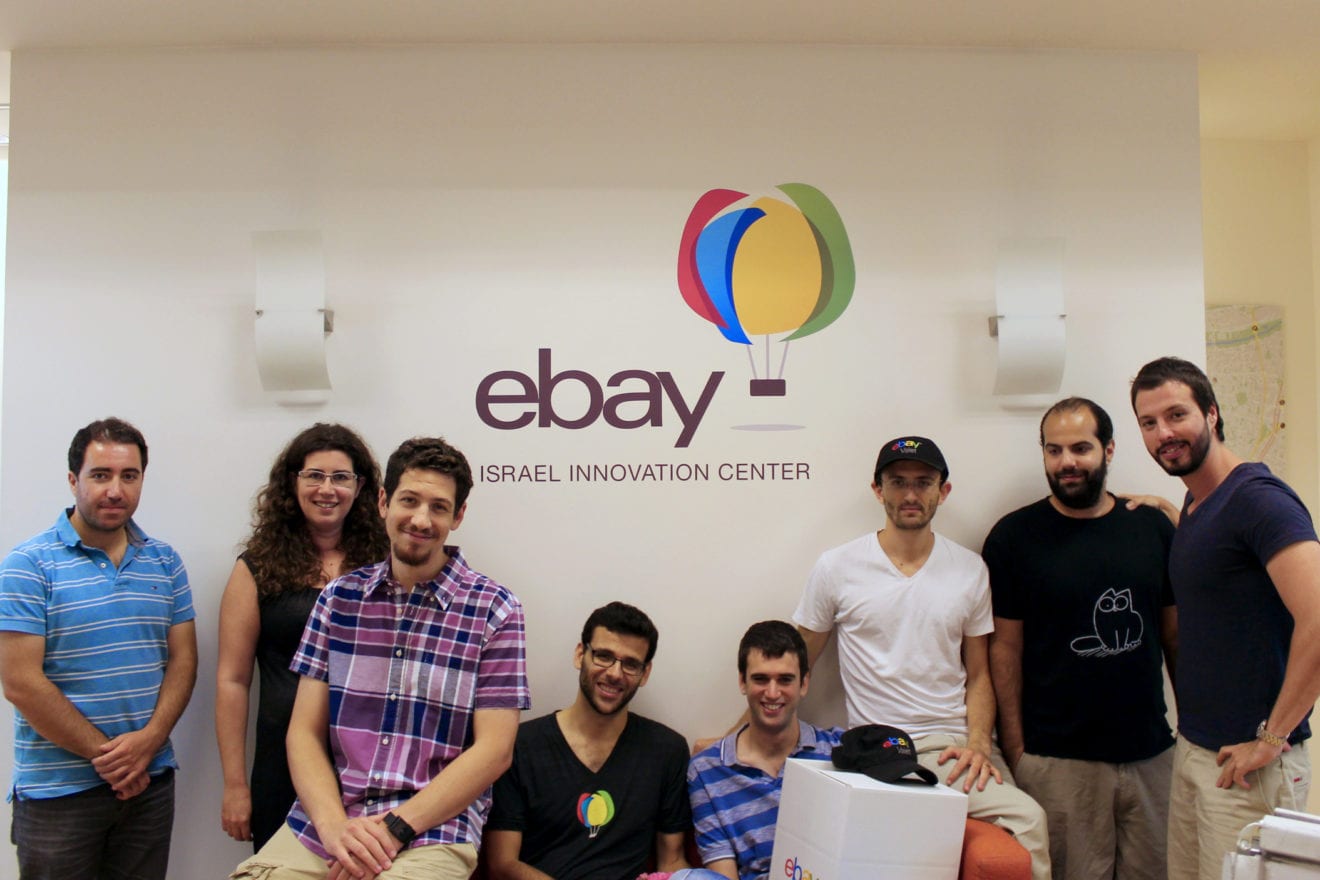
  • Ebay launches e-commerce training program in Singapore

    Ebay launches e-commerce training program in Singapore

    Ebay Singapore and the Institute of Retail Studies have partnered in an e-commerce training program.

    Called “Let’s Ebay with SIRS”, the full-day workshop aims to help aspiring entrepreneurs kickstart their e-commerce business and connect with the global marketplace of active buyers.

    The program was designed for small businesses and entrepreneurs who have little or no e-commerce experience but want to learn directly from the source.

    Singapore’s e-commerce market is expected to grow by 48 per cent to S$10.04 billion by 2022.

    “Singapore’s cross-border trade continues to grow and there is a huge opportunity for more small businesses to join the ranks of Ebay sellers,” said Wong Mei Inn, Ebay‘s head of Southeast Asia seller growth.

    “By listing their products on Ebay’s global marketplace, Singaporean businesses can reach 180 million active buyers all around the world.”

    SMEs contribute to 72 per cent of Singapore’s employment, and added a nominal value of $213.6 billion, or 48 per cent to the economy last year.

    “E-commerce has been recognised as one of the key growth opportunities under the 2020 vision of the Retail Industry Transformation Map launched by Spring Singapore (now Enterprise Singapore),” said Megan Ong, Nanyang Polytechnic’s Singapore Institute of Retail Studies director.

    “By partnering with Ebay, we will be able to encourage retailers in Singapore to adopt e-commerce and omnichannel strategies to succeed in today’s digital context.”

    Following the workshop, the two parties launched an Ebay onboarding program which further enables SMEs to optimise cross-border selling and manage operations.

  • US$2.7bil SMB cloud services industry in Indonesia by 2018

    US$2.7bil SMB cloud services industry in Indonesia by 2018

    The small and medium business (SMB) cloud services market in Indonesia is expected to grow at a compound annual growth rate (CAGR) of 30% in the next three years from Rp15 trillion (US$1.2 billion) in 2015 to Rp33 trillion (US$2.7 billion) by 2018.

    This growth will primarily be driven by SMBs moving business functions into the cloud as more tools and solutions are developed specifically for the SMB market, cloud computing specialist Odin said in a statement, citing its annual SMB Cloud Insights research report.

    The 2015 SMB Cloud Insights research for Indonesia reveals that infrastructure-as-a-service (IaaS) is the largest market opportunity for cloud services in 2015, accounting for 40% of the market at Rp 6.1 billion (US$$496 million).

    This segment – which includes virtual private servers, dedicated servers, and elastic computing – is projected to grow at a 24% CAGR and reach Rp11.7 billion (US$956 million) by 2018, driven largely by firms without any type of server moving into the cloud market for the first time, Odin said in a statement.

    The research also shows that business applications, or Software-as-a-Service (SaaS), will soon become the fastest growing cloud category in Indonesia, growing at a CAGR of 43%.

    Business applications such as file sharing and online backup are currently the most commonly used applications in Indonesia, and adoption is expected to increase, Odin said.

    Less commonly used business applications such as payroll and HR (human resource) applications, as well as customer relationship management (CRM) apps, are expected to see rapid growth in adoption over the next three years, it added.

    “As evidenced by this study, the Indonesian cloud market remains poised for rapid growth over the next few years – especially in the IaaS segment – underscoring a greater awareness and appreciation for cloud computing even in its early stages today,” said Pavel Ershov, Odin vice president and general manager, Asia Pacific and Japan.

    “Increasingly, more SMBs in Indonesia are using the cloud for their core business functions in order to compete with larger corporations.

    “This is a scenario we expect to see play out across today’s dynamic Asia Pacific business environment,” he added.

    Odin was formerly the service provider business of cloud and virtualisation specialist Parallels Inc, spun off in March this year. With offices in 15 countries, it supports more than 10,000 service providers in delivering applications and cloud services to more than 10 million SMBs, it claimed.

    Other highlights of the SMB Cloud Insights report for Indonesia include:

    • The market represents more than four million SMBs using cloud services. Security and control panels are two key areas for cloud services.
    • Unified communications – which includes hosted business voice services, email, and collaboration applications – is the second-largest category of the Indonesian cloud market (Rp4 trillion or US$324 million) and is poised for expansion.
      • Nearly 80% of Indonesian SMBs do not use email services. Of those which do, only 1% use in-house servers for email, another 7% use a service provider, and the remaining 12% use free email services.
      • Premium email security is a large concern – of the 20% of SMBs using email, an overwhelming 89% said that the increased need for email security was a purchase trigger for obtaining premium hosted email.
    • The Indonesian web presence market is valued at Rp1.6 trillion (US$128 million). Today, only 11% of Indonesia’s SMBs have websites. The market is set to double in the next three years to Rp4 billion (US$322 million).
      • Interestingly, 55% of Indonesian SMBs with websites have mobile-optimised sites. This compares to just 30% of SMBs in the United States and 25% of SMBs in Germany.
      • ‘Optimising mobile sites’ was ranked by respondents as the top feature, more than double the second priority of ‘displays on mobile without optimisation’ (22%), and ‘only displays properly on a computer’ (23%).
    • Almost three-quarters of all Indonesian SMBs purchase their services from just one or two service providers. One of the key reasons for this behaviour is that SMBs want to maximise the efficiency of their spending. This demonstrates the need for service providers to offer high-value, best-in-breed bundles and transparent pricing structures, Odin said.

    Odin said its SMB Cloud Insights report focuses on the cloud services that have the most current and future appeal for SMBs across four key categories: IaaS, web presence and web applications, unified communications, and business applications or SaaS.

    Research reports are available for 15 countries including Australia, Brazil, China, France, Germany, India, Japan, Mexico, the Netherlands, Poland, Russia, Spain, the United Kingdom, and the United States. Regional reports are also available for Europe and Asia Pacific.

    All SMB Cloud Insights reports are available for download here.