Retail News CRM

Tag: sms

  • Protecting A2P SMS Revenue Streams Amidst CPaaS and OTT Disruption: Strategies for Retail Success

    Protecting A2P SMS Revenue Streams Amidst CPaaS and OTT Disruption: Strategies for Retail Success

    As the Asia Pacific (APAC) region accelerates through its digital evolution, mobile network operators (MNOs) find themselves grappling with an urgent challenge: the protection of Application-to-Person (A2P) SMS, a crucial communication channel. Despite its reliability and security as a mode of enterprise communication, A2P SMS is increasingly undermined by revenue loss through gray routes, fraud, and fierce competition from communication-platform-as-a-service (CPaaS) providers and over-the-top (OTT) messaging options like WhatsApp and Flash Calls.

    Addressing these concerns is VOX Solutions, a company focused on A2P monetization, messaging security, and fraud prevention. The firm collaborates closely with operators, providing platforms and analytical tools designed to ensure revenue assurance while preserving the trust of both enterprises and subscribers.

    In an exclusive dialogue with Telecom Review Asia, John White, VP of Strategic Partnerships for APAC at VOX Solutions, provided insights into how MNOs can defend their messaging revenues, adapt to evolving market dynamics, and reinforce trust within the A2P SMS ecosystem.

    Navigating a Complex Landscape

    White identified the most pressing issue facing MNOs as the decline in A2P SMS traffic and revenue. This downturn stems from numerous factors, including budget-conscious enterprises opting for cheaper, unauthorized channels offered by CPaaS providers, along with widespread adoption of OTT messaging alternatives.

    Compounding these issues are ongoing threats from fraud and gray routes that continually chip away at revenue assurance. Some aggregators, who also operate as CPaaS providers, create conflicts of interest by simultaneously monetizing channels that compete directly with SMS. The outcome is a notable contraction in traffic, squeezed profit margins, and diminishing trust from enterprises and subscribers alike.

    The Future of A2P SMS: A Balancing Act

    Despite the pressures, A2P SMS holds a unique value proposition: it remains universal, reliable, and secure, with no app download required for users. Enterprises will continue to depend on A2P SMS for essential communications such as authentication, alerts, and consumer engagement.

    Ultimately, the future of A2P SMS rests in the hands of MNOs and how effectively they manage and safeguard this channel. Those that implement best-in-class monetization and fraud prevention strategies, alongside transparent partnerships, will stabilize revenues and reinforce SMS as the reliable communication avenue for enterprises.

    As new technologies like Flash Calls and Rich Communication Services (RCS) emerge, MNOs that cultivate robust partnerships can capture revenue across multiple channels, rather than allowing it to seep away through unregulated routes. It’s a classic case of adapt or be left behind—almost like a game of musical chairs, but instead of seeking a seat, it’s all about claiming the traffic!

    Strategic Priorities for MNOs

    To navigate this shifting landscape and protect their revenues, MNOs should focus on a comprehensive monetization strategy built on four cornerstones. First, they must achieve direct control over traffic by eliminating reliance on opportunistic aggregators and gray routes. Second, transparent commercial models are critical; fair and sustainable pricing helps retain the trust of enterprises. Third, robust fraud prevention is essential; leveraging analytics and AI can significantly reduce financial leakages. Finally, strategic partnerships are key. By working with dedicated providers like VOX Solutions, whose commitment lies with long-term alignment rather than opportunistic traffic deals, MNOs can position themselves favorably.

    Innovations from VOX Solutions

    VOX Solutions was founded with a sole mission: to prioritize the interests of MNOs fully. Eschewing competition with operators by not diverting traffic to cheaper OTT channels, VOX ensures that A2P messaging is conducted exclusively through direct, secure SMS pathways, promoting revenue assurance and brand credibility.

    Among their innovative offerings, the award-winning VOX360 platform stands out as a real-time SMS and Voice firewall that detects and blocks fraud. Additionally, their advanced analytics capabilities provide operators with clear visibility into gray-route traffic and fraud patterns. As a trailblazer in combating Flash Calls and Artificial Inflation of Traffic (AIT), VOX has set industry benchmarks and delivered the first AIT mitigation implementations worldwide. Their transparent, flexible commercial models aim to balance immediate risks with long-term revenue growth, making them a trusted partner for tier-one operators, regulators, and governments around the globe.

    Questions & Answers

    What are the primary challenges MNOs face regarding A2P SMS?
    The biggest challenges include declining traffic and revenue due to price-sensitive enterprises opting for cheaper alternatives, growing competition from CPaaS providers and OTT services, as well as ongoing threats from fraud and gray routes.

    How can MNOs protect their A2P SMS revenues in the future?
    MNOs can safeguard their revenues by implementing robust monetization strategies that enhance traffic control, enforce transparent pricing, improve fraud prevention, and build strategic partnerships with aligned providers.

    What innovations is VOX Solutions bringing to the A2P SMS ecosystem?
    VOX Solutions offers the VOX360 firewall for real-time fraud detection, advanced analytics for traffic visibility, and pioneering efforts against Flash Calls and traffic inflation, all while maintaining a long-term partnership model with MNOs.

  • Odine and HORISEN Partner for SMS and Voice Solutions

    Odine and HORISEN Partner for SMS and Voice Solutions

    Odine, an award-winning global telecoms partner empowering network transformation with resilient, software-defined networks of the future, and HORISEN, a multi-award-winning SMS Platform provider specializing in feature-rich, vendor-neutral, cutting-edge messaging technology, have finalized a strategic “best-of-breed” alliance for operators worldwide.

    These two globally trusted organizations will be joining to provide their customers with a synergy of solutions and complementing expert technologies. This collaboration will result in Odine’s integration of HORISEN’s solutions for seamless billing, invoicing and reporting capabilities. The partnership will enable flexible contract management, fulfilling demands for swaps, bi-lateral deals and a more agile use of credit, ensuring a more holistic view of all traffic that encompasses both voice and SMS.

    This alliance achieves an important strategic evolution of services that effectively aligns with the changing demands of the market. As traffic trends fluctuate, operators need to adapt to accommodate the growing nature of SMS, encompassing wholesale and A2P as well as increasingly dynamic service demands.

    The technological partnership between Odine and HORISEN is truly a best-of-breed technology and service integration, facilitating the management of customers’ resources and risks. As SMS and voice markets converge, the collaboration will prove increasingly necessary in order to maintain a competitive edge in the global marketplace.

  • Toku Steps Up Efforts to Eliminate Call Frauds in Singapore

    Toku Steps Up Efforts to Eliminate Call Frauds in Singapore

    Toku has become the first telco-service provider in Singapore, and Southeast Asia, to join the global AB Handshake Community. Asia Pacific’s cloud communications and Singapore-licenced telecom service provider, Toku is currently the leading provider of virtual numbers in Singapore, providing 60% coverage of all virtual numbers in the country.

    The Infocomm Media Development Authority (IMDA) welcomes Toku’s move to join the AB Handshake Community to proactively fight against fraudulent calls. It represents a timely intervention within the Singapore telco space. According to the Singapore Police Force, victims lost at least S$633.3 million to scams in 2021. Many of these scams relied on voice calls to dupe victims, such as banking-related phishing scams, fake friend call scams and impersonating foreign government officials.

    Findings in a new survey commissioned by Toku also revealed that out of the 1,000 respondents in Singapore, 87% have received a scam call recently, and 75% actually answered the call, with 10% of all the respondents have fallen prey and suffered monetary loss. These figures suggest that people in Singapore are still largely vulnerable to phone scams if they are not vigilant.

    “As a Singaporean company, we are committed to finding new ways of protecting the Singapore community from fraudulent calls that are affecting almost everyone. Call frauds are responsible for the loss of personal information, and the loss of billions of dollars for companies. As phone scammers are increasingly using sophisticated tactics to run their call scams, we strive to restore trust back in phone calls by eliminating fraudulent calls. As we gain momentum and work towards building a stronger, safer and fraud-free telco community, we strongly urge other telco players in Singapore to join in the ongoing efforts,” said Thomas Laboulle, Founder and CEO of Toku. “Looking beyond Singapore, we are prepared to take this initiative to the other countries in the region where we operate, starting with Malaysia and Vietnam. With the telco players in these countries on board, we would be able to ensure that 179.58 million numbers are protected from fraud calls by the end of 2024.”

    Nadejda Papernania, Founder of AB Handshake said, “We are pleased to be joining forces with Toku to expand the fraud-free global community to prevent fraudulent scam calls in the telecom industry, particularly in the Southeast Asia region. Our partnership with Toku will leverage the company’s industry expertise and in-market knowledge to encourage a growing community for other telecom players to join the community, which is an important step towards achieving a fraud-free community.”

    As the Asia Pacific region is a highly fragmented telco market, Toku is currently in discussions with other telco players and regulatory bodies to build a framework that will provide an additional layer of validation to prevent call frauds, and instil trust in the system for users and businesses to interact seamlessly without worry or concerns.

    Toku’s business in Singapore is already adhering to local telco regulations and licensing requirements. The InfoComm Media Development Authority (IMDA) of Singapore has recognised Toku as a Tier 1 Aggregator, which permits Toku to handle commercial SMS traffic. This includes anti-spoofing protocols for protected SMS.

  • Update rolling out now adds useful new feature to Google Messages app

    Update rolling out now adds useful new feature to Google Messages app

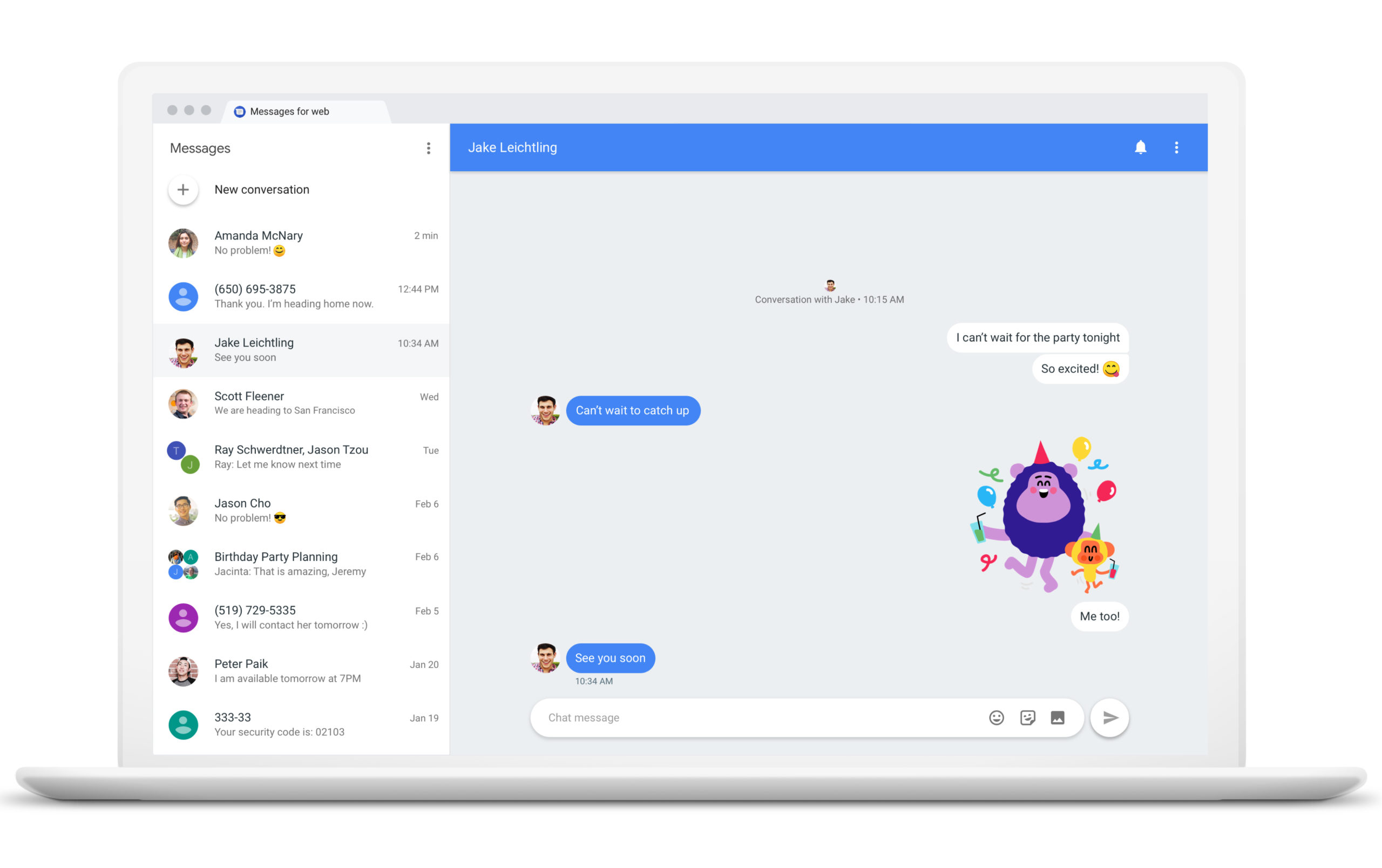
    Google has started rolling out an update for the Google Messages app that might make it faster to find certain messages. The update adds a new feature that places SMS messages into one of five different categories: personal, transactions, OTP (one-time passwords), offers, and more. The feature can be enabled or disabled through the use of a toggle switch found in the Google Messages app settings.

    If your Google Messages app has been updated, you will see the different categories just below the app’s search bar on the top part of the UI. If you’re not happy with the category that a certain message has been assigned to, you will have the opportunity to do so and even share the message with Google. This will help similar messages get categorized correctly in the future.

    Google has been beefing up the Messages app allowing it to work with many of the features available with Rich Communication Services (RCS). This means that messages are sent through data networks instead of a carrier’s cellular network allowing messages to be sent over Wi-Fi. At the same time, users can fill each message with as many as 8,000 characters instead of the previous limit of 160. And Android device owners will get a read receipt to confirm that their messages have indeed been read.

    Google starts to roll out a new feature that places SMS messages in different categories.

    Not all Android users have received the update. It appears to be disseminated to Android users via a server-side update so just keep your eyes peeled.

  • Microsoft brings its SMS Organizer app to the US

    Microsoft brings its SMS Organizer app to the US

    The SMS Organizer app is one of the many projects that took shape under Microsoft Garage’s umbrella, but it’s only been available in India since release. Starting this week, Microsoft has expanded the availability of SMS Organizer to more countries, including the US, UK, and Australia.

    As the name suggests, SMS Organizer will sort all your incoming text messages into categories. Microsoft’s app is a bit more advanced when it comes to sorting text messages, as it uses machine learning to filter them into categories like personal, transaction, and promotional.

    But the app goes even further and prevents promotional messages from popping up on your phone’s screen. While you will find these on the promotional tab, you also have the option to automatically delete these messages every few days or weeks.

    On the other hand, whenever you receive text messages related to trains, flights or payments, SMS Organizer will notify you every time and even helps you keep track of your account balance. More importantly, you can use SMS Organizer to backup and restore chats to and from Google Drive.

    Unfortunately, SMS Organizer does not feature support for multimedia messaging (MMS), so it’s limited to standard text messages. If you want to use the app, which is available for download via Google Play Store, you must register using your phone number.

  • GMS selected as an international A2P SMS partner

    GMS selected as an international A2P SMS partner

    Global Message Services (GMS) has been chosen as an international application-to-person (A2P) messaging hub and managed services partner with the UAE’s du.

    The partnership will see the global messaging provider, which since 2006 has expanded globally with a current reach of 900 mobile operators, secure du’s network and manage its inbound international A2P SMS traffic.

    “Connectivity and communication are core pillars of our operations and we are always in a constant drive to explore ways to improve the quality of service delivery for our end customers,” said Hany Aly, executive vice president of enterprise business at du.

    “We are happy to partner with GMS in effective monetisation of international A2P traffic. Ultimately, the benefits will be plentiful for both du and GMS with the monetisation of our SMS channels and we look forward to building our expertise and trusted solutions in this field as our partnership ensues.”

    du’s intention to improve service quality and unlock new revenue streams was perfectly in line with GMS’s ambition to extend its global monetisation footprint.

    Successful achievement is preceded by conducting a deep analysis of the legal, technical and commercial environments, identifying weak spots which need to be eliminated and implementing the necessary steps to secure the network. In line with this, du and GMS have established direct connectivity over Signalling System No.7 (SS7).

    SS7 connectivity offers an edge over other technologies in that it is of very high quality, speedy and most importantly, offers complete transparency, providing correct delivery reports to the traffic generator (enterprise) for all messages and thereby giving the full picture to both the enterprise and the MNO.

    “du stands out for its approach and attention to detail, and GMS has the exact same vision on doing business. We believe that GMS’ expertise will enable du to maximise its messaging business and achieve steady revenue growth,” added Iurii Makarenko, managing director of GMS (pictured).

    GMS multi-channel messaging platform, Hyber, allows enterprises to deliver messages across different channels worldwide: SMS, Push, OTT messengers, email, etc. GMS is Viber’s official partner.

  • Globe Q1 profit grows 44%

    Globe Q1 profit grows 44%

    The Philippines’ Globe Telecom has reported a 44% year-on-year increase in net profit for the first three months of 2019 to 6.7 billion pesos ($129.1 million), partly as a result of strong data revenue growth.

    The company reported revenue for the quarter of 36 billion pesos, up 13% year-on-year. Growth was mainly fueled by increasing data usage across the operator’s service offerings.

    Mobile revenue grew 11% to 27 billion pesos, with mobile data revenues reaching 16.5 billion pesos, representing 61% of gross service revenues. Total mobile data traffic surged to 370 petabytes for the quarter.

    But mobile voice revenues fell 15% to 6.3 billion pesos, with SMS revenues down 22% to 4.2 billion pesos.

    Globe’s home broadband business reported 21% higher revenue of 5.2 billion pesos, with the company’s total subscriber base increasing 22% year-on-year to 1.7 million. Of these, 63% are fixed wireless subscribers. Enterprise data revenues grew 16% year-on-year to 2.7 billion pesos.

    Globe’s capex for the quarter reached 8.8 billion pesos, representing 24% of topline revenues.

    “As we continue to invest in our LTE network, we are also excited with the growth opportunities of our 5G commercial pilot launch in June this year,” Globe CEO Ernest Cu commented.

    “Through this launch, we will be able to offer our customers a whole new ecosystem of devices to enhance the way they experience data to the home. This is in line with our proven strategy of making our customers a priority, by providing them a superior digital and network experience, despite all the industry challenges that we face ahead.”


  • SM Group introduces first Customer Service Robot

    SM Group introduces first Customer Service Robot

    SM Group has employed its first in-mall customer service robot, at SM Megamall.

    Named Sam, the AI humanoid robot is designed to help customers with directions and information about the latest mall deals, promotions and events.

    “Innovation is what SM strives for in providing better customer service to all and we are proud to introduce our latest innovation yet,” said Steven Tan, SM Supermalls COO.

    “Sam is easy to approach and has answers to almost everything SM mall related, making shopping more seamless and fun for our customers.”

    Equipped with an advanced face-recognition technology, Sam can also make personalised greetings to customers at Mega Atrium, Mega Fashion Hall and Bank Drive.

    Customers can also chat with Sam through the SM Supermalls Facebook page 24/7 to get information on branch locations, mall schedules and promotions.

    Created in partnership with the Cal-Comp Technology, Sam will be upgraded with more functions to provide a more fun and engaging shopping experience.

  • Telcos to use AI to fight SMS fraud and drive A2P messaging revenue

    Telcos to use AI to fight SMS fraud and drive A2P messaging revenue

    Juniper Research is forecasting that total operator revenues from A2P (Application-to-Person) messaging services will reach $62 billion by 2023, up from $43 billion in 2019.  This represents a growth of 42% over the next 4 years.

    The research firm also claimed that revenue growth will be driven by operator efforts in mitigating messaging fraud over grey routes, alongside the emergence of rich-media messaging technologies including RCS (Rich Communications Suite).

    The Juniper research, A2P Messaging: SMS, RCS & OTT Business Messaging 2019-2023, also found that increased investment in SMS firewalls and AI (Artificial Intelligence) will drive down operator loss due to grey route SMS messages to $4 billion by 2023. This represents a fall from $10 billion in 2019, further contributing to operators’ messaging revenue growth over the next four years.

    Grey route SMS includes A2P messages disguised as P2P (Peer-to-Peer) traffic to exploit the lower costs compared to directly connected A2P SMS. Juniper estimates that 24% of A2P SMS messages will be delivered via grey routes in 2019, however efforts in improving SMS firewall capabilities will drive this down to below 10% by 2023.

    Meanwhile, RCS business messaging will account for under 10% of operators’ A2P messaging revenue by 2023. However, the research claimed that RCS business users will continue to use SMS for simple notifications, such as OTPs (One Time Passwords) owing to the low cost and simplicity. The research identified the integration of mobile payment capabilities directly into the RCS client to provide a differentiation point to SMS and increase RCS traffic.

    Research author Sam Barker added “RCS will provide operators with additional revenue opportunities beyond simple message termination. Operators must explore the advertising ecosystem and mobile payments over RCS to exploit their substantial subscriber bases to generate fresh revenue streams.”

  • A2P SMS to bring new life to aging messaging market

    A2P SMS to bring new life to aging messaging market

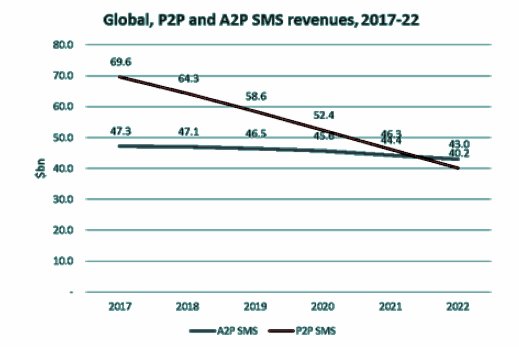
    SMS is not dead – not yet anyway. Ovum’s Mobile Messaging Traffic and Revenue Forecast: 2017-22 forecasts global revenues from application-to-person (A2P) SMS will finally exceed revenues from person-to-person (P2P) SMS by 2022, totalling $43 billion, even though A2P SMS traffic will be less than half of P2P SMS traffic by that time.

    P2P SMS revenues will generate just $40.2 billion in revenues by the end of the forecast period, but P2P SMS traffic will total 3.4 trillion messages in 2022, by comparison to 1.5 trillion A2P SMS.

    Figure 1: Global P2P and A2P SMS revenue, 2017-2022

    Figure 1: Global P2P and A2P sms revenue, 2017-2022Source: Ovum 2018

    The bulk of P2P and A2P SMS traffic and revenues will come mainly from the mobile-first, powerhouse markets of China, India and Indonesia.

    “Unfortunately for most telcos, P2P SMS has become essentially value-less, since they have had to bundle unlimited SMS into mobile tariffs to remain relevant to their customers, an increasing number of whom use chat apps such as WhatsApp, WeChat and Facebook Messenger. However, telcos can still charge a per-message termination rate for A2P SMS, which means it remains a more valuable source of revenues, since enterprises still value SMS for its global reach, affordability and mature ecosystem,” said Pamela Clark-Dickson, practice leader of Ovum’s communications and social team.

    Ovum forecasts chat apps will have 3.2 billion unique monthly active users (MAUs) by 2020, connecting enterprises with consumers via their platforms. Telcos and the wider ecosystem are therefore under pressure to protect their A2P revenues, driving them to upgrade from SMS to Rich Communication Services (RCS).

  • Sompo Japan to Release in Indonesia Weather Index Insurance for Farmers

    Sompo Japan to Release in Indonesia Weather Index Insurance for Farmers

    Sompo Japan Nipponkoa Insurance will start selling insurance products that compensate farmers hit by drought in Indonesia as early as this autumn.

    Earlier this month, Sompo Japan signed a memorandum to partner with BMKG, Indonesia’s meteorological bureau, to gather weather data. The Japanese insurer will provide weather index products that pay a certain amount to contract farmers when rainfalls drop below the forecast amount of the past three months.

    Such technologies and services provided by companies in disaster-prone Japan are likely to become promising exports to Southeast Asia. With an insurance premium of 50,000 rupiah ($3.76), contract farmers will be entitled to recuperate up to 500,000 rupiah if a drought occurs.

    Sompo Japan is narrowing down potential insurance agencies to partner with, such as local financial institutions. The company plans to test-run products in some areas as early as this autumn and go full swing in 2018.

    Sompo Japan started selling weather index insurance products for banana producers in Thailand in 2010 and in the Philippines in 2014. The company plans to release policies in Myanmar as soon as it gets government approvals.

    The company plans to boost its lineups of countries of sale and products to increase contracts fivefold to 30,000 in Southeast Asia by 2025.

    In the wake of increasing damage due to drought caused by unusual weather patterns, governments in Southeast Asia are taking measures to improve infrastructure, such as building irrigation facilities and providing financial coverage for damage claims.

    There are two major strategies for dealing with climate change. One is climate change mitigation, which is any action taken to reduce greenhouse gases such as carbon dioxide. The other is adaptation, which is the ability of a system to adjust to climate change to moderate any potential damage.

    The Paris Agreement, an international framework implemented to slow global warming, requires countries to set a goal of cutting greenhouse gases and taking adaptation measures. Emerging and developing countries — which are often hit by drought and heavy rains — are showing interest in the adaptation route.

    The United Nations Environment Programme, or UNEP, estimates the costs of adaptation could range from $140 billion to $300 billion a year by 2030, and between $280 billion and $500 billion a year by 2050.

    The market for adaptation solutions is expected to spread globally with the help of multinational funds and local governments. Some companies have started offering products and services catering to these demands.

    Japanese companies are well-positioned to help developing countries adapt to climate change, such as by contributing to better infrastructure, developing cultivation technologies so crops can withstand warmer temperatures, and increasing preparedness for power outages.

    However, Mari Yoshitaka, chief consultant of Mitsubishi UFJ Morgan Stanley Securities, said many Japanese companies have not shown much interest in the global adaptation business. But focusing on environmental measures needed to cope with the situation presents business opportunities.

  • 47% of mobile users still only call and text

    47% of mobile users still only call and text

    Despite the great strides being made to bring mobility services to the global population, recent research indicates that nearly half of mobile users worldwide still only use their devices to make calls and send SMS.

    The consumer research from GSMA Intelligence, covering 56 markets collectively representing 80% of the world’s population, found that 47% of adult mobile phone owners only make calls and send texts.

    But this segment is expected to shrink to 29% by 2030 as users across the developing world benefit from advances in mobile innovation, affordability and availability.

    The report ranked countries covered in terms of their citizens’ mobile engagement, or the frequency and diversity of use of mobile devices. South Korea and Qatar ranked equal first in terms of  engagement. The only other APAC nation to make it into the top 10 was Australia in seventh place.

    “In an era of mobile being near ubiquitous around the world and at the centre of people’s lifestyles, there is a growing need to measure mobile user engagement levels to identify future industry growth opportunities,” GSMA chief strategy officer Hyunmi Yang said.

    “Consumer behaviours are continuing to change as mobile devices get smarter, services grow richer and societies become more connected. The Global Mobile Engagement Index is a unique industry tool to help understand these shifting trends.”

    The research found that in some markets – such as Myanmar – smartphone ownership is relatively high but engagement remains low due to digital illiteracy and a lack of relevant local content.

  • Smart Axiata deploys SMS spam filtering suite

    Smart Axiata deploys SMS spam filtering suite

    Cambodia’s Smart Axiata announced it has deployed an SMS spam filtering and A2P SMS monetization platform from 365squared for its more than 8 million customers.

    The operator is using the 365secure service to continuously monitor and filer SMS traffic from any source on a round-the-clock basis. The service is designed to detect and block fraudulent SMS messages delivered through gray routes.

    Smart will also be able to use the service’s proprietary 365analytics software to conduct detailed traffic analysis and reporting. The implementation was conducted by 365squared last month.

    “Spam messages are disliked by everyone. The partnership with 365squared stands on our desire to strengthen customer relationships based on trust,” Smart Axiata CEO Thomas Hundt said.

    “By filtering intrusive and uninvited messages we provide to our customers peace of mind and therewith step up our customer experience efforts further.”

    Smart Axiata launched LTE services in January 2014, and has now expanded the network to cover 25 key provincial capitals as well as other key cities. The company’s combined 2G, 2.5G, 3G, 3.75G and 4G mobile network covers more than 98% of the Cambodian population.

  • Telkom picks HAUD for A2P SMS monetization

    Telkom picks HAUD for A2P SMS monetization

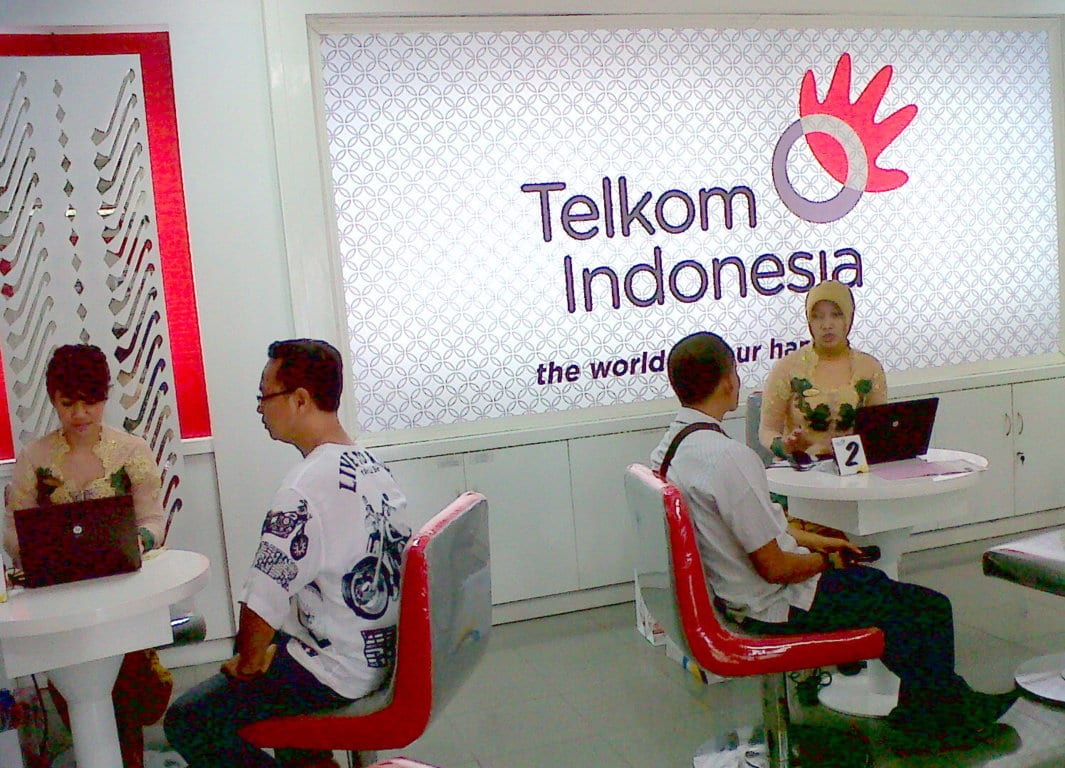
    Telkom Indonesia has adopted HAUD’s A2P SMS monetization and SS7 security managed services to create new sources of revenue and improve subscriber experience for the operator.

    The managed service agreement with HAUD will help Telkom Indonesia mitigate any lost A2P revenue, and its subscribers are protected from spam and fraudulent SMS traffic.

    Through its Revenue-as-a-Service approach, HAUD will manage the entire A2P monetization process, from traffic identification and blocking, to redirection of traffic to monetizable channels, without requiring any initial investment from the MNO.

    HAUD’s mobile network firewall provides modular protection against SS7 security vulnerabilities, fraud and spam SMS, while preventing grey route traffic that bypasses network termination fees. Its range of packages effectively ring-fence networks from malicious messages, while improving customer experience and revenue assurances.

    Mårten Björkman, SVP for Asia Pacific at HAUD, said Revenue-as-a-Service is a new approach to helping operators to make the most of all possible income streams available to them.

    Björkman said the global A2P SMS market is worth billions, but many operators are not equipped to claim their fair share, and routinely lose out on large amounts of revenue due to the ongoing use of grey routes.

    “HAUD’s knowledge and experience of the global A2P and fraud landscape can help MNOs like Telkom Indonesia stay in control of their networks with a minimal outlay of resources,” he said.

    Michael Adiguna, AVP of sales strategy at Telkom Indonesia, said the agreement with HAUD was particularly attractive, and the ability to deliver results almost instantly “was impressive.”

    “With our revenues maximized and network utilization improved, we can focus on delivering the quality of service that modern mobile users demand,” said Adiguna. “HAUD’s solution makes sure that the messages our subscribers receive are from genuine, trustworthy sources.”

  • Enhancing last mile delivery, consumer experience with SMS Services

    Enhancing last mile delivery, consumer experience with SMS Services

    E-commerce is a fast-moving game and major forces are changing the rules. Forward-thinking retailers are investing to maximize the potential of both physical and digital channels. Global players that once stood on the sidelines are now poised to compete in South East Asia. Just recently, Indonesian department store chain MatahariMal raised $500 million to develop their e-commerce venture. Alibaba too, has invested $249 million in SingPost to expand their delivery network in SEA.

    As the world’s fastest growing internet region with 260 million users, South East Asia is fast becoming a unique e-commerce market. Primed for tough competition, e-commerce companies are fast prioritizing customer service as a way to stand out from their competitors. Keeping customers at the heart of their business strategy, and delivering the best possible value to them is becoming more important than ever.

    Today, last-mile delivery has become a priority for both e-commerce companies and their customers. Ensuring speedy, but prompt delivery has been proven to give companies an edge in the competitive landscape, while showing customers that companies could go the extra mile for them.

    In fact, local and regional players have still emerged as early winners, largely due to their ability to provide a better-tailored experience for local consumers than what global competitors usually offer. For instance, Singapore-based Lazada built local logistics footprints in each market to increase delivery reliability, and added motorbike fleets to provide speedier options to traditional truck deliveries.

    That said, enhancing last-mile delivery for consumers in the region comes with its own set of challenges.

     Consumer trust, diversity, slow infrastructure serve as roadblocks

    Firstly, the lack of consumer trust is one of the challenges the Southeast Asian e-commerce market is facing. Consumers today are wary of making transactions online due to various security issues such as fraud. According to the e-conomy SEA report by Google and Temasek Holdings, 58 percent of citizens in South East Asia expressed concerns over financial information being shared online. With cyber attacks on the horizon, trust between customers and e-commerce companies have been shaken and today, assurances must be given to customers on a consistent basis to maintain strong relationships.

    The region also encompasses a wide range of ethnicities, languages, consumer preferences and regulations, coupled by a politically and economically complex landscape. With such diversity, consumers in different markets have conflicting preferences and expectations, which means more time and money must be invested carefully into business planning to ensure that this is addressed adequately.

    Despite the immensely positive steps taken towards ASEAN economic integration, there are still socio-political and economic issues that can put a dampener on overall business growth of regional delivery companies.

    Southeast Asia also lacks a solid regional payment and logistics infrastructure, which were the foundation for China’s astounding digital-retail growth. Even though larger businesses today are investing in the development of delivery infrastructure, they are still weak and getting your goods delivered affordably and efficiently may still be an issue. As a result, organisations often find it a challenge to make a scalable business model work, and to justify the high levels of initial investment.

    The use of SMS to represent reliability and optimization

    In order to manage deliveries in a reliable and robust manner while ensuring customer trust is being built, e-commerce companies are looking at the option of sending SMS notifications to customers, and are turning to SMS services to manage the surge in SMSs.

    SMS services have been selected over mobile apps as it is ideally equipped for both application-to-person (A2P) or machine-to-machine (M2M) applications. While not a popular choice of communication between people today, businesses still leverage SMS because it is always delivered even when customers do not have smartphones or data connection, representing reliability and consistency.

    This step is critical for business continuity as it helps to ensure continued trust with customers. To best manage their communication processes when it comes to delivery, e-commerce companies can consider working with a messaging solutions provider to create a reliable and efficient distribution process and enhance overall customer experience.

    By outsourcing their communication processes to messaging solutions, companies can efficiently manage the large volume of messages they send to customers and delivery partners, through unlimited scalability and transmission capacity.

    Through implementing SMS messaging services, delivery processes are more convenient and transparent for e-commerce companies, their business partners and customers. SMS services can not only be used during the registration process to authenticate customers’ account mobile numbers, but also more importantly, update recipients on specific parcel delivery information such as estimated time of arrival.

    By selecting a provider with high quality of service, reliability, security levels and transparency, e-commerce companies can experience increased customer and partner satisfaction as communication becomes more efficient with important messages being sent and delivered in seconds.