Tag: Snohetta

  • Aesop store pays tribute to Oscar Niemeyer

    Aesop store pays tribute to Oscar Niemeyer

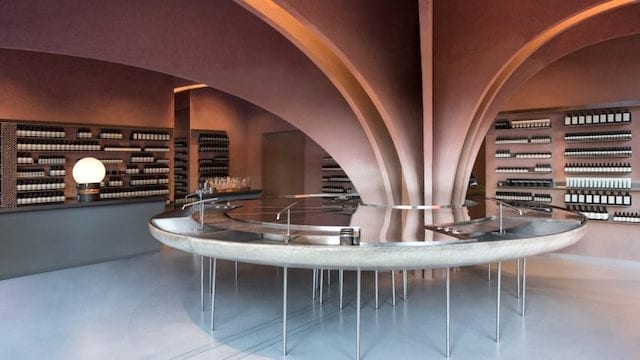
    The new Aesop Duke of York Square store in west London was designed as a tribute to Brazilian modernist Oscar Niemeyer.

    While founded in Australia, skincare brand Aesop was recently bought by Brazilian retail group Natura and the new owner has been quick to add a touch of its own influence in store designs. Aesop is renowned for each of its shops being designed differently, eschewing the cookie-cutter approach of most global retail brands.

    Twelve rose-tinged clay arches fan out over a huge stainless-steel sink in the Snohetta-designed Aesop Chelsea store, reports architecture and design online publication Dezeen. It is located inside a luxury shopping area beside the Saatchi gallery in Duke of York Square off King’s Road.

    Dezeen reports a large column set in the centre of the 108sqm shop dictated the starting point of the design for Snohetta’s Oslo office.

    “The team placed 12 arching sections of wall – intentionally reminiscent of the concrete forms used by Oscar Niemeyer – around its edges. The arches splay out across the ceiling and touch the walls, to incorporate the column into the design.”

    Aesop West London 1

    A large disk-shaped sink with a polished stainless-steel top and fibre-glass base wraps around the centre of the column, cementing it as the centre point of the store.

    “There is this column, very odd, very strange, and we decided we would surround this column to accentuate it even more,” senior architect Peter Girgis told Dezeen.

    “Central to the space is this large disk sink, about four and a half metres in diameter, and from that we wanted this column of both light and emulating structure to come and loom,” added Girgis, who led the project with architect Gaute Simonsen.

    Aesop Duke of York Square is Snohetta’s first permanent project in the UK, but its seventh store for the skincare brand. It designed a store for Aesop in Singapore, likened to “an upside-down forest”.
  • Aesop Singapore store marks new design direction

    Aesop Singapore store marks new design direction

    The newly-opened Aesop Ion Orchard features the brand’s newest generation store design concept.

    The store, designed by Snohetta, was officially opened a week ago after about a month’s trading. It is the first time Aesop has had a presence in Ion Orchard.

    Aesop-ION-store-by-Snohetta-Singapore-04

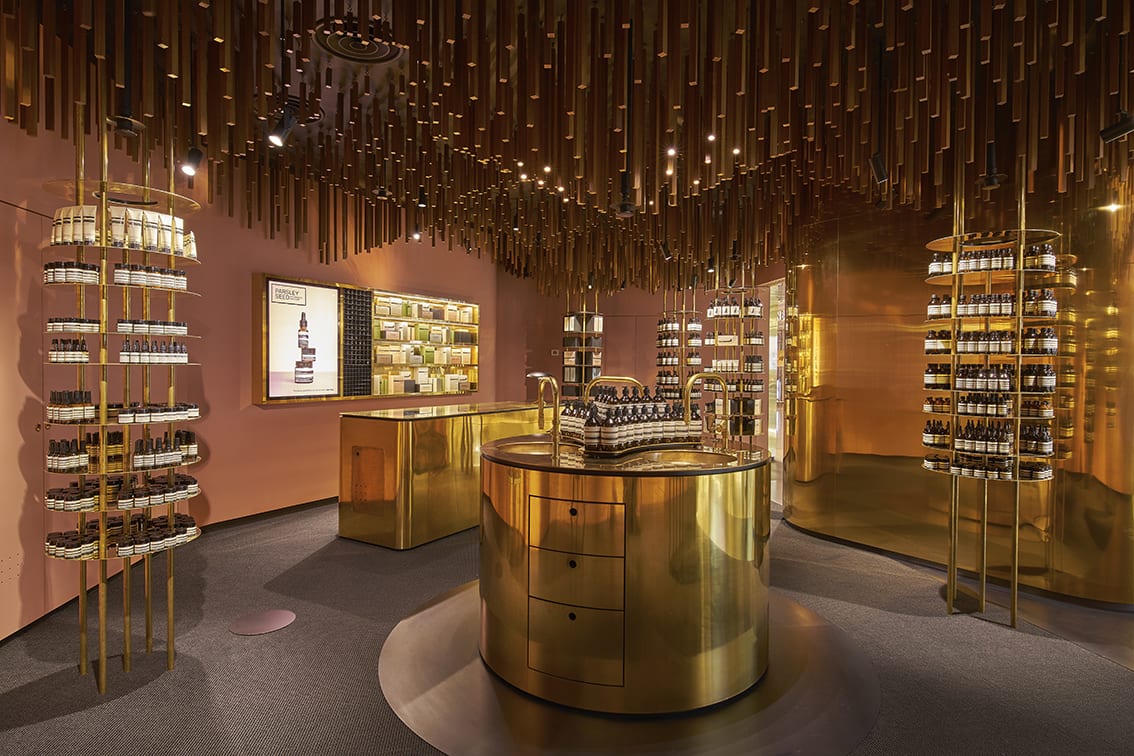
    The store features metals and timber, with a bold polished brass exterior. Narrow square timber batons of differing lengths hang down from the ceiling to create an ‘upside down forest’. The timber was chosen in part to mark the presence of a nutmeg plantation on the site many years before Orchard Rd became a retail hub.

    Aesop-ION-store-by-Snohetta-Singapore

    The walls are painted in a pink hue, intended to be reminiscent of the colour of mace, a spice harvested from the nutmeg fruit.

    “A connection with the nearby Aesop Raffles City is established through the use of brass in functional elements such as the sales counter and sink, and the metal’s lustre is enhanced by overhead lighting,” said the brand.

    Aesop-ION-store-by-Snohetta-Singapore-07

    Aesop-ION-store-by-Snohetta-Singapore-06

    A lot of the product is displayed on circular shelves mounted on steel frames running from ceiling to floor creating a ‘floating effect’ which fits in with the ceiling forest effect. There are vintage style basins with old style outdoor taps for customers to wash their hands before treatments.

    Aesop-ION-store-by-Snohetta-Singapore-03

    Aesop was founded in Melbourne, Australia, in 1987 and has since grown into an international chain of stores and department store concessions selling skin care products packaged in brown medicine bottles.

    Aesop-ION-store-by-Snohetta-Singapore-09

    Aesop Ion Orchard is the fifth of the brand’s shops to be designed by Snøhetta – earlier stores include Raffles City, Berlin and Norway.

    Aesop founder Dennis Paphitis told Dezeen “there’s a direct correlation between interesting, captivating store spaces and customer traffic within a store.”