Retail News CRM

Tag: Soaring

  • Domestic Demand Dwindles in China Despite Soaring Industrial Output

    Domestic Demand Dwindles in China Despite Soaring Industrial Output

    The second-largest economy in the world is currently experiencing a dual-speed growth pattern. While factories are flourishing due to robust exports, domestic demand is on a downward trajectory due to an ongoing slump in the property market.

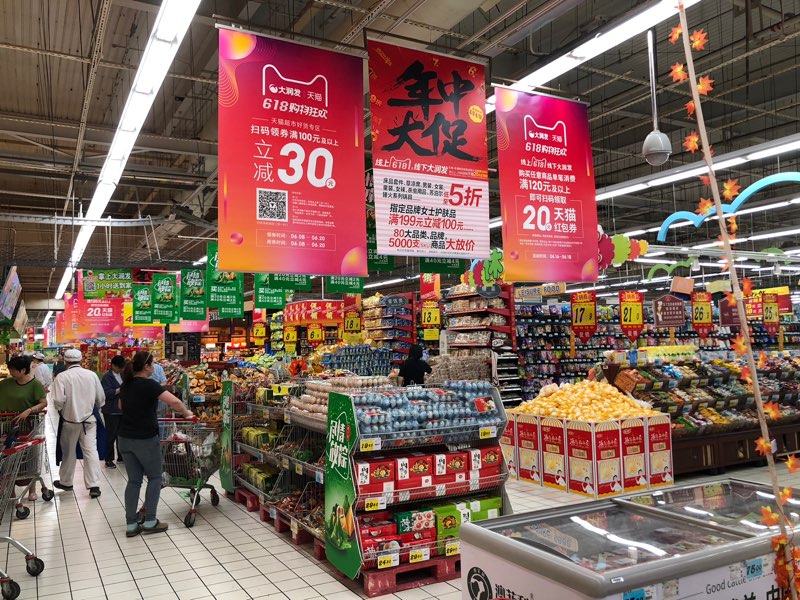
    In May, retail sales, which serve as a critical measure of consumption, decreased by 0.6%, a significant drop from April’s 0.2% rise, and below the predicted 0.0%. This decline in retail sales marks the first reduction since December 2022. Even the extended Labour Day holiday was unable to boost consumer morale, and the government’s consumer goods trade-in initiative is gradually losing its effectiveness. An inflated base from the previous year’s May further added to this downturn.

    According to Zhiwei Zhang, chief economist at Pinpoint Asset Management, the disappointing retail sales data puts increased pressure on the government to contemplate policy measures aimed at stabilizing consumption. “Policy ‘fine tuning’ is anticipated around July, following the release of the second quarter GDP data,” Zhang added.

    On the other hand, data from the National Bureau of Statistics (NBS) revealed that industrial output in May grew by 4.5% compared to the previous year, an increase from the 4.1% growth recorded in April. This rise surpassed the projected 4.3% increase.

    Divides in the Economy

    A boom in global AI investment and related tech demand has allowed the world’s largest manufacturer to counterbalance the anticipated export blow from the Iran war. However, a 19.4% increase in exports has yet to positively impact domestic consumption.

    The economic weakness was particularly noticeable in the automotive sector, as domestic car sales suffered a decline for the eighth consecutive month in May. This trend hints at a diminishing demand in the world’s biggest car market, a pressure that is expected to linger throughout the year.

    Senior economist at the Economist Intelligence Unit, Xu Tianchen, identified several divisions in the May economy. “The divide between domestic and external demand, the divide between AI and traditional industries, and the divide between goods retail and services consumption,” he mentioned.

    He expects the second quarter’s economic growth to slow down to 4.5% from the first quarter’s 5%.

    Growing investment weakness and ongoing property drag

    Investment figures were also significantly weaker than expected. Fixed-asset investment dropped by 4.1% in the first five months of 2025, a fall from the 1.6% decrease recorded from January to April. Economists had anticipated a 2% decline.

    According to NBS spokesperson Fu Linghui, this fall is partially due to extreme weather conditions in several regions, as well as the shift from old to new growth drivers. Fu added that China still has substantial room for future investment, with urbanisation, rural revitalisation, the development of new quality productive forces, and public service improvements all requiring support.

    Questions & Answers

    What contributed to the decline in retail sales in May?
    Several factors contributed to the decline in retail sales in May, including a lack of consumer confidence, the waning effectiveness of the government’s trade-in scheme, and a high base from the same period last year.

    How are the car sales in China currently?
    Car sales within China have been on the decline, with May marking the eighth consecutive month of decreasing sales. This is indicative of a softened demand in the world’s largest auto market.

    What are the expectations for China’s economic growth?
    It’s anticipated that China’s economic growth may slow in the second quarter, dropping to 4.5% from 5% in the first quarter. While it might not be difficult to achieve a full-year growth target of 4.5-5%, the sluggish domestic demand may necessitate policy intervention in the second half of the year.
  • Yum China’s Kpro Surpasses 300 Locations: Eyes 600 Stores by Year-End Amid Soaring Health Food Demand

    Yum China’s Kpro Surpasses 300 Locations: Eyes 600 Stores by Year-End Amid Soaring Health Food Demand

    Yum China has announced plans to expedite the expansion of its light-meal brand, Kpro, following its current establishment of over 300 locations across the country. The company’s stated ambitions to double its stores by year’s end, from around 200 last year to 600, indicates the rising demand for healthier and cost-effective dining options within the Chinese market.

    Kpro operates in tandem with KFC restaurants, offering a menu that centers around balanced nutrition. This includes items such as multigrain energy bowls, yogurt smoothies, and whole-wheat sandwiches.

    The company explains that the operational symbiosis between Kpro and KFC allows them to capitalize on the pre-established network, customer base, and supply chain of KFC. This strategy also helps keep investment and operating expenses lower than what would be incurred with independent outlets.

    The expansion plan for Kpro is concentrated on tier-one, tier-two, and selected tier-three cities, specifically in the eastern and southern regions of China. These areas are known for having a high demand for light-meal options.

    Recently, Yum China announced a record-breaking first quarter for FY26 with over 600 new store openings.

    Questions & Answers

    What is the growth strategy for Kpro in China?
    Kpro plans to expand its presence in China, aiming to reach 600 stores by year’s end. The company is targeting tier-one, tier-two, and selected tier-three cities, particularly in the eastern and southern parts of China, where light meals are in high demand.

    What is unique about Kpro’s operating model?
    Kpro operates alongside KFC restaurants, allowing the brand to leverage KFC’s existing store network, customer base, and supply chain. This model helps Kpro maintain lower investment and operating costs than standalone formats.

    How does Kpro’s menu contribute to its popularity?
    Kpro’s menu, focused on balanced nutrition, aligns with the rising demand for healthier and affordable dining options in China. Offerings such as multigrain energy bowls, yogurt smoothies, and whole-wheat sandwiches cater to this growing consumer preference.

  • Grab Defies Fuel Crisis with Double-Digit Growth: Record Earnings and Soaring Demand in Q1

    Grab Defies Fuel Crisis with Double-Digit Growth: Record Earnings and Soaring Demand in Q1

    Singapore-based Grab Holdings kicked off the new financial year on a high note, reporting double-digit growth in its first-quarter revenue and earnings, reflecting the company’s robust resilience in the face of market fluctuations.

    Impressive First-Quarter Results

    Grab’s revenue for the first quarter, ending March 31, climbed by 24%, amounting to US$955 million. This represents a 19% increase when considered on a constant currency basis.

    The gross value of the company’s on-demand merchandise, a key indicator of transactions from Grab’s mobility and delivery branches, also witnessed a significant jump. It surged by 24% according to reported figures and 21% on a constant currency basis.

    The firm recorded a striking 46% increase in its Adjusted EBITDA, reaching a record-setting figure of $154 million. Profits also displayed an upward trend, going from $10 million in the previous year to $120 million.

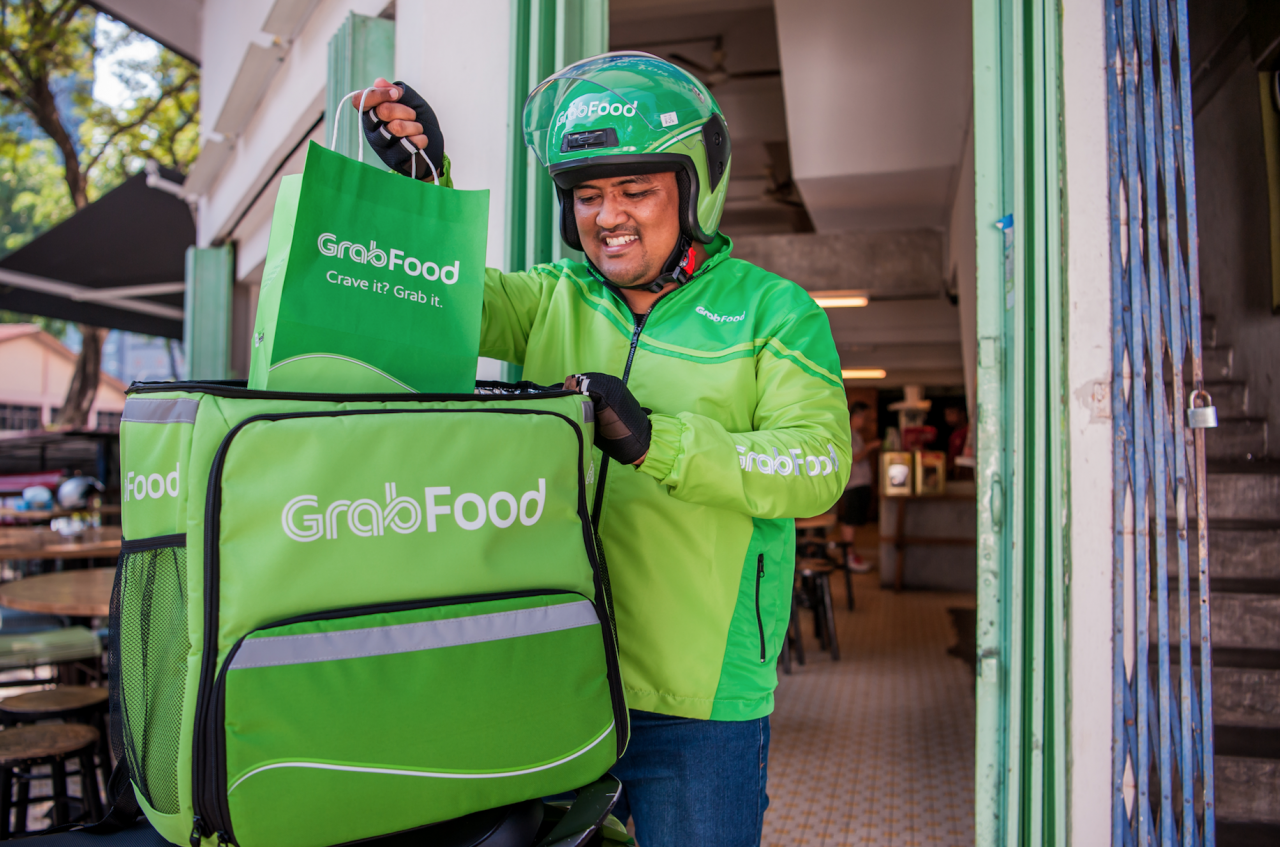
    Grab’s Group CEO and Co-founder, Anthony Tan, attributed these strong outcomes to the resilience of the company’s platform, particularly in the face of Southeast Asia’s unpredictable macroeconomic climate, which is currently grappling with a fuel crisis.

    Supporting Driver-Partners Amid Rising Fuel Prices

    Grab acknowledged an increase in its on-demand incentives during the quarter. This move was taken to bolster the earnings of driver-partners as fuel costs across the region spiral upwards. It also aimed to cater to the increased demand during the festive season.

    Segment-Wise Performance

    Looking at the performance of different sectors, the delivery revenue witnessed a 23% surge, totaling $510 million. The mobility revenue increased by 19%, amounting to $337 million. The financial services sector also saw a boost in revenue, with a 43% rise that led to $107 million.

    Outlook for the Full Year

    For the upcoming year, Grab maintains its revenue forecast, predicting a figure between $4.04 billion and $4.10 billion, indicating a 20-22% rise. The Adjusted EBITDA is also expected to grow by 40-44%.

    As the company moves forward, it reaffirms its commitment to ensuring durable, profitable growth while standing in solidarity with its communities. According to Tan, the company plans to leverage AI to deliver hyper-personalized experiences for users while creating more sustainable earning opportunities for ecosystem partners.

    Expansion Beyond Southeast Asia

    Earlier this year, Grab made its debut outside Southeast Asia by acquiring Delivery Hero’s Foodpanda business in Taiwan for $600 million.

    Questions & Answers

    What was Grab’s first-quarter revenue?
    Grab’s revenue for the first quarter was US$955 million, representing a 24% increase.

    What steps has Grab taken to support its driver-partners amid the fuel crisis?
    Grab has increased its on-demand incentives to bolster the earnings of driver-partners affected by rising fuel costs.

    What are Grab’s revenue predictions for the upcoming year?
    Grab estimates its revenue to be between $4.04 billion and $4.10 billion, indicating a 20-22% rise.

  • Indonesia’s Wealthy on Tax Radar as Government Battles Soaring Budget Deficit

    Indonesia’s Wealthy on Tax Radar as Government Battles Soaring Budget Deficit

    The Indonesian government is increasing its tax scrutiny on its wealthy residents and large corporations in light of a significant national budget deficit. This action is part of a broader initiative to enhance tax collections amidst a challenging year for revenue in Southeast Asia’s most substantial economy. The current budget deficit is closing in on the 3% of GDP ceiling.

    Intensified Tax Scrutiny

    Large corporations, especially those under local magnate control, have been requested to provide additional tax payments in 2025. Some family-owned businesses have been asked to contribute over US$5 million.

    Circumstances grew more complicated when a subset of these firms resisted the new demands. Tax authorities then proposed a compromise, suggesting companies pay 30% of the requested amount. The calculation method for this figure, however, was not disclosed.

    Finance Ministry’s Director-General of Taxes, Bimo Wijayanto, verified the summoning of high-net-worth taxpayers. In a press briefing on December 18, he described the move as a standard procedure meant to make tax data more accurate. He also mentioned that this initiative offers taxpayers an opportunity to provide explanations, voluntarily rectify their tax returns, and ensure compliance.

    The exact number of individuals and businesses contacted for this matter remains unknown.

    The “Hunting in a Zoo” Phenomenon

    End-of-year drives to boost tax revenue are not uncommon in Indonesia. Critics and business leaders often refer to this as “hunting in a zoo.” This metaphor refers to the tendency to focus on a small group of large, formal taxpayers who are easier to track, rather than broadening compliance across the country’s expansive informal economy.

    According to data from the Finance Ministry, tax receipts are currently significantly below targets. Collections up to the end of November amounted to 79% of a decreased full-year aim, a drop from nearly 90% over the same period the previous year.

    Experts believe that weak collections, coupled with subdued economic conditions and softer commodity prices, have led to Indonesia’s budget deficit forecast hitting 2.78% of GDP. This estimate is the highest in two decades, excluding the years affected by the COVID-19 pandemic.

    Questions & Answers

    Why is the Indonesian government increasing tax scrutiny on wealthy individuals and corporations?
    The government is trying to address a significant national budget deficit by enhancing tax collections.

    What compromise has been proposed to companies resisting additional tax payments?
    The tax authorities have suggested that these companies pay 30% of the requested amount.

    How are end-of-year efforts to increase tax revenue perceived in Indonesia?
    These efforts are often referred to as “hunting in a zoo,” indicating a focus on a small pool of large, formal taxpayers rather than seeking to expand compliance across the country’s vast informal economy.

  • Thailand Outshines Southeast Asia with Soaring Gold Demand

    Thailand Outshines Southeast Asia with Soaring Gold Demand

    Thailand has emerged as a shining star in Southeast Asia’s gold market, showcasing a remarkable 17% increase in gold demand during the first quarter of the year. A report from the World Gold Council reveals that this surge is the most significant growth among five countries analyzed in the region.

    In total, consumer demand in Thailand reached 9.1 tons, marking a robust trend in the country’s appetite for gold. Meanwhile, neighboring nations such as Singapore, Malaysia, and Indonesia experienced more modest growth rates ranging from 5% to 8%. In a surprising twist, Vietnam faced a decline of 15%, painting a mixed picture across the region’s gold consumption.

    Gold Bars and Coins Shine Bright

    Thailand’s inclination towards gold bars and coins has shown an impressive 25% year-on-year increase, totaling 7.4 tons. This shift underscores the Thai investors’ growing preference for gold as a safe-haven asset amid swirling uncertainties in the global economy. Louise Street, senior markets analyst at the World Gold Council, noted the tumultuous start to the year for global markets—characterized by trade disputes, unpredictable U.S. policy shifts, and rekindled recession fears. All these factors have contributed to a particularly shaky environment for investors.

    In light of such challenges, it’s no wonder that the demand for gold in the first quarter has reached its highest levels since 2016, according to Street. Globally, gold demand—including over-the-counter trades—tallied 1,206 tonnes during the same period, achieving a slight increase of 1% year on year, despite gold prices surging past US$3,000 per ounce. Although the price may seem daunting for some, others see it as an opportunity to invest in a timeless asset.

    In a world where investments can feel as volatile as a rollercoaster ride, isn’t it refreshing to find stability in shimmering gold?

    Questions & Answers

    What was Thailand’s gold demand in the first quarter?
    Thailand’s gold demand rose to 9.1 tons in the first quarter, reflecting a 17% year-on-year growth.

    How did the gold demand in Thailand compare to other Southeast Asian countries?
    Thailand led the growth in gold demand, while Singapore, Malaysia, and Indonesia saw increases between 5% and 8%, and Vietnam experienced a decline of 15%.

    What factors contributed to the increase in gold demand?
    The rise in gold demand is attributed to investors seeking safe-haven assets amidst trade turmoil, geopolitical tensions, and recessionary fears, creating a highly uncertain market environment.