Retail News CRM

Tag: social media

  • TikTok is among the things Biden and Xi discussed on the phone

    TikTok is among the things Biden and Xi discussed on the phone

    During a phone call on Tuesday, President Joe Biden and Chinese leader Xi Jinping discussed the push for TikTok Inc.’s divestment in the US.

    Following the call, the first direct discussion between the two leaders since November, White House spokesperson John Kirby confirmed that TikTok was indeed a topic of conversation.

    Biden reiterated to Xi his concerns about Chinese ownership of the popular video-sharing app.
    “This was not about a ban of the application, but rather our interest in divestiture, so that the national security interests and the data security of the American people can be protected,” Kirby explained.

    Last month, the US House approved legislation that would prohibit the operation of the video-sharing platform if ByteDance, its Chinese parent company, fails to sell its interest. President Biden has indicated he would ratify the bill, though its prospects in the US Senate remain uncertain.

    ByteDance aims to sell its interests in the viral short video app, or face a ban in the US. If everything goes to plan (the bill passes and Joe Biden signs it), ByteDance will have a 165-day deadline to divest from TikTok. Should it not pass the control of TikTok to an American-based company, US app stores (like Apple’s, Google’s and Samsung’s) would be prohibited from offering TikTok in the country.

    It all started when the Energy and Commerce Committee cast a unanimous 50-0 vote (highly unusual) in favor of the TikTok/ByteDance measure.

    Prior to that, members of Congress were flooded with calls and emails (some of which containing no-no words) from angry TikTok users who were scared that TikTok is coming to an end.


  • WhatsApp will reportedly let you use Meta AI straight from its search bar

    WhatsApp will reportedly let you use Meta AI straight from its search bar

    Artificial Intelligence (AI) is everywhere these days, and we’d be pretty naive not to admit that it is transforming how we use our devices on a daily basis. Meta is one company that has been at the forefront of integrating AI into its platforms, and WhatsApp, Messenger, and Instagram users in the US already have a taste of what it can do. But soon, interacting with Meta AI might become even more seamless.

    According to WABetaInfo, Meta is working on a new feature for WhatsApp that allows you to ask Meta AI questions directly from the app’s search bar. This means that it will no longer be necessary to manually start separate AI chats.

    We can see a new prompt that reads “Ask Meta AI” beneath the search bar in the screenshot above from WABetaInfo. This prompt would reportedly eliminate extra steps, make interacting with the AI incredibly more convenient, and wouldn’t require that unsightly Meta AI shortcut that got in the way of accessing your messages.

    In fact, if you’ve ever used ChatGPT, Meta AI will feel familiar, as it is designed as an all-around assistant. However, one advantage that this chatbot will have is that instead of having to hunt it down, you’ll simply type your question into the search bar. WhatsApp is even planning suggested prompts to get your creative AI juices flowing.

    This feature is still under development and will likely appear in a future version of the app. In the meantime, WhatsApp is showing us that it is clearly all in on AI, as it is reportedly also working on implementing AI-powered image editing tools into its platform.

    WhatsApp’s new features are a glimpse into a future where AI is woven deeply into our everyday apps. It’s likely just the beginning, and I’m excited to see what other innovations Meta and other tech giants have in store.

  • Twitch is raising subscription prices for the first time

    Twitch is raising subscription prices for the first time

    Twitch is raising prices for its channel subscriptions for the first time. Just over a month ago, Twitch announced that one in three of its employees will have to go in a 35% layoff spree.

    In two rounds of job-cutting fiesta, Amazon’s Twitch laid off about a thousand workers in total. By the way, in 2022, Amazon initiated its own workforce reduction, which affected some 27,000 positions across the company, and parallels with the “Red Wedding” episode from “Game of Thrones” were drawn.

    Before that, Twitch announced that it was ceasing its operations in Korea (South Korea, not North Korea, duh!) in February 2024.

    The Amazon-owned streaming platform says it has been operating at “significant losses” because of high local costs. The company specifically pointed to the high network fees in the country. Korea introduced legislation that would force major content providers to pay to use networks in the country.

    Apparently, Twitch has some money problems. Now, the platform says that “updating prices in several countries” will “help streamer revenue keep pace with rising costs and reflect local currency fluctuations”. The first markets to feel the impact of those changes are the UK, Canada, Australia and Turkey.

    As of March 28, Tier 1 subscriptions and gift subs will be more expensive in the UK, Canada and Australia. A base/gift sub is going up from £5 to £6 in the UK, $7 CAD to $8 in Canada and $8 AUD to $9 in Australia. Tier 2 and 3 prices will remain the same in those countries.

    In Turkey, Twitch is significantly increasing the price of all three tiers. For instance, a Tier 1 sub will soon cost 43.90 lira ($1.42) instead of 9.90 (32 cents). Don’t be shocked by these figures – the value of the Turkish lira has plummeted over the last decade. However, a 343% jump isn’t funny if you’re the one paying for it.

  • Meta launches much stricter message setting for teens on Facebook and Instagram

    Meta launches much stricter message setting for teens on Facebook and Instagram

    Following its recent changes to the teen experience on its social apps, Meta announced a harsher change intended to protect teens from unwanted contact.

    After limiting teens’ ability to see sensitive content on Instagram and Facebook, Meta introduced today a stricter message setting for teens who are using these two social apps.

    Until now, Meta restricted adults over 19 from messaging teens who don’t follow them. Also, the company limits the type and number of DMs people will be able to send to someone who doesn’t follow them to one text-only message.

    The new setting announced today makes it possible to turn off teens’ ability to receive DMs from anyone they don’t follow or aren’t connected to on Instagram, including other teens, by default.

    When the new setting is toggled on, teens will only receive messages from people they already follow or are connected to. According to Meta, teens in “supervised accounts” must get their parents’ permission to change this setting.

    The new default setting will apply to all teens under the age of 16 (or under 18 in certain countries). Those affected will receive a notification about the new changes on Instagram at the top of their Feed.

    Apart from Instagram, Meta revealed that it’s also changing teens’ default settings on Messenger, so those under 16 (or 18 in certain countries) will only receive messages from Facebook friends, or people they’re connected to through phone contacts.

    Finally, Meta plans to launch another feature that will help protect teens from seeing unwanted and potentially inappropriate images in their message from people they’re already connected to.

  • Instagram starts testing the ability to control who can see your likes

    Instagram starts testing the ability to control who can see your likes

    Instagram plans to introduce a new privacy feature that will allow users to select who can see their likes on posts and reels. The ability to control who gets to see your likes is meant to boost privacy and, hopefully, improve engagement.

    A couple of screenshots captured from a beta version of Instagram confirm the new feature will offer four different options that users can choose from. Judging from the screenshots, you will only be able to choose one option from the four presented, unless Instagram decides to change things by the time the new feature goes live for everyone.

    However, the four options below offer enough variation to allow users to customize their privacy settings as they see fit:

    • Allow everyone to see likes
    • Allow people that you follow to see likes
    • Allow close friends to see likes
    • Don’t allow anyone to see likes

    Instagram is testing new features all the time. Some never see the light of day, while others go through many iterations that, in some cases, change the way they originally worked.

    Obviously, it’s difficult to say when exactly the ability to control who is going to see your likes on posts and reels will come out, but at least we know Instagram is working on a feature that will actually be helpful to many of its users.

  • Big players opt out of advertising on Instagram after a child predator test fails

    Big players opt out of advertising on Instagram after a child predator test fails

    Two of the major dating app companies – Bumble and Match – have paused their Instagram advertising. The reason is that tests that mimic the behavior of child predators utterly failed and led to ads being served alongside sexually explicit material.

    Other affected include Disney, Pizza Hut, and Walmart. As you know, these giants demand from social media platforms that their ads must not appear next to inappropriate content (for example, hate speech and sexually explicit material).

    The Wall Street Journal has conducted a substantial experiment which they summarize like this: “Instagram’s Algorithm Delivers Toxic Video Mix to Adults Who Follow Children”.

    WSJ “sought to determine what Instagram’s Reels algorithm would recommend to test accounts set up to follow only young gymnasts, cheerleaders and other teen and preteen influencers active on the platform. Instagram’s system served jarring doses of salacious content to those test accounts, including risqué footage of children as well as overtly sexual adult videos—and ads for some of the biggest U.S. brands”, the report say

    In a stream of videos recommended by Instagram, an ad for the dating app Bumble appeared between a video of someone stroking the face of a life-size latex doll and a video of a young girl with a digitally obscured face lifting up her shirt to expose her midriff. In another, a Pizza Hut commercial followed a video of a man lying on bed with his arm around what the caption said was a 10-year-old girl.

    The Canadian Centre for Child Protection, a child-protection group, separately ran similar tests on its own, with similar results.

    Meta said these tests produced “a manufactured experience that doesn’t represent what billions of users see” and declined to comment on why the algorithms compiled streams of separate videos showing children, sex and advertisements.

    Match began canceling Meta advertising for some of its apps, such as Tinder, as early as October 2023. Also, Match has halted all Reels advertising and stopped promoting its major brands on any of Meta’s platforms. “We have no desire to pay Meta to market our brands to predators or place our ads anywhere near this content,” said Match spokeswoman Justine Sacco.

    Robbie McKay, a spokesman for Bumble, said it “would never intentionally advertise adjacent to inappropriate content,” and that the company is suspending its ads across Meta’s platforms.

  • WhatsApp for Android brings back Muted Updates and Channel Polls

    WhatsApp for Android brings back Muted Updates and Channel Polls

    WhatsApp, one of the world’s most popular instant messaging apps, is constantly rolling out new features and updates in an effort to improve the user experience. In the past week alone, the app’s developers have released two new beta updates on Android that introduce a couple of interesting features, including the return of Muted updates and the ability to create and share polls within Channels.

    As reported by WaBetaInfo, WhatsApp brought back Muted updates in version v2.23.24.11 of the Android beta app, which had disappeared from the main Updates tab following the arrival of Channels. Previously, users could still access Muted updates by tapping the three-dot menu in the Updates tab, but this was not as convenient as having them directly displayed in the main tab.

    Shortly after, v2.23.24.12 was released, which introduces the ability to create and share polls within Channels. This feature is similar to the polls feature that is already available in one-on-one and group chats, but with a few key differences.

    In order to prevent spamming and ensure that poll results are accurate, the feature within Channels are limited to one choice per user. Additionally, in order to protect privacy, Channel polls are also anonymous — meaning that no one can see who voted for what.

    The ability to create and share polls within Channels is a useful new feature that can be used for a variety of purposes, such as gathering feedback from community members or running contests and giveaways. Similarly, the return of Muted updates is a welcome change for users who prefer to keep their status updates muted. With this feature, users can easily view all of their muted status updates in one place without having to navigate through multiple menus.

    Unfortunately, as both of these features are currently only showing up for a limited amount of users using the beta app, and the WhatsApp beta program is currently — and almost always — full to capacity, it might be a bit until we see then both show up on the stable public app.

  • Instagram now rolling out option to add song lyrics to your Reels

    Instagram now rolling out option to add song lyrics to your Reels

    Instagram has been doubling down on its “Reels” strategy lately by launching new features that will hopefully entice users to use them more often. The latest of these features is the ability to add song lyrics when editing, just like you already can on “Stories.”
    The announcement was made today via the IG Updates and Meta channels on the app itself by both Instagram boss Adam Mosseri and CEO of Meta, Mark Zuckerberg. The feature was added after the powers that be noticed that users were adding them manually to Reels.
    To add song lyrics when editing your Instagram Reels, tap on the music button, add a song, and then swipe left to add the lyrics for the song you added. The steps seem straightforward enough for anyone to follow.
    The ability to add song lyrics had been available on Instagram Stories for some time now, so it is unclear why it has taken so long to bring that same capability to Reels. For those not aware, Reels differ from Instagram Stories in that Reels are public, while Stories are only shown to your followers.

    However, Stories and Reels have never quite had feature parity, perhaps due to the more intimate nature of stories. That said, Instagram has continued to make Reels more feature-packed as they face increasing competition from competing platforms, such as TikTok.

    Most recently, Instagram also launched new tools to make it easy for its users to create new Reels, including a new and improved templates and a template browser that is organized by categories. This browser can help users find the appropriate template to their content as it is organized by Recommended, Trending, and Saved categories.
    We can expect more to come from Instagram as far as Reels are concerned, as promised by the company during the last update. New features should follow in the coming weeks, such as the ability to automatically add text and transitions that were used in a past reel.


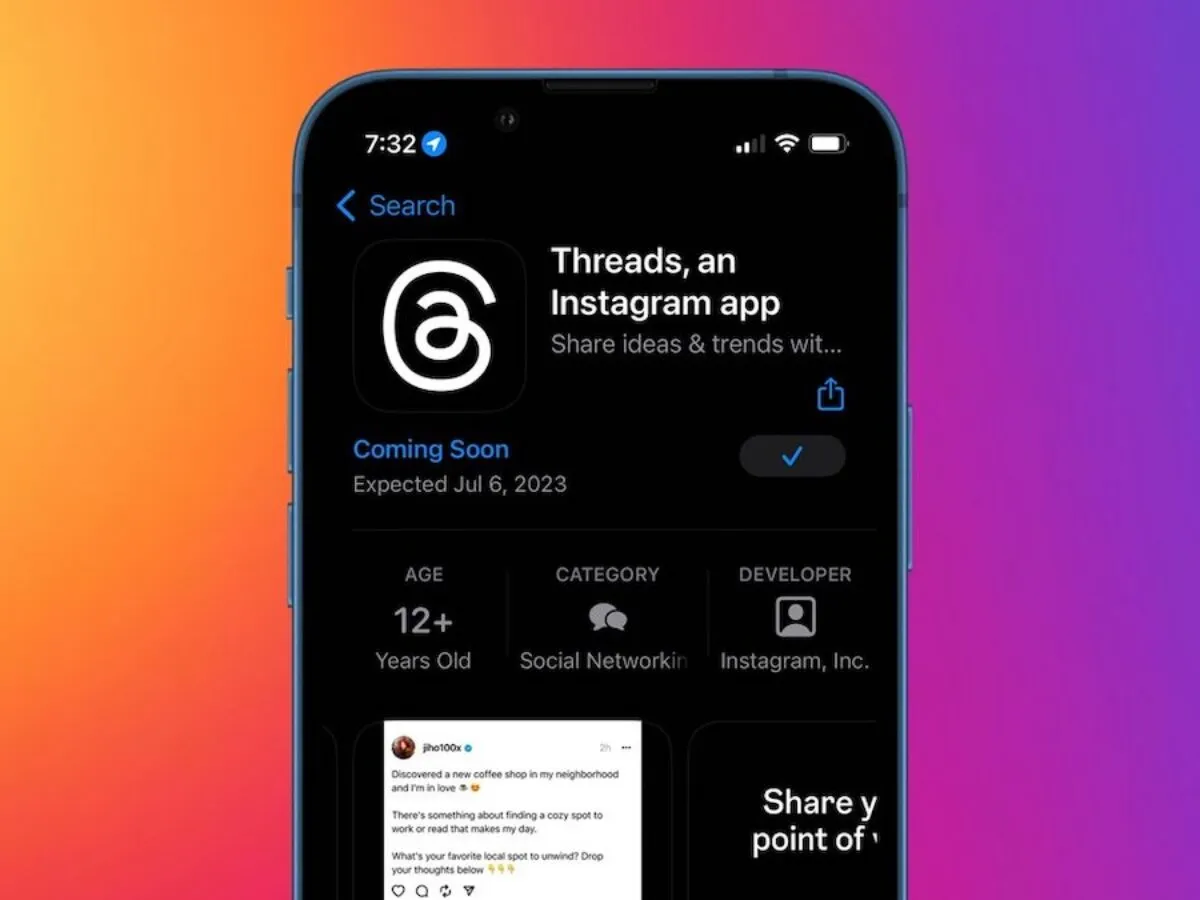
  • Threads by Instagram reveals secret new features on mobile and the web

    Threads by Instagram reveals secret new features on mobile and the web

    Threads by Instagram is on a mission to earn that spot on your phone’s home screen and it plans on doing that by regularly releasing new features that are of interest to its users. In its latest release, the company has revealed a few “secret” features that you may or may not know exist on the platform.

    Head of Instagram and Threads boss, Adam Mosseri, revealed via a post a couple of tricks that the app can currently do. While these are definitely not mind-blowing additions, they are neat little details that can enrich the app’s user experience.
    On the mobile apps, you can now long press on a post to follow everyone who is mentioned on it. A panel will popular at the bottom of the app showing you who was mentioned in the post. Here, you can either follow each one individually or choose the “Follow all” option. As a bonus, there is also a “Copy text” option if you want to use that same text in a new post or share it to another app.

    You can now copy and paste media attachments on the web to make posting easier. Previously, when composing a post you had to click on the media icon in order to attach an image or video from your device’s file manager. Now, it’s as easy as copy/paste, which can save you a ton of time when wanting to add something that’s already saved in your clipboard.

    Not only can you tag other accounts within Threads, but you can also now tag Instagram accounts. When tagging, you can now see Instagram accounts populate in the autocomplete options. This is great if the account you want to tag has not signed up for Threads yet, but does have a presence on Instagram. Who knows? This might entice more Instagram users to sign up for threads and gain more exposure that way.
    Hopefully, Threads continues to add on helpful features such as they have been lately. The platform’s daily user base continues to request new features regularly and these are seemingly not falling on deaf ears. We will continue to report new features here as they are revealed.
  • Instagram tests Stories with multiple audience lists

    Instagram tests Stories with multiple audience lists

    Instagram’s Stories is one of the standout features on the social media platform. Data shows that more than 500 million people engage with Stories daily, and a whopping 85% of all Instagram users post a Story every single day. Considering the platform boasts over 2.3 billion active users, that’s quite a substantial number, don’t you think? It’s understandable if you’re not keen on having your Story visible to everyone, especially after seeing these staggering figures. The good news is there might be a solution on the horizon.

    Instagram is currently testing the capability to share Stories with multiple audience lists. The goal is to allow you to share Stories with smaller, more specific groups, providing better control over who gets to see your Stories. Adam Mosseri, Instagram’s head, shared details about testing this new feature on his Instagram broadcast channel.

    Previously, Instagram introduced the Close Friends feature, allowing you to share Stories exclusively with a select group of your closest friends, keeping them hidden from the wider audience. To use the Close Friends feature, you first need to specify who you want in your Close Friends list. You have complete control over this list since no one can request to be added.

    The new feature being tested goes beyond the Close Friends concept, enabling users to create multiple lists, not just one for close friends. For instance, you can have a list exclusively for your classmates, another for your co-workers, or one for family members. This way, you have the power to decide who sees what, emphasizing the importance of privacy (after all, not everyone wants to share their moments with over 2.3 billion people, right?).

    A recent report revealed that Meta used public Facebook and Instagram posts to train parts of its new Meta AI virtual assistant. If this raises concerns, using features like Close Friends or the upcoming one being tested might be a wise choice. The new AI assistant is already rolling out to WhatsApp, Instagram, and Facebook.

  • Meta took down more than 7,000 fake accounts related to pro-China propaganda

    Meta took down more than 7,000 fake accounts related to pro-China propaganda

    Fake accounts on social media aren’t something new. Most likely, many of us have come across at least one fake account during our time on social media. Facebook reportedly holds the largest number of fake accounts compared to any other social network in the world. However, it appears that Meta has managed to eliminate at least some of them.

    Meta shared details about a network of fake accounts that had spread pro-China propaganda on Facebook. The company mentions that the takedowns were tied to “individuals associated with Chinese law enforcement” who also ran similar fake accounts on other platforms.

    The company often shares updates about taking down fake accounts that are up to no good, but what Meta’s security researchers found this time is pretty big. Meta got rid of 7,704 Facebook accounts, 954 Pages, 15 Groups, and 15 Instagram accounts, making it one of the largest networks of fake accounts ever discovered by the company.

    Meta found several groups of fake accounts from various parts of China. The way the groups acted, made it seem like they might have been working together from a shared place, maybe an office. Each group had a specific schedule, being most active in the morning and afternoon. They took breaks for lunch and dinner and then had another burst of activity in the evening, so basically, they had a full-time job.

    Ben Nimmo, who’s in charge of global threat intelligence at Meta, calls this move “the most prolific covert influence operation that we know of in the world today.” He also points out that the people running these accounts were also busy on X, Reddit, YouTube, TikTok, and Pinterest.

    As per Meta, the fake accounts aimed to share pro-China messages, including positive commentary about China, criticisms of the US, and Western foreign policies. The company did verify that it discovered proof connecting these fake accounts to an earlier pro-China operation cleverly called Spamouflage that showed up in 2019.

    In addition, the company also shared that it stopped numerous malicious domains and efforts to create fake accounts and Pages linked to the Russian Doppelganger operation, which aims to mimic official news and government websites to spread false articles undermining support for Ukraine. This operation has broadened its scope from France, Germany, and Ukraine to the US and Israel.

  • WhatsApp may soon get new text formatting tools

    WhatsApp may soon get new text formatting tools

    WhatsApp is already one of the best messaging apps, but there’s always room for improvement. That’s why we’re getting new updates that bring important new features almost every month. Recently, the app added support for high-resolution photos and promised to bring support for HD videos very soon too.

    On top of that, we’ve just learned that WhatsApp is working on additional text formatting tools that will make communications easier and even more fun. The fine folks over at WabetaInfo spotted a brand-new feature in the latest beta version of WhatsApp, which indicated that Meta’s developers have started to implement new text formatting tools.

    There’s proof about three new text formatting options, which will be added on top of the already available italics, bold, strikethrough, and monospace options.

    The first one is called “Code Block” and is aimed at software developers and programmers who might want to send code snippets to their friends or colleagues. This particular text formatting tool will prevent the confusion created when code snippets were not being displayed accurately in the chat window.

    Another interesting text formatting tool, Quote, will receive a small yet important improvement. WhatsApp plans to introduce a new option that will allow users to highlight portions of a text that they want to quote. Currently, you can only quote entire messages, not parts of them.

    Last but not least, one of the latest beta versions of WhatsApp had a new formatting tool that allowed users to create lists of items. That will basically eliminate the need to manually add bullet points to every item that you want to be included in your list.

    The report mentions that these features are now in development, so it may take some time until WhatsApp actually releases them for everyone to use. Still, it’s nice to know what we’ll be getting in future updates, even if these new features won’t be available for a long time.

  • Meta faces new legal hurdles in Europe

    Meta faces new legal hurdles in Europe

    Social media platforms have often faced issues with European laws, particularly regarding data privacy and tracking. Recently, TikTok had to change its privacy rules to match the new Digital Service Act (DSA). Some time ago, Meta got hit with a $423 million fine from Ireland’s Data Protection Commission, which made the tech company allow EU users to turn off ad tracking.

    Now, Meta is facing legal troubles again in Europe, this time in Norway. Starting from August 14, Meta will be fined $97,700 per day for privacy breaches. The fine comes from the Norwegian data regulator, Datatilsynet, and will be in effect until November 3.

    With the timeframe and amount of money at stake, the fine might be challenging, even for a tech giant like Meta. As a result, Meta is reaching out to a court in Norway, seeking to put a stop to the fine. A petition for a temporary injunction against the order will be put forth on August 22 during a two-day hearing. Whether the court leans in favor of Meta or not is still up in the air.

    Datatilsynet says that Meta can’t gather users’ data in Norway, like their physical locations, and then use it to aim ads at them, known as behavioral advertising. Behavioral advertising is a strategy that tailors online ads to users based on their web activity and interests. It uses data analysis to create personalized ads for better engagement but also raises privacy concerns about user data usage.

    The regulator also dangles the possibility of turning the fine into a long-term fixture by passing its judgment to the European Data Protection Board, which has the authority to take such action if it aligns with the Norwegian regulator’s stance. If the board backs this move, it could imply that the decision starts to have an impact across Europe.

    In May of this year, the EU slapped Meta with a whopping $1.3 billion fine for breaching privacy rules. It appears that European lawmakers aren’t exactly aiming to be gentle with the big tech giant.

  • Snapchat facing a possible $184 million fine

    Snapchat facing a possible $184 million fine

    Social media platforms don’t have it too easy these days, and Snapchat is no exception to that. Snapchat owner Snap Inc could face a formal investigation and, if found guilty, be fined some $184 million. All of this – over mismanaging and not enforcing strict enough policies to remove underage users from its platform.

    Ofcom is the UK’s communications regulator – last year it found out that in the UK, the most popular app for underage social media users was none other than Snapchat. According to their data, more than half (approximately 60%) of kids that are aged between 8 and 11 had “at least one social media account, often created by supplying a false date of birth”. UK’s data protection law states that social media companies need consent from the parents, if in need to process data of kids under 13.

    So far Snapchat has not issued an official statement on the matter of reducing the number of underage users. A Snap person says the company does strive towards ensuring that “digital platforms are age appropriate and support the duties set out in the Children’s Code”. Before starting an official investigation, ICO (Information Commissioner’s Office) has to gather information and may ask the company to aid the investigation.

    A report from Reuters in March claimed that Snapchat had only removed “a few dozen” under-13 accounts from its platform in Britain last year. Ofcom estimates Snapchat has “thousands of underage users”. If an investigation launches and if found guilty, Snap Inc could be fined an equivalent to up to 4% of its annual global turnover.

    On a side note, the NSPCC (National Society for the Prevention of Cruelty to Young Children), said that figures it had obtained showed that Snapchat accounted for 43% of cases in which social media was used to distribute indecent images of children.