Retail News CRM

Tag: social network

  • Meta is working on Instagram Malfunction

    Meta is working on Instagram Malfunction

    Instagram seems to be down for a lot of people around the globe at the time of this writing, according to users flocking to Twitter to make their plight known to the entire world (oh, the irony) and the always reliable Downdetector platform.

    The situation is already so widespread that the social network’s PR team has also taken to Twitter to apologize to everyone for the “inconvenience” of not being able to access your Instagram accounts for the last few hours (at the time of this writing).
    What Instagram parent company Meta is not ready to confirm just yet is the nature of this “inconvenience”, which appears to include random account suspensions for a worrying number of users.
    Many people claim they are not aware of having violated any rules so egregiously that a 30-day ban would be warranted, and because the Instagram app and website themselves refuse to work for a lot of these users, appealing the decision is currently impossible.

    Account confirmation is also being required of some users, which is either not possible at the moment as well or completely broken.

    In short, Meta has a PR disaster in the making, and although the company is undoubtedly “looking into” the outage and its causes, the masses are demanding (and arguably deserving) more detailed and satisfying explanations, not to mention a swift resolution. We’ll keep you posted if we find out more or if the glitches are indeed resolved soon.
  • Pomelo, Senreve explain how to maximise sales conversions via social media

    Pomelo, Senreve explain how to maximise sales conversions via social media

    Online retailers who follow their consumers along the customer journey can see where buyers trail off without completing a purchase. Worldwide, the online shopping abandoned cart rate is about 70%—representing a key challenge and opportunity for marketers. At leading fashion eCommerce brand Pomelo Fashion, which produces a range of stylish, affordable clothes for the digitally native female consumer, finding a way to meet that challenge was a major marketing priority, one they decided to address by leveraging Braze.

    Founded in 2013 in Bangkok, Pomelo Fashion has disrupted the fast fashion industry by providing a seamless shopping experience both online and offline. Pomelo has a strong presence in Asia, with over 4 million monthly visits to their website and a 60 million monthly reach on their social media pages. As a result of being a leading fashion brand in the region, styles frequently run out of stock as customers race to buy their favorite items.

    Customers take advantage of the purchase options Pomelo Fashion gives them, such as the ability to buy from specific store inventory and the ability to buy online and pick up in-store. Buying online and picking up in-store is so popular amongst customers that Pomelo has multiple pick-up only locations amongst its rapidly expanding retail portfolio. As a customer-centric company, Pomelo wanted to give customers a heads up when items they’re interested in are running low on stock. 90% of sales come from the Pomelo Fashion app, so communicating with push notifications and News Feed cards made the most sense.

    You’re reading Perspectives magazine, our new monthly hub for industry-shaking news and strategy—plus interactive experiences and refreshers to make the most of our platform. Want to see the whole story?

    At Pomelo Fashion, they knew that speaking to their customers as individuals was the key to encouraging users to re-engage after abandoning a cart. Pomelo Fashion utilized Canvas—the Braze lifecycle engagement tool—to target consumers based on their personal preferences and recently viewed items, as well as where they stopped along their purchase journey. The “Browsed Category” level and the “Added Item to Cart” level were the two stages where users were targeted for follow-up communications.

    At the “Browsed Category” level, the goal was to encourage users to return to the category and view a product. Push notifications and News Feed Cards mentioned the category of clothing that a user viewed, focusing on the scarcity of products within that category. This campaign saw a 5% increase in sessions, an 84% increase in conversion rate, and a 235% increase in revenue when compared to users who didn’t receive targeted messages.

    The campaign that targeted app users at the “Added Item to Cart” level also saw very successful results. The goal of this campaign was to nudge users to come back to the app to complete their order. Pomelo Fashion tested generic push notifications against hyper-personalized push that included a user’s name and an image of the low stock item that a customer had recently viewed, which was pulled into the message using the Braze platform’s Connected Connect dynamic personalization feature. This campaign drove a 126% increase in sessions and a 66% increase in conversions when compared to their generic push notifications.

    A user’s News Feed on the Pomelo Fashion app was leveraged by the brand to showcase relevant promotional content for each individual. By segmenting users based on whether they were new customers, existing customers or lapsing users, Pomelo was able to display different coupon codes in the News Feed based on user type, supporting a more targeted experience.

    Geo-triggered push notifications were also used by Pomelo to send out promotional messages. When target customers were close to brick-and-mortar locations, they received notifications triggered using Braze Geofence support. These notifications highlighted new collections and offers in stores that were relevant to users based on their preferences. Other notifications alerted users about items they had recently viewed in the app and items on users’ wishlists. By leveraging Braze APIs and Connected Content, Pomelo Fashion’s notifications were able to notify users when items were newly available in a given user’s size.

    Pomelo Fashion tackled one of the most entrenched problems ecommerce retailers face—namely, customers failing to complete a purchase after beginning the process. By skillfully utilizing data highlighting product scarcity, Pomelo sent out targeted notifications based on an app user’s viewed items that moved the needle for their engagement efforts. The success of these personalized push notifications and News Feed Cards shows how powerful testing campaigns against a control group can be.


  • Introducing Clubhouse, the invite-only alternative to Linkedin

    Introducing Clubhouse, the invite-only alternative to Linkedin

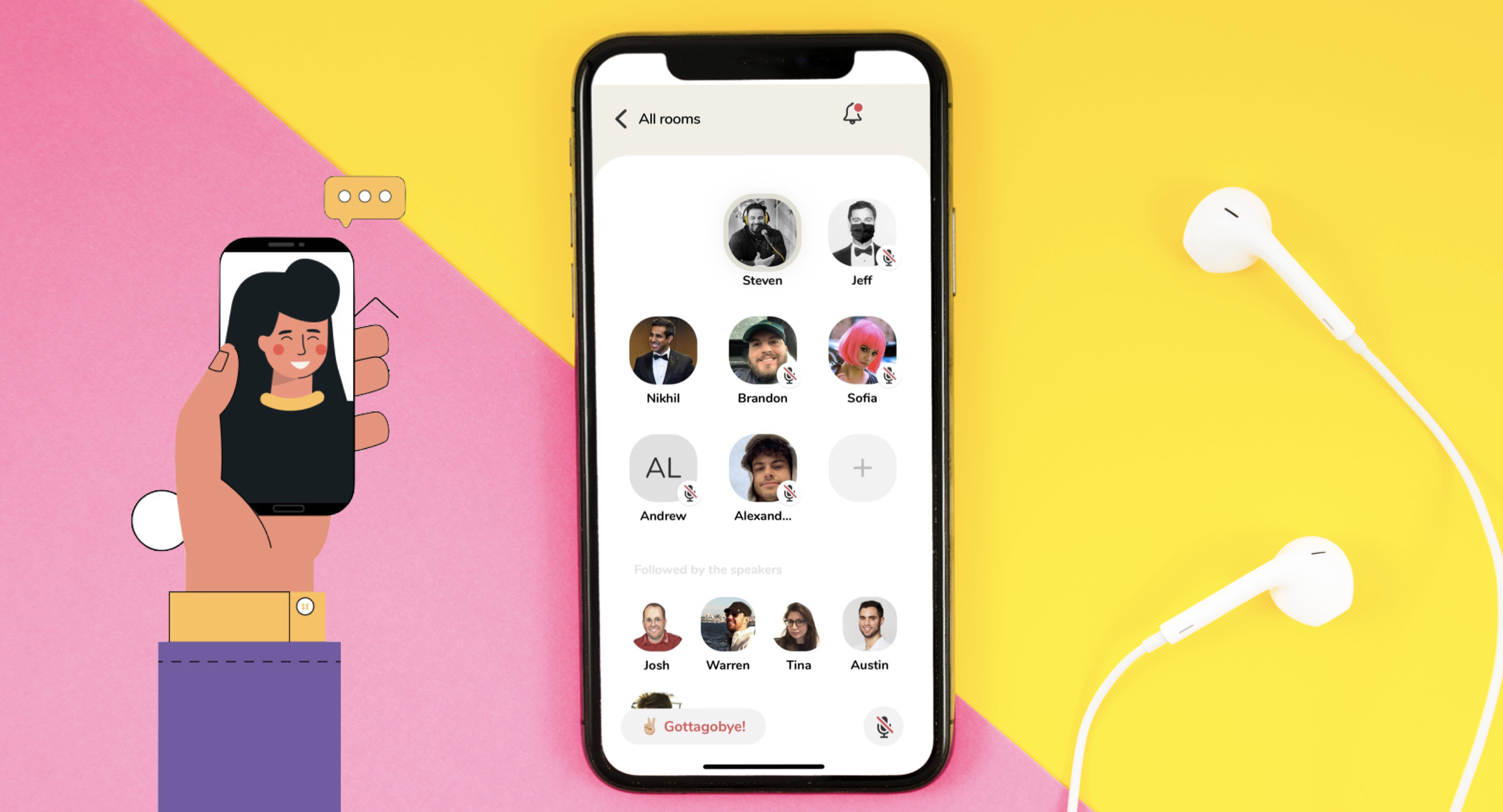
    Forget The Nice Guy or Soho House. The place to find Hollywood and Silicon Valley powerhouses during the pandemic has been on Clubhouse, the invite-only, audio-driven app that’s quickly gaining steam as a networking tool for those looking to make it in the entertainment and tech worlds.

    Hop on Clubhouse at any given time and you could stumble into conversations led by Wiz Khalifa, Tiffany Haddish, Ava DuVernay, Ashton Kutcher, Brian Koppelman or Scooter Braun, among several other celebs. Kevin Hart, in a story that’s already solidified in Clubhouse lore, recently took part in an hours-long conversation focused on whether he was, in fact, funny. And on the tech side, Clubhouse is packed with entrepreneurs like former Twitter CEO Ev Williams, Reddit co-founder Alexis Ohanian, and former Y Combinator President Sam Altman, along with a laundry list of angel investors and venture capitalists.

    Clubhouse isn’t complicated: Users can go on the app and join a “room” where a particular conversation is going on. Often, these conversations are focused on business and networking topics; “Pivoting from live events to virtual events + sponsorships” and “virtual writing cafe” were two rooms pulling in users on Monday, for example. Once inside, users can listen to the discussion and, if approved by the room moderator, chime in and join the conversation themselves. It’s not uncommon to see rooms with a few dozen speakers and a few hundred users listening in.

    Since launching in April, the app has grown to over 100,000 beta users, according to an individual familiar with the company’s internal metrics. The app’s early traction helped it land a $12 million round of funding from Andreessen Horowitz, valuing Clubhouse at $100 million.

    As the new, go-to spot to listen to entrepreneurs and stars, Clubhouse has also become the audio version of LinkedIn for those looking to make connections in Hollywood. Even in normal times, making it in the movie business is tough enough. But for Sade Sellers, a 31-year-old screenwriter from Burbank, California, one of the many problems tied to the pandemic has been the end to casual networking events — coffee meet-ups with executives, conferences and post-work drinks with people in the film industry — that have helped her career grow.

  • Facebook reports strong Q4 and 2020 top and bottom line growth

    Facebook reports strong Q4 and 2020 top and bottom line growth

    Facebook reported its fourth-quarter and full-year earnings numbers today. The controversial social networking site reported advertising revenue of $27.19 billion for the fourth quarter running from October through December. That resulted in a 31% year-over-year gain from the $20.74 billion in advertising revenue that the company earned during last year’s fourth quarter. For all of 2020, Facebook grossed $84.17 billion, up 21% from 2019’s total of $69.66 billion.

    During the fourth quarter, Facebook garnered a total of $28.07 billion compared to the $21.08 billion it took in during the same quarter last year. If you’re counting, that is a 33% hike on an annual basis. For all of 2020, the company collected $86 billion dollars producing a 22% increase from 2019’s top line number of $70.70 billion.

    Let’s move on to the bottom line. For the period from October through December (yes, also known as the fourth quarter), Facebook earned $11.22 billion or $3.88 per share. Net income was up 53% from the previous year’s $7.35 billion while the per-share figure reflected a hike of 52% from the $2.56 per share figure attained during Q4 of 2019. For 2020, Facebook reported profits of $29.15 billion or $10.09 per share. That’s an annual gain of 58% and 57% respectively over 2019’s figures of $18.49 billion and $6.43 per share.

    Facebook achieved 1.84 billion Daily Active Users for December 2020, an 11% gain year-over-year. As of the end of last year, the number of Monthly Active Users amounted to 2.80 billion for a 12% annual gain.

    For the first half of 2021, Facebook expects revenue to be stable, or show a slight gain. CFO David Wehner said that Facebook expects some issues with ad targeting. As you might recall, Apple and Facebook are fighting each other over Apple’s change requiring iOS users to opt-in to receive targeted ads. Wehner says, “We also expect to face more significant ad targeting headwinds in 2021. This includes the impact of platform changes, notably iOS 14, as well as the evolving regulatory landscape. While the timing of the iOS 14 changes remains uncertain, we would expect to see an impact beginning late in the first quarter.”

    Besides owning Facebook, the company owns Facebook Messenger, WhatsApp and Instagram. It also runs VR headset producer Oculus and makes the Facebook Portal line of smart displays.

    The earnings report failed to excite Wall Street investors. During the regular trading session, Facebook (FB) shares closed down $9.91 or 3.51% to $272.14. After the report was released slightly after 4pm ET, Facebook dropped another $5.14 or 1.89% to $267.

  • Ministry wants social networks used to sell goods treated as online marketplaces

    Ministry wants social networks used to sell goods treated as online marketplaces

    Social networks that enable trading of goods should be regulated like e-commerce trading platforms, a draft decree by the Ministry of Industry and Trade proposes.

    It seeks to expand the scope of online marketplace regulations to include social media that allows people to create pages to sell goods, enter into contracts with customers or post articles offering goods or services for sale.

    But Nguyen Quang Dong, director of the Institute for Policy Studies and Media Development, said there is no basis to treat social networks as e-commerce platforms.

    They do not have physical stores or goods, or an obligation to provide support in cases of complaints or fraud, and charge fees for advertising as opposed to sales, he pointed out.

    “Viewing social networks as e-commerce trading sites would be incorrect, they are closer to advertising services. It is necessary to clarify the nature of social networks, instead of trying to have overarching regulations governing everything.”

    Some European countries treat social networks as digital services, a concept with a wider scope than e-commerce platforms, and allows them to collect taxes based on this definition, he added.

    Another provision in this draft that raises concern among analysts is that only foreign investors considered by the ministry to be “reputable global technology companies in the field of e-commerce” will be allowed to enter the Vietnamese e-commerce market.

    It will periodically publish a list of eligible companies, according to the draft decree.

    Nguyen Thanh Ha, chairman of law firm SB Law, warned this would limit the entry of foreign capital.

    “The definition of ‘reputable global tech company’ is ambiguous and subjective, and it is difficult to identify the standards of that qualify a company, and makes it difficult for businesses to interpret.”

    Dong too said this provision is not feasible and should be deleted.

    Global data firm Statista estimated Vietnam’s e-commerce market to be worth $6 billion last year and projected it to grow to around $9 billion by 2025.

  • Kaskus founder leaves company, says IT sector becoming too risky

    Kaskus founder leaves company, says IT sector becoming too risky

    Kaskus founder Ken Dean Lawadinata has resigned from his position as chairman of PT Darta Media Indonesia, the operator of the Kaskus online community. Ken plans to invest in property and commodities instead of Information Technology (IT).

    Ken released his shares in Kaskus to GDP Ventures.

    “That’s right, I have left Kaskus. I released all my shares to GDP,” he said on Saturday as quoted by kompas.com.

    Ken was one of the founders of Kaskus and elevated Kaskus to its current status as the biggest online community in Indonesia.

    Ken said that after Kaskus, he was not interested in the IT industry anymore. He has his eyes on property and commodity investments such as mining and timber.

    He said the IT industry in Indonesia was still growing and demand was healthy and new ideas kept emerging. However, Ken said the risks in IT were now too high.

    “IT was a sector with low-risk, high-return, but it has now become a high-risk, high-return sector. In this industry, US$10 million is now meaningless,” Ken said.

    Ken also founded Smartmama, a media company for mothers, and Tororo, an online baby products shop. He plans to hold on to these companies.

    “In IT, I will focus on Smartmama and Tororo,” Ken went on to say.

    Another Kaskus founder, Andrew Darwis, who is still chief commercial officer of Kaskus, offered his thanks to Ken for Ken’s dedication in growing Kaskus. He stated that Ken’s resignation would not disturb the company’s performance.

    “Kaskus is focusing on its mission to become the biggest social commerce platform in Indonesia,” Andrew said.

    Kaskus was founded in 1999 by Andrew, Ken and two other friends.

  • Migme buys in Indonesia

    Migme buys in Indonesia

    Social networking company migme has announced the acquisition of two Indonesia-based companies, while finalising a $3.5 million convertible note issue.

    migme announced today the purchase of social news site Hipwee Media Solutions and Shopdeca, which operates two retail sites.

    The value of the acquisitions were undisclosed.

    migme chief executive Steven Goh said the Hipwee acquisition would replicate the company’s service offering in other countries, such as India and the Philippines.

    “Hipwee has always aimed to be the most influential media company for young Indonesians and joining migme will allow us to continue to pursue our mission in a whole new level,” he said.

    Hipwee delivers curated and original community generated content focused on entertainment, relationships and travel, targeting Indonesian urbanities.

    The team comprises 16 editorial and community staff, who write and curate content.

    Shopdeca, meanwhile, will enable migme to launch its ecommerce operations in Indonesia with two retail sites, which provide curated lifestyle products for Indonesian consumers.

    As part of the acquisition, Shopdeca founder Andreas Tharmin will join migme as global head of ecommerce.

    “We’re gaining valuable local market expertise and we look forward to the acquisition being a positive contributor to group results in 2016,” Mr Goh said.

    Meanwhile, migme also announced it had finalised the issue and placement of convertible notes at $1.10 per share conversion ratio and raising a total of $3.5 million.

    The price of the notes were a 22 per cent premium to migme’s opening share price.

    In a statement, the company said the proceeds would be used to fund acquisitions and accelerate market penetration in Asia.

    “The company believes raising funds via the convertible note issue is in the best interests of shareholders at this stage as it allows the business to better execute its expansion plans and achieve its stated objectives,” the company said.

    Shares in migme were 2.2 per cent higher to 90 cents each at the close.