Tag: soft drink

  • Bobby partners with the Happy Hour podcast on new flavour

    Bobby partners with the Happy Hour podcast on new flavour

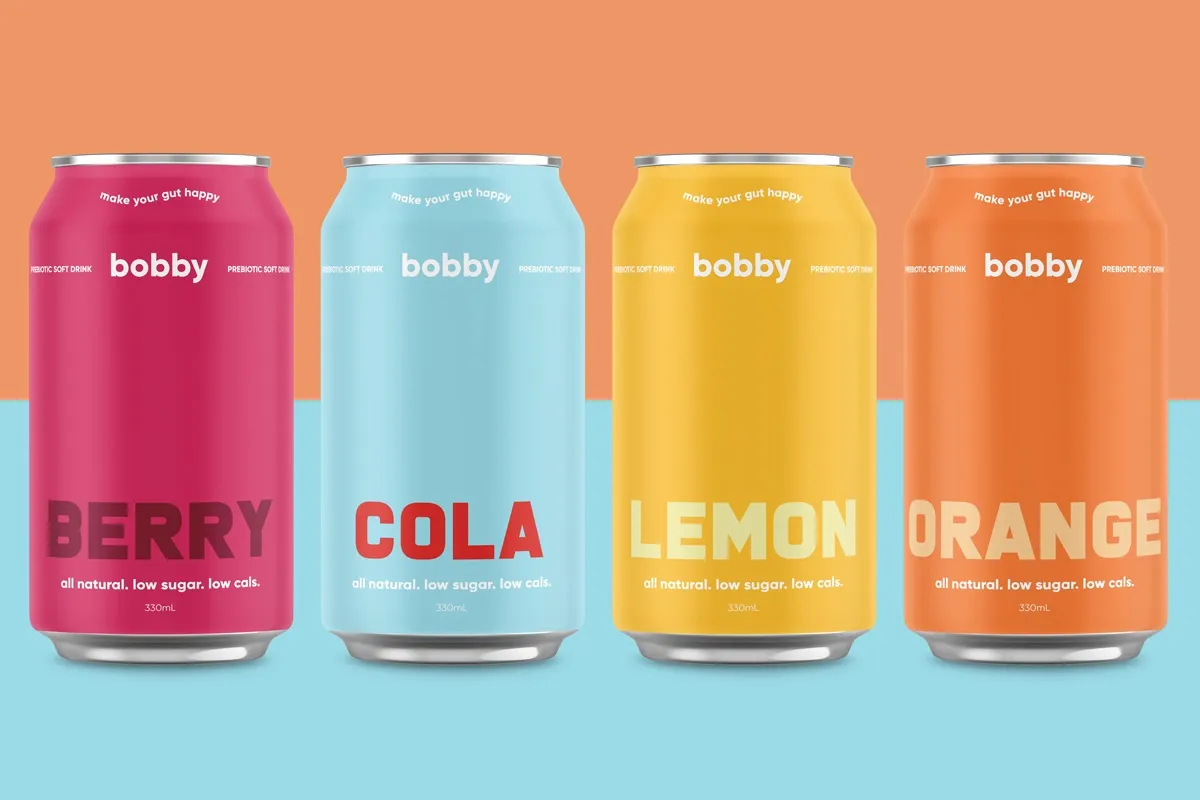
    Bobby, an Australian soft drink brand, has recently joined hands with Lucy Jackson and Nikki Westcott, co-hosts of the popular Happy Hour podcast, to introduce a limited-edition flavour named ‘Strawberries & Cream.’

    A First-Time Collaboration

    This initiative is Bobby’s inaugural venture in co-creating a flavour with external contributors. The move signifies the brand’s inclination to engage with popular culture via strategic partnerships.

    The latest beverage offers a unique mix of strawberry and vanilla, enriched with a creamy finish, positioning itself as a healthier alternative in the drink market.

    Health-Conscious Beverage

    Each can of the drink only contains 30 calories and is 98% sugar-free. It also includes prebiotics. Moreover, the drink is vegan, gluten-free, and non-GMO.

    Kristian Johannsen, the founder of Bobby, stated that collaborating with the podcast hosts was an obvious choice. She said their vibrant and unrestricted energy perfectly aligns with what Bobby represents.

    Bobby called the collaboration ‘authentically genuine,’ with Jackson and Westcott playing an active part in the entire process. This involvement ranged from conceptualising the initial flavour to participating in taste tests and contributing to the broader brand execution.

    Authenticity and Enthusiasm

    Jackson expressed, “We didn’t just want our faces on a can, we wanted a drink that felt like us. Strawberries & Cream is nostalgic, fun, a little cheeky – basically everything Happy Hour stands for.”

    Westcott added her excitement about introducing a non-alcoholic drink for their listeners to enjoy. “It’s creamy and totally satisfying without all the unnecessary ingredients,” she said.

    Bobby’s Strawberries & Cream flavour is now available nationwide at Coles and Metro stores. The retail price is $36 for a six-pack.

    Questions & Answers

    What is the new product launched by Bobby?
    The Australian soft drink brand, Bobby, has launched a new flavour, ‘Strawberries & Cream,’ in partnership with the co-hosts of the Happy Hour podcast.

    Who were the external collaborators on this new Bobby flavour?
    Bobby has collaborated with Lucy Jackson and Nikki Westcott, the co-hosts of the popular Happy Hour podcast, to create the ‘Strawberries & Cream’ flavour.

    What are the health benefits of the new Bobby flavour?
    Each can of the ‘Strawberries & Cream’ flavour contains only 30 calories and is 98% sugar-free. It also includes prebiotics and is vegan, gluten-free, and non-GMO.
  • The Coca-Cola Company completes acquisition of Costa

    The Coca-Cola Company completes acquisition of Costa

    The Coca-Cola Company has announced that it has completed the acquisition of Costa Limited from Whitbread PLC. The US$ 4.9 billion transaction follows approval from regulatory authorities in the European Union and China. The acquisition was first announced on August 31, 2018. Costa, which has operations in more than 30 countries, gives Coca-Cola a significant footprint in the global coffee business. Worldwide, the coffee segment is growing 6 percent annually. Costa has a scalable platform across multiple formats and channels, from the existing Costa Express vending system to opportunities to introduce ready-to-drink products.

    “We see great opportunities for value creation through the combination of Costa’s capabilities and Coca-Cola’s marketing expertise and global reach,” said James Quincey, CEO of The Coca-Cola Company. “Our vision is to use the strong Costa platform to expand our portfolio in the growing coffee category.”

    “We wish our friends and colleagues at Costa all the very best for their future success,” said Alison Brittain, Whitbread Chief Executive. “Whitbread acquired Costa 23 years ago, when it had only 39 shops. Costa has grown to become a leading, international coffee brand, and Coca-Cola is the right partner to take Costa to the next stage of expansion.”

  • Soft drink firms make big money, pay small taxes in Vietnam

    Soft drink firms make big money, pay small taxes in Vietnam

    Business has been sweet for the four major companies that dominate Vietnam’s soft drinks market, but they pay a relative pittance in taxes.

    The big 4 in Vietnam’s sweetened beverage market are: Coca-cola Vietnam, an arm of American Coca-cola, Suntory Pepsico, a fully foreign owned joint venture between U.S. PepsiCo Inc. and Japan’s Suntory Holdings Limited, URC Vietnam based in the Philippines, and Vietnamese firm Tan Hiep Phat.

    High consumption in Vietnam has boosted revenues for these firms, Suntory Pepsico leading the way.

    Truong Tuyet Mai, deputy director of the National Institute of Nutrition, said in June that Vietnamese people are forecast to consume over 5 billion liters of sweetened drinks in 2018, nine times more than in 2000, and the figure is estimated to reach 11 billion by 2025.

    According to Vietnam Association of Liquor, Beer and Beverages, a Vietnamese person currently consume more than 23 liters of soft drinks per year and the figure will keep rising in the future.

    To date, Vietnam has not imposed a special consumption tax on sweetened drinks, collecting just corporate income tax. The tax paid by firms making the sweetened drinks has, therefore, been quite modest, compared to their revenues.

    Economist Vu Dinh Anh said on Friday that “there might be two reasons for the low income of these companies: one is transfer pricing and the other is the high expenditure on advertisement.”

    As for advertisement, it is easy to understand that those companies have to spend a big sum each year on all media channels for their products, Anh said.

    Vietnam used to put a cap on the spending for advertisement but that policy is no longer applied, said Anh.

    Those two reasons might result in the low income and lead to the low corporate income tax payment, he added.

    The Ministry of Finance has proposed a 10 percent special consumption tax on different type of beverages, including sweetened drinks.

    If passed, the proposal will go into effect in 2019.

  • WHO backs Vietnam’s new tax proposal on sugary drinks

    WHO backs Vietnam’s new tax proposal on sugary drinks

    World Health Organization (WHO) experts have expressed strong support for a new tax on sugary drinks proposed by the Ministry of Finance.

    The proposal, which will go into effect in 2019 if passed, will impose a 10 percent special consumption tax on different type of beverages, including sweetened drinks.

    While the tax aims to prompt a shift from unhealthy consumption habits, it has been criticized by business representatives and experts who say the industry is already taxed heavily.

    The tax proposal comes in the wake of Vietnam being put on high alert over its consumption of sugary drinks, which has skyrocketed over the last 15 years.

    The WHO noted that a fourth of Vietnam’s population was already obese or overweight.

    Guilermo Paraje, a WHO consultant, said the 10 percent special consumption tax will increase the average price of sweetened drinks in the Vietnamese market by 5 percent, and provide a VND4 trillion ($173.9 million) boost to the state budget.

    He further suggested three tax proposals that would increase the tax contribution to VND12 trillion – one liter of sweetened beverages will be taxed VND3,500; VND35 per gram of sugar in every 100 milliliters of a drink; or a 40 percent tax on factory price. All three options will increase average soda prices by 20 percent.

    “People will substitute sugary drinks with water or other products, leading to alternative jobs. The industry has also experienced industrialization so there are not many job opportunities in this sector,” Paraje said.

    Dr. Jun Nakagawa, WHO representative in Vietnam, said excessive consumption of sugar was the leading cause of overweight and obesity, which are linked to many health risks such as diabetes, heart disease and gout.

    Vietnam has added sugary drinks to the list of items to be placed under stricter control and tax regulations, along with cigarettes and alcohol.

    The government has banned the sale of soft drinks in all school canteens across Vietnam.

    Truong Tuyet Mai, deputy director of the National Institute of Nutrition, said that Vietnamese people are forecast to consume over 5 billion liters of sweetened drinks in 2018, nine times more than in 2000, and the figure is estimated to reach 11 billion by 2025.

    The new 10 percent special consumption tax would also accrue to other beverages, including carbonated or non-carbonated soft drinks, juices, flavored water, energy drinks, instant tea, pre-packed coffee and flavored milk.

  • Vietnam tax on sweetened drinks hurts the business

    Vietnam tax on sweetened drinks hurts the business

    A Finance Ministry proposal to slap a 10 percent special consumption tax on sweetened drinks would hurt small and medium businesses, critics say.

    Business representatives and some experts say the beverage industry is already taxed heavily, and the latest addition could prove to the last straw.

    The tax proposal, first announced last year and expected to take effect in 2019, aims to promote healthier habits by discouraging the consumption of sweetened drinks. The Ministry has cited reports from the World Health Organization, saying overconsumption of sweetened drinks lead to obesity and that a fourth of Vietnam’s population are already obese or overweight adults.

    “The tax will help regulate the consumption of sweetened beverages, and it’s also an international norm,” the proposal says.

    However, the Vietnam Association of Liquor, Beer and Beverage (VBA) has protested the move, saying the tax could hurt small and medium businesses by promoting circulation of fake products.

    “The tax proposal would lead to higher production costs, allowing fake and low-quality products to thrive,” it said in a statement.

    Many industry insiders also say they are already paying no less than 10 different types of taxes.

    “If this tax proposal passes, we won’t be able to survive,” a Thursday report by the Tuoi Tre newspaper quoted an unnamed vice director of a beverage firm in the southeast province of Binh Duong as saying.

    Nguyen Van Viet, president of VBA, suggested an incremental imposition of the tax in order to reduce the burden on businesses.

    The industry stand has been backed by several ministries, who rejected the Finance Ministry’s rationale that sweetened drinks contain an unhealthy amount of sugar, warranting a special consumption tax.

    The Ministry of Industry and Trade said in a statement that imposing a special consumption tax on sweetened drinks because they contain sugar was not a convincing enough reason.

    It said the Finance Ministry needs to give clearer explanations for its proposal.

    The Trade Ministry statement echoed the argument made last October by the Vietnam Chamber of Commerce and Industry (VCCI) that a special tax should only be imposed after adequate studies have been made on the drinks’ impacts on consumer health and if the tax could help reduce the risks significantly.

    The Ministry of Planning and Investment is also against the proposal, which it says could adversely affect the beverage industry and its large workforce.

    In Vietnam, special consumption taxes are levied on items and services considered unhealthy or luxurious, like tobacco, liquor and cars.

    Many Southeast Asian countries have already imposed taxes on sugary drinks, according to the Finance Ministry. The current rate is 20-25 percent in Thailand, 5-10 percent in Laos and 10 percent in Cambodia.

    Myanmar, the Philippines and Indonesia are considering a similar tax.

  • Japan’s Pokka Starts Making Soft Drinks in Indonesia

    Japan’s Pokka Starts Making Soft Drinks in Indonesia

    Pokka Sapporo Food & Beverage is ramping up Indonesian operations in soft drinks, switching to local production to strengthen its market foothold and save on costs.

    The Japanese beverage maker set up a production facility through a joint venture with local distributor Dima Indonesia and began shipments in late April. Pokka aims to sell 1.4 million cases in the first year.

    Since predecessor Pokka Corp. set up shop in Southeast Asia back in 1977, Pokka has become well-known in the region for its green tea, mainly in Singapore. The company has also shipped drinks produced in Singapore to Indonesia for sale.

    The first products coming out of the Indonesian plant include bottled jasmine green tea and lemon black tea. Pokka’s drinks are a little pricier than rival brands, costing the equivalent of 40 yen to 70 yen (36 cents to 63 cents) more per bottle. The company plans to use sales channels of Dima and expand sales through supermarkets and other volume retailers.