Tag: SoftBank

  • SoftBank working on eSIM platform for IoT

    SoftBank working on eSIM platform for IoT

    SoftBank is developing an embedded subscriber identity module (eSIM) platform as part of its efforts to promote Internet of Things (IoT) solutions.

    The platform, which is scheduled to start operating in 2017, enables remote eSIM provisioning by connecting to carrier communication networks with the required profiles.

    When selling vehicles and other items embedded with machine-to-machine (M2M) equipment to markets abroad, until now it was necessary to prepare dedicated SIM cards with the necessary profiles to connect to the respective communication networks of overseas carriers.

    With eSIMs integrated into IoT products and M2M equipment, and by using the eSIM Platform, corporate customers will be able to remotely provision eSIMs with the profiles required for connecting to various carrier networks.

    For tablets, wearables and other consumer devices equipped with eSIMs, the eSIM Platform will also enable the remote provisioning of pre-registered contract information and other types of information, in addition to the necessary profiles for network connection.

  • SoftBank taps Ericsson to improve indoor coverage

    SoftBank taps Ericsson to improve indoor coverage

    Japan’s SoftBank plans to deploy Ericsson’s Radio Dot system across Japan to improve indoor coverage for its large subscriber base.

    The operator will target medium to large buildings in high-density urban areas including Tokyo, Osaka and Nagoya with the deployment, Ericsson said. Deployment will commence in the densest areas of the three cities, in buildings including office towers, shopping malls and train stations

    SoftBank began testing Radio Dot technology in Japan in June 2015 as the company explored ways to better meet the huge demand for improved indoor coverage in urban areas. Now after extensive testing and verification, the operator is ready to enter the mass deployment stage.

    “We are always interested in adopting the latest technologies to ensure our subscribers receive the best possible network service,” SoftBank SVP Hideyuki Tsukuda said.

    “After evaluating a number of options, we concluded that the Ericsson Radio Dot System was the most cost-efficient solution for large buildings. Its deployment in crowded urban indoor environments will enable us to meet user expectations for a consistently high quality of network coverage.”

  • SoftBank, Ericsson to trial 5G over 28-GHz

    SoftBank, Ericsson to trial 5G over 28-GHz

    Ericsson and Japan’s SoftBank have announced plans to demonstrate 5G over 28-GHz millimetre wave spectrum, as part of the next stage of their joint 5G trials.

    The companies said they are moving forward with more advanced 5G tests following the successful completion of basic 4.5-GHz and 15-GHz 5G trials in Tokyo last year.

    The upcoming trial will involve both indoor and outdoor testing environments and cover both device mobility and stationary tests. The trial will use Ericsson’s mmWave 28-GHz 5G Test Bed base station and device prototype solution.

    SoftBank and Ericsson will make use of advanced 5G technologies including Massive-MIMO, massive beamforming, Distributed MIMO, Multi-user MIMO and beam tracking.

    “SoftBank started to verify 4.5-GHz radio back in August 2016 and now 4.5GHz is becoming the leading candidate band for 5G services in Japan together with 28-GHz,” the operator’s SVP Hideyuki Tsukuda said.

    “We are leveraging Ericsson’s Test Bed with 28-GHz radio to validate a lot of advanced features at super low-latency and high throughput, which helps position us as a pioneer of 5G.”

    Ericsson Japan head Mikael Eriksson added that he is confident that the company “will be the first to deliver 5G services and that we will deliver the best performing end to end network in Japan.”

  • Foxconn to help Japanese firm sell robots around the world

    Foxconn to help Japanese firm sell robots around the world

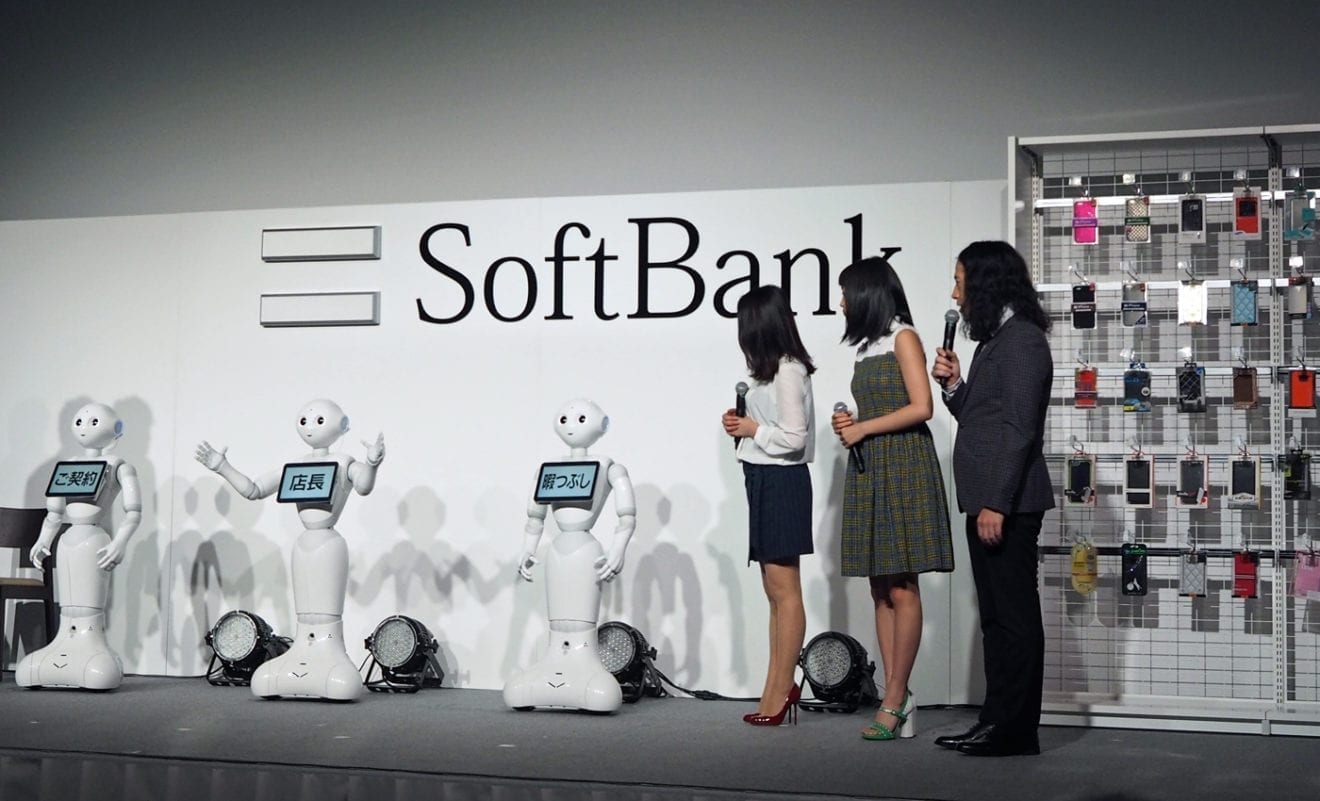
    What guise will robots of the future take? Some see as them as faceless automatons, capable of performing basic tasks for us, whilst the Supermatrix predicts a future where they’ll be actively concious but subdued through a dream within a dream. SoftBank Mobile however believes robots can be our friends before they do our bidding, which is why it launched its Pepper robot in Japan last year and is now partnering with Foxconn and Alibaba to help sell it around the world.

    Pepper doesn’t perform any particularly useful tasks around the house or office, but he can read facial expressions and judge emotions based on language and tone of voice and can react accordingly. If you are sad, he might engage you in conversation or play your favourite song to cheer you up. Over time he learns your emotions and different moods and can compliment or help alleviate them depending on your preferences.

    To date he’s mostly been used as a greeter in Softbank stores, but there are other potential uses such as babysitter, party greeter, serving staff or a companion for the elderly. It’s expected that retailers may be some of the most interested in Pepper, but that there are plenty of other applications for him where end users and other organisations may see him as a good fit for the role.

    Projected costs for the robot are expected to be $1,660 (£,1044) up front, followed by monthly payments of £125 to cover ongoing insurance coverage (should it fall over and break) as well as access to the cloud processing facilities required to make many of Pepper’s more complicated analysis and decisions.

  • Apple to invest $1b in SoftBank tech fund

    Apple to invest $1b in SoftBank tech fund

    Apple has revealed plans to invest $1 billion in Japanese telecom behemoth SoftBank’s $100 billion technology venture capital fund.

    Apple will join a list of investors that are also expected to include Foxconn Technology Group and Oracle chairman Larry Ellison. Companies including Qualcomm have already committed to the fund.

    The $100 billion SoftBank Vision Fund will invest in strategic technology areas such as the IoT and AI as part of efforts by SoftBank CEO Masayoshi Son to help the company capitalize on emerging opportunities.

    The report quotes a market analyst as stating that that the investment could be aimed at helping Apple’s core smartphone business stay competitive as the IoT market expands, and could also reflect the company’s increasing interest in partnering with other companies for growth.

    Apple does not have a track record of investing in venture capital funds, but the company has been changing its investment strategy recently to reflect evolving market dynamics.

    This change in strategy and growing interest in partnerships was reflected by the company’s $1 billion investment in China’s home-grown Uber alternative Didi Chuxing last year.

  • OneWeb secures $1.2b from Softbank-led investment

    OneWeb secures $1.2b from Softbank-led investment

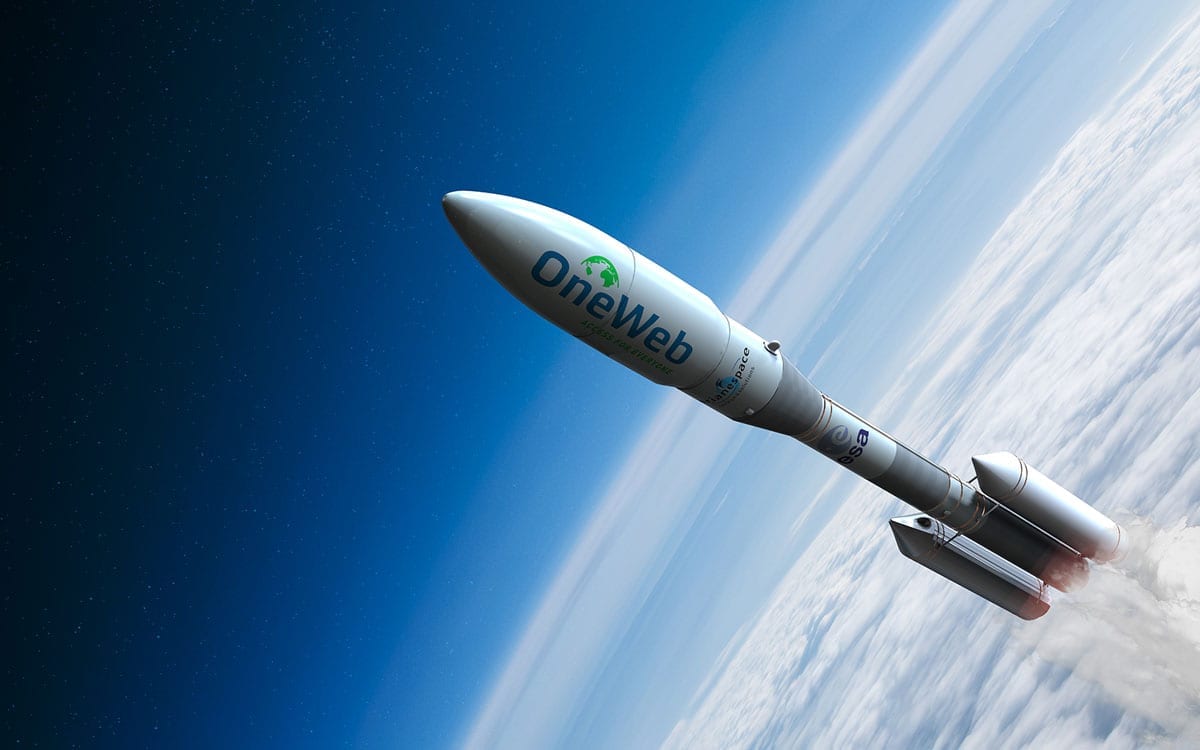
    OneWeb has raised $1.2 billion in a new funding round led by Japan’s Softbank, bringing in fresh capital for the US satellite startup to compete with Elon Musk’s SpaceX.

    Softbank is investing $1 billion of the total $1.2 billion and has become a strategic partner, with one of its directors, Ronald Fisher, joining OneWeb’s board of directors.

    The remaining $200 million will be funded by its current investors, which include Airbus Group, Bharti Enterprises, Intelsat-owned Hughes Network Systems, Qualcomm, and Virgin Group. The transaction is expected to close in the first quarter of 2017.

    OneWeb said the money will be used to build a high-volume satellite production plant in Florida, which is expected to create almost 3,000 new engineering, manufacturing and supporting jobs in US over the next four years.

    “With this new round of funding and based on our rapid technical progress over the past year, we also announce a much larger goal: to fully bridge the digital divide by 2027, making internet access available and affordable for everyone,” said OneWeb founder Greg Wyler.

    The new facility, which will begin production in 2018, aims to produce 15 satellites each week “at a fraction of the cost of what any satellite manufacturing facility in the world can produce today,” the company said.

    For Softbank, the $1 billion investment in OneWeb is the first tranche of a $50 billion US investment the Japanese conglomerate’s founder and CEO Masayoshi Son pledged to President-elect Donald Trump.

    “Earlier this month I met with President-Elect Trump and shared my commitment to investing and creating jobs in US,” Son said in a media release. “This is the first step in that commitment.”

    It is also Softbank’s latest attempts to strengthen the company’s foothold in the burgeoning IoT sector. In July, Softbank, which also owns US mobile carrier Sprint, acquired UK chipmaker Arm for a whopping $31 billion to pursue business opportunities in the emerging IoT sector.

    “SoftBank has a long history of investing in disruptive, foundational technologies that promise to help us realize the future sooner. OneWeb is a tremendously exciting company poised to transform internet access around the world from their manufacturing facility in Florida,” Son noted.

    Founded in 2012, OneWeb aims to build a communication network with a constellation starting with 720 low earth orbit (LEO) satellites to deliver affordable, high-speed, low latency internet access to rural areas across the United States and emerging markets.
  • SoftBank launches cloud videoconferencing service

    SoftBank launches cloud videoconferencing service

    Japan’s SoftBank  has launched a new cloud-based videoconferencing service using PolyCom’s RealPresence Clariti infrastructure software.

    SoftBank’s new PrimeMeeting service will strengthen the company’s offerings to customers looking for a flexible video collaboration solution that is simple to purchase and implement.

    The service is built on RealPresence Clarity as well as SoftBank’s White Cloud ASPIRE Infrastructure-as-a-Service (IaaS) platform.

    As well as enabling collaboration from anywhere on any device, the service will support integration with Microsoft’s Skype for Business and traditional video conferencing systems.

    “We are happy to announce the launch of our cloud videoconferencing service, PrimeMeeting, provided in collaboration with Polycom. Customers who previously could not use a video conferencing service due to cost, location, or device issues will now be able to easily adopt this service,” SoftBank ICT innovation division director Sadahiro Sato said.

    “By combining Polycom’s strong market share and brand value in the video conferencing market together with our new cloud service, we can enable more flexible and richer communication options to more of our customers.”

  • Ericsson deploys Elastic RAN for SoftBank

    Ericsson deploys Elastic RAN for SoftBank

    Ericsson has completed the first commercial deployment of its new Elastic RAN for Japan’s SoftBank, and entered an agreement to build a 5G trial network in parts of Tokyo with NTT DoCoMo and Intel.

    SoftBank has implemented Ericsson’s Elastic RAN at Tokyo station, one of the biggest train stations in the world.

    The deployment allows for an unlimited number of cells to be co-ordinated across a network to improve flexibility in the aggregation of different network carriers.

    Ericsson said tests indicate that downlink throughput has increased by up to 40% during peak hours for commuters using three-carrier aggregation compatible smartphones.

    “The Japanese market is highly developed, and our customers enjoy using the latest mobile broadband technologies with their smartphones and applications,” SoftBank SVP and deputy head of technology Hideyuki Tsukuda said.

    “We are excited to partner with Ericsson in the first introduction of the Elastic RAN solution to enable peak performance of the most advanced smartphones in the world, in the densest and most challenging areas of our network.”

    He said SoftBank plans to continue deploying the RAN across these dense urban areas.

    Ericsson separately announced an agreement with DoCoMo and Intel to build a 5G trial network in parts of the city from 2017.

    Ericsson will provide 5G radio, baseband, virtualized RAN and core networks, while Intel will contribute its chipset in user devices. The trial will use the 28-GHz spectrum band that the Japanese government is considering designating for 5G use.

  • SoftBank to establish tech investment fund

    SoftBank to establish tech investment fund

    SoftBank Group has announced plans to establish the SoftBank Vision Fund to make investments in the technology sector globally.

    The fund will be managed in the United Kingdom by a subsidiary of SoftBank and will deploy capital from SoftBank and investment partners. The fund will aim to be one of the world’s largest of its kind.

    SoftBank expects to invest at least $25 billion over the next five years. The company has concluded a non-binding memorandum of understanding (MoU) with the Public Investment Fund of the Kingdom of Saudi Arabia (PIF).

    Under the MoU, PIF will consider investing in the fund and becoming the lead investment partner, with the potential investment size of up to $45 billion over the next five years.

    In addition, a few large global investors are in active dialogue to join SoftBank and PIF to participate in this investment fund. The overall potential size of the fund can go up to $100 billion.

    SoftBank will use its operational expertise and network of portfolio companies in order to add value to the fund’s investments.

    Deputy Crown Prince Mohammed Bin Salman, chairman of PIF, said the PIF is focused on achieving attractive long-term financial returns from its investments at home and abroad, as well as supporting the Kingdom’s Vision 2030 strategy to develop a diversified economy.

    “With the establishment of the SoftBank Vision Fund, we will be able to step up investments in technology companies globally,” said Masayoshi Son, chairman and CEO of SoftBank Group.

    “Over the next decade, the SoftBank Vision Fund will be the biggest investor in the technology sector,” said Son. “We will further accelerate the Information Revolution by contributing to its development.”

    SoftBank Group’s head of strategic finance Rajeev Misra is leading the Fund. SoftBank has engaged former Deutsche banker Nizar Al-Bassam and ex-Goldman partner Dalinc Ariburnu for the project. PIF also had its own team of experts engaged.

  • SoftBank to deploy LoRaWAN network

    SoftBank to deploy LoRaWAN network

    Japan’s SoftBank has revealed plans to roll out a LoRaWAN low power wide area (LPWA) network in the current financial year.

    The operator plans to use the network to provide end-to-end IoT services, ranging from device and application support to consulting.

    SoftBank will target the service at industry sectors that require low cost, low power network construction, including equipment monitoring and control for commercial buildings, automated gas and water meter reading, senior and child monitoring, infrastructure monitoring and logistics.

    In collaboration with LPWA specialist Actility, Hon Hai Precision Industry and LoRa technology developer Semtech Corporation, Softbank will aim to build a LoRaWAN ecosystem in Japan.

    Softbank said the LoRaWAN deployment represents the first stage of the company’s plans to usher in the IoT era.

    The company eventually aims to deploy the full set of LPWA networks, including Cat-M1 and narrowband IoT (NB-IoT), to ensure its IoT network can operate in different environments.

    LoRaWAN uses the unlicensed 920-MHz band in Japan and was designed to meet the low cost and efficiency requirements for the IoT. Main features include devices with battery life of at least 10 years, support for numerous simultaneous connections and a communication range of multiple kilometers.

    Specifications for LoRaWAN are developed by the LoRa Alliance, a collaboration between 391 IoT-related companies worldwide.

  • Softbank, Wireless City kick off 5G project

    Softbank, Wireless City kick off 5G project

    Softbank and its affiliate company, Wireless City Planning, have officially launched the ‘5G Project’.

    As the first phase of the project, which was announced in Tokyo last week, Softbank plans to roll out commercial services based on Massive MIMO technology from September 16, a move which Softbank says will make it the world’s first cellco to provide such services.

    Under the plan, SoftBank will be deploying the technology across 100 base stations in 43 cities across Japan, of which 30-40% will be deployed in downtown areas of the Tokyo capital.

    At the media conference for the launch last week, Shubun Kitahara, director of the network planning department of SoftBank’s mobile technology division, tested at four locations in downtown Tokyo, which showed that massive MIMO increased communications speed by 6.7 times on average.

    According to Softbank, corresponding terminals only need to support SoftBank 4G (compatible with TD-LTE). The service is also available on the SoftBank 4G terminals customized for Y!mobile.

    Aiming for 5G commercialization in 2020, Softbank last year signed separate research collaboration agreements with Huawei and ZTE covering the development of stopgap technologies on the road towards 5G.

    SoftBank has teamed with ZTE to help develop networking equipment based on ZTE’s Pre5G technology, such as the vendor’s Massive MIMO base stations.

    Massive MIMO base stations have the capacity to support more than 100 antenna elements, allowing up to eight users to transfer data simultaneously.

    SoftBank already has cooperation agreements covering Massive MIMO as well as ultra-dense networks and multi-user shared access technology.

  • SoftBank lifts June quarter profit by 19.1%

    SoftBank lifts June quarter profit by 19.1%

    Japan’s SoftBank lifted its net profit for the June quarter by 19.1% year-on-year to 254.16 billion yen ($2.42 billion), largely as a result of solid growth from the company’s domestic telecoms business.

    Domestic telecoms service revenue grew 5.4% to 761.8 trillion yen following steady growth of the operator’s SoftBank Hikari fiber service. Total FTTH subscribers grew to 2.24 million, from 1.72 million in the previous quarter.

    The company meanwhile grew its mobile subscriber base by 580,000 year-on-year to 32.15 million, with smartphone and tablet subscribers outweighing net losses for feature phones.

    Total ARPU declined by 50 yen to 4,610 yen, but service ARPU increased by 40 yen to 560 yen, reflecting an increase in the number of subscribers to the operator’s content services.

    Revenues from SoftBank’s US subsidiary Sprint meanwhile declined 9.6% year-on-year to 848.09 billion yen, but remained largely flat in US dollar terms.

    SoftBank CEO Masayoshi Son assured reporters at an event announcing the company’s results that Sprint is about to turn into a revenue generator for the company after multiple quarters of negatively affecting the company’s results.

    SoftBank paid $21.6 billion to acquire control of Sprint in 2013, and the company has repeatedly insisted that Sprint’s fortunes are about to turn around.

    Now SoftBank is planning another big bet. The operator recently arranged to acquire chipmaker ARM for $31 billion to pursue opportunities in the emerging IoT sector, which Son believes will be the “biggest paradigm shift in human history.”

  • SoftBank arranges to buy ARM for $31b

    SoftBank arranges to buy ARM for $31b

    SoftBank has entered a deal to buy chipmaker ARM for a whopping $31 billion to help cement the company’s future in the burgeoning IoT sector.

    The boards of both SoftBank and ARM have unanimously recommended the proposed deal to buy out 100% of ARM and turn the company into a wholly-owned SoftBank subsidiary.

    The proposed buyout of UK-based ARM is the third largest proposed corporate merger of the year, and the first major deal in the UK since the Brexit vote, which has pushed down the value of the British pound to make the prospect more enticing for SoftBank.

    ARM’s core business of designing chips for mobile devices alone does not justify the high purchase price, which is more than 70 times the company’s net earnings for 2015. The company generated a mere $1.5 billion in revenue last year.

    But to counter slowing smartphone sales, ARM has been seeking to diversify into other sectors by designing chips for IoT devices, and this is where SoftBank’s interest in the company lies.

    Speaking at a press conference announcing the proposed merger, SoftBank CEO Masayoshi Son said the IoT is expected to be the “biggest paradigm shift in human history,” and that the investment marks a move to enter at the ground floor of this shift.

    Presentation materials prepared for the deal indicate that 14.8 billion ARM-powered SoCs shipped in 2015. The company is particularly targeting the consumer electronics, enterprise infrastructure, automotive and embedded intelligence segments.

    The deal still requires approval from ARM shareholders and English courts, but subject to these approvals is expected to close in the current calendar quarter.

  • Amazon To March Into Indonesia With $600 Million: Winners And Losers

    Amazon To March Into Indonesia With $600 Million: Winners And Losers

    Amazon.com has said it plans to expand its e-commerce empire to Indonesia, with a $600 million investment for the first year.
    It makes perfect business sense. Indonesia’s e-commerce space is only about $3.2 billion in sales, a tiny fraction of its $150 billion retail market. Indonesia is also the world’s 4th most populous country with 250 million population.

    When Amazon moves in, the market shudders. Who are the movers and shakers in the Indonesian e-commerce space right now?

    It turns out Amazon will be competing with start-ups backed by Alibaba Group and its buddy SoftBank.

    Lazada, a direct-sales marketplace that spans the entire ASEAN, has 75% of its transactions coming from Indonesia. It was founded by Rocket Internet and was recently valued at $1.5 billion through an investment from Alibaba. It generated $1 billion GMV last year and made $275 million in sales.

    Tokopedia is an Indonesian pure play. It is backed by SoftBank and Sequoia Capital.

    Bukalapak is smaller than Tokopedia and is 49% owned by local media conglomerate PT Elang Mahkota Technologi, or Emtek Group.

    Warehouse logistics companies can benefit if Indonesia’s e-commerce picks up. Mega Manunggal Property  is one stock we can look at.

  • SoftBank CEO-elect Nikesh Arora steps down suddenly

    SoftBank CEO-elect Nikesh Arora steps down suddenly

    In a surprise move, SoftBank president and heir apparent Nikesh Arora has stepped down from his role.

    Nikesh announced on Twitter that current SoftBank CEO Masayoshi Son will continue to be CEO for the next 5-10 years, and he has therefore decided to move on from the company.

    Nikesh had been selected last year to be groomed to replace Son, following a $482 million investment in SoftBank that Nikesh had described as “a personal bet on the Softbank Group.” Nikesh had joined SoftBank in 2014 from Google, where he was Chief Business Officer.

    At the time the succession seemed to be a done deal. But in a statement, Son said his plans have changed.

    “Nikesh is a unique leader with unparalleled skills around strategy and execution. He should be CEO of a global business, and I had hoped to hand over the reins of SoftBank to him on my 60th birthday – but I feel my work is not done,” Son said.

    “I want to cement SoftBank 2.0, develop Sprint to its true potential and work on a few more crazy ideas. This will require me to be CEO for at least another five to ten years – this is not a timeframe for me to keep Nikesh waiting for the top job.”

    Son said Nikesh will continue to act in an advisory role for Softbank starting from July 1.

    At the start of this year a US law firm called for an independent investigation into Nikesh, citing unnamed SoftBank investors, accusing him of having a conflict of interest and strongly criticizing his investment strategy on behalf of SoftBank.

    But the day before Nikesh announced his resignation, the SoftBank board had announced that a special committee had found the allegations to be without merit.